
How to Add Water to a Spray Mop: Easy Step-by-Step Guide

Quick Answer
To add water to a spray mop, remove or open its liquid reservoir, fill it with cool or room-temperature water up to the marked fill line, close the cap securely, and reinstall the tank. Only add water if your mop has a refillable reservoir, and always follow the mop manufacturer’s instructions before adding cleaner or other liquids, especially when cleaning moisture-sensitive flooring covered by wood-floor maintenance guidance.
Quick steps
- Check the reservoir: Confirm that your spray mop is designed to be opened and refilled.
- Remove the tank: Release the bottle or reservoir according to the mop’s design.
- Open the cap: Unscrew or flip open the filling port without forcing it.
- Add water: Pour in cool or room-temperature water without exceeding the maximum line.
- Close securely: Tighten the cap and wipe away spills before reinstalling the reservoir.
- Test the spray: Squeeze the trigger several times until a light, even mist appears.
Most important rule
- Never pry open a sealed disposable cleaning cartridge or add homemade cleaner unless the manufacturer specifically permits it.
If you’re wondering how to add water to a spray mop, the job is usually much easier than filling a traditional mop bucket. Most refillable spray mops have a removable bottle or small built-in reservoir.
I’ve used spray mops on tile, vinyl, laminate, and sealed floors, and the biggest mistake I see is filling every model the same way. The correct method depends on whether your mop has a refillable tank, reusable bottle, or sealed cleaner cartridge.
In This Guide
- How Do You Add Water to a Spray Mop?
- Which Type of Spray Mop Do You Have?
- Should You Put Water or Cleaner in a Spray Mop?
- How Much Water Is Safe for Different Floor Types?
- Why Is My Spray Mop Not Spraying After I Fill It?
- How Do You Keep a Spray Mop Reservoir Clean?
- Spray Mop Water FAQs
- Final Takeaway
How Do You Add Water to a Spray Mop?
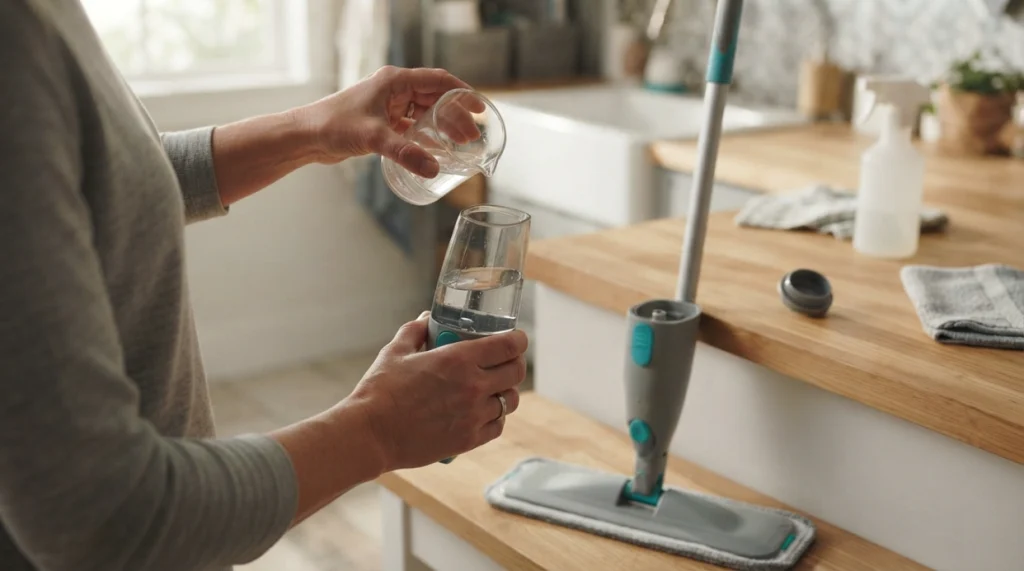
For most refillable spray mops, remove the reservoir, open its cap, add water to the fill line, close it tightly, and reinstall it. Avoid overfilling because trapped air is often necessary for the spray system to work correctly.
Definition: A spray mop is a floor-cleaning tool with a built-in reservoir that releases a small amount of water or cleaning solution in front of the mop head when you operate a trigger or button.
Step 1: Check whether the reservoir is refillable
Look for a removable bottle, screw cap, flip cap, or clearly marked filling opening. A reservoir designed for refilling should open without cutting, drilling, or prying.
If the mop uses a sealed disposable cartridge, don’t force it open. Replace it according to the manufacturer’s instructions instead.
Step 2: Remove the bottle or tank
Hold the mop upright so leftover liquid does not spill. Release the reservoir using its button, latch, or pull mechanism.
- Removable bottle: Pull or lift it away from the mop body.
- Built-in reservoir: Leave it attached and open the designated filling cap.
- Sealed cartridge: Replace rather than refill unless the manufacturer says otherwise.
Step 3: Add cool or room-temperature water
Pour water slowly through the filling opening. A small funnel can help if the reservoir neck is narrow.
Stop at the maximum fill line if one is provided. Leaving a little air space can also make the bottle easier to close without spilling.
Step 4: Close and reinstall the reservoir
Make sure the cap sits straight and seals completely. Then wipe the outside of the reservoir before clicking it back into the mop.
I always check around the cap with a dry paper towel before mopping. A loose seal can look like a leaking spray mechanism when the real problem is simply the cap.
Step 5: Prime the spray system
Point the mop toward an appropriate hard-floor surface and squeeze the trigger a few times. A newly filled system may need several pumps before liquid reaches the nozzle.
- Look for a light, even mist.
- Check underneath the reservoir for leaks.
- Make sure the nozzle points toward the floor.
- Stop if liquid drips continuously without using the trigger.
Which Type of Spray Mop Do You Have?
There are several types of spray mops, and they aren’t filled the same way. Identifying the reservoir design first prevents broken caps, leaks, and clogged spray systems.
| Mop type | How it holds liquid | Can you add water? | Main caution |
|---|---|---|---|
| Refillable spray mop | Reusable bottle or tank | Usually yes | Don’t exceed the fill line |
| Cartridge spray mop | Pre-filled cleaner cartridge | Model dependent | Don’t force open sealed cartridges |
| Powered spray mop | Removable internal tank | Only as directed | Unapproved liquids may clog internal parts |
| Steam mop | Water tank feeding a heater | Yes, on refillable models | It is not the same appliance as a spray mop |
A spray mop is not a steam mop
A spray mop releases liquid directly onto the floor without boiling it. A steam mop heats water and produces hot vapor through or near its cleaning pad.
That difference matters when filling the machine. Steam mops may have stricter water requirements because minerals can collect around heating components.
Check the manual before improvising
As of 2026, spray-mop designs range from simple mechanical trigger models to powered floor-cleaning systems. Follow the instructions for your exact model when its reservoir design differs from the basic method above.
Don’t assume a tank is refillable because you can physically remove it. Some manufacturers design removable containers specifically for proprietary solutions.
Should You Put Water or Cleaner in a Spray Mop?
Water alone is suitable for some routine cleaning jobs, but other floors and mop systems work better with an approved cleaner. Your mop manual and flooring manufacturer’s care instructions should decide what goes into the reservoir.
When plain water makes sense
Plain water can help with light dust, footprints, and fresh spills on water-safe floors. It also reduces the chance of detergent residue from using too much cleaner.
- Light maintenance cleaning
- Fresh, water-soluble spills
- Floors whose manufacturer approves damp cleaning
- Mops designed to work with plain water
When a floor cleaner may work better
Greasy kitchen residue and established grime may need an appropriate floor-cleaning product. Choose one that matches both your flooring and mop reservoir.
If you’re choosing household cleaners, the EPA Safer Choice program provides information about products evaluated against its safer-ingredient criteria.
Safety note: Check your floor manufacturer’s care guide and the cleaner label before putting any chemical, vinegar mixture, disinfectant, essential oil, detergent, or soap into a spray mop.
Don’t automatically dilute ready-to-use cleaner
A ready-to-use floor cleaner is already formulated for direct application. Adding extra water can change how it cleans and may conflict with the product instructions.
Concentrated cleaner is different. Dilute concentrates only at the ratio stated on their labels.
Don’t mix cleaning chemicals
Combining household cleaners can create hazardous reactions or damage the mop. The CDC’s cleaning and disinfecting guidance also emphasizes following product-label directions.
Cleaning and disinfecting are not automatically the same task. For ordinary household floor care, use the product intended for your floor rather than improvising chemical combinations.
How Much Water Is Safe for Different Floor Types?
A spray mop’s biggest advantage is moisture control. You can mist a small area instead of saturating the entire floor with a wet string mop.
The correct amount still depends on the surface. More water does not mean a cleaner floor.
Hardwood and engineered wood
Wood floors need careful moisture control because standing liquid can enter seams or affect the finish. The National Wood Flooring Association recommends cleaning spills promptly and cautions against wet mopping wood floors.
- Use a light mist rather than soaking the surface.
- Clean small sections.
- Wipe spills quickly.
- Use a cleaner approved for the floor’s finish.
Safety note: Check the flooring manufacturer’s care guide before damp-mopping wood or engineered wood.
Laminate
Laminate usually responds best to minimal moisture. Water that remains around joints can reach the fiber-based core beneath the wear layer.
Use a fine spray and a clean microfiber pad. The floor should look lightly damp rather than visibly wet.
Vinyl and LVP
Vinyl and luxury vinyl plank are often easier to damp-clean than wood, but you should still avoid standing water. Seams, edges, and installation methods vary.
A spray mop works well because you can control where the liquid lands. Use a compatible cleaner if plain water does not remove greasy residue.
Ceramic and porcelain tile
Sealed ceramic and porcelain tile generally tolerate damp cleaning better than moisture-sensitive wood products. Grout condition still matters, especially where joints are cracked or deteriorating.
Use enough mist to loosen soil without creating puddles. Change or rinse a dirty microfiber pad before it begins spreading grime.
Natural stone
Natural stone requires more attention to cleaner chemistry. Acidic mixtures such as vinegar can damage some calcium-based stone surfaces.
Use a stone-compatible, usually pH-neutral cleaner when the manufacturer recommends one. Plain water may handle light dust, but it may not remove oily buildup.
Safety note: Always check the stone type, sealer instructions, and cleaner label before wet cleaning natural stone.
Why Is My Spray Mop Not Spraying After I Fill It?
A newly filled spray mop may need several trigger pulls to draw liquid through the tube. If nothing appears after priming, check the reservoir installation, nozzle, vent, and trigger system.
Check these problems first
- Tank isn’t seated: Remove it and reinstall it until it locks into position.
- Cap is loose: Tighten the cap so the reservoir can maintain its intended pressure or flow.
- Pickup tube is dry: Pump the trigger several times to prime the line.
- Nozzle is blocked: Inspect the spray opening for dried residue or debris.
- Reservoir is overfilled: Remove a small amount of liquid if the manual requires air space.
- Cleaner is too thick: Stop using unapproved solutions that may restrict the spray pathway.
What if the mop sprays unevenly?
An uneven stream often points to residue around the nozzle. Wipe the nozzle gently with a damp cloth after removing the reservoir or otherwise making the mop safe to handle.
Don’t push needles, drill bits, or other sharp objects deep into the opening. They can enlarge or damage the spray nozzle.
What if the reservoir leaks?
Remove the tank and check the cap, gasket, threads, and bottle for visible damage. A damaged seal can allow liquid to escape even when the spray mechanism is fine.
Place the filled reservoir over a sink for a short leak test before reinstalling it. Replace damaged seals or tanks with compatible parts.
How Do You Keep a Spray Mop Reservoir Clean?
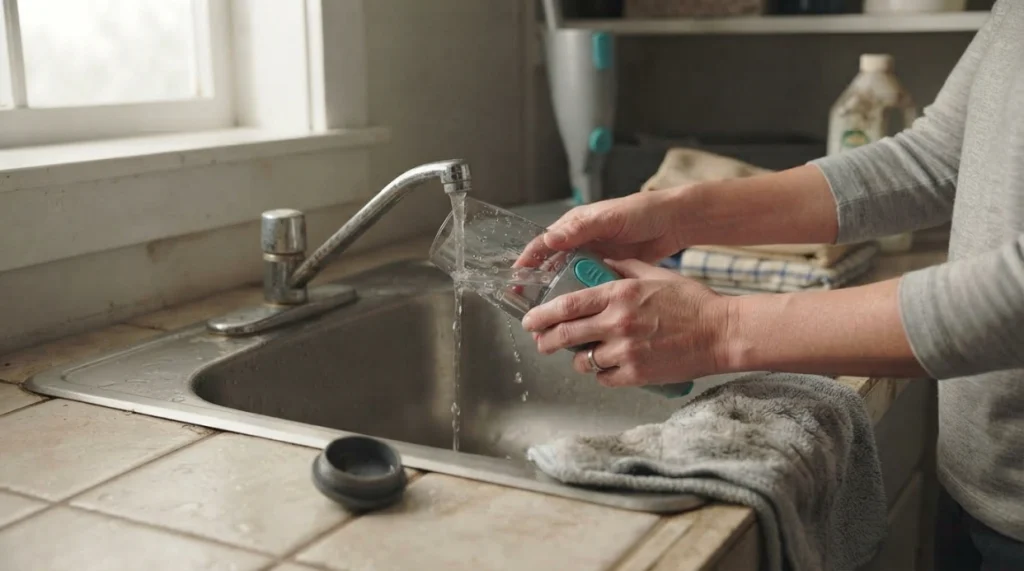
Emptying and cleaning the reservoir helps prevent stale liquid, residue, odors, and clogged spray components. This matters most when you use cleaner rather than plain water.
After routine cleaning
- Remove any leftover solution if the manufacturer recommends empty storage.
- Rinse refillable tanks only when their instructions permit rinsing.
- Wipe the cap and bottle opening.
- Clean the microfiber mop pad after each dirty-floor session.
- Allow washable parts to dry before long-term storage.
I prefer mixing only the amount of solution I expect to use. That keeps me from leaving diluted cleaner sitting in a reservoir between cleaning days.
Keep the microfiber pad clean too
A clean reservoir cannot compensate for a saturated, dirty pad. Microfiber is designed to collect soil, but eventually it starts moving dirty moisture around instead.
Swap the pad when it becomes visibly dirty. Avoid fabric softener when the pad manufacturer warns against it because coatings can reduce microfiber absorbency.
Store the mop upright and dry
Keep the spray mop where the handle and reservoir won’t be crushed or exposed to extreme temperatures. Don’t leave a leaking reservoir installed for weeks.
Routine cleaning is usually more important than aggressive disinfection. CDC guidance notes that regular cleaning removes dirt and many germs, while disinfection is particularly relevant when illness creates a need for it.
Section Takeaway: Keep the reservoir, spray nozzle, and microfiber pad clean as one system. Residue in any of those areas can cause poor spraying, streaks, or odors.
Spray Mop Water FAQs
Can I put only water in a spray mop?
Yes, many refillable spray mops can use plain water for light cleaning, provided the mop manufacturer allows it. Water works best for fresh spills and light soil, while greasy residue may need a floor-compatible cleaning product.
Can I put hot water in a spray mop?
Use cool or room-temperature water unless your mop’s manual specifically allows warmer water. Very hot or boiling water may deform plastic reservoirs, seals, tubes, or other internal components.
Can I put vinegar and water in a spray mop?
Only if both the spray-mop manufacturer and flooring manufacturer permit it. Vinegar is acidic and may be unsuitable for natural stone or certain floor finishes, so it should not be treated as a universal floor cleaner.
Safety note: Check the flooring care guide and mop instructions before using any homemade cleaning mixture.
Can I put dish soap in my spray mop?
It’s usually better to avoid dish soap unless the manufacturer specifically recommends it. Excess detergent may leave a sticky film, create streaks, or clog a narrow spray mechanism.
Do I need distilled water in a spray mop?
Most basic mechanical spray mops don’t require distilled water unless their manufacturer says otherwise. Distilled water can reduce mineral deposits, however, which may help in areas with hard tap water.
How full should a spray mop reservoir be?
Fill to the manufacturer’s maximum line rather than to the absolute top of the bottle. If there is no visible line, follow the model’s manual and leave enough room to close the reservoir without spilling.
Why does my spray mop leave streaks?
Streaks commonly appear when you use too much liquid, too much cleaner, or a dirty microfiber pad. Sweep first, use a fine mist, work in small sections, and change the pad when it becomes soiled.
Final Takeaway
Adding water to a spray mop is simple when the mop has a refillable reservoir. Remove or open the tank, add the approved water or cleaning solution, close it securely, reinstall it, and prime the trigger.
The more important decision is what goes into that reservoir. Match the liquid to your mop and floor instead of assuming every cleaner or homemade mixture is safe.
- Use only a refillable opening designed by the manufacturer.
- Choose cool or room-temperature water unless instructed otherwise.
- Don’t overfill the reservoir.
- Use only approved cleaners and dilution ratios.
- Keep moisture especially light on wood and laminate.
- Clean the tank, nozzle, and microfiber pad regularly.
A spray mop should make floor cleaning easier, not wetter. A light, controlled mist paired with a clean microfiber pad is usually the goal.