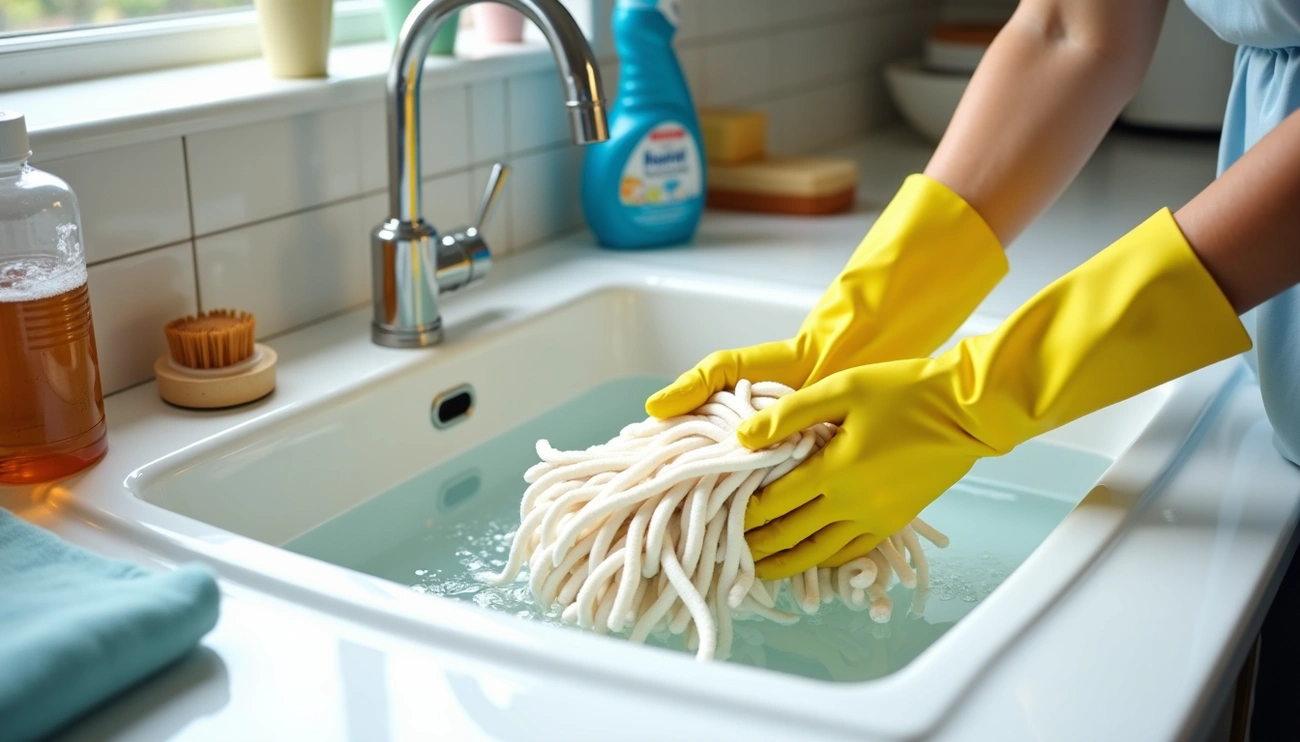
Clean a mop head without a washing machine by soaking it for 30 minutes in a bucket of hot water mixed with dish soap, laundry detergent, or 1 cup of white vinegar. For deep cleaning, use a bleach solution for cotton mop heads or an oxygen cleaner. Agitate thoroughly, rinse with clean water, wring out excess moisture, and air-dry in direct sunlight.
What You Need to Clean a Mop Head
Gathering the right supplies makes cleaning your mop head by hand efficient and effective. You don’t need specialized equipment, just a few household items you likely already own.
Bucket and Warm Water
A standard bucket serves as your primary cleaning vessel. Warm water works better than cold because it helps break down grime and dissolve cleaning agents more effectively. Fill the bucket with enough water to fully submerge your mop head. For larger mop heads, you might need two buckets: one for washing and another for rinsing.
Cleaning Agents (Vinegar, Detergent, Bleach)
Different cleaning agents serve specific purposes when you clean a mop head. White vinegar breaks down odors and mineral buildup, making it ideal for routine cleaning. Hydrogen peroxide disinfects effectively and provides a gentler alternative to harsher chemicals. Bleach should be used sparingly for deep disinfection, particularly when your mop head is heavily soiled.
Proper ratios matter. If you use bleach, mix ½ cup of bleach to 1 gallon of hot water. For white vinegar, add 8 ounces to 1 gallon of hot water. With hydrogen peroxide, use 8 ounces per gallon of hot water. Mild detergent works well for sponge mop heads and can be added in small amounts to your cleaning solution.
Never mix bleach and vinegar together. When sodium hypochlorite in bleach combines with acetic acid in vinegar, it releases potentially lethal chlorine gas. Similarly, avoid combining bleach with hydrogen peroxide or any citrus-based cleaners.
Scrub Brush or Sponge
A scrub brush helps dislodge stubborn dirt and stains from mop fibers. Choose a brush with firm bristles that can penetrate deep into the mop head without damaging the material. A regular kitchen sponge also works for lighter cleaning tasks.
Gloves and Safety Equipment
Wear gloves to protect your hands from dirt and cleaning agents. This prevents skin irritation from both bleach and vinegar. When using bleach, open windows before you start so there’s airflow and ventilation, especially in small spaces. This precaution reduces exposure to fumes and keeps your cleaning area safe.
Having these supplies ready before you begin streamlines the entire process of how to wash a mop head without a washing machine.
How to Clean a Mop Head Without a Washing Machine
Hand washing your mop head requires a systematic approach that removes dirt, kills bacteria, and extends the life of your cleaning tool.
Step 1: Rinse Off Loose Dirt and Debris
Start by rinsing your mop head under clean running water until the water runs clear. Use your hands to gently squeeze and manipulate the fibers, forcing out visible dirt and grime. For mop heads with intricate fibers, a hose nozzle or handheld showerhead helps flush out stubborn particles more effectively. This pre-rinse prevents your wash water from becoming immediately saturated with soil.
Step 2: Prepare Your Cleaning Solution
Fill your bucket with warm water and add a small amount of mild detergent. For sponge mop heads, use a few drops of dish soap. The warm temperature helps dissolve cleaning agents and breaks down grime better than cold water.
Step 3: Soak the Mop Head
Submerge your mop head completely in the cleaning solution and let it sit for at least 10-15 minutes. This soaking period loosens embedded dirt and allows the detergent to penetrate deep into the fibers. Don’t leave your mop soaking longer than 30 minutes, as prolonged moisture exposure may cause mold and bacteria to grow.
Step 4: Scrub and Agitate
Agitate the mop head vigorously in the bucket to dislodge grime. Use a scrub brush to work stubborn dirt and stains from the fibers. Pay special attention to heavily soiled areas where dirt tends to accumulate.
Step 5: Rinse Thoroughly
Rinse your mop head meticulously under clean running water until no suds remain. Move the strands constantly to reach every corner. Leftover soap becomes a dirt magnet during future cleaning sessions.
Step 6: Disinfect (Optional but Recommended)
Mix ½ cup of bleach or 1 cup of vinegar per gallon of hot water. Soak your mop head for 10-30 minutes to kill bacteria and eliminate odors. Rinse thoroughly afterward to remove all disinfectant residue.
How to Dry Your Mop Head Properly
Proper drying prevents bacteria and mold from turning your freshly cleaned mop head into a contamination tool.
Wring Out Excess Water
After your final rinse, wring out the mop head thoroughly to remove as much water as possible. This step speeds up drying and reduces mold risk. For microfiber mop heads, gently press the water out without twisting. Twisting damages delicate fibers and shortens their lifespan. Cotton and synthetic mop heads tolerate more aggressive wringing, so use the fold and twist method by folding the mop head in half and twisting in a circular motion.
Air Drying in a Ventilated Area
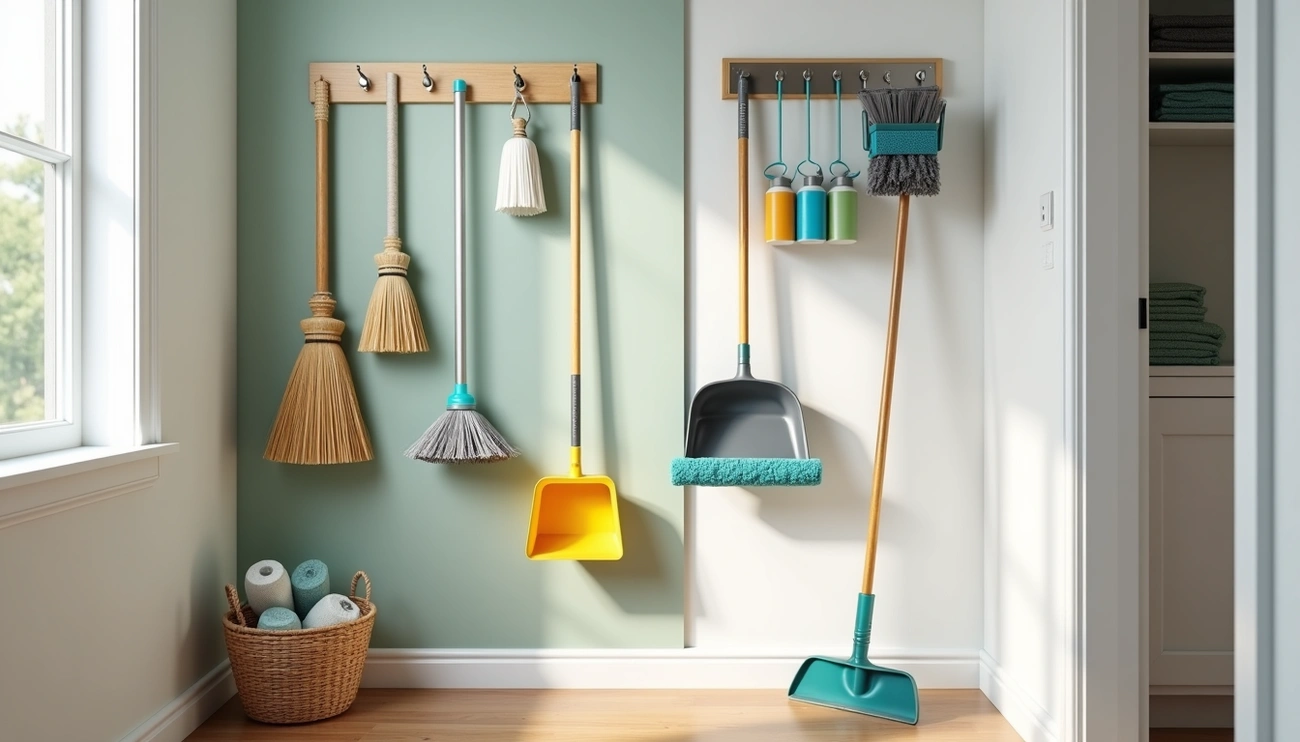
Hang your mop head in a well-ventilated area with good airflow. Basements, garages, or rooms with open windows work perfectly. Position the mop upright with strands hanging down. This allows air to circulate freely through every fiber and prevents water from pooling at the base.
If you lack hanging space, lay the mop flat on a clean, absorbent towel or drying rack. Flip it periodically to ensure even drying on all sides. Use a fan near the hanging mop to accelerate evaporation. Opening windows on opposite sides creates a cross-breeze that enhances circulation.
Sunlight Drying for Natural Sanitization
Sunlight acts as an excellent natural sanitizer. Hang your mop head outside where it receives direct sun exposure. The UV rays help kill remaining bacteria while fresh air speeds drying. However, prolonged UV exposure can fade colors and degrade microfiber fabric, so bring it inside once dry.
Avoid These Drying Mistakes
Never store a damp mop head. Moisture trapped in enclosed spaces breeds bacteria, mold, and foul odors. Don’t leave your mop in a bucket, on the floor, or crumpled in a closet. These areas lack ventilation and keep fibers wet longer than necessary, creating an ideal environment for microbial growth.
Tips for Maintaining a Clean Mop Head
Extending your mop head’s life requires consistent maintenance habits that prevent bacteria buildup and preserve cleaning effectiveness.
Rinse After Every Use
Rinse your mop head thoroughly under running water after each cleaning session. This mechanical action purges loose dirt and prevents wash water from becoming saturated with soil during deep cleaning. Additionally, rinsing removes built-up chemicals that can degrade fibers over time.
When to Replace Your Mop Head
Replace traditional string mops every 2-3 months with weekly use. Microfiber mop heads last longer, typically 3-6 months. Watch for persistent odors that survive deep cleaning, visible fraying or thinning fabric, poor water absorption, and streaks left on floors. Cotton mop heads last 15-50 washes, while microfiber handles 200-500+ washes. Consequently, your replacement schedule depends more on condition than time.
Proper Storage to Prevent Mold
Hang your mop in a well-ventilated area with strands hanging down after confirming it’s completely dry. Never store mops on the floor, in buckets, or in damp corners[192]. In other words, proper airflow prevents bacterial growth and extends lifespan.
Cleaning Frequency Guidelines
Clean your mop head after every use. For deeper sanitization, perform a bleach or vinegar soak every 3-4 uses.
Conclusion
You now have everything you need to keep your mop head clean without a washing machine. Hand washing with the right supplies, proper drying techniques, and consistent maintenance will ensure your mop stays bacteria-free and effective.
Without doubt, the key to a hygienic mop head is regular cleaning after every use and complete drying in ventilated spaces. Follow these steps consistently, and your mop will clean floors effectively for months to come.