
How to Control Spin Mop Moisture for Safer, Streak-Free Floors

Quick Answer
To control spin mop moisture, rinse the microfiber head, place it securely in the spinner, and use short spinning bursts until the mop feels damp rather than dripping. Adjust the amount of spinning to your floor type, use a suitable cleaner sparingly, and remove excess water immediately from moisture-sensitive surfaces. The National Wood Flooring Association’s floor-care guidance emphasizes minimizing moisture on wood floors.
Follow these moisture-control steps
- Remove loose dirt: Sweep or vacuum before wet mopping to prevent gritty residue.
- Rinse thoroughly: Remove dirty water and trapped debris from the mop fibers.
- Spin in bursts: Start with a few seconds, inspect the mop, and repeat as needed.
- Check the fibers: Aim for evenly damp microfiber without visible dripping.
- Test the floor: Mop a small area and check for puddles, streaks, or excessive wetness.
- Adjust as needed: Spin longer for delicate, moisture-sensitive surfaces and use less water overall.
One important rule
- If the floor remains visibly wet after a pass, stop and wring the mop again before continuing.
Controlling spin mop moisture is the difference between a clean floor and one that stays streaky, slippery, or wet for too long. I focus on the amount of water left behind, not simply how fast the mop head spins.
In this guide, I’ll explain how to adjust the spinner, recognize the right dampness, choose the correct technique for different flooring materials, and fix common mopping problems. These practical methods are useful for everyday cleaning in 2026.
What Is Spin Mop Moisture Control?
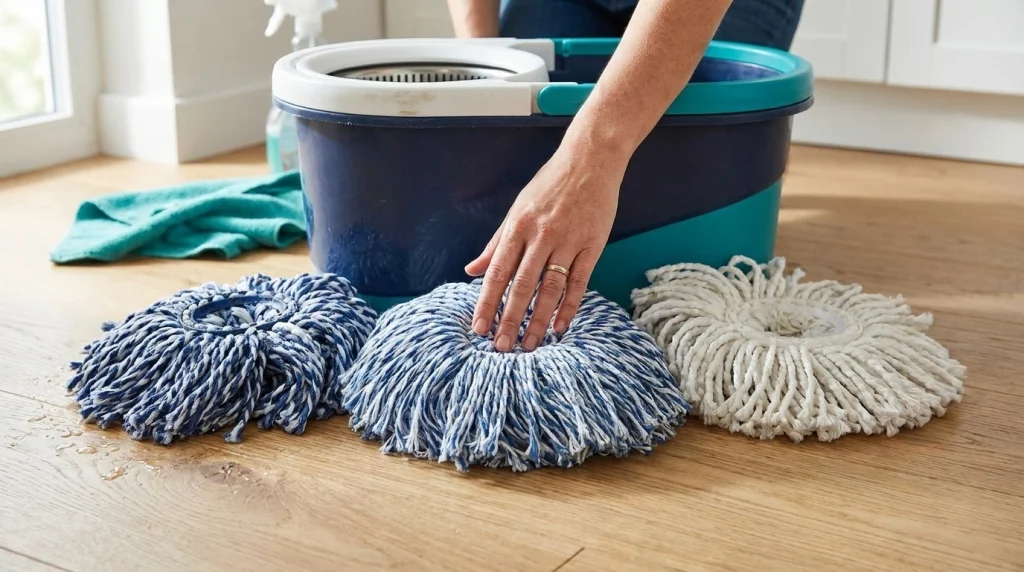
Spin mop moisture control is the process of regulating how much water remains in a mop head before it touches the floor. It combines effective wringing, sensible water use, and a technique suited to the flooring material.
Why does the mop’s moisture level matter?
A microfiber mop needs enough moisture to loosen everyday dirt, but excess water can create puddles, streaks, and unnecessary drying time. On vulnerable flooring, too much moisture can also damage joints, finishes, or underlying materials.
Microfiber is a synthetic material made from extremely fine fibers that trap dirt and absorb liquid. Its ability to hold water makes it useful for cleaning, but it also means a mop can remain wetter than expected after a quick spin.
What does a properly wrung mop look like?
For many sealed, water-tolerant floors, the practical target is a uniformly damp mop head that releases no visible drops when lifted and moved over the floor. The exact moisture level depends on the flooring manufacturer’s instructions and the cleaning task.
- Too wet: Water drips from the strands, gathers in low spots, or leaves a shiny wet trail.
- Appropriately damp: The fibers feel moist, spread cleaning solution evenly, and leave no puddles.
- Too dry: The fibers barely glide, struggle with stuck-on dirt, or leave soil behind.
Don’t rely on a single visual test alone. A mop that looks dry on the outside may still hold plenty of water inside its twisted fibers.
How Do You Wring a Spin Mop to Control Moisture?
The most reliable approach is to spin briefly, inspect the mop, and repeat until it reaches the dampness your floor requires. You don’t need to use the spinner for the same length of time after every rinse.
Follow this step-by-step method
- Remove loose debris. Sweep or vacuum first so dust and grit don’t turn into a muddy film.
- Rinse the mop head. Swish the microfiber strands in the clean-water section of your bucket, if your model has separate compartments.
- Position the head correctly. Place it fully inside the spinner basket and make sure the mop handle and head are aligned as the manufacturer directs.
- Start with a short spin. Use a brief burst, following the bucket’s operating instructions, instead of immediately spinning at maximum speed for an extended period.
- Inspect the fibers. Look for dripping strands and feel whether the head is evenly damp, taking care around moving parts.
- Repeat if necessary. Give the mop another short spin if water still drips freely.
- Test a small area. Clean a limited section and observe the wet trail before mopping the entire room.
Should you spin longer or press harder?
Spin longer when the mop remains too wet, but use the bucket as designed. Don’t force the handle, push down excessively, or overload the basket to extract more water.
Some spin mops use a foot pedal, while others use a handle-operated spinning mechanism. Their operating speeds and wringing efficiency vary, so there isn’t one universal spinning time for every model.
Practical tip: Use the shortest spin that consistently produces the moisture level your floor needs. This makes it easier to repeat the same result throughout the room.
How Long Should You Spin a Mop Before Cleaning?
There is no fixed number of seconds that works for every spin mop. The right duration depends on the spinner design, microfiber condition, amount of water absorbed, and type of floor you’re cleaning.
Use a short-burst approach
As a starting experiment, try a brief burst of around three to five seconds on a typical manual spin mop, then inspect the head. This is a practical starting point, not a manufacturer-approved universal setting or a guaranteed drying result.
If the mop still drips, repeat the process in short bursts. If it feels too dry to pick up dirt effectively, allow it to absorb a small amount of clean solution before spinning again more lightly.
What changes the amount of spinning needed?
- Mop material: Thick, absorbent microfiber may retain more water than a thinner replacement head.
- Spinner design: Basket shape, drainage, and the mechanism influence how efficiently water leaves the fibers.
- Water load: A fully saturated head generally needs more wringing than one that’s already partly drained.
- Floor sensitivity: Hardwood and laminate require more conservative moisture control than many sealed tile floors.
- Cleaning solution: Detergent residue or excessive solution can affect how the mop feels and how the floor dries.
How can you make moisture levels consistent?
Use the same starting technique for each room, then adjust according to the floor’s response. Pay attention to the appearance of the wet trail rather than relying on memory alone.
For example, if a kitchen tile floor tolerates a slightly wetter mop, don’t automatically use that setting on nearby laminate. Treat each flooring surface according to its own care requirements.
How Wet Should a Spin Mop Be for Different Floor Types?
The safest moisture level depends on the flooring material, surface finish, seams, and installation. When in doubt, use less water and follow the floor manufacturer’s care instructions.
| Floor type | Moisture approach | Important precaution |
|---|---|---|
| Sealed hardwood | Use a barely damp mop only if the finish manufacturer permits it. | Never leave standing water or wet seams. |
| Engineered wood | Keep moisture minimal and follow the product’s care guide. | Protect joints and exposed edges. |
| Laminate | Use a well-wrung, lightly damp mop if approved. | Avoid water entering seams or edges. |
| Vinyl and LVP | Use a damp mop with a compatible cleaner. | Prevent excess liquid around seams and edges. |
| Ceramic or porcelain tile | A moderately damp mop may suit routine cleaning. | Avoid flooding grout or leaving slippery residue. |
| Natural stone | Use a damp mop and a stone-compatible cleaner. | Avoid acidic cleaners unless specifically approved. |
| Concrete | Use moisture appropriate to the sealer and finish. | Protect coatings and remove excess liquid. |
*These are general starting points, not substitutes for flooring-specific instructions. Unsealed, damaged, waxed, or specially finished surfaces may need different care.
Why is hardwood more sensitive to moisture?
Wood can absorb moisture, swell, and change shape, while excess water can harm the finish. The National Wood Flooring Association advises against wet mopping and steam cleaning wood floors over time.
For wood surfaces, consult the NWFA’s floor-care recommendations and the specific finish manufacturer’s guidance before using a spin mop.
Safety note: Check the flooring manufacturer’s care guide before using water, detergent, vinegar, or disinfectants. Never assume that a sealed-looking floor can tolerate repeated wet cleaning.
How Does Spin Mop Moisture Control Compare With Other Mop Types?
A spin mop gives you direct control over how much water remains in its head, but other mop designs offer different ways to limit moisture. The best option depends on your floor, the mess, and how much control you need.
| Mop type | Moisture control | Best practical use |
|---|---|---|
| Spin mop | Adjustable through spinning and inspection. | General cleaning where bucket wringing is convenient. |
| Flat microfiber mop | Controlled by how much solution is applied to the pad. | Small rooms and floors needing careful moisture control. |
| Spray mop | Small, targeted sprays reduce unnecessary application. | Quick touch-ups and smaller areas. |
| Traditional string mop | Depends on manual wringing or the bucket mechanism. | Larger, water-tolerant surfaces when managed carefully. |
| Steam mop | Moisture and heat are delivered through steam. | Only flooring explicitly approved for the particular model. |
| Cordless electric mop | Depends on its dispensing, pad, and recovery system. | Routine cleaning when the device suits the floor. |
| Robot mop | Controlled by onboard settings and pad design. | Maintenance cleaning on compatible surfaces. |
When is a flat microfiber mop better?
A flat microfiber mop can be easier to manage when you want precise control over a small amount of cleaning solution. You can dampen the pad lightly, squeeze it by hand if its instructions allow, or use a compatible spray system.
A spin mop is often more convenient for larger areas and frequent rinsing. However, its advantages disappear if you leave the head saturated or fail to remove dirty water properly.
Does a steam mop eliminate moisture concerns?
No. Steam mops introduce heat and moisture, so they aren’t automatically safer for delicate flooring than a conventional mop.
Safety note: Use steam, disinfectants, and cleaning chemicals only where the floor manufacturer and product labels permit them. Never substitute steam for ordinary damp mopping on wood floors that prohibit it.
How Much Water and Cleaning Solution Should You Use?
Use only enough compatible cleaning solution to loosen dirt without leaving a wet film. More liquid doesn’t automatically mean a cleaner floor, and excess detergent can leave residue that attracts dirt or causes streaking.
Should you add more water to the bucket?
Fill the bucket according to its marked capacity and your model’s instructions. Enough water should be available to rinse the mop effectively, but there’s no universal bucket volume that guarantees the correct moisture level.
Keep the rinse water clean enough to avoid repeatedly spreading dirty solution across the floor. If the bucket has separate wash and spin compartments, follow its design rather than improvising a different operating method.
How much floor cleaner is appropriate?
Follow the exact dilution directions on the cleaner label. If the label specifies a measured amount per litre or gallon, use that ratio instead of estimating by eye.
- pH-neutral cleaner: Often suitable for compatible sealed surfaces when the label confirms use on that flooring.
- Vinegar-based mixtures: Not appropriate for every floor, particularly finishes or stone surfaces vulnerable to acid.
- Enzyme cleaners: Use only when the product is intended for the soil and floor material involved.
- Disinfectants: Follow the label’s dilution, application, and contact-time instructions; don’t assume ordinary mopping disinfects a surface.
Never mix household cleaning products unless the labels explicitly allow it. Combining bleach with acids or ammonia can produce dangerous gases.
Safety note: Read both the cleaner label and the floor manufacturer’s care guide. Avoid unapproved vinegar, abrasive products, disinfectants, and homemade mixtures on delicate finishes.
How Do You Fix Common Spin Mop Moisture Problems?
If your floor looks streaky, stays wet, or feels slippery after mopping, the cause may be excess water, dirty rinse water, detergent buildup, or a worn mop head. Identify the symptom before changing your technique.
Why does the mop leave puddles?
Puddles usually indicate that the head holds too much water, the fibers release liquid unevenly, or the mop deposits more solution than the floor needs.
- Return the mop to the spinner for another short burst.
- Check whether the head is fitted correctly and the spinner drains as intended.
- Work in smaller sections so you can spot excess water early.
- Wipe up standing water promptly, especially around seams and edges.
Why are there streaks after mopping?
Streaks can result from detergent residue, dirty rinse water, a contaminated mop head, or uneven moisture distribution. A longer spin alone won’t solve every streaking problem.
- Rinse the mop thoroughly and replace dirty bucket water.
- Use the cleaner’s recommended dilution rather than adding extra detergent.
- Wash the microfiber head according to its care instructions.
- Try a small area with clean water if the floor and cleaner instructions permit it.
Why does the floor feel sticky or slippery?
A sticky finish may indicate detergent or soil buildup, while slipperiness can arise from residual cleaner, polish, or excess moisture. Keep people away from a wet or slippery area until it is safe to walk on.
Remove residue using only a method approved for your flooring. If the surface remains slippery after cleaning and drying, stop using the suspected product and check the manufacturer’s recommendations.
What if the mop stays too wet even after spinning?
Inspect the microfiber head for heavy soil, compacted fibers, or damage. A worn head may absorb or release water unevenly, while an incorrectly assembled spinner may not wring effectively.
- Clean or replace the head if its condition requires it.
- Check the spinner basket for obstructions.
- Confirm that the handle mechanism or foot pedal works as intended.
- Follow the manufacturer’s instructions for repairs or replacement parts.
For persistent moisture problems, a flat microfiber mop with a controlled spray may be easier to manage. Choose a replacement only after confirming that it suits the floor you clean.
How Do You Maintain a Spin Mop for Better Moisture Control?
A clean mop head and a functioning spinner help you control moisture consistently. Dirt, detergent buildup, damaged fibers, and blocked drainage can make wringing less effective.
Clean the microfiber head properly
- Rinse out loose dirt immediately after cleaning.
- Machine-wash the head only if its care label permits it.
- Use the recommended detergent amount and avoid fabric softener when the manufacturer warns against it.
- Dry the head fully before storage to limit unpleasant odors and microbial growth.
- Replace the head when the fibers become worn, matted, or difficult to clean.
Keep the spinner and bucket working correctly
Empty and rinse the bucket after use, then remove trapped debris from accessible drainage areas. Let the parts dry according to the product instructions.
Check the spinner for wobbling, unusual resistance, or visible damage before each cleaning session. Never put your fingers into a moving basket or attempt to clear an obstruction while the mechanism is operating.
How often should you replace the mop head?
There is no universal replacement interval because usage, floor area, laundering, and material quality differ. Replace it when it no longer rinses clean, develops persistent odors, sheds fibers, or loses its ability to pick up dirt.
Use the product’s care guidance to determine whether the head can be washed and how it should be dried. A well-maintained mop makes moisture control easier, but it still needs correct wringing before every pass.
What Is the Safest Daily Routine for Controlling Mop Moisture?
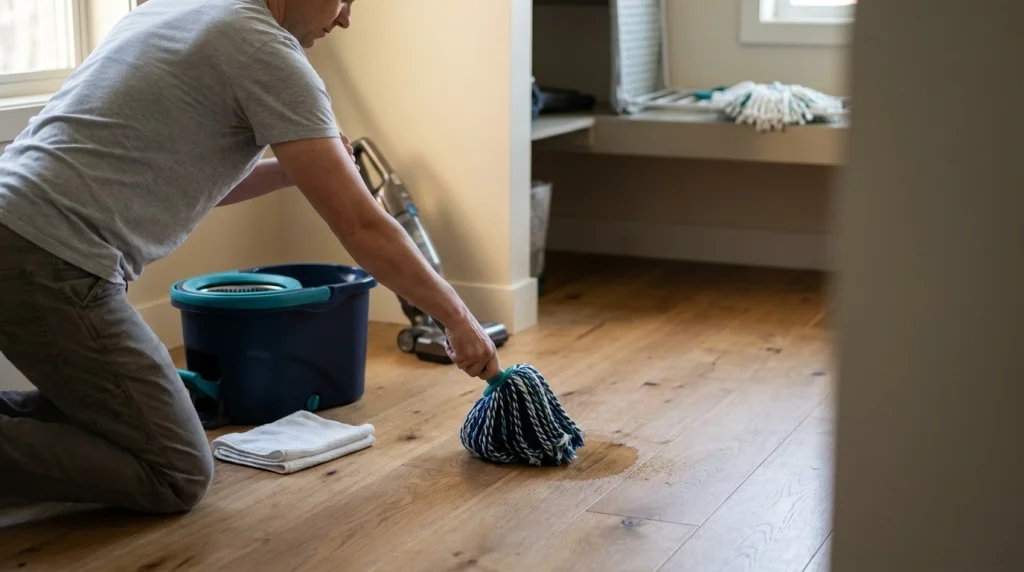
A repeatable routine prevents most moisture-related problems before they start. In 2026, the same practical principle still applies: use the least liquid that cleans effectively, and follow the requirements of the surface you’re maintaining.
Use this room-by-room checklist
- Identify the floor material and confirm that wet mopping is allowed.
- Sweep or vacuum loose dirt before adding moisture.
- Prepare the approved cleaner at the labelled dilution.
- Rinse the mop head and wring it using short, controlled spins.
- Test a small area and check for pooling, streaks, or an overly wet trail.
- Mop in manageable sections, rinsing whenever the head becomes dirty.
- Remove standing water immediately and keep foot traffic away from slippery areas.
- Rinse, clean, and dry the mop equipment after use.
What should you do if a floor gets too wet?
Stop mopping and absorb visible water immediately with a clean, dry cloth or suitable absorbent mop. Give special attention to wood flooring, laminate seams, vinyl edges, and other areas where liquid can penetrate.
Allow the area to dry with normal ventilation, following the flooring manufacturer’s instructions. If water has entered joints or the floor begins to swell, cup, lift, or discolor, seek advice from the flooring manufacturer or a qualified professional.
Safety note: Keep children, pets, and other household members away from slippery wet floors. For wood and other moisture-sensitive materials, follow the specific care guide rather than relying on a generic mopping routine.
Frequently Asked Questions About Spin Mop Moisture
Should a spin mop be wet or damp?
For routine cleaning, a spin mop should generally be damp rather than dripping on surfaces that permit damp mopping. Some floors require especially minimal moisture, so check the flooring manufacturer’s instructions before cleaning.
Does spinning a mop faster remove more water?
Not necessarily in every model. Water removal depends on spinner design, spinning duration, head condition, and how the mop sits in the basket. Follow the manufacturer’s operating instructions and inspect the head instead of assuming maximum speed is always best.
Can I use a spin mop on hardwood floors?
Only if the wood flooring and finish manufacturer permits the method, and then with strict moisture control. The National Wood Flooring Association advises against wet mopping wood floors because excess moisture can damage the finish and wood over time.
Why does my floor take so long to dry after mopping?
The mop may be depositing too much water, or the room may have limited airflow and high humidity. Wring the head more thoroughly, clean in smaller sections, and remove puddles immediately. Follow the floor manufacturer’s guidance for drying and ventilation.
Can I add extra detergent to make spin mopping more effective?
No. Excess detergent can leave a film that attracts dirt or makes floors streaky and slippery. Use the product’s labelled dilution and confirm that the cleaner is compatible with your floor material and finish.
How do I know when the mop head is too dry?
A mop may be too dry when it drags across the surface, fails to loosen ordinary dirt, or leaves soil behind. Rewet it with a small amount of approved solution, then spin lightly to avoid saturating the fibers.
Is a spin mop suitable for laminate flooring?
A spin mop may be suitable if the laminate manufacturer allows damp mopping. Use a well-wrung head, avoid puddles and wet seams, and remove excess liquid promptly. Some laminate products specify particular mop types or cleaning methods.
Final Takeaway: Control the Water, Not Just the Spinner
The key to controlling spin mop moisture is to wring in short bursts, inspect the microfiber, and adjust the technique to the flooring material. A damp, clean mop is usually more useful than a saturated one that leaves puddles or a dry one that cannot lift dirt.
Start cautiously, test a small section, and watch how the floor responds. With the right moisture level, compatible cleaner, and regular equipment maintenance, you can reduce streaks, improve everyday cleaning, and help protect your floors.
For more practical floor-cleaning guidance, use the care instructions supplied with your flooring and cleaning equipment as your final reference before changing your routine.
Affiliate Disclosure
This article is intended to provide general home-cleaning information. Any product references are illustrative and do not represent a claim of independent testing or a guarantee of results.