
How to Remove Mop and Glo Buildup From Wood, Tile, Vinyl and Laminate

Quick answer: To remove Mop and Glo buildup, use a remover that matches your floor. On vinyl, linoleum and ceramic tile, mop on about 1 cup of clear ammonia per gallon of warm water (or a vinyl floor stripper), let it sit a few minutes, scrub, then rinse well. On sealed hardwood and laminate, start gently with 1/2 cup of white vinegar per gallon of warm water on a barely damp microfiber pad, and use a polish remover made for that floor if the haze stays. Always test a hidden spot first and never mix ammonia with bleach.
Mop and Glo is a cleaner with an acrylic polish that leaves a shiny coat. Used often, or on floors that do not need polish, the layers build up, trap dirt and turn cloudy, sticky or yellow. Regular mopping will not remove it; you need to strip it.
Why Mop and Glo Builds Up
Each use leaves a thin film of polish. When new layers go on top of dirt, the dirt gets sealed in. Over months the coating turns dull, scuffs easily and can look yellow, especially in walkways and corners. On grout, the film collects grime and makes the lines look dark.
Common signs of buildup:
- Cloudy or milky haze that comes back after mopping
- A tacky or sticky feel underfoot
- Yellow or gray patches along walls and under furniture
- Footprints and scuffs that show quickly
If your floor looks cloudy for another reason, our guide to cloudy floors after mopping covers the other causes.
What You Need
- Clear (non-sudsy) ammonia or a floor stripper labeled for your floor type
- White vinegar for wood and laminate
- Two buckets, one for the solution and one for clean rinse water
- A soft scrub brush or white non-scratch scrub pad
- Microfiber mop and plenty of microfiber cloths or old towels
- A plastic scraper for thick spots on tile or vinyl
- Rubber gloves, eye protection and non-slip shoes
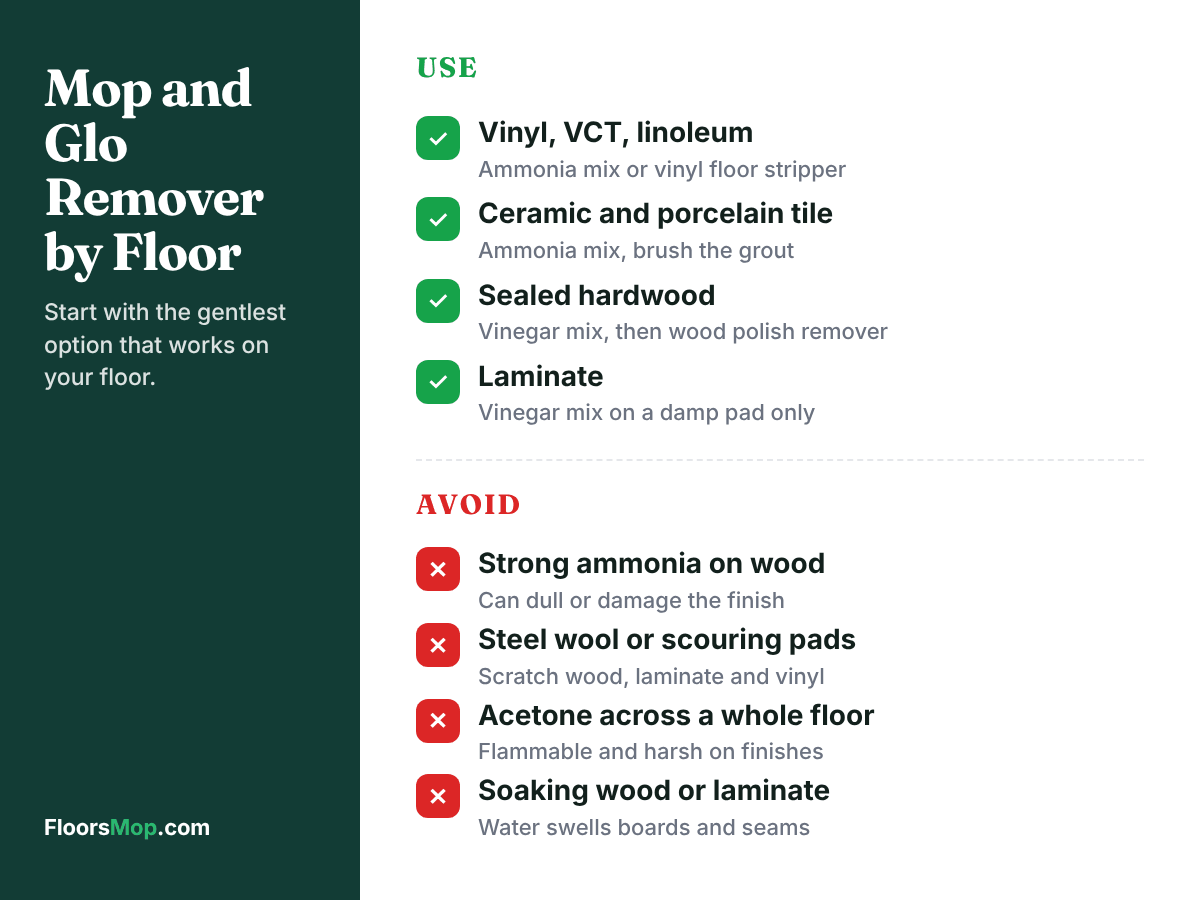
Which Remover to Use on Each Floor
| Floor | First try | For heavy buildup | Avoid |
|---|---|---|---|
| Vinyl, VCT, linoleum | 1 cup ammonia per gallon warm water | Commercial stripper for vinyl or resilient floors | Steel wool, abrasive powders |
| Ceramic and porcelain tile | 1 cup ammonia per gallon warm water | Tile-safe stripper, brush on grout | Acid cleaners on colored grout |
| Sealed hardwood | 1/2 cup vinegar per gallon, barely damp | Polish remover made for wood floors | Strong ammonia, soaking, abrasive pads |
| Laminate | 1/2 cup vinegar per gallon, sprayed on a pad | Remover approved by the laminate maker | Wet mopping, acetone over the whole floor, steel wool |
| Natural stone | Stone-safe alkaline cleaner | Professional stripping | Vinegar and other acids |
How to Remove Mop and Glo Step by Step
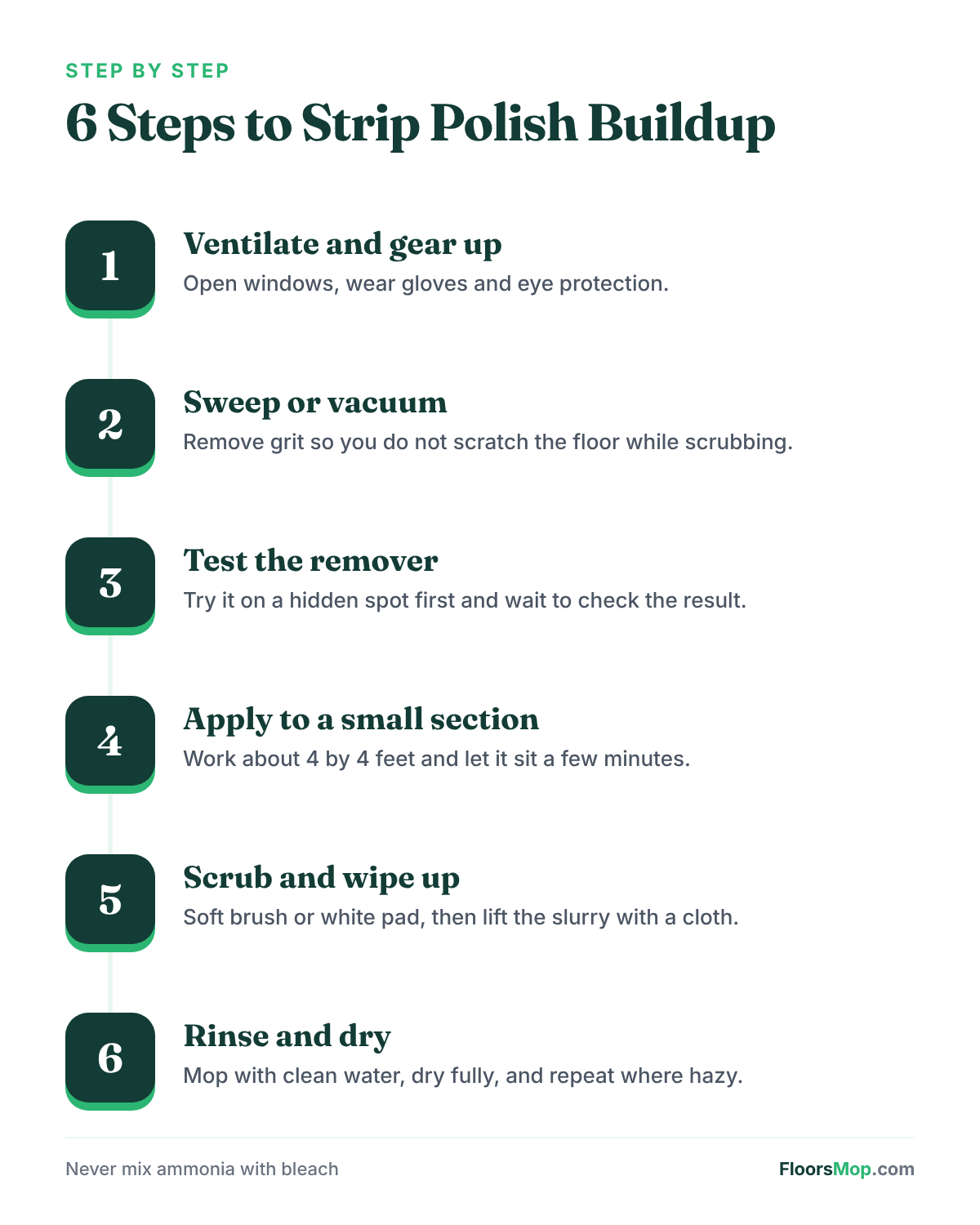
- Ventilate and gear up. Open windows, turn on fans and wear gloves and eye protection. Ammonia fumes are strong.
- Sweep or vacuum. Remove grit so scrubbing does not scratch the floor.
- Test first. Apply your solution to a hidden spot, such as inside a closet, and check it after it dries.
- Work in small sections. Apply the solution to an area about 4 by 4 feet. Let it sit for 3 to 5 minutes, but do not let it dry.
- Scrub and wipe up. Scrub with a soft brush or white pad. The polish will soften into a cloudy slurry. Wipe it up with a cloth or wet-vac before moving on.
- Rinse and dry. Mop the section with clean water, then dry it. Repeat any spots that still look hazy once dry.
Removing Mop and Glo From Vinyl and Linoleum
Vinyl and linoleum handle an ammonia solution well. Mix about 1 cup of clear ammonia into a gallon of warm water, apply it with a mop, let it sit a few minutes, and scrub with a white pad. For many years of buildup, a commercial floor stripper made for vinyl or resilient floors works faster. Follow its label exactly and rinse twice, because stripper left behind keeps the floor slippery. Do not flood the seams of sheet vinyl.
Removing Mop and Glo From Tile
Glazed ceramic and porcelain tile is the most forgiving floor. Use the same ammonia mix, scrub tiles with a brush, and pay extra attention to grout lines where polish collects. A plastic scraper lifts thick spots. Rinse well with clean water and dry. See how to mop porcelain tile floors for routine care afterward.
Removing Mop and Glo From Hardwood
Wood needs the gentlest approach, because water and strong chemicals can damage the finish and the boards.
- Start with 1/2 cup of white vinegar per gallon of warm water. Dip a microfiber cloth or pad, wring it until barely damp, and rub along the grain in small sections.
- Wipe each section dry right away. Never leave liquid on the boards.
- If the film stays, use a polish remover made for wood floors and test it in a hidden spot first.
- Skip strong ammonia, scouring pads and steel wool. They can dull or scratch the finish.
If the floor still looks cloudy after stripping, the finish itself may be worn. A flooring pro can screen and recoat it. For future cleaning, use a wood floor cleaner, not a polish. Our guide on how often to mop hardwood floors explains a safe routine.
Removing Mop and Glo From Laminate
Laminate makers generally say not to use polish at all, and laminate cannot be sanded or refinished, so be careful.
- Mix 1/2 cup of white vinegar per gallon of warm water in a spray bottle.
- Mist a small area or spray the microfiber pad, rub the haze, and wipe dry right away.
- Repeat a few times rather than using more liquid.
- For stubborn film, use only a remover your laminate maker approves. Some makers allow a little acetone on a cloth for small spots, but do not wipe the whole floor with it; it is very flammable.
- Never soak laminate, and never use steel wool.
Read can you use Mop and Glo on hardwood floors before you use any polish on wood or laminate again.
Safety Tips
- Never mix ammonia with bleach. It makes toxic chloramine gas.
- Do not mix ammonia with other cleaners unless the label allows it.
- Keep kids and pets out until the floor is rinsed and dry.
- Stripped floors are slippery while wet. Use non-slip shoes and keep one dry path to the door.
How to Prevent Buildup Again
- Use a pH-neutral cleaner for weekly mopping instead of a polish product.
- If you like shine, apply polish only every few months, in thin coats, on a clean floor.
- Change mop water often and wash microfiber pads after each use.
- Use a microfiber mop and keep it barely damp.
Frequently Asked Questions
What dissolves Mop and Glo buildup?
An ammonia solution, about 1 cup of clear ammonia per gallon of warm water, softens Mop and Glo on vinyl, linoleum and tile. On wood and laminate, start with a mild vinegar solution and use a polish remover made for that floor if needed.
Does vinegar remove Mop and Glo?
Vinegar removes light buildup, especially on wood and laminate when used on a damp cloth. Thick, older layers usually need an ammonia mix or a floor stripper on floors that can handle it.
Can I use ammonia on hardwood floors to remove Mop and Glo?
It is risky. Strong ammonia can dull or damage polyurethane finishes. Try a vinegar solution first, then a polish remover made for wood floors, and test in a hidden spot.
How do I get Mop and Glo off laminate floors?
Spray a mild vinegar solution on a microfiber pad, rub small areas and dry right away. For stubborn film, use only a remover your laminate maker approves, and never soak the floor.
Why does my floor look cloudy after using Mop and Glo?
The polish has built up over dirt or old layers, or it was applied too thick. Stripping the old layers and switching to a neutral cleaner usually fixes it.
Is Mop and Glo safe for hardwood floors?
Most hardwood makers do not recommend acrylic polishes on polyurethane-finished floors because they build up and can complicate future recoating. Use a cleaner made for wood instead.
The Bottom Line
Mop and Glo buildup comes off once you match the remover to the floor. Use an ammonia mix or vinyl stripper on vinyl, linoleum and tile. Use a gentle vinegar mix, and then a wood or laminate polish remover, on hardwood and laminate. Work in small sections, rinse well and dry. Then switch to a neutral cleaner so the haze does not come back.