
Kitchen Checklist vs Monthly Deep Cleaning Which Wins

The kitchen checklist wins for fast prevention, while monthly deep cleaning wins for removing hidden grease and buildup. The best approach is a hybrid routine that matches your floor type and uses minimal moisture.
When people compare a kitchen checklist vs monthly deep cleaning, they are usually trying to solve the same problem in two different ways: keep the kitchen sanitary without spending all day on it. The best answer is not choosing one method forever, but using both in the right order for your floors, finishes, and routine.
Emma Whitmore for FloorsMop here, and in this guide I’ll break down what each method really covers, where each one falls short, and how to build a kitchen cleaning plan that protects the floor under all that daily traffic.
- Checklist = prevention: Best for daily crumbs, spills, and touchpoints.
- Deep clean = restoration: Best for grease, edges, vents, and under appliances.
- Floor type matters: Wood needs gentler care; tile and grout benefit from deeper monthly cleaning.
- Less water is safer: Especially on laminate, LVP, and hardwood.
- Hybrid routine wins: Use both methods for cleaner floors and less buildup.
Kitchen Checklist vs Monthly Deep Cleaning: What Each Method Covers in 2025
A kitchen checklist is the fast, repeatable routine that keeps mess from turning into buildup. Monthly deep cleaning is the slower, more detailed reset that reaches the grease, dust, and moisture hiding in corners, edges, and under appliances.
In 2025, the biggest difference is not just effort. It is whether the routine is meant to maintain a clean kitchen day to day, or restore areas that regular wiping and mopping cannot fully reach. If you want a broader room-by-room reset, our monthly deep cleaning guide for a spotless home can help you plan that work around the rest of the house.
Why kitchen cleaning needs two different routines
Kitchens collect fast-moving mess: crumbs, oil splatter, sink drips, pet hair, and tracked-in dirt. A checklist handles the visible surface mess before it hardens or spreads.
Deep cleaning handles the hidden layer that builds up over time. That includes sticky cabinet fronts, grime around appliance bases, and residue on the floor edges where daily mopping often stops short.
What readers are really trying to solve: speed, hygiene, and floor protection
Most homeowners are balancing three things at once. They want a routine that is quick enough to repeat, hygienic enough to feel safe, and gentle enough not to damage the floor.
That is why the kitchen checklist vs monthly deep cleaning comparison matters so much. Daily or weekly habits reduce wear, while monthly work helps remove buildup that can dull finishes, trap odors, or make floors feel tacky.
Kitchen Checklist vs Monthly Deep Cleaning: Side-by-Side Comparison for Busy Homes
The easiest way to think about the two methods is this: checklist cleaning prevents problems, while deep cleaning solves the problems that prevention cannot fully stop. Both matter, but they do different jobs.
| Method / Product | Best For | Be Careful With |
|---|---|---|
| Kitchen checklist | Daily crumbs, spills, sink wipe-downs, quick floor care | Rushing through corners, over-wetting floors, skipping touchpoints |
| Monthly deep cleaning | Grease, hidden grime, baseboards, vents, under appliances | Using harsh chemicals, soaking sensitive floors, over-scrubbing finishes |
Daily and weekly checklist tasks that prevent buildup
A practical checklist should focus on the high-contact areas that get dirty every day. These are the spots that turn into stubborn grime if they are ignored for even a short time.
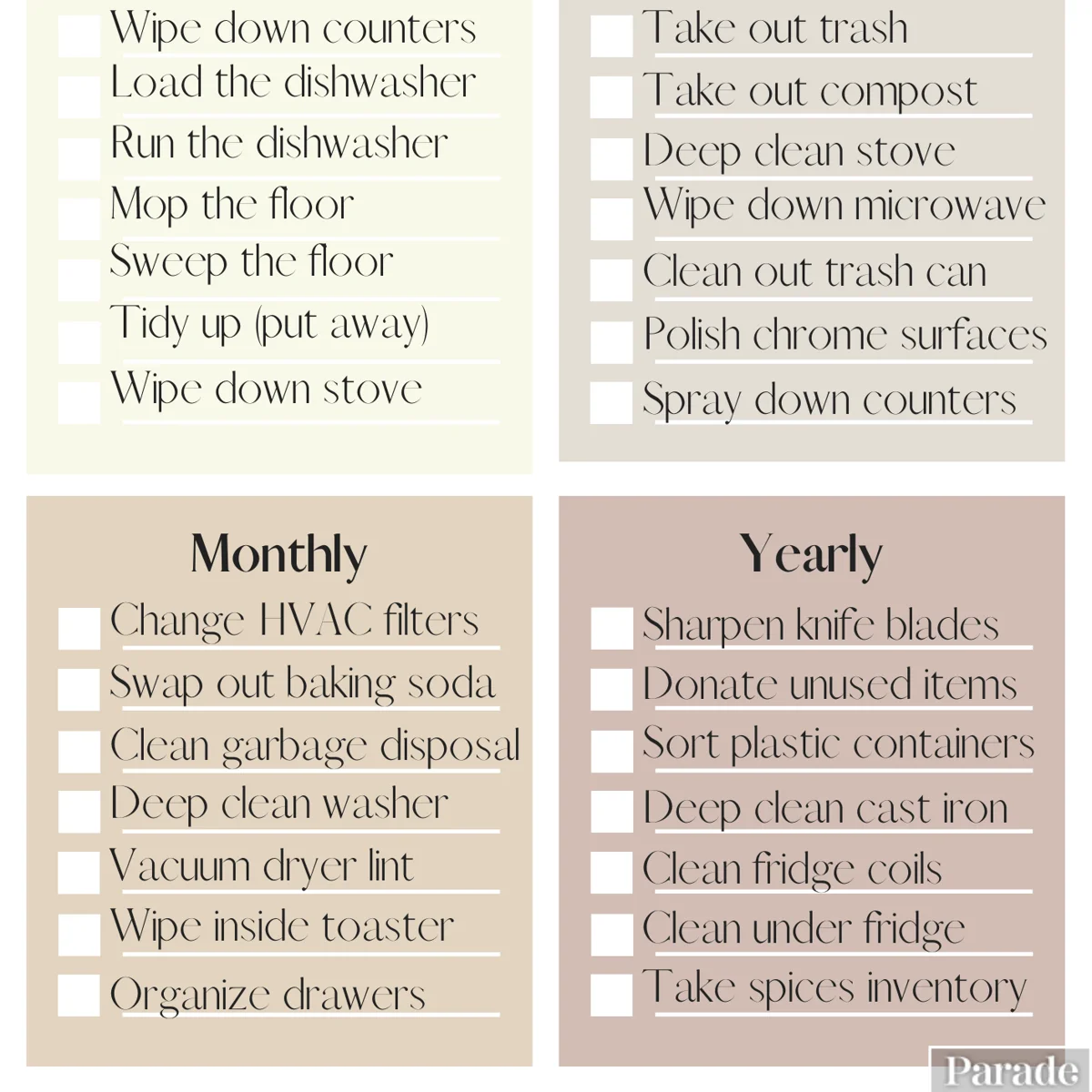
- Wipe countertops after cooking
- Clean sink basins and faucet handles
- Spot-clean spills near the stove and fridge
- Sweep or dry mop crumbs from the floor
- Wipe appliance handles and switches
Monthly deep cleaning tasks that target hidden grease and grime
Monthly deep cleaning goes beyond the visible surface. It is where you handle the greasy film that collects on cabinets, the dust that settles behind appliances, and the floor edges that get missed during a normal pass.
If you want to avoid common over-cleaning problems, it helps to review monthly deep cleaning mistakes before you start. Many of the same issues show up in kitchens, especially when cleaners use too much product or too much water.
Time, effort, and cost comparison for each approach
A checklist usually takes less time because it is built for repetition. It often uses fewer products too, since the goal is quick maintenance rather than full restoration.
Deep cleaning takes more effort and may require extra supplies such as a degreaser, grout brush, microfiber pads, or a safe floor cleaner matched to the surface. The long-term value is that regular deep cleaning can reduce buildup that becomes expensive to remove later.
Checklist cleaning is usually the cheaper routine because it relies on basic tools and small amounts of cleaner. Deep cleaning can cost more in supplies and time, but it may save money by slowing wear, residue buildup, and premature floor damage.
Which Cleaning Method Wins for Different Kitchen Floor Types?
The winner changes depending on the floor under your feet. Some surfaces benefit most from frequent gentle care, while others need periodic deep cleaning to remove grime from texture, grout, or sealed pores.
Tile and grout: where monthly deep cleaning matters most
Tile can look clean even when grout lines are holding onto dirt and grease. That makes monthly deep cleaning especially useful, because the grout and edges often need more attention than the tile face itself.
For porcelain or ceramic tile, a checklist keeps crumbs and spills from settling in. For the deep clean, a controlled amount of water and a grout-safe cleaner are usually more effective than aggressive scrubbing. If your kitchen is tiled, it may also help to read how to mop porcelain tile floors for surface-specific care.
Hardwood and engineered wood: why gentle checklist cleaning is safer
Wood floors in kitchens need caution because water, residue, and harsh products can cause visible wear over time. A simple checklist routine is often safer than frequent heavy wet cleaning.
Monthly cleaning still matters, but it should be light and controlled. Use minimal moisture, dry the floor quickly, and avoid leaving cleaner behind. If you are unsure how often to clean, how often should you mop hardwood floors is a useful reference for balancing cleanliness with finish protection.
LVP, laminate, and vinyl: balancing moisture control with deep cleaning
Luxury vinyl plank, laminate, and sheet vinyl are all common kitchen choices because they are easier to maintain than many porous materials. Still, they can be damaged by standing water, residue, or repeated over-wetting at seams and edges.
For these floors, a checklist keeps daily grit from scratching the surface, while a monthly deeper clean removes film that can make the floor feel sticky. The key is moisture control. If you want more detailed guidance, see are steam mops good for vinyl floors before using heat or steam on a vinyl surface.
Natural stone and sealed surfaces: when pH-safe products are essential
Stone floors and sealed finishes can be beautiful, but they are more sensitive to the wrong cleaner than many people expect. Acidic or strongly alkaline products may dull the surface, weaken sealers, or leave a cloudy finish.
For these kitchens, the checklist should stay simple and the monthly deep clean should use pH-safe products approved for the specific stone or seal. When a surface is expensive or uncertain, this is one of the clearest times to ask a flooring professional before trying a new product.
Practical Kitchen Checklist Routine for 2025 Homes
A good checklist routine is short enough to repeat even on busy days. It should focus on the places that affect hygiene and floor condition the fastest.
Countertops, sinks, and appliance touchpoints
Start with the areas that spread grime when they are ignored. Countertops, sink rims, faucet handles, microwave buttons, and fridge pulls all collect fingerprints and food residue quickly.
These touchpoints matter because they transfer mess back onto floors and nearby surfaces. A quick wipe after cooking prevents drips from hardening and keeps the rest of the kitchen easier to maintain.
Quick floor care after cooking spills and crumbs
Floor care should be part of the checklist, not an afterthought. Crumbs, oil drops, and sauce splashes are easier to remove right away than after they have been walked across the room.
A quick sweep, dry mop, or spot wipe is often enough for daily maintenance. If you need a more structured routine, the daily floor cleaning guide can help you keep the floor clean without overdoing moisture.
Example checklist for a 10-minute end-of-day reset
Keep the reset short so it stays realistic. The point is not perfection; the point is stopping buildup before it starts.
Put away food, wipe counters, and clean the sink area with a mild, surface-safe cleaner.
Sweep crumbs, spot-clean spills, and dry any damp areas before they spread or leave residue.
Wipe handles, switches, and the stove front so grease does not build up overnight.
Monthly Deep Cleaning Plan: Where the Kitchen Checklist Falls Short
Even the best checklist cannot reach everything. Monthly deep cleaning fills the gaps by targeting the hidden zones where grease, dust, and floor grime settle over time.
Degreasing cabinet fronts, backsplash edges, and vent zones
Cabinet fronts often collect a thin film of cooking residue that is easy to miss during daily cleaning. The same is true for backsplash edges and the area around the range hood or vent.
These are important because airborne grease eventually lands on nearby floors too. If your kitchen still feels sticky after cleaning, it may help to read why monthly deep cleaning leaves floors sticky so you can avoid residue-heavy products.
Cleaning under appliances, toe kicks, and hard-to-reach floor edges
Under the fridge, stove, and dishwasher is where dust, crumbs, and grease often hide. Toe kicks and floor edges also trap debris that a quick mop usually misses.
This is where monthly deep cleaning really earns its place. A narrow vacuum attachment, microfiber cloth, or lightly damp pad can help remove buildup without flooding the area. Be careful not to push water under appliances or into seams.
Do not soak kitchen floors or use a dripping mop around appliance bases. Excess water can seep into seams, swell wood products, loosen edges, and leave sticky residue behind.
Example monthly deep clean schedule for floors, baseboards, and drains
A simple monthly plan keeps the work manageable. You do not need to deep clean everything in one exhausting session if you break it into zones.
- Move small appliances and clean behind them
- Vacuum or sweep under accessible appliances
- Wipe baseboards and toe kicks
- Scrub floor edges and corners with a damp microfiber pad
- Clean sink drain area and rinse residue away
If your routine still feels overwhelming, a broader weekly mopping guide for a cleaner home every week can help you bridge the gap between quick maintenance and monthly detail work.
Common Cleaning Mistakes That Damage Kitchen Floors
The wrong routine can do more harm than good, especially in kitchens where moisture and residue are already constant challenges. Many problems come from trying to clean faster, stronger, or with too much product.
Using too much water on wood, laminate, or LVP
These surfaces often tolerate damp cleaning, but not saturation. Water left in seams or along edges can cause swelling, lifting, or cloudy spots over time.
Use a well-wrung mop or pad instead of a wet one, and dry the floor promptly after cleaning. If you are unsure about your floor’s tolerance, check the manufacturer’s care instructions before changing your routine.
Mixing harsh chemicals that leave residue or dull finishes
More product does not always mean better cleaning. Some strong formulas leave behind a film that attracts dirt, making the floor feel dirty again sooner.
Mixing cleaners can also create unpredictable results and may damage finishes. For kitchen floors, a simple compatible cleaner is usually safer than a harsh blend, especially on sealed or glossy surfaces.
Scrubbing grout, stone, or sealed floors with the wrong tools
Hard bristles and abrasive pads can scratch delicate finishes or wear down grout sealer. That damage may not show immediately, but it can make the floor harder to maintain later.
Choose the softest tool that still removes the soil. For grout, stone, and sealed flooring, a targeted brush or microfiber tool is often a better choice than aggressive scrubbing.
Skipping rinse steps and letting sticky buildup attract more dirt
One of the most common issues in kitchen cleaning is leaving cleaner behind. Even when the floor looks clean, residue can create a tacky surface that grabs dust and crumbs.
That is why rinse steps matter when the product label calls for them. If a floor starts feeling sticky after cleaning, it may be a sign the routine needs less product and more controlled wiping.
When to Ask a Flooring Professional Instead of DIY Cleaning
DIY cleaning works well for routine maintenance, but some floor issues need a closer look. If moisture damage or finish failure is already present, cleaning harder is usually not the answer.
Signs of warping, lifting, haze, grout failure, or finish wear
Watch for boards that cup or lift, tile grout that crumbles, stone that looks dull or cloudy, or floors that stay hazy even after careful cleaning. These are signs that the problem may be beyond normal maintenance.
If the floor changes texture, color, or stability after repeated kitchen moisture exposure, stop using strong cleaners until you know what is happening.
What a flooring professional can assess after repeated kitchen moisture exposure
A flooring professional can help identify whether the issue is surface residue, seal failure, water intrusion, or simple wear. That matters because each problem calls for a different solution.
They can also advise whether the floor needs restoration, resealing, or more cautious cleaning going forward. This is especially useful for expensive wood, natural stone, or older floors with uncertain product history.
When professional cleaning or restoration is more cost-effective than replacement
Sometimes a professional cleaning or light restoration is the smarter investment. That is often true when the floor is structurally sound but looks tired, sticky, or uneven because of buildup or worn finish.
Replacement is not always the first step, especially if the issue is localized. A professional can help you decide whether the floor needs deep cleaning, repair, or a more involved restoration plan.
Final Verdict: Kitchen Checklist or Monthly Deep Cleaning?
For most homes, the real winner in the kitchen checklist vs monthly deep cleaning debate is the combination of both. The checklist wins for prevention, and monthly deep cleaning wins for restoration.
Which method wins for prevention, which wins for restoration
If your goal is to keep crumbs, spills, and daily grime under control, the kitchen checklist is the clear winner. It is faster, easier to repeat, and safer for many floor finishes when done gently.
If your goal is to remove hidden grease, edge buildup, and the residue that daily wiping misses, monthly deep cleaning is the stronger method. It reaches the places that make a kitchen feel dirty even when it looks clean.
Best hybrid routine for kitchens in 2025
The best routine is usually a simple daily or weekly checklist plus one monthly deep clean tailored to the floor type. That balance keeps the kitchen manageable without over-wetting or over-scrubbing the surface.
If you want to keep your kitchen floors cleaner longer, focus on quick spill response, minimal moisture, and product compatibility. For readers who want to avoid routine errors, the daily floor cleaning mistakes article is a helpful companion.
Final recap for FloorsMop readers on keeping kitchen floors cleaner longer
Use the checklist to stop buildup before it starts. Use monthly deep cleaning to remove the grease, grime, and hidden debris that a fast routine cannot fully catch.
That hybrid approach is usually the most practical, the most floor-friendly, and the easiest to maintain in a busy home.
Frequently Asked Questions
A kitchen checklist is usually enough for daily maintenance and spill control. It keeps crumbs, grease, and touchpoints from turning into bigger problems.
Most kitchens benefit from a deep clean about once a month, though busy homes may need it more often. The right schedule depends on cooking habits, floor type, and how quickly buildup appears.
Wood, laminate, and some vinyl floors need careful moisture control. Natural stone also needs pH-safe products to avoid dulling or damage.
Yes, if the wrong products, tools, or too much water are used. Deep cleaning should always match the flooring material and finish.
The most common mistake is using too much water or leaving residue behind. Both can make floors sticky, dull, or more likely to trap dirt.
Call a professional if you see warping, lifting, haze, grout failure, or finish wear that does not improve with careful cleaning. Expensive or sensitive floors are also worth expert advice before trying new products.
