
Manual Spin Mop Types: A Complete Guide to Choosing the Right One

Quick Answer
The main manual spin mop types are foot-pedal, push-handle, hand-operated, and dual-compartment spin mops. Foot-pedal models offer convenient wringing, push-handle systems save space, and dual-compartment designs help separate cleaner water from dirty rinse water. The best choice depends on your floor type, cleaning routine, physical comfort, and storage space. For a real product comparison, see this spin mop selection guide.
Main Manual Spin Mop Types
- Foot-pedal spin mop: Uses a bucket-mounted pedal to spin the wringer basket without hand-squeezing the mop.
- Push-handle spin mop: Uses downward pressure on the handle to activate a rotating wringer.
- Hand-operated spin mop: Uses a manually operated crank or twisting mechanism, depending on the design.
- Dual-compartment spin mop: Separates clean and dirty water using dedicated reservoirs or chambers.
- Compact spin mop: Focuses on a smaller bucket and storage-friendly components, often with a push-operated mechanism.
Which Should You Choose?
- For everyday cleaning: Start with a foot-pedal microfiber model.
- For limited storage: Consider a compact push-handle model.
- For several rooms: Choose a system that keeps fresh water separate from dirty water.
- For moisture-sensitive floors: Prioritize adjustable wringing and flooring-manufacturer approval.
Choosing between manual spin mop types can seem confusing because many buckets look almost identical. I focus on the wringing mechanism, moisture control, and cleaning practicality when comparing them.
This guide explains how each system works, which floors it suits, and what to check before buying. I’ll also cover common mistakes that make an otherwise useful mop frustrating.
In This Guide
- What Is a Manual Spin Mop and How Does It Work?
- What Are the Different Types of Manual Spin Mops?
- Manual Spin Mop Types Compared
- Which Manual Spin Mop Works Best for Each Floor Type?
- How Do You Choose the Right Manual Spin Mop?
- How Do You Use a Manual Spin Mop Correctly?
- How Do You Maintain a Manual Spin Mop?
- Common Spin Mop Problems and Mistakes
- Frequently Asked Questions
- Final Thoughts: Which Manual Spin Mop Is Worth Choosing?
What Is a Manual Spin Mop and How Does It Work?
A manual spin mop is a floor-cleaning tool that removes excess water by spinning its mop head inside a mechanical wringer. It works without electricity or rechargeable batteries.
Most models include a bucket, rotating basket, reusable microfiber head, and adjustable handle. Microfiber is a fabric made from very fine synthetic fibers that help collect dirt and moisture.
How the Spinning Mechanism Removes Water
The wringer rotates the wet mop head rapidly. This spinning motion forces excess water outward through the fibers and into the bucket.
The process makes it easier to control how wet your mop remains. More spinning generally removes more water, although results depend on the model.
The usual cleaning cycle follows four actions:
- Wet the mop: Dip the microfiber head into the appropriate cleaning solution.
- Position the head: Place it securely inside the wringing basket.
- Activate the spinner: Use the pedal, handle, or manual control.
- Clean the floor: Mop a section before rinsing and wringing again.
Why Choose a Manual Model?
Manual spin mops offer a practical middle ground between traditional string mops and powered floor cleaners. They eliminate hand-wringing while keeping operation relatively simple.
The main benefits include:
- No battery charging or electrical connection.
- Reusable mop heads instead of disposable cleaning sheets.
- Adjustable moisture removal through repeated spinning.
- Suitable options for different sealed hard floors.
- Less direct contact with dirty mop water.
However, mechanical wringing cannot guarantee complete water removal. A mop may still hold too much moisture for delicate flooring.
What Are the Different Types of Manual Spin Mops?
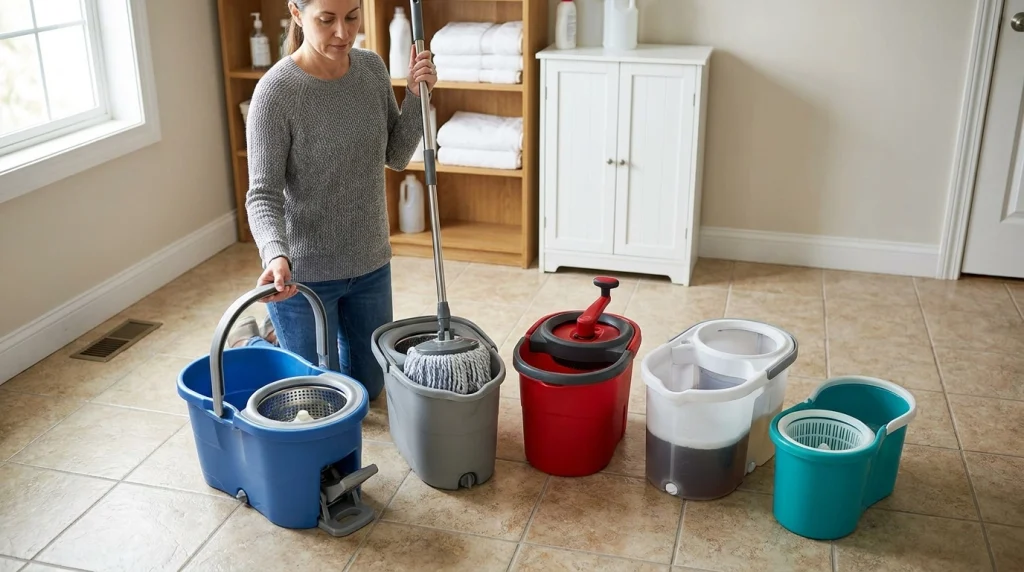
Manual spin mops differ mainly in how they activate the wringer. Bucket layout also matters, particularly when managing dirty water.
1. Foot-Pedal Spin Mops
A foot-pedal spin mop uses a pedal connected to the bucket’s spinning basket. Pressing it rotates the wet mop head and removes excess water.
This design keeps your hands on the mop handle rather than inside the bucket.
Advantages:
- Reduces repeated squeezing and twisting of wet fibers.
- Offers simple control over wringing duration.
- Works well for routine household floor cleaning.
- Often includes washable microfiber replacement heads.
Limitations:
- Requires enough floor space to operate the pedal.
- Pedal parts may wear with heavy use.
- The bucket can move if placed on an unstable surface.
The O-Cedar EasyWring is a familiar example of this design. Its pedal activates the basket while the user holds the mop handle.
Best for: People who want straightforward wringing without repeatedly pushing down using their arms.
2. Push-Handle Spin Mops
A push-handle spin mop uses downward movement to activate its spinning mechanism. Depending on the model, the handle may contain a spring or gear assembly.
You position the mop in the basket and press down repeatedly. This action spins the head and removes water.
Advantages:
- No foot pedal to operate.
- Often available with compact buckets.
- Can be convenient in narrow cleaning spaces.
- Allows repeated wringing without touching the mop fibers.
Limitations:
- Requires downward arm pressure.
- Handle mechanisms can jam when improperly aligned.
- Some models require unlocking the handle before spinning.
Push-handle systems can suit people who prefer standing steadily while operating the wringer. However, users with wrist or shoulder discomfort may prefer a pedal model.
3. Hand-Crank and Twist-Operated Spin Mops
Some manual systems use a hand crank or twisting action to drive the wringer. These designs are less common than pedal and push-handle models.
The user rotates a control mechanically rather than pressing a foot pedal. Operation varies considerably between products.
Advantages:
- Doesn’t require stepping on a pedal.
- Offers direct control over manual wringing.
- May suit specialized or compact cleaning systems.
Limitations:
- Repeated turning can strain hands or wrists.
- Replacement parts may be difficult to find.
- Crank mechanisms add components that need occasional cleaning.
Check the product demonstration before purchasing. Some products advertised as hand-operated mops use a press mechanism rather than a true rotating crank.
4. Dual-Compartment Manual Spin Mops
A dual-compartment spin mop separates clean water from dirty rinse water. These systems may use either a foot-pedal or push-handle wringer.
The distinction lies in the bucket rather than the spinning mechanism.
Advantages:
- Helps avoid repeatedly dipping the mop into heavily soiled water.
- Useful when cleaning several rooms.
- Provides more organized rinsing and wringing.
- Can reduce how often fresh cleaning water becomes contaminated.
Limitations:
- Usually takes more storage space.
- Contains additional chambers that require washing.
- Some systems involve more filling and draining steps.
A true clean-water separation system differs from a bucket with separate rinse and spin areas. If both areas share the same dirty water, it isn’t fully separating clean and dirty water.
The O-Cedar RinseClean illustrates a dual-reservoir approach. It’s useful to distinguish this from a standard single-bucket spin mop.
5. Compact Manual Spin Mops
Compact spin mops prioritize smaller buckets and easier storage. They commonly use push-operated handles, although designs vary.
These systems suit apartments, small kitchens, and homes with limited utility space.
- Strength: Smaller storage footprint.
- Trade-off: More frequent water changes during larger cleaning sessions.
- Best use: Small, regularly maintained floor areas.
Compact doesn’t automatically mean lightweight when filled. Check bucket capacity and lifting comfort before purchasing.
Section Takeaway: Pedal models emphasize convenient wringing, while push-handle models emphasize compact operation. Water-separated buckets offer an additional advantage for larger cleaning jobs.
Manual Spin Mop Types Compared
The table below compares the major designs by mechanism, physical effort, and practical use. These are design characteristics rather than laboratory performance ratings.
| Mop Type | Wringing Method | Main Advantage | Main Limitation | Best For |
|---|---|---|---|---|
| Foot-pedal | Foot-operated spinner | Less arm effort | Pedal needs space | Regular household cleaning |
| Push-handle | Downward handle pressure | No pedal required | More arm effort | Small or medium rooms |
| Hand-crank or twist | Manual rotation | Direct mechanical control | Hand and wrist effort | Specialized preferences |
| Dual-compartment | Pedal or push mechanism | Cleaner water management | More components | Multi-room cleaning |
| Compact | Usually push-operated | Easier storage | Smaller water capacity | Apartments |
Remember that these categories can overlap. A dual-compartment system may also use a pedal, while a compact mop may use a push-handle spinner.
Independent consumer testing also shows why usability matters. CHOICE’s comparison of mop types discusses practical issues such as wringing, handling, and stain removal.
Which Manual Spin Mop Works Best for Each Floor Type?
The best spin mop depends on both the floor material and the amount of moisture it can safely tolerate. A powerful wringer doesn’t make every mop suitable for every surface.
Tile and Grout
Sealed ceramic and porcelain tiles generally work well with microfiber spin mops. Their textured surfaces may require repeated passes to lift trapped soil.
Choose a pedal or dual-compartment system for larger tiled spaces. Use a separate grout brush when dirt sits below the tile surface.
Hardwood and Engineered Wood
Wood flooring requires greater caution. Excess water can enter joints and damage the finish or underlying material.
The National Wood Flooring Association advises against wet mopping and recommends appropriate cleaners for the floor finish.
Use a spin mop only if your flooring manufacturer permits damp mopping. Keep the head barely damp and prevent pooling near board edges.
Laminate Flooring
Laminate floors can develop swollen edges when water enters vulnerable seams. A well-wrung mop reduces moisture but doesn’t eliminate this risk.
A compact microfiber spin mop may work on flooring specifically approved for damp cleaning. Dry any visible standing water promptly.
Vinyl and Luxury Vinyl Plank
Many vinyl and LVP floors tolerate routine damp mopping when their manufacturer permits it. A microfiber pedal mop offers convenient moisture control.
Avoid flooding plank seams or using concentrated cleaning chemicals. Surface-safe products and clean mop heads matter more than aggressive scrubbing.
Natural Stone and Concrete
Stone floors need cleaners compatible with their specific material and sealer. Acidic cleaners can damage certain natural stones, including marble and limestone.
Sealed concrete may tolerate damp mopping, while unsealed or specialty finishes require different care. Always follow the finish manufacturer’s instructions.
Safety note: Check your flooring manufacturer’s care guide and cleaner label before using any cleaning solution or applying moisture to sensitive surfaces.
How Do You Choose the Right Manual Spin Mop?
Start with the physical operation, not the number of accessories. A comfortable, easy-to-clean mop will usually be more useful than a complicated system.
Check the Wringing Mechanism
Consider whether repeated foot pressure or downward arm pressure feels easier. Test the movement when possible, especially if you have mobility limitations.
Inspect the Bucket Design
Look for a stable base, accessible draining, and a removable wringer. Buckets with awkward corners can retain dirty water after cleaning.
For larger homes, cleaner water separation deserves special attention.
Look for Replacement Mop Heads
A reusable microfiber head loses effectiveness as its fibers wear. Replacement availability matters more than receiving several unusual accessories.
Check head diameter, attachment shape, and model compatibility. Mop refills aren’t universally interchangeable.
Consider Handle Length and Storage
A handle that’s too short encourages bending. An overly long handle can feel awkward in narrow rooms.
Before choosing, check:
- Handle height when fully extended.
- Bucket dimensions and filled weight.
- Storage space beside cleaning supplies.
- Ease of removing the head for washing.
- Replacement component availability.
For 2026 buyers, I would prioritize a reliable wringer and readily available refills over extra features. Those two details affect everyday use long after the initial purchase.
How Do You Use a Manual Spin Mop Correctly?
Proper technique improves cleaning results and helps prevent streaks. The goal is controlled moisture rather than simply making the mop as wet as possible.
Step-by-Step Cleaning Method
- Remove debris: Sweep or vacuum loose grit before wet cleaning.
- Prepare the bucket: Fill to the specified level with water and a compatible cleaner.
- Wet the mop: Saturate the fibers according to the manufacturer’s instructions.
- Wring thoroughly: Operate the spinner until the head reaches the appropriate dampness.
- Mop small sections: Use overlapping strokes without flooding the floor.
- Rinse frequently: Remove trapped dirt and replace visibly dirty water.
- Inspect the floor: Wipe away remaining moisture when necessary.
- Clean the equipment: Empty the bucket and wash the reusable head.
What Cleaning Solution Should You Use?
Use a product approved for your flooring and mop system. A pH-neutral cleaner has a formulation designed to avoid strong acidity or alkalinity.
For shoppers comparing cleaning chemicals, the EPA Safer Choice program identifies products meeting its ingredient and performance standards.
Avoid adding extra detergent to make the water foam. Excess cleaner can leave residue that causes streaks and attracts dirt.
Safety note: Follow product dilution directions, never mix household cleaning chemicals, and confirm compatibility with your floor finish.
How Do You Maintain a Manual Spin Mop?

Good maintenance protects the wringing mechanism and prevents odors. Leaving a damp microfiber head inside a closed bucket encourages unpleasant smells.
After Every Cleaning Session
- Empty dirty water completely.
- Rinse the bucket and spinning basket.
- Remove hair and debris from the mop fibers.
- Wash the microfiber head as its care label directs.
- Allow components to dry before storage.
Cleaning the Microfiber Head
Many detachable microfiber mop heads are machine washable. However, washing temperature and detergent requirements vary by manufacturer.
Avoid fabric softener unless the care instructions specifically permit it. Softener can coat microfiber and reduce its ability to collect moisture and dirt.
Maintaining the Mechanical Parts
Inspect pedal joints, handle locks, and spinning baskets occasionally. Remove hair or debris that interferes with movement.
Never force a jammed spinner. Check the manual before disassembling any internal mechanism.
Replace a worn head when washing no longer restores its cleaning performance. A damaged wringer may require a model-specific replacement rather than lubrication or improvised repair.
Common Spin Mop Problems and Mistakes
Most everyday spin mop complaints involve moisture control, dirty water, or mechanical operation. The solutions are often simple.
Why Does My Spin Mop Leave Streaks?
Streaks commonly result from excess cleaner, dirty water, or a heavily saturated mop head.
- Measure cleaning solution according to its label.
- Replace dirty bucket water sooner.
- Rinse the mop head thoroughly.
- Use less moisture on subsequent passes.
Why Won’t My Spin Mop Spin?
Check whether the handle is locked or the mop head sits incorrectly in the wringer. A misaligned basket can also prevent rotation.
Don’t force the pedal or handle. Inspect the manufacturer’s troubleshooting guidance if basic adjustments fail.
Why Does My Mop Smell Bad?
A damp mop stored without airflow can develop persistent odors. Dirty residue in the bucket may contribute.
Wash the head correctly, rinse the bucket, and dry both thoroughly. Replace the head when odors remain despite appropriate cleaning.
Can a Spin Mop Damage Floors?
Yes, when used incorrectly. Excess water, abrasive debris, unsuitable chemicals, and damaged mop components can harm some flooring.
Keep the head clean and use only the amount of moisture approved for your surface.
Safety note: Stop using the mop if you notice finish discoloration, swelling, unusual slipperiness, or visible surface damage. Check your floor manufacturer’s care instructions.
Frequently Asked Questions
What is the best type of manual spin mop?
A foot-pedal microfiber spin mop is a practical starting point for routine household cleaning. It offers convenient wringing without requiring repeated downward arm pressure. For larger cleaning areas, consider a dual-compartment system that separates clean and dirty water.
Is a pedal spin mop better than a push-handle spin mop?
Neither design is universally better. Pedal systems suit users who prefer operating the wringer with their feet, while push-handle systems avoid foot controls. Choose based on physical comfort, bucket stability, available storage, and wringing reliability.
Can manual spin mops clean hardwood floors?
Only when the hardwood flooring manufacturer approves damp mopping. The mop should remain barely damp, and water must not collect near seams. Some wood finishes require specialized cleaning methods, so a spin mop isn’t automatically suitable.
Do dual-compartment spin mops keep water clean?
They can help prevent dirty rinse water from mixing with a separate clean-water reservoir. However, performance depends on the system’s construction. A bucket with separate rinsing and spinning sections does not necessarily provide true clean-water separation.
How often should you wash a spin mop head?
Rinse the head after every use and wash it according to the manufacturer’s instructions. Wash more thoroughly after heavily soiled floors. Let the head dry completely before storage, and replace it if the fibers become damaged or persistently dirty.
Are manual spin mops better than traditional string mops?
Manual spin mops make water removal more convenient by using a mechanical wringer. Traditional string mops may still work well for some cleaning jobs. The better choice depends on moisture control, floor compatibility, cleaning area, and personal preference.
Do manual spin mops need electricity?
No. Manual spin mops use mechanical force from a pedal, push-handle, or hand-operated mechanism. They don’t need batteries or charging. Electric spinning mops are a different category and may use motors to rotate cleaning pads against the floor.
Final Thoughts: Which Manual Spin Mop Is Worth Choosing?
Understanding manual spin mop types makes choosing a cleaning system easier. The important differences are how the wringer operates, how water stays separated, and how comfortably the mop handles your floors.
For most everyday cleaning routines, a foot-pedal microfiber spin mop offers a sensible balance of convenience and control. A push-handle design can be more practical when storage space matters.
If you clean several rooms regularly, consider a genuine clean-and-dirty-water separation system. Whatever you choose, keep the head clean and follow your floor manufacturer’s moisture recommendations.
My final recommendation: Choose a mop that is comfortable to operate, easy to maintain, and suitable for your flooring. Reliable water control and accessible replacement heads matter more than unnecessary extras.