
Microfiber vs Cotton Spin Mop Head: Which Cleans Better?

Quick Answer
Microfiber is the better spin mop head material for most homes. It traps fine dirt effectively, stays relatively lightweight, and makes moisture easier to control. Cotton remains useful for absorbent, traditional wet mopping on water-tolerant floors. The CDC’s cleaning equipment guidance also identifies advantages of microfiber over cotton for collecting dirt and microorganisms.
Key Differences
- Everyday cleaning: Microfiber captures fine dust, footprints, and light residue effectively.
- Liquid spills: Cotton absorbs water well, although saturated heads can become heavy.
- Delicate floors: A carefully wrung microfiber head generally offers better moisture control.
- Drying and maintenance: Microfiber often dries faster, while thick cotton loops may retain moisture longer.
- Long-term value: Quality microfiber can remain effective through repeated washing when maintained correctly.
My Recommendation
- Choose microfiber for routine household cleaning and floors that require limited moisture.
- Consider cotton for traditional wet cleaning on suitable tile or other water-resistant surfaces.
Choosing between a microfiber and cotton spin mop head sounds simple until you consider your floors. I’ve found that the fabric affects how comfortably you mop, how much moisture remains, and how clean the surface looks afterward.
In this guide, I’ll compare both materials and explain where each performs best. I’ll also cover floor compatibility, maintenance, replacement costs, and common mistakes.
In This Guide
- What Is the Difference Between Microfiber and Cotton?
- Which Spin Mop Head Cleans Better?
- Microfiber vs Cotton Spin Mop Head Comparison
- Which Mop Head Is Best for Different Floors?
- Which Mop Head Lasts Longer?
- How Do You Get Better Results With Either Mop?
- Which Spin Mop Head Should You Buy?
- Frequently Asked Questions
- Final Verdict: Microfiber or Cotton?
What Is the Difference Between Microfiber and Cotton?
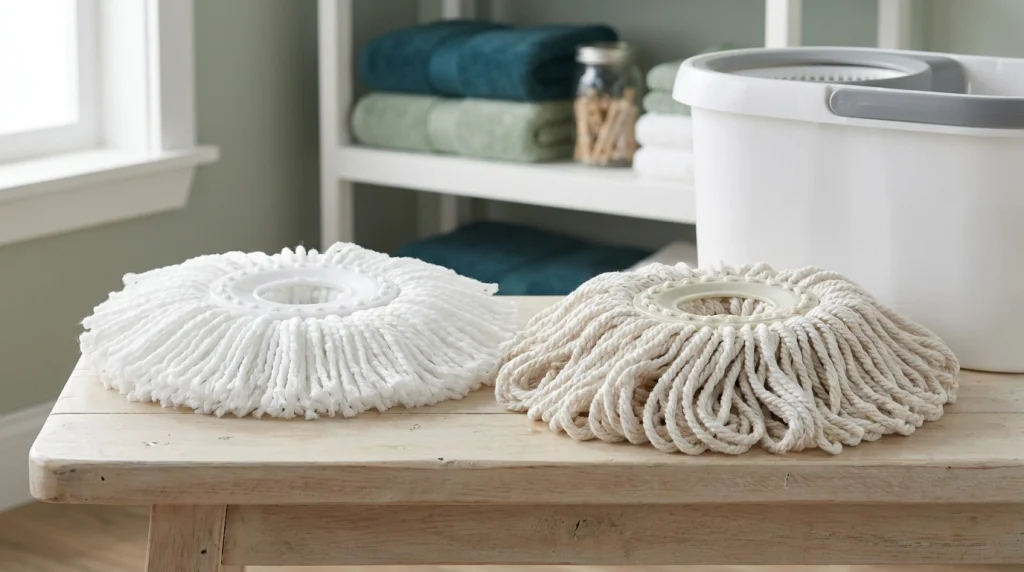
The biggest difference is how the fibers collect dirt and manage water. Microfiber uses fine synthetic strands, while cotton uses natural plant fibers.
What Is a Microfiber Spin Mop Head?
A microfiber spin mop head is a removable cleaning attachment made from fine synthetic fibers. Most use polyester and polyamide blends designed to capture dust, moisture, and loose grime.
Many microfiber strands have a split structure that helps them collect small particles. That makes them useful for routine floor cleaning without heavy scrubbing.
I particularly like microfiber for kitchens where light grease, crumbs, and footprints appear together. A properly cleaned head handles these everyday messes without feeling bulky.
What Is a Cotton Spin Mop Head?
A cotton spin mop head uses natural cotton yarn or loops to absorb water and lift soil. Its soft, absorbent strands suit traditional wet-mopping tasks.
Cotton can carry substantial water into the cleaning area. However, that advantage becomes a drawback when you need a nearly dry mop.
Thick cotton loops also take more effort to rinse and dry completely. Their performance depends on yarn quality, density, and the bucket’s wringing mechanism.
Does Mop Head Construction Matter?
Absolutely. Two mop heads made from the same material can perform differently because of their construction.
- Strand thickness: Fine strands may reach small surface textures more easily.
- Loop density: Denser arrangements can improve surface contact.
- Head diameter: Larger heads cover more floor but may struggle in tight spaces.
- Backing design: A secure attachment helps the head remain stable during spinning.
- Fiber quality: Better construction can reduce shedding and premature wear.
Don’t judge a replacement head by material alone. Check whether it fits your existing spin mop system.
Which Spin Mop Head Cleans Better?
Microfiber generally wins for everyday household dirt and fine particles. Cotton remains effective for conventional wet mopping, especially when the floor tolerates water.
Dust and Fine Dirt Removal
Microfiber’s fine strands help collect tiny particles rather than simply pushing them across the floor. This becomes particularly useful around entryways and kitchens.
Cotton collects dirt too, but its larger fibers may be less effective with fine dust. The difference becomes more noticeable when cleaning lightly textured surfaces.
Research summarized in CDC infection-control guidance has documented microfiber’s advantages in soil and microorganism removal. Those findings support the material’s cleaning potential, although household spin mop performance varies by design.
How Do They Handle Spills?
Both materials absorb liquid, but the amount and speed depend on the fabric construction. Cotton is naturally absorbent, while many split-microfiber designs also hold substantial moisture.
For a small kitchen spill, I prefer a clean microfiber head followed by a dry cloth. With a larger spill, I remove excess liquid first instead of soaking the mop.
Neither material should replace a wet vacuum or absorbent towels for standing water. Too much liquid increases slipping and floor-damage risks.
Which Leaves Fewer Streaks?
Microfiber often has an advantage when you use a small amount of appropriate cleaner. Its fine strands help distribute moisture across the floor.
Streaks aren’t always caused by the mop fabric. Excess detergent, dirty rinse water, and insufficient wringing are common problems.
When a floor looks cloudy after mopping, I would check the cleaner concentration first. Changing the mop head won’t solve heavy product buildup by itself.
What About Stubborn Grime?
Neither mop material works miracles on hardened grease or dried food. The right cleaning solution and adequate contact time matter more.
- Remove loose dirt before wet cleaning.
- Apply a floor-approved cleaner to stubborn marks.
- Allow the product’s recommended dwell time.
- Gently loosen residue without abrasive scrubbing.
- Collect the loosened dirt with a clean mop head.
Safety note: Check your flooring manufacturer’s instructions and cleaning-product label before treating stubborn stains. Never combine cleaning chemicals.
Section Takeaway: Microfiber is the stronger all-around choice for routine cleaning. Cotton still has a place where traditional wet mopping is appropriate.
Microfiber vs Cotton Spin Mop Head Comparison
This table summarizes practical differences you can expect from typical household spin mop heads. Individual models may behave differently depending on fiber quality and wringer design.
| Feature | Microfiber | Cotton |
|---|---|---|
| Fiber material | Synthetic polyester/polyamide | Natural cotton yarn |
| Fine dust pickup | Generally excellent | Good, but often less effective |
| Water absorption | High in quality designs | Naturally high |
| Weight when wet | Often lighter | Can become heavy |
| Moisture control | Generally easier | Depends heavily on wringing |
| Drying after washing | Often faster | Often slower |
| Laundry sensitivity | Avoid softener and damaging chemicals | Follow cotton head care label |
| Best application | Everyday household cleaning | Traditional wet mopping |
There isn’t one universal absorption or durability rating for either fabric. Product construction and cleaning habits make a substantial difference.
Which Mop Head Is Best for Different Floors?
The ideal material depends on the floor’s tolerance for moisture. A good mop should clean effectively without leaving puddles or damaging protective finishes.
Hardwood and Engineered Wood Floors
Microfiber is my preferred material for dry dusting and carefully controlled cleaning. However, neither a cotton nor microfiber spin mop is automatically safe for wood flooring.
The National Wood Flooring Association’s maintenance guidance warns against wet mopping because excess moisture can damage wood and its finish.
For wood, I favor dry microfiber cleaning and the manufacturer’s recommended floor-care method. Use any damp cleaning only when the flooring maker explicitly permits it.
Laminate Flooring
Microfiber is generally the more practical option because laminate needs careful moisture control. Water collecting near plank seams can cause damage.
Choose an approved cleaner and wring the head thoroughly. Avoid leaving visible standing water.
Vinyl and Luxury Vinyl Plank
Both materials can work on suitable waterproof or water-resistant vinyl products. I generally prefer microfiber because it handles everyday dust and footprints efficiently.
Keep moisture within the flooring manufacturer’s limits, even when a product is labeled waterproof. Avoid aggressive cleaners that could affect the wear layer.
Ceramic and Porcelain Tile
Tile offers more flexibility, provided the grout and installation are in good condition. Both microfiber and cotton can clean sealed, water-tolerant tile effectively.
Microfiber is useful for routine cleaning and textured surfaces. Cotton works for traditional wet cleaning but requires careful rinsing.
Natural Stone and Concrete
Stone and concrete need special attention because finishes and sealers vary. A gentle microfiber head is often practical, but material alone doesn’t guarantee compatibility.
Use a cleaner approved for the surface and its sealer. Acidic DIY solutions can harm certain stones.
Safety note: Always follow your floor manufacturer’s cleaning instructions. Don’t assume a water-resistant floor can safely remain wet after mopping.
Section Takeaway: Microfiber is more versatile across common household floors. The permitted cleaning method still matters more than the mop material.
Which Mop Head Lasts Longer?
Quality microfiber can provide excellent long-term value, but proper washing matters. Cotton may also last well, especially when made from strong, tightly constructed yarn.
Washing Microfiber Spin Mop Heads
Microfiber needs gentle laundering to preserve its cleaning structure. Fabric softener can coat the fibers and reduce their effectiveness.
- Remove the mop head according to the manufacturer’s instructions.
- Shake loose dirt into a trash container.
- Wash using a suitable mild detergent.
- Avoid fabric softener and chlorine bleach unless specifically permitted.
- Dry using the manufacturer’s recommended temperature or air-dry completely.
The CDC recommends appropriate cleaning and reprocessing of reusable mop equipment. It also notes that microfiber can be incompatible with certain high-pH or chlorine-based products.
Washing Cotton Spin Mop Heads
Cotton mop heads also need thorough washing and drying. Dense loops can hold moisture deep within the head.
Rinse away detergent and dirt before drying. Never store a damp cotton head in a closed bucket.
When Should You Replace a Mop Head?
I prefer condition-based replacement rather than a fixed calendar schedule. Cleaning frequency and laundry habits make universal replacement intervals unreliable.
Watch for these warning signs:
- Persistent unpleasant odors after proper washing.
- Noticeable loss of dirt pickup.
- Frayed, thinning, or shedding strands.
- Damaged attachment points.
- Residue that remains trapped after cleaning.
- A head that no longer spins or wrings correctly.
A spare replacement head is particularly useful in busy households. You can use a clean head while the other dries.
Which Is Better for the Environment?
Cotton is a natural fiber, while conventional microfiber is synthetic. Neither material has a universally lower environmental impact across every product.
Cotton cultivation and processing use resources, while synthetic fibers can shed microplastics during laundering. Longevity, washing practices, and replacement frequency also matter.
Buying durable, compatible heads and maintaining them properly can reduce unnecessary replacements. That’s a practical starting point regardless of material.
How Do You Get Better Results With Either Mop?
Good technique often makes a bigger difference than switching fabrics. Use a clean head, limit detergent, and avoid carrying dirty water across the floor.
Step-by-Step Spin Mopping Method
- Remove debris: Sweep or vacuum first to prevent grit from scratching the surface.
- Prepare cleaner: Follow the flooring and cleaner manufacturers’ instructions.
- Wet the mop: Saturate the head only as needed for the approved cleaning method.
- Spin thoroughly: Adjust remaining moisture to suit the floor.
- Mop in sections: Work from the far side of the room toward the exit.
- Rinse frequently: Change dirty water before it spreads residue.
- Allow drying: Keep people and pets away until the floor is safe to walk on.
For lightly soiled floors, a small amount of approved cleaning solution is usually enough. Extra detergent can leave a sticky film.
How Often Should You Mop?
Mopping frequency depends on foot traffic and visible dirt. These are practical household starting points, not rules for every floor.
- Busy kitchen: Spot-clean daily and consider wet cleaning weekly when permitted.
- Bathroom tile: Clean regularly, often around once per week.
- Hallways: Clean weekly or when footprints accumulate.
- Low-traffic bedrooms: Clean as needed, often less frequently.
- Wood floors: Prioritize dry cleaning and follow the finish manufacturer’s care schedule.
Should You Add Disinfectant?
Routine floor cleaning doesn’t always require disinfection. Cleaning removes soil, while disinfection uses an appropriate product to inactivate specified microorganisms.
The EPA’s guidance on greener cleaning products notes that many ordinary floor-cleaning tasks don’t typically need disinfectants.
If disinfection is necessary, use a product labeled for that surface and purpose. Follow dilution, contact time, and rinsing directions exactly.
Safety note: Never mix bleach, ammonia, vinegar, or other cleaning chemicals. Confirm the product is safe for your floor finish and mop-head material.
Section Takeaway: Clean water, correct dilution, and proper wringing are essential. Even an excellent mop head performs poorly when overloaded with dirty solution.
Which Spin Mop Head Should You Buy?

For most household buyers in 2026, I’d start with a quality microfiber replacement head. However, fit and construction are just as important as the fiber itself.
Check Compatibility First
Spin mop replacement heads are not universally interchangeable. Measure your current attachment and check its locking design.
Before buying, confirm these details:
- Compatible mop brand and model.
- Attachment diameter and connector type.
- Number of replacement heads included.
- Machine-washing instructions.
- Suitable floor types and intended use.
- Availability of matching replacements.
Systems from brands such as O-Cedar use specific head designs. A generic replacement may fit poorly even when its advertised diameter looks similar.
Consider the Total Cost
The cheapest replacement head isn’t always the most economical. Compare replacement frequency, washing requirements, and multi-pack value.
For example, buying two durable heads may be more practical than frequently replacing one poorly constructed head. Having a spare also helps maintain a cleaner routine.
Who Should Choose Cotton?
Cotton remains a reasonable choice when you prefer traditional wet-mopping techniques. It can also make sense if your existing equipment specifically requires cotton heads.
Just account for the added drying time and potential wet weight. Don’t use extra water simply because the mop can hold it.
Who Should Choose Microfiber?
Microfiber best suits households that want a lighter, more versatile cleaning head. It’s particularly attractive for routine maintenance across several compatible floor types.
When selecting a cleaner, the EPA Safer Choice product directory can help you identify products meeting its ingredient and performance criteria. Floor compatibility still needs separate confirmation.
Frequently Asked Questions
Is a microfiber spin mop better than cotton?
Microfiber is generally better for everyday household cleaning because it captures fine particles effectively and often offers easier moisture control. Cotton remains useful for conventional wet cleaning on water-tolerant floors. Overall performance depends on fabric quality, mop design, and technique.
Which spin mop head absorbs more water?
Both materials can be highly absorbent. Cotton naturally absorbs moisture, while split microfiber can also hold considerable amounts of liquid. Actual capacity depends on strand density, construction, and product quality, so neither material always wins.
Can microfiber spin mop heads be machine-washed?
Many microfiber replacement heads are machine-washable. Use the manufacturer’s specified detergent, wash cycle, and drying method. Avoid fabric softener, which can coat the fibers and reduce cleaning performance. Check the label before using bleach or heat.
Is microfiber safe for hardwood floors?
Microfiber is useful for dry dusting hardwood floors. However, using a wet microfiber spin mop can still damage moisture-sensitive flooring. Follow your flooring manufacturer’s instructions and use an approved wood-floor cleaner and method when needed.
Do cotton mop heads cause streaks?
Cotton doesn’t automatically cause streaks. Excess cleaning solution, dirty water, or insufficient wringing can leave visible residue. A clean cotton head and correct detergent dilution can improve results on compatible floors.
How often should I replace a spin mop head?
Replace the head when it develops persistent odors, sheds fibers, loses cleaning performance, or becomes damaged. There’s no reliable universal replacement interval because washing frequency, construction, and household use vary considerably.
Can I use the same mop head in the kitchen and bathroom?
It’s better to keep separate, clearly marked heads for different cleaning areas. This reduces the chance of transferring bathroom contamination into food-preparation areas. Wash and dry reusable heads thoroughly after each cleaning session.
Final Verdict: Microfiber or Cotton?
If I were choosing one spin mop head for everyday household cleaning, I’d choose microfiber. Its fine-particle pickup, manageable weight, and versatile design make it a practical option.
Cotton still deserves consideration for traditional wet mopping on suitable surfaces. It isn’t automatically inferior, but its tendency to retain water requires more careful handling.
My final advice is simple: choose the material that fits your floor, mop system, and routine. Then focus on clean water, proper wringing, and regular head maintenance.
Ready to replace your mop head? Check your existing model number, compare compatible microfiber and cotton options, and choose a washable head designed for your floors.