
Should You Mop Floors Every Day? A Floor-by-Floor Guide

Quick Answer
No, you usually should not wet-mop every floor every day. Daily dry cleaning and immediate spill cleanup make sense in busy areas, while full damp mopping is better scheduled around traffic, dirt, and floor type. Wood needs extra moisture caution, so check National Wood Flooring Association guidance before using wet or steam methods.
A smarter daily routine
- Remove grit first: Sweep, vacuum, or use a microfiber dust mop in busy areas.
- Spot-clean spills: Wipe food, mud, pet accidents, and sticky spots promptly.
- Damp mop selectively: Mop kitchens, entries, or bathrooms when they are visibly dirty.
- Limit moisture: Hardwood and laminate should never be left soaked or visibly wet.
- Use steam carefully: Steam only surfaces whose flooring manufacturer specifically approves it.
Quick rule
- Clean according to the mess you have, not because the calendar says the entire floor needs mopping.
I’ve found that the cleanest-looking homes aren’t always the ones where someone wet-mops every day. The better approach is matching your floor-cleaning routine to the surface, traffic, and type of dirt you’re dealing with.
This guide explains when daily mopping helps, when it becomes overcleaning, and how steam mops fit into a practical 2026 floor-care routine.
In This Guide
- Should you mop floors every day?
- How often should you mop each floor type?
- What should daily floor cleaning include?
- Can mopping every day damage your floors?
- Should you use a steam mop every day?
- What is the best daily floor-cleaning routine?
- When should you mop more often?
- What daily mopping mistakes should you avoid?
- Frequently asked questions
Should You Mop Floors Every Day?
Most homes do not need complete wet mopping every day. Daily debris removal and spot cleaning are usually more useful than repeatedly washing the entire floor.
Think about what shoes, pets, children, cooking, and open doors bring onto the floor. A busy kitchen may need attention each evening, while a guest bedroom may stay clean for days.
- Daily: Remove crumbs, grit, hair, and obvious spills from high-traffic areas.
- Several times a week: Damp mop busy areas when dirt or footprints remain after dry cleaning.
- Weekly or as needed: Give suitable floors a more complete damp cleaning.
- Immediately: Clean sticky liquids, pet accidents, mud, grease, or anything that could stain.
Daily mopping becomes more reasonable in commercial-style traffic, homes with several pets, or entrances that collect mud. Even then, you can usually target dirty zones rather than washing every square foot.
Definition: Daily mopping means maintaining hard floors every day. It does not have to mean soaking or wet-mopping the entire home every 24 hours.
How Often Should You Mop Each Floor Type?

The right schedule changes with the material. Moisture-tolerant tile can handle a different routine from hardwood, laminate, or natural stone.
I use the following ranges as practical starting points, not rigid rules. Increase or reduce them based on visible soil, traffic, pets, and the flooring manufacturer’s instructions.
| Floor type | Routine damp-mop starting point | Daily care | Main caution |
|---|---|---|---|
| Hardwood | About weekly or when needed | Dry microfiber or hard-floor vacuum | Standing water and steam |
| Engineered wood | About weekly or as approved | Remove grit and spills | Moisture entering seams |
| Laminate | Weekly to every two weeks | Vacuum or dry mop | Swollen edges from excess water |
| Vinyl/LVP | Once or twice weekly | Sweep and spot-clean | Residue, abrasives, and heat |
| Ceramic/porcelain tile | One to three times weekly | Sweep traffic areas | Dirty grout and cleaner buildup |
| Natural stone | Weekly or as needed | Remove abrasive grit | Acidic cleaners and damaged sealer |
| Sealed concrete | Weekly or based on traffic | Sweep or vacuum | Cleaner residue and coating compatibility |
Rooms also matter. Kitchens, bathrooms, mudrooms, and entrances commonly need more attention than bedrooms or low-use spaces.
Safety note: Always follow the flooring manufacturer’s care guide when it recommends a different cleaner, moisture level, or schedule.
What Should Daily Floor Cleaning Include?
A good daily routine is mostly about preventing buildup. You do not need to turn every cleaning session into a full bucket-and-mop job.
Dry debris removal
Start by lifting grit, crumbs, dust, and pet hair. A microfiber flat mop, soft broom, or vacuum with a hard-floor setting works well for most homes.
This first step matters because dragging grit beneath a damp mop can create fine scratches. It also keeps your mop pad from becoming muddy too quickly.
Spot cleaning
- Blot drink spills before they spread.
- Lift sticky food with a damp cloth.
- Remove muddy paw prints before they dry.
- Clean grease near cooking areas promptly.
- Dry moisture near sinks, tubs, and exterior doors.
Cleaning is not always disinfecting
Routine floor cleaning and disinfection are different jobs. The CDC notes that ordinary cleaning is enough in many household situations, while disinfection becomes more relevant when illness or specific contamination is involved.
That means you do not need a strong disinfectant on the entire floor every day simply because people walked across it.
Safety note: Use disinfectants only as directed on their labels, and confirm that the product is suitable for your flooring.
Can Mopping Every Day Damage Your Floors?
Yes, daily wet mopping can cause problems when you use too much water, too much cleaner, or the wrong method. Damage risk depends heavily on the flooring material.
Moisture can enter seams
Hardwood, engineered wood, and laminate are the surfaces I treat most cautiously. Water sitting around joints can move below the visible wear layer.
Repeated moisture exposure may contribute to swelling, raised edges, finish problems, or distorted boards. A well-wrung microfiber pad is safer than a dripping string mop.
Cleaner residue can build up
Using extra cleaner does not make a floor extra clean. Repeated overdosing can leave a dull, sticky film that attracts more dirt.
- Measure concentrates: Follow the label instead of pouring by eye.
- Use compatible products: Match the formula to the floor finish.
- Avoid unnecessary mixtures: Combining household chemicals can be dangerous.
- Change dirty water: Do not keep spreading gray mop water across the room.
If you are shopping for a household cleaner, the EPA provides information about its Safer Choice program for products that meet its ingredient and performance requirements.
Safety note: Never assume vinegar, bleach, ammonia, or another DIY ingredient is safe for your floor. Check both the product label and flooring instructions first.
Should You Use a Steam Mop Every Day?
For most households, daily steam mopping is unnecessary. Steam can be useful for compatible surfaces, but heat and moisture make floor approval more important than frequency.
A steam mop is an electric floor-cleaning tool that heats water and passes vapor through a cleaning pad. The heat loosens stuck-on soil while the pad collects the released dirt.
Where steam makes the most sense
- Ceramic tile: Often a good candidate when tile, grout, and sealant are intact.
- Porcelain tile: Usually handles heat and moisture better than wood-based flooring.
- Some sealed concrete: Compatibility depends on the coating or sealer.
- Other floors: Use steam only when the flooring manufacturer specifically permits it.
Where I would be cautious
Wood flooring deserves special care. Industry guidance from the NWFA warns against wet mops and steam mops because long-term moisture can affect the finish and wood.
Laminate also contains moisture-sensitive layers beneath its surface. Luxury vinyl plank may resist spills, yet heat can still matter around seams or adhesives.
Natural stone creates another compatibility question because both the stone and its sealer can react differently to heat, moisture, or cleaners.
My practical rule: If I cannot confirm that the exact flooring product allows steam, I use a lightly damp microfiber mop instead.
Safety note: Steam-mop instructions and flooring warranties may differ. The flooring manufacturer’s care requirements should determine whether steam is acceptable.
What Is the Best Daily Floor-Cleaning Routine?
The best routine removes the mess with the least moisture and product necessary. I prefer a five-step process because it prevents most streaks and residue problems before they start.
- Clear the floor. Move lightweight objects and pick up anything that can catch the mop.
- Remove dry debris. Vacuum, sweep, or dry-mop from the room edges toward the exit.
- Spot-clean problem areas. Treat sticky spills instead of flooding the entire floor.
- Damp mop only when needed. Use the smallest amount of compatible cleaner and moisture that works.
- Let the floor dry fully. Keep people and pets away from wet areas until footing is safe.
I also change or rinse microfiber pads before they become saturated with dirt. Once a pad looks gray, continuing to mop often moves soil instead of lifting it.
How wet should the floor be?
After a normal damp-mop pass, I want a thin moisture film that disappears quickly. I do not want puddles, wet seams, or water collecting along baseboards.
Drying also matters for safety. OSHA identifies wet floors as a slip hazard in workplace guidance, and the same practical concern applies when people are walking through a freshly mopped home.
Cleaning tip: If you can see footprints forming behind you long after mopping, you may be using too much solution or leaving too much moisture.
When Should You Mop More Often?
Mopping frequency should respond to real conditions. Some homes genuinely need more frequent damp cleaning than a quiet, shoe-free household.
- Pets: Muddy paws, drool, litter tracking, and accidents create localized messes.
- Young children: Food drops and sticky spills can make kitchen floors dirty quickly.
- Outdoor shoes: Soil and fine grit increase wear in entrances and hallways.
- Rain or snow: Wet footwear can leave water, salt, or mud near doors.
- Cooking: Grease and food residue may collect around ranges and preparation areas.
- Allergy concerns: Regular dry dust removal can help keep visible dust and tracked debris under control.
I usually clean the affected zone first rather than mopping the entire house. A two-minute kitchen touch-up can be more useful than another full-floor wash.
What if someone in the home is sick?
Cleaning frequency may increase when illness is present, but cleaning and disinfecting should still be treated as separate steps. Follow current public-health guidance and the disinfectant label.
Safety note: Never mix cleaning or disinfecting chemicals, and keep products away from children and pets.
What Daily Mopping Mistakes Should You Avoid?
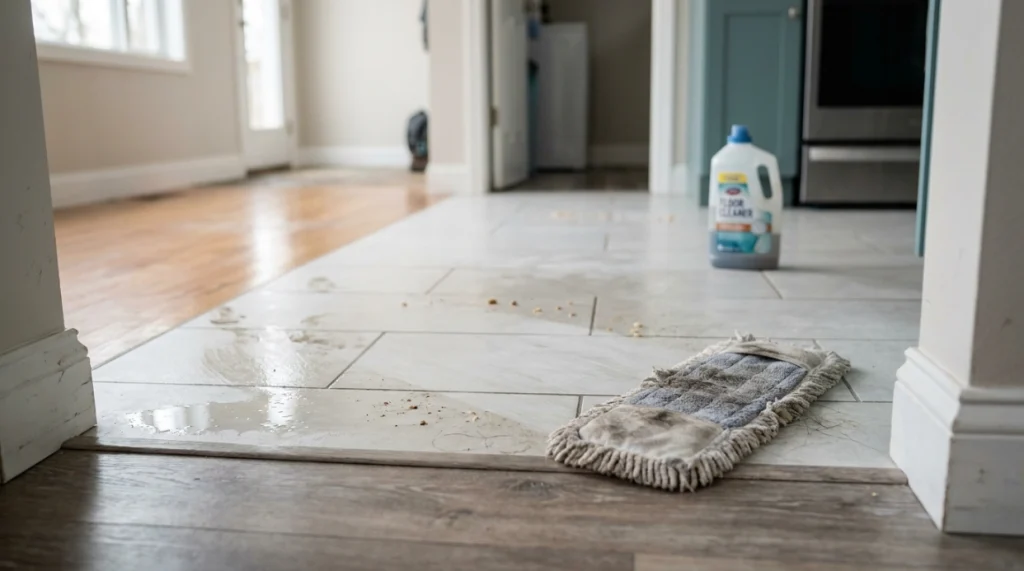
Overcleaning can create almost as many appearance problems as undercleaning. These are the mistakes I see most often when someone starts mopping every day.
- Mopping before vacuuming: Loose dirt turns into muddy streaks and gets caught beneath the pad.
- Using too much water: Excess moisture increases risk around wood and laminate seams.
- Adding extra cleaner: More product can leave haze, stickiness, or slippery residue.
- Using one cleaner everywhere: Tile, natural stone, wood, laminate, and vinyl have different care needs.
- Leaving a steam mop stationary: Concentrated heat and moisture can stress a small area.
- Ignoring dirty pads: A loaded microfiber pad cannot keep absorbing soil effectively.
- Walking on wet floors: Footprints return, and slippery surfaces create an unnecessary fall risk.
Another mistake is treating dullness as proof that the floor needs stronger cleaning. Dull floors sometimes have cleaner buildup rather than remaining dirt.
If repeated cleaning makes a surface look worse, stop adding products. Check the manufacturer’s care guide before trying a stronger chemical or aggressive scrubber.
Frequently Asked Questions
Is it bad to mop tile floors every day?
Daily tile mopping is not automatically harmful, but it is often unnecessary. If the tile is visibly dirty, use a compatible cleaner and avoid leaving residue in grout lines.
Should I mop my kitchen floor every day?
A busy kitchen may benefit from daily sweeping and spot cleaning. Full damp mopping can be done when grease, food residue, footprints, or sticky areas remain after those quicker steps.
How often should hardwood floors be mopped?
Many homes can use a light damp-cleaning schedule around once a week or as needed, but the floor manufacturer’s instructions should control. Remove dust and grit more frequently without soaking the wood.
Can I steam mop every day?
Daily steam cleaning is rarely necessary. Only steam floors explicitly approved for steam cleaning, and avoid assuming that a surface is steam-safe simply because it is described as sealed or waterproof.
Is mopping every day more hygienic?
Not necessarily. Hygiene depends on removing the relevant contamination with an appropriate method, not simply increasing mopping frequency.
Should I disinfect floors every day?
Routine household disinfection of entire floors is usually unnecessary unless there is a specific reason, such as illness or contamination. Follow current public-health guidance and use products approved for the surface.
What is the best mop for quick daily cleaning?
A washable microfiber flat mop is one of the most practical choices for routine debris and light damp cleaning. Steam mops, spin mops, cordless electric mops, and robot mops can also help when their cleaning method matches the floor.
The bottom line: You do not need to wet-mop every floor every day to maintain a clean home. Remove dry dirt often, clean spills quickly, and damp mop according to traffic and floor compatibility.
When you do mop, use less water and less cleaner than you might expect. Your floor’s care guide should always win over a one-size-fits-all cleaning schedule.
Before your next cleaning session, identify the flooring material in each room and build a simple schedule around it. That one step can prevent residue, moisture damage, unnecessary work, and many common mopping mistakes.