
Spin Mop Pedal Parts: Names, Functions, Common Problems, and Repairs

Quick Answer
Spin mop pedal parts control the foot-operated mechanism that rotates the wringer basket and helps remove water from the mop head. Depending on the model, the system may include a foot pedal, pivot or hinge, connecting linkage, return spring, drive mechanism, and mounting hardware. If the pedal feels loose, sticks, or stops spinning the basket, inspect these parts before replacing the entire bucket. For general cleaning and safe product use, follow the CDC’s cleaning and disinfecting guidance.
Common pedal problems and likely causes
- Pedal moves freely: A disconnected linkage, worn pivot, or damaged drive component may prevent engagement.
- Pedal feels stiff: Dried residue, trapped debris, or a damaged hinge may restrict movement.
- Basket will not spin: Check the pedal linkage, drive connection, basket seating, and any model-specific locking mechanism.
- Pedal stays down: A return spring or other resetting component may be damaged, displaced, or obstructed.
- Pedal cracks or detaches: The pedal, pivot, or mounting points may need a compatible replacement.
Before repairing the pedal
- Empty the bucket, disconnect any electrical power if the unit has powered components, and inspect the mechanism without forcing it.
- Identify the mop’s brand and exact model before ordering parts, because pedal and drive designs differ.
When a spin mop stops wringing properly, the pedal is an obvious place to look, but it isn’t always the real cause. I’ll explain how the foot-operated mechanism works, which parts commonly wear out, and how to troubleshoot a faulty pedal without damaging the bucket.
This guide also covers replacement compatibility, routine maintenance, and the differences between pedal-operated and handle-operated wringers. The goal is to help you find the actual problem before spending money on unnecessary parts.
In This Guide
- What are spin mop pedal parts?
- What parts make up a spin mop pedal mechanism?
- Why is my spin mop pedal not working?
- How do you troubleshoot a faulty spin mop pedal?
- How do you find the correct replacement parts?
- Pedal-operated vs. other spin mop wringers
- How do you maintain spin mop pedal parts?
- How does a working wringer help with floor cleaning?
- Frequently asked questions
What are spin mop pedal parts?
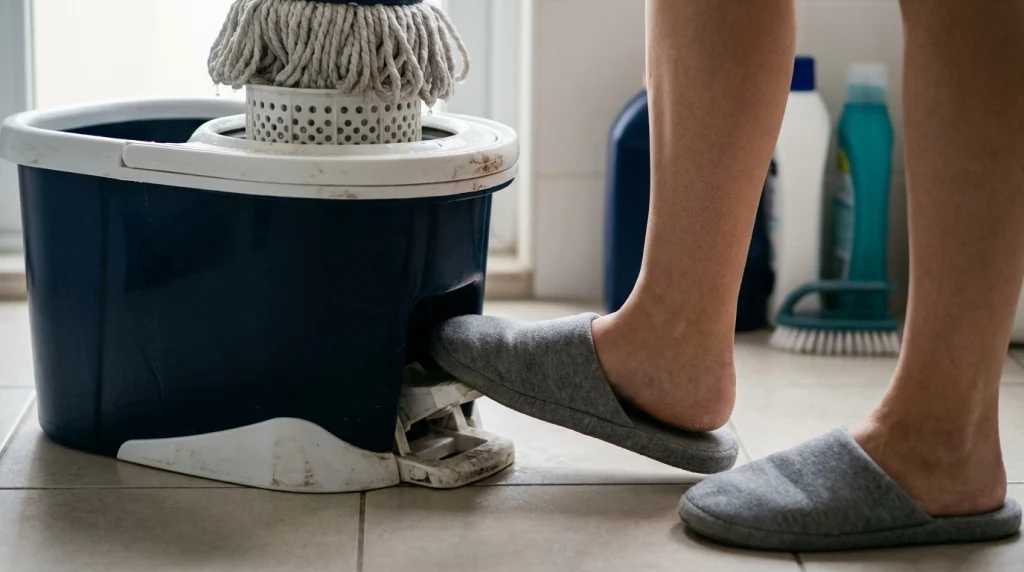
Spin mop pedal parts are the mechanical components that let you operate a bucket’s wringer with your foot. Pressing the pedal activates a drive system that rotates the basket on compatible models, helping extract excess water from the mop head.
How does a spin mop pedal work?
A pedal-operated spin mop uses foot pressure to engage a mechanical connection between the pedal and the wringer. The exact arrangement varies by manufacturer, so not every bucket contains the same springs, gears, or linkages.
In a typical design, the process follows this sequence:
- Pedal movement: Your foot pushes the pedal through its operating range.
- Drive engagement: A linkage or internal drive transfers that movement to the spinning mechanism.
- Basket rotation: The wringer basket turns and helps remove water from the mop head.
- Reset: The pedal returns to its resting position, either through a spring, the mechanism’s design, or another return arrangement.
Some systems use different internal designs, and a few spin mop buckets do not have a foot pedal at all. A handle-operated wringer, for example, relies on movement of the mop handle instead.
Why does the pedal matter?
A working pedal makes wringing easier and gives you better control over how wet the microfiber mop head remains. That matters when cleaning floors that tolerate only limited moisture.
However, the pedal doesn’t determine moisture output on its own. The mop head’s condition, basket design, loading, and operating technique also influence how much water remains in the fibers.
What parts make up a spin mop pedal mechanism?
The pedal assembly can contain several connected parts, but the exact components depend on the bucket model. Knowing their basic functions helps you describe the fault accurately when seeking a repair or replacement.
1. Foot pedal
The foot pedal is the external surface you press to operate the wringer. It may be made from molded plastic or another material selected for the manufacturer’s design.
Look for cracks, bent edges, excessive sideways movement, or a pedal that has separated from its mounting point. A visibly damaged pedal may need replacement rather than a makeshift repair.
2. Pivot or hinge
The pivot allows the pedal to move through its intended range. Depending on the design, it may use a molded hinge, pin, axle, or another joint.
A worn pivot can make the pedal wobble, bind, or disengage from the drive connection. Check for missing pins, broken mounting tabs, and uneven movement.
3. Connecting linkage
The linkage transfers pedal movement to the wringer’s drive mechanism. It may consist of a connecting rod, lever, or model-specific internal component.
If the pedal moves but the basket remains still, a disconnected or damaged linkage is one possible cause. The fault could also lie farther inside the drive system.
4. Return spring or resetting component
Some pedal mechanisms use a spring to return the pedal to its resting position. Other designs rely on different arrangements.
A displaced or broken spring can leave the pedal down, make it return slowly, or prevent consistent operation. Never assume a spring is present without checking the model’s parts diagram.
5. Drive mechanism and basket connection
The internal drive transfers motion to the spinning basket. Depending on the design, this may involve gears, a clutch-like connection, a shaft, or other mechanical parts.
If the pedal and linkage move normally but the basket doesn’t rotate, the drive mechanism or basket connection may be the problem. Replacing the external pedal alone won’t fix an internal failure.
6. Mounting hardware and bucket housing
Screws, clips, pins, brackets, and molded mounting points keep the assembly aligned. Some models use integrated plastic fittings instead of separate hardware.
Inspect these areas for missing fasteners, stripped holes, cracked plastic, or signs that the assembly has shifted. A broken bucket housing can make an otherwise functional replacement pedal unusable.
Why is my spin mop pedal not working?
A spin mop pedal may stop working because of a mechanical obstruction, loose connection, worn component, or problem with the basket drive. The symptom usually provides a useful starting point, but it doesn’t prove which part has failed.
The pedal moves, but the basket does not spin
This symptom suggests that pedal movement isn’t reaching the basket effectively. The linkage may have disconnected, the drive may have worn, or the basket may not be seated correctly.
- Check whether the basket sits securely in its intended position.
- Inspect accessible connections for obvious damage or dislodged parts.
- Check the manufacturer’s instructions for any locking or engagement requirements.
Don’t repeatedly stamp on the pedal to force the basket to move. Excessive force can damage plastic joints or worsen a partially broken mechanism.
The pedal feels stiff or gets stuck
A stiff pedal can indicate trapped dirt, dried cleaning residue, a binding pivot, or damaged components. Sometimes the obstruction is visible around the external hinge.
Remove loose debris and wipe accessible surfaces with a damp cloth. If the pedal still binds, stop using it until you can inspect the mechanism safely.
The pedal feels loose or falls out of position
Loose movement may come from a worn pivot, missing pin, cracked mounting tab, or disconnected linkage. Compare the pedal’s movement with the normal resting position shown in the manual, if available.
Don’t compensate by tightening random screws or inserting improvised pins. An incorrect fastener can obstruct the mechanism or create a new failure point.
The pedal doesn’t return after pressing
A pedal that remains down may have a failed return spring, a displaced connection, or an obstruction. Some designs also require a particular operating sequence to reset.
Remove the bucket from service until the cause is clear. Avoid pulling hard on the pedal, particularly if the surrounding plastic looks cracked.
The pedal is cracked or completely detached
A cracked pedal or broken mounting point usually calls for a compatible replacement component. Glue may not withstand repeated pressure, moisture, and twisting forces.
If the bucket housing itself is fractured, replacing only the pedal may not restore safe operation. Compare the repair cost and parts availability with the price of a replacement bucket.
How do you troubleshoot a faulty spin mop pedal?
The safest approach is to inspect the system in stages, starting with visible issues before considering internal repairs. This helps distinguish a pedal fault from a basket or drive problem.
Step 1: Identify the exact mop model
Look for a model number on the bucket, underside, packaging, instruction manual, or manufacturer’s product page. Record the brand and any identifying product details before searching for parts.
Similar-looking buckets may use different pedal shapes, pivot positions, or drive assemblies. Appearance alone isn’t reliable proof of compatibility.
Step 2: Empty and inspect the bucket
Pour out the water and place the bucket on a stable surface. Keep your fingers away from the basket and linkage while examining the pedal.
- Check for hair, grit, and dried detergent residue around accessible joints.
- Look for visible cracks or missing hardware.
- Check whether the basket is seated correctly.
- Notice whether the pedal is loose, stiff, detached, or stuck down.
Step 3: Clean accessible areas
Wipe dirt from accessible surfaces using a damp cloth, then dry them. Avoid flooding internal cavities or applying lubricant unless the manufacturer permits it.
Do not use sharp tools to dig debris from plastic joints. They can scratch components, break clips, or injure your fingers.
Step 4: Check the mechanism without forcing it
With the bucket empty and your hands clear of moving parts, inspect whether the pedal appears connected to its intended mechanism. If the design allows a simple external check, follow the manual’s instructions.
Never reach beneath a moving basket or test a damaged assembly under load. If the internal drive is enclosed, don’t dismantle it unless the manufacturer provides an appropriate repair procedure.
Step 5: Decide whether to repair or replace
A removable, replaceable pedal may be a straightforward repair when the surrounding housing and drive remain intact. An internal failure or cracked bucket body can make a larger replacement more sensible.
| Observed symptom | Possible cause | Next step |
|---|---|---|
| Pedal moves freely | Disconnected linkage or worn pivot | Inspect the connection and mounting points |
| Pedal is stiff | Debris, residue, or binding joint | Clean accessible areas and inspect for damage |
| Basket won’t rotate | Drive fault, linkage issue, or incorrect basket seating | Check seating and model-specific connections |
| Pedal stays down | Obstruction or faulty return component | Stop forcing it and inspect the reset mechanism |
| Pedal or housing is cracked | Structural damage | Find a compatible replacement or replace the bucket |
Section takeaway: Diagnose the symptom before buying parts. If the mechanism is enclosed, structurally damaged, or unsafe to access, use the manufacturer’s service guidance instead of forcing a repair.
How do you find the correct replacement parts?
The correct spin mop pedal replacement must match the bucket’s specific model and mechanical design. A pedal that looks similar can have different mounting points, dimensions, or drive connections.
Where should you look for replacement parts?
Start with the original manufacturer’s website or customer support. Check the product manual, spare-parts listings, and warranty terms before purchasing a component.
If the manufacturer no longer stocks the pedal, look for a reputable replacement-parts seller that provides clear compatibility information. Avoid listings that identify a part only as a universal spin mop pedal without confirming the actual fit.
What details should you compare?
Use this checklist when comparing a replacement pedal or internal component with your existing assembly.
- Brand and model: Confirm the exact bucket model, not just the brand name.
- Part number: Match the number in the manual or manufacturer’s parts listing when one is available.
- Dimensions: Compare the pedal’s length, width, thickness, and mounting positions.
- Connection type: Check the pivot, hinge, pin, linkage, and drive connection where applicable.
- Included hardware: Confirm whether the listing includes necessary pins, clips, springs, or brackets.
- Return policy: Check whether an unused part can be returned if compatibility is incorrect.
Should you replace just the pedal or the whole bucket?
Replacing an individual pedal makes sense when the component is available, the damage is localized, and the bucket’s other parts remain in good condition. A small, compatible replacement can extend the life of an otherwise usable cleaning tool.
Consider a complete bucket replacement when the housing is cracked, the drive mechanism is extensively damaged, or essential parts are unavailable. Compare the total repair cost with the cost of a compatible replacement bucket.
Don’t assume that every spin mop has interchangeable components. Even products from the same brand can use different generations of pedal and wringer assemblies.
What if your spin mop has no replaceable pedal?
Some buckets use an integrated pedal or a molded housing that isn’t designed for separate repair. In that situation, ask the manufacturer whether the assembly is sold as a complete unit.
If the mechanism isn’t intended for user disassembly, forcing it apart may damage the housing and eliminate any remaining repair options.
Pedal-operated vs. other spin mop wringers
Not every spin mop uses a foot pedal to control wringing. Comparing the mechanism with other wringer designs can help you identify which parts your bucket actually needs.
How do the common wringer designs differ?
| Wringer type | How it works | Parts to inspect |
|---|---|---|
| Foot-pedal spin mop | Foot pressure activates a mechanical drive that rotates the wringer basket. | Pedal, pivot, linkage, return component, drive, and basket connection |
| Handle-operated spin mop | A compatible twisting or pumping handle activates the spinning mechanism. | Handle coupling, shaft, locking mechanism, and wringer drive |
| Manual press wringer | A manual pressing or squeezing action removes water without necessarily spinning a basket. | Pressing mechanism, hinges, clips, and mounting points |
| Electric spin mop | A powered motor drives the cleaning or spinning mechanism, depending on the design. | Manufacturer-approved controls, drive components, and power connections |
These designs are not interchangeable. For example, a handle-operated wringer may have no pedal or pedal return spring, so searching for pedal parts would lead you toward the wrong components.
Can you use a pedal from another spin mop brand?
Only if the manufacturer or a reliable parts listing confirms compatibility. Matching the color and general shape isn’t enough because the mounting and drive connections must also fit.
Mixing incompatible parts can cause poor engagement, excessive movement, or further damage. When compatibility remains uncertain, contact the seller with the model number and a clear photograph of the component.
How do you maintain spin mop pedal parts?
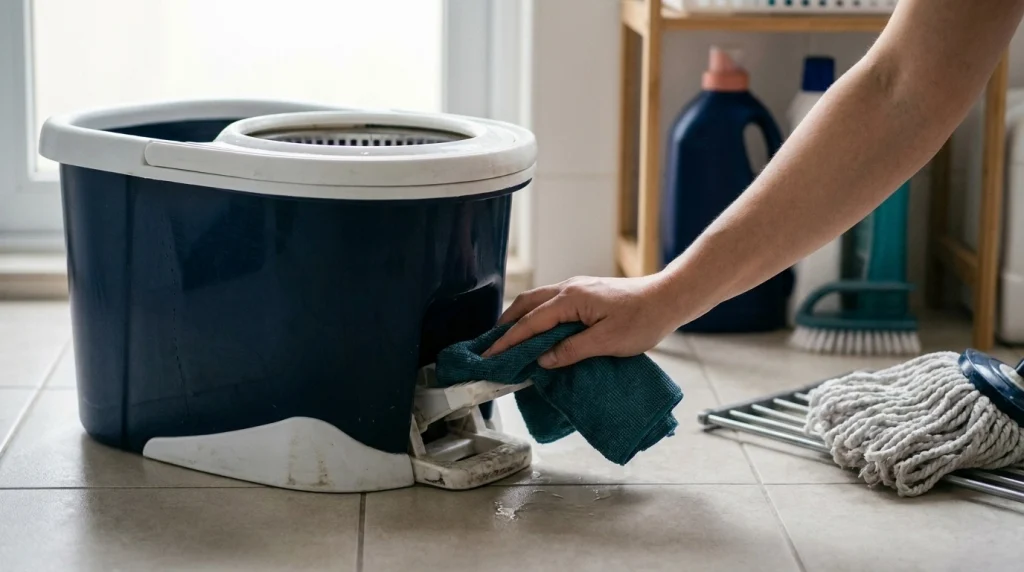
Regular cleaning and careful operation can help prevent avoidable wear in a pedal-operated wringer. Maintenance won’t repair a broken component, but it can reduce problems caused by dirt, residue, and rough handling.
Clean the pedal area after mopping
Rinse away loose dirt and wipe the outside of the pedal and bucket with a damp cloth. Pay attention to visible gaps where hair, grit, or dried cleaning solution might collect.
Allow the bucket to dry before storing it. Avoid leaving standing cleaning solution in the mechanism longer than the manufacturer’s instructions allow.
Use the pedal as designed
Press the pedal through its normal operating range rather than stamping on it or holding it down with excessive force. If it becomes harder to press, investigate the cause instead of pushing harder.
Keep the bucket on a stable, level surface during wringing. An unstable bucket can move unexpectedly and place additional strain on the pedal and housing.
Avoid unsuitable lubricants and cleaning chemicals
Lubrication isn’t necessary for every pedal mechanism. Some products may damage plastic, attract dirt, or interfere with parts designed to operate without lubricant.
Safety note: Check the mop manufacturer’s care instructions and the cleaning product label before applying any chemical, lubricant, or disinfectant. Never mix cleaning products, and keep liquids away from electrical components.
Store the mop bucket properly
Empty the bucket after use and store it where the pedal won’t be crushed by other cleaning equipment. Avoid stacking heavy objects on the pedal or leaving the bucket in a position that puts pressure on its hinge.
As of 2026, the most useful maintenance habit remains simple: remove residue, avoid excessive force, and address changes in pedal movement early. There’s no universal replacement schedule because component life depends on the design and how the mop is used.
How does a working wringer help with floor cleaning?
A properly functioning wringer helps you control how much water remains in the mop head. That makes it easier to match your cleaning technique to the floor instead of leaving unnecessary moisture behind.
Match moisture levels to your floor type
Different flooring materials tolerate moisture differently. Always follow the floor manufacturer’s care instructions, particularly for wood, laminate, and other surfaces with vulnerable seams or finishes.
- Finished hardwood: Use a well-wrung mop and avoid standing water.
- Laminate: Use minimal moisture and prevent water from collecting around joints.
- Vinyl and LVP: Use a compatible cleaner and avoid leaving excess water or residue.
- Ceramic or porcelain tile: Use an appropriate cleaner and remove excess solution when needed.
- Natural stone: Choose a stone-compatible product rather than assuming a general-purpose cleaner is suitable.
- Concrete: Follow the care instructions for the concrete’s sealer or surface finish.
A working pedal doesn’t make every cleaner suitable for every floor. Cleaner compatibility and correct dilution remain important, regardless of the mop type.
Safety note: Check your flooring manufacturer’s guidance before using vinegar-based mixtures, acidic cleaners, disinfectants, or other chemical solutions. Some products can damage sensitive finishes or stone, and wet floors can become slippery.
Choose the right mop for the job
A spin mop is useful for general hard-floor cleaning, but other tools may suit particular tasks better. A microfiber flat mop can provide precise moisture control, while a steam mop requires explicit approval for the flooring material and finish.
For routine cleaning, use the least aggressive method that removes the soil effectively. The EPA’s explanation of cleaning, sanitizing, and disinfecting also clarifies why ordinary floor cleaning and disinfection are different tasks.
Prevent streaks and residue after a repair
If the mop wrings unevenly, the head may leave excess water or cleaning solution on the floor. Check the mop head for trapped debris and rinse it thoroughly before concluding that the repaired pedal is still faulty.
Use the cleaner’s stated dilution rather than adding extra detergent. Excess product can leave residue, while dirty rinse water can spread soil across the floor.
For everyday household cleaning, the CDC’s home-cleaning guidance recommends choosing products appropriate for the surface and following their instructions.
Finally, let the floor dry before walking across it, especially in busy kitchens, bathrooms, and entryways. A properly working wringer supports safer moisture control, but it doesn’t eliminate the need to manage wet-floor hazards.
Frequently asked questions about spin mop pedal parts
Can I replace a spin mop pedal without replacing the bucket?
Yes, if the manufacturer offers a compatible replacement pedal and the bucket’s mounting points and drive mechanism remain intact. Check the model number and parts documentation first. If the housing is cracked or the drive is damaged, replacing the complete bucket may be more practical.
Why does my spin mop pedal go down but not spin the basket?
The pedal may be disconnected from the drive linkage, the internal mechanism may be worn, or the basket may not be seated correctly. Inspect accessible connections and follow the model’s instructions. Don’t force the pedal, because excessive pressure can worsen a damaged mechanism.
Does every spin mop bucket have a pedal return spring?
No. Some pedal-operated models use a return spring, while others use a different resetting arrangement. Check the manufacturer’s parts diagram before ordering a spring. If the pedal remains down or returns inconsistently, inspect for obstructions and visible damage before replacing components.
Can I repair a broken plastic spin mop pedal with glue?
Glue is generally not a dependable fix for a pedal that repeatedly carries foot pressure. The joint may fail again, particularly around a hinge or mounting point. A compatible replacement is usually preferable. If the bucket housing or mounting tabs are broken, assess whether the whole assembly needs replacement.
How do I know which spin mop pedal to buy?
Find the brand, exact model number, and original part number if available. Compare the mounting points, dimensions, and drive connection with the replacement listing. Confirm compatibility with the manufacturer or seller rather than relying on a similar shape or a generic product title.
Why is my spin mop pedal difficult to press?
Dirt, dried detergent, a binding pivot, or a damaged internal component can make a pedal stiff. Empty the bucket, clean accessible areas, and inspect the mechanism without forcing it. If the pedal remains difficult to operate, stop using it until the fault is identified.
Should I replace the pedal or buy a new spin mop?
Replace the pedal when the damage is isolated, a compatible part is available, and the rest of the bucket is in good condition. Consider a new bucket when the housing is cracked, the internal drive has failed, or replacement parts are unavailable. Compare the full repair cost before deciding.
Final takeaway: identify the faulty pedal component first
Spin mop pedal problems don’t always mean the pedal itself has failed. A loose pivot, disconnected linkage, faulty return component, damaged drive, or incorrectly seated basket can produce similar symptoms.
Start with the model number, inspect visible parts, clean accessible areas, and avoid forcing a stuck mechanism. Then choose a compatible replacement based on the manufacturer’s specifications.
A little careful troubleshooting can help you avoid unnecessary purchases and extend the useful life of your floor-cleaning equipment. If the bucket has structural damage or an enclosed mechanism that you can’t safely inspect, replacing the assembly or contacting the manufacturer is the better choice.