
Spin Mop Wringer Parts: Names, Functions, Common Problems, and Replacement Tips

Quick Answer
Spin mop wringer parts are the components that spin or press water out of a wet mop head, including the wringer basket, drive mechanism, pedal or hand-operated handle, and supporting connectors. The correct replacement depends on your mop’s brand, model, and wringing design. Before buying parts, compare the damaged component with your mop’s manual or the manufacturer’s replacement-part guidance.
Main wringer parts and what they do
- Wringer basket: Holds and supports the mop head while excess water spins out.
- Foot pedal: Activates the spinning mechanism on pedal-operated models.
- Drive mechanism: Transfers movement from the pedal or handle to the rotating basket.
- Basket support: Keeps the rotating assembly positioned correctly inside the bucket.
- Centering guide: Helps position the mop head in compatible wringer designs.
- Fasteners and connectors: Secure compatible components and may need replacement if cracked or loose.
What to check before replacing a part
- Identify whether your mop uses a foot pedal, a hand-press handle, or another spinning mechanism.
- Check the model number, attachment points, basket dimensions, and part number.
- Clean out tangled fibers and debris before deciding that a component has failed.
- Replace the entire bucket assembly only when an individual compatible part is unavailable or the damage affects several components.
A spin mop can become frustrating when its wringer stops spinning, slips, wobbles, or leaves the mop head dripping wet. I find it helps to identify the exact component before spending money on a replacement.
This guide explains the main spin mop wringer parts, how different mechanisms work, which symptoms point to specific problems, and what to check before ordering replacements. The advice applies to common household spin mops, but individual designs vary.
In This Guide
- What are spin mop wringer parts?
- What are the main parts of a spin mop wringer?
- How do different spin mop wringers work?
- Why is my spin mop wringer not working?
- How can you troubleshoot a spin mop wringer?
- How do you find the right replacement parts?
- How do you clean and maintain wringer parts?
- Which wringer parts should you replace?
- How does wringer performance affect floor care?
- Frequently asked questions
What Are Spin Mop Wringer Parts?
Spin mop wringer parts are the mechanical components that remove excess water from a mop head before floor cleaning. Depending on the model, the assembly uses a rotating basket driven by a foot pedal, a hand-operated handle, or another mechanism.
How does a spin mop wringer work?
A spin mop wringer uses rotational movement to force water out of a wet microfiber mop head. The water passes through the basket’s openings and drains into the bucket below.
With a pedal-operated design, pressing the pedal activates the drive mechanism. With a hand-operated design, moving the handle up and down turns the mop head or its supporting assembly.
The goal is simple: remove enough water to make the mop suitable for the floor you’re cleaning. A well-wrung head can reduce excess moisture, although it doesn’t replace using the correct cleaning method for the flooring material.
Which parts belong to the wringer assembly?
The precise parts list varies by manufacturer, so don’t assume every spin mop has the same internal components.
- Rotating basket: Holds the mop head during spinning.
- Drive components: Transfer pedal or handle movement into rotation.
- Support and alignment pieces: Keep the assembly positioned correctly.
- Pedal, lever, or operating handle: Provides the input that activates the mechanism.
- Retaining clips and fasteners: Secure removable components where the design uses them.
- Bucket and drain components: Collect water and help with emptying or cleaning.
Some parts belong to the mop itself rather than the wringer. The handle, mop disc, microfiber refill, and mop-head connector affect overall operation but may need separate replacement.
What Are the Main Parts of a Spin Mop Wringer?
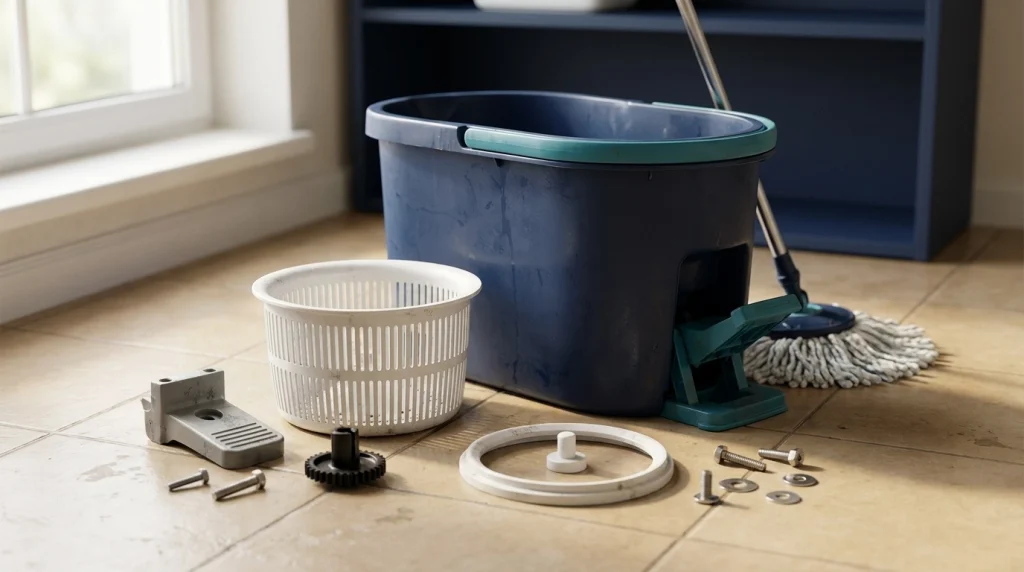
The basket, drive mechanism, and operating control are the key parts to inspect when a wringer fails. Start with the component you can see, then check its connections and movement.
1. Wringer basket
The wringer basket is the perforated or slotted component that holds the mop head while it spins. Its openings allow water to escape instead of remaining trapped around the fibers.
Inspect the basket for cracks, broken supports, deformation, and excessive movement. A damaged basket may wobble, scrape against nearby plastic, or fail to hold the mop head securely.
Not every basket is interchangeable. Diameter, height, attachment style, and central support design can differ even between products that look similar.
2. Foot pedal and pedal linkage
A foot pedal gives the user a hands-free way to activate the wringer. The pedal connects to a mechanism that transfers pressure into rotational movement.
If the pedal feels unusually loose, sticks, or moves without spinning the basket, inspect it for visible cracks and obstructions. Internal drive damage may also cause these symptoms, so the pedal alone isn’t always the problem.
Never force a pedal that has suddenly jammed. That can damage connected parts or create a pinch hazard.
3. Drive mechanism and gears
The drive mechanism converts movement into rotation. Depending on the mop design, it may use gears, a shaft, a clutch-like connection, or other internal components.
Grinding noises, slipping, and intermittent spinning can indicate wear or a loose connection. However, dirt buildup, a poorly seated basket, or an overloaded wringer can produce similar symptoms.
Many household models don’t offer separately replaceable internal gears. Check the manufacturer’s parts information before attempting to open the assembly.
4. Basket support and centering guide
Support pieces keep the basket aligned, while a centering guide helps position the mop head in designs that use one. Their shape and attachment points are specific to the product.
A loose support can make the basket tilt or wobble. A damaged guide can make positioning difficult and increase rubbing during use.
5. Springs, clips, and fasteners
Some mechanisms use springs or small fasteners to return a pedal, retain a cover, or hold components in place. Other models use molded plastic connections without separate springs.
Replace only the component identified in the product documentation. A spring that looks similar may have a different size or tension, and an improvised fastener can interfere with rotation.
6. Bucket, drain, and splash guard
The bucket supports the wringer and collects the water removed from the mop head. Some models also include a drain plug, removable cover, splash guard, or separate clean-water compartment.
Cracks around the wringer mounting point matter because the basket relies on stable support. A bucket with a damaged mounting area may need a complete replacement rather than a new basket alone.
How Do Different Spin Mop Wringers Work?
Spin mops use different ways to generate rotation, and the mechanism determines which replacement parts you need. Identify the operating style before searching for a component.
Foot-pedal spin mop
A foot-pedal model typically uses a pedal connected to a rotating wringer basket. Pressing the pedal drives the spinning action while you hold the mop handle steady.
For example, the O-Cedar EasyWring system uses foot-activated wringing. Its replacement options should be checked against the specific product model rather than selected by appearance alone.
Hand-operated spin mop
A hand-operated design creates rotation through movement of the mop handle. Depending on the construction, the handle may drive the mop head directly or operate a mechanism within the bucket.
These systems may not use a foot pedal or the same type of wringer basket as pedal-driven products. A replacement basket designed for another mechanism may not fit or function correctly.
Manual wringer versus electric mop
A conventional spin mop relies on human-powered movement. Cordless and electric mops may use powered brush heads, water systems, or separate drying mechanisms instead of a conventional spin wringer.
A steam mop is different again: it heats water to produce steam and generally doesn’t use a spin-mop wringer basket. Don’t order spin mop parts for an electric floor cleaner unless its manufacturer explicitly lists compatible components.
| System type | How it operates | Parts to identify | Key compatibility check |
|---|---|---|---|
| Foot-pedal spin mop | Foot pressure activates rotation | Pedal, drive assembly, basket, supports | Model and basket mounting design |
| Hand-operated spin mop | Handle movement creates rotation | Handle sections, lock, shaft, mop-head connector | Thread, locking style, and drive design |
| Traditional string-mop bucket | A press or side wringer squeezes the mop | Press, lever, spring, wringer frame | Bucket and wringer model |
| Steam or electric floor mop | Uses a powered cleaning system | Manufacturer-specific components | Exact product documentation |
The table describes common operating categories, not universal replacement specifications. Dimensions, internal parts, and repair options depend on the exact model.
Why Is My Spin Mop Wringer Not Working?
A wringer that won’t spin may have a jam, a loose connection, a damaged basket, or a failed drive component. Check the simplest visible causes first instead of assuming the entire system is broken.
The wringer basket won’t spin
Look for tangled microfiber strands, debris, a basket that’s not seated correctly, or an obstruction around the rotating assembly. Remove the mop head and inspect the accessible area while the mop is switched off or otherwise inactive.
If the basket remains stuck after cleaning and correct repositioning, the drive mechanism or support may be damaged. Consult the product manual before dismantling anything.
The pedal moves but the basket doesn’t turn
This symptom may indicate a disconnected linkage, worn drive parts, or a pedal that no longer transfers force properly. First check whether the pedal has visible damage and whether the basket sits correctly in its mount.
If the connection appears intact but rotation doesn’t return, the internal mechanism may require a manufacturer-approved replacement. Avoid applying extra force to compensate.
The basket wobbles or scrapes
Wobbling can come from a cracked basket, a loose mounting point, a damaged support, or a misaligned component. Scraping may indicate that the rotating parts are touching the bucket or splash guard.
Stop using the wringer until the source is clear. Continued spinning can worsen the damage or cause the assembly to come loose.
The mop head stays too wet
A wet mop head doesn’t automatically mean the wringer has failed. The head may be overloaded, positioned incorrectly, tangled, or unsuitable for the basket.
Try a smaller amount of mop material in the basket if the design permits, position the head as directed, and operate the mechanism according to its instructions. If spinning is normal but water removal remains poor, inspect the mop head itself.
The wringer makes grinding or clicking sounds
Unusual noises can point to debris, loose parts, worn gears, or damaged supports. A light operating sound may be normal for some designs, but a sudden change deserves attention.
Stop if the noise comes with resistance, wobbling, cracking, or intermittent rotation. Don’t lubricate internal parts unless the manufacturer specifies an appropriate product and procedure.
How Can You Troubleshoot a Spin Mop Wringer?
Work through a short inspection sequence before ordering replacement parts. This helps separate a simple maintenance issue from mechanical damage.
Follow these troubleshooting steps
- Stop the mechanism. Keep hands, hair, jewelry, and clothing away from moving parts, and let the basket come to a complete stop.
- Remove the mop head. Follow the manufacturer’s removal instructions rather than pulling against a locked connector.
- Inspect the basket. Look for cracks, bent sections, trapped fibers, and broken mounting points.
- Check the controls. Examine the pedal, lever, or handle for visible looseness, damage, or a disconnected joint.
- Clean accessible areas. Remove dirt and strands without forcing the mechanism or flooding internal components.
- Reassemble correctly. Seat removable components according to the manual and keep the bucket below its marked fill limit.
- Test cautiously. Follow the product’s operating instructions and stop if the basket wobbles, jams, or makes unusual noises.
These steps are intended for routine inspection, not an internal mechanical repair. If a sealed or spring-loaded assembly appears damaged, contact the manufacturer or replace the approved assembly.
Safety note: Never reach into a moving wringer, bypass a safety feature, or test a damaged mechanism under load. Keep the bucket away from children and prevent spills that could make floors slippery.
How Do You Find the Right Spin Mop Wringer Replacement Parts?
The safest way to choose a replacement is to match the exact mop model and part number. A component that looks identical may have different clips, shaft dimensions, or mounting points.
Identify the brand and model
Look for a label on the bucket, handle, packaging, or instruction manual. Record the brand, model number, and any part number shown in the exploded diagram.
If the label is missing, compare the complete mop with manufacturer documentation. Photos of the basket, underside, pedal, and mounting points can help customer support identify the correct assembly.
Compare dimensions and attachment points
When the manufacturer provides measurements, compare the replacement’s diameter, height, shaft connection, clip locations, and mounting method. Measurements alone are not enough if the internal drive connection differs.
- Check whether the basket attaches by clips, screws, a shaft, or another connection.
- Confirm that the part is intended for the same model or an explicitly compatible model.
- Verify whether the listing includes only the basket or a complete wringer assembly.
- Check whether installation hardware is included or sold separately.
Where should you look for replacement parts?
Start with the brand’s official support page or parts catalog. Some manufacturers sell individual handles, mop-head bases, or other components through their support channels or authorized retailers.
For example, O-Cedar’s support information explains how customers can request help locating certain replacement parts. Availability varies, so verify the exact component before purchasing.
Marketplace listings may offer compatible-looking baskets and pedal assemblies, but the listing should explicitly identify your model. Avoid relying on generic descriptions such as “fits most spin mops” when the attachment design is unknown.
Should you replace one part or the whole bucket?
Replace an individual part when the damage is isolated and the manufacturer offers a confirmed compatible component. Consider a complete bucket or wringer assembly when the bucket mounting area is cracked or multiple connected components have failed.
Compare the replacement cost, availability, installation requirements, and expected usefulness of the remaining mop. A cheaper component isn’t a good value if it doesn’t fit or cannot restore safe operation.
How Do You Clean and Maintain Spin Mop Wringer Parts?
Regular cleaning helps prevent debris from interfering with the basket and its supports. Maintenance won’t repair broken gears or cracked plastic, but it can reduce avoidable operating problems.
After each cleaning session
- Remove the mop head and rinse away trapped dirt.
- Empty the bucket according to the manufacturer’s instructions.
- Wipe accessible basket surfaces and remove tangled fibers.
- Allow the bucket and removable components to air-dry.
- Store the mop with the bucket empty and the parts positioned as recommended.
Standing dirty water can contribute to unpleasant odors and residue. Letting components dry also makes it easier to spot cracks, buildup, and loose fittings during the next inspection.
Remove buildup without damaging the mechanism
Use a soft cloth or brush to clean accessible surfaces. Avoid abrasive tools that may scratch plastic or damage a protective finish.
Don’t pour cleaning chemicals into an enclosed drive assembly or apply oil to a gear mechanism unless the manual specifically recommends it. Some lubricants can damage plastics or attract additional dirt.
Safety note: Follow the product label and manufacturer’s care instructions for cleaners and disinfectants. Never mix bleach with ammonia, acids, vinegar, or other incompatible cleaning products.
Keep the mop head in good condition
A tangled or worn microfiber head can make a working wringer seem ineffective. Wash the refill as directed, remove loose strands, and replace it when the fibers no longer clean or attach securely.
Use the wringer to control moisture rather than forcing every mop head to become nearly dry. Sealed hardwood and laminate need careful moisture control, while tile may tolerate different cleaning conditions depending on its finish and grout.
Which Spin Mop Wringer Parts Should You Replace?
Replace the component that has failed, provided the manufacturer supports separate replacement and the rest of the assembly remains sound. The visible symptom is a useful starting point, but it isn’t proof of which internal part has failed.
| Observed problem | Parts to inspect | Next step |
|---|---|---|
| Cracked or broken basket | Basket and mounting points | Find a model-matched basket or assembly |
| Pedal moves without rotation | Pedal linkage and drive mechanism | Check the manual and approved repair options |
| Basket tilts or wobbles | Support, alignment guide, and basket mount | Stop use until alignment or damage is resolved |
| Pedal sticks | Accessible debris, pedal, and return mechanism | Clean safely; replace only confirmed damaged parts |
| Mop remains dripping wet | Mop-head fit, basket position, and drive action | Correct the setup before buying components |
| Bucket leaks around its base | Bucket body, drain plug, and joints | Identify the leak source and replace damaged parts |
Use this table to narrow the inspection, not to diagnose hidden damage with certainty. If several components are worn or the mounting structure has failed, a replacement bucket system may be more practical.
How Does Wringer Performance Affect Floor Care?
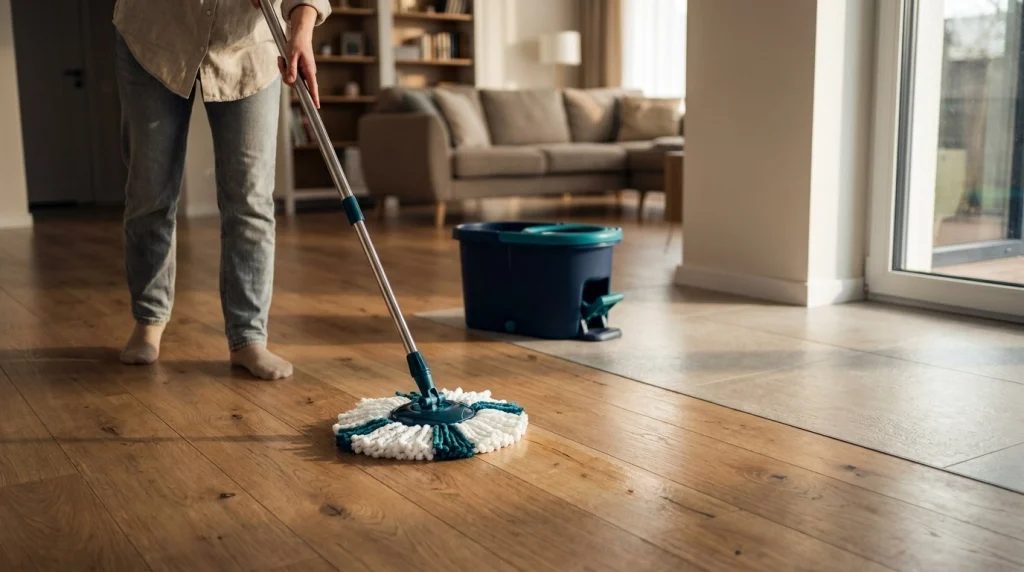
The amount of water left in a mop head affects drying time, streaking, and the risk of moisture damage on sensitive floors. A functional wringer helps you adjust dampness, but the right amount depends on the floor and cleaner.
Hardwood and engineered wood
Use a well-wrung mop and a floor cleaner approved for the finish. Avoid leaving standing water or allowing moisture to pool around seams, edges, and joints.
Laminate and vinyl flooring
Follow the flooring manufacturer’s moisture guidance, especially for laminate with vulnerable seams. Vinyl and luxury vinyl plank also benefit from the correct cleaner and a mop head that doesn’t leave excessive water behind.
Tile and natural stone
Tile surfaces generally tolerate routine damp mopping, but grout, sealers, and stone finishes have their own care requirements. Natural stone often needs a suitable pH-neutral cleaner rather than acidic household mixtures.
Prevent streaks and slippery residue
A dirty mop head, excess detergent, or leftover cleaning solution can leave streaks even when the wringer works correctly. Rinse or replace the mop head as needed and use the cleaner at its labeled dilution.
For general cleaning-product and disinfectant guidance, consult the U.S. Environmental Protection Agency and the Centers for Disease Control and Prevention. For wood-floor care, the National Wood Flooring Association provides flooring-specific guidance.
Safety note: Check the flooring manufacturer’s care guide and the cleaner’s label before using any solution. Keep people away from freshly mopped floors until they are safe to walk on.
Frequently Asked Questions About Spin Mop Wringer Parts
Can you replace just the spin mop wringer basket?
Yes, if the manufacturer offers a separate replacement basket that fits your model. Check the basket’s mounting method, dimensions, and drive connection before ordering. If the bucket support is cracked or the drive mechanism has failed, replacing the basket alone may not solve the problem.
Why does my spin mop pedal move but not spin?
A pedal that moves without turning the basket may have a disconnected linkage, worn drive component, or incorrectly seated basket. Check for visible obstructions and damage first. If the connection appears intact, consult the manual or manufacturer before attempting an internal repair.
Are spin mop wringer baskets universal?
No. Basket sizes, mounting points, drive connections, and support designs vary between manufacturers and models. A basket that looks similar may not fit securely or rotate correctly. Use the model number and manufacturer compatibility information instead of relying on appearance alone.
How do I know if the wringer mechanism is broken?
Persistent failure to spin, unusual grinding, repeated slipping, or a visibly damaged linkage can indicate a mechanical problem. First remove accessible debris and confirm that removable components are seated correctly. Stop using the wringer if it jams, wobbles, or makes sudden abnormal noises.
Can I lubricate a squeaky spin mop wringer?
Only lubricate the mechanism if the manufacturer recommends it and specifies a suitable product. Household oils and sprays may damage plastic components, leave residue, or attract dirt. Clean accessible areas first, and replace a confirmed damaged part rather than masking the symptom.
Is it better to replace the wringer or buy a new spin mop?
Replacing the wringer makes sense when the damaged component is available, compatible, and reasonably easy to install. A new system may be more practical when the bucket is cracked, the drive mechanism is unavailable, or multiple parts have failed. Compare the total replacement cost with the condition of the remaining components.
Can a faulty wringer damage my floors?
It can contribute to floor-care problems if it leaves the mop excessively wet or makes moisture control difficult. Sensitive wood and laminate surfaces may be vulnerable to standing water or moisture entering seams. Use the floor manufacturer’s recommended cleaning method and stop using a wringer that cannot operate safely.
Final Takeaway
The best way to fix a spin mop wringer is to identify the failed component before buying a replacement. Start with the basket, pedal or handle, drive connections, and support points, then confirm the exact model and compatible part number.
Clean accessible parts regularly, avoid forcing a jammed mechanism, and replace damaged components only with approved compatible parts. A correctly working wringer makes moisture control easier and helps you clean floors without leaving unnecessary water behind.