
Sticky Floors Guide to Clean and Prevent Slippery Messes

Sticky floors are usually caused by residue, not just dirt, so the safest fix is to identify the floor type and use the mildest effective cleaner. Rinsing well, drying thoroughly, and reducing product buildup are the best ways to keep floors from turning tacky again. Related: sticky floor cleaning. Related: floor residue removal. Related: slippery floors prevention. Related: mop residue buildup. Related: floor cleaning tips.
Sticky floors are more than an annoyance. They can make a home feel unclean, create slip hazards, and signal that the wrong product, too much moisture, or hidden residue is building up on the surface.
This sticky floors guide walks through what causes tacky floors, how to identify the problem correctly, and how to clean different floor types without making the mess worse. For broader routine care, FloorsMop readers often pair this topic with a daily floor cleaning guide or a proper floor mopping method so residue does not return.
- Find the cause first: Residue, finish damage, and moisture need different fixes.
- Use less product: Too much cleaner is a common reason floors feel sticky.
- Match the floor type: Wood, tile, laminate, and vinyl all need different care.
- Dry the floor well: Rinse and dry to stop film from returning.
- Call for help when needed: Swelling, lifting, or recurring tackiness can mean deeper damage.
What Causes Sticky Floors and Why It Matters in 2025
Sticky floors usually come from residue, not from the floor being “dirty” in the usual sense. In many homes, the problem starts with a cleaner that leaves film behind, then gets worse as dust and grime cling to that film.
Common residue sources: mop solution buildup, spills, grease, humidity, and cleaning product film
The most common cause is too much cleaner in the mop bucket. Soap, all-purpose sprays, and even some “shine” products can leave a thin layer on the floor if they are not diluted or rinsed well.
Kitchen grease, tracked-in dirt, spilled drinks, pet messes, and bathroom humidity can also create a tacky feel. In some cases, the floor is reacting to a product film rather than the spill itself, which is why the surface may look clean but still feel sticky.
If a floor gets sticky soon after mopping, reduce the cleaner amount first before trying stronger products. More cleaner often creates more residue, not less.
How stickiness creates safety risks, dulls finishes, and attracts more dirt over time
Sticky floors can be slippery in a different way than wet floors. A tacky surface may catch dust and grit, which can make it feel uneven underfoot and eventually dull the finish.
Over time, residue can also make the floor harder to clean because dirt bonds to the film. That is why a sticky floor often becomes a cycle: residue attracts soil, soil makes the floor look dull, and more aggressive cleaning adds even more buildup.
How to Identify the Type of Sticky Floor Problem Before Cleaning
Before you grab a mop, it helps to figure out whether the issue is on the surface, inside the finish, or caused by moisture below. The right fix depends on the source.

Testing whether the issue is surface residue, damaged finish, or subfloor moisture
Try a small test with a damp microfiber cloth and plain water on a hidden area. If the tacky feeling improves, the issue is often surface residue. If it stays sticky or the finish looks cloudy, the floor may have coating damage.
If the floor feels soft, swells, or stays damp in one area, subfloor moisture may be involved. That is more serious and usually needs a professional assessment, especially on wood-based flooring.
Signs the problem is localized to one room versus spread across the home
If stickiness is limited to the kitchen, bathroom, or entryway, the cause is often room-specific buildup. Grease, humidity, or outdoor debris usually explain localized issues.
If multiple rooms feel sticky, the problem may be the cleaner, mop method, or a product residue used throughout the home. In that case, it is worth checking your routine before assuming the floors are damaged.
When the floor feels sticky but looks clean: what that usually means
That “clean-looking but tacky” feeling is a classic sign of film. It may come from too much soap, a glossy cleaner, wax on the wrong surface, or leftover rinse water that dried unevenly.
This is also why some floors look shinier right after cleaning but feel worse later. The shine may be residue, not a healthy finish.
Sticky Floors Guide by Floor Type: What’s Safe to Use and What to Avoid
Floor material matters a lot here. A cleaner that works on tile may be too wet or too harsh for wood, and a product that leaves a nice finish on vinyl may damage laminate.

Hardwood and engineered wood: moisture limits, pH-safe cleaners, and finish protection
Use as little water as possible on wood floors. A lightly damp microfiber mop and a pH-safe cleaner made for wood are usually the safest starting point.
Avoid soaking the floor, using steam, or applying oily polishes unless the product is specifically approved for that finish. If you need more detail, FloorsMop has a separate guide on how often to mop hardwood floors and another on engineered hardwood care.
Tile and grout: removing soap scum, kitchen grease, and grout haze safely
Tile can handle more moisture than wood, but grout and textured surfaces can trap residue. A neutral or tile-safe cleaner is usually better than a heavy soap mix.
For kitchen tile, grease-cutting cleaners may help, but they should still be rinsed well. For porcelain-specific care, a porcelain tile mopping guide can be useful when the floor needs a deeper clean without leaving film.
Laminate and luxury vinyl plank: avoiding excess water and glossy residue
Laminate and LVP are both sensitive to excess water, though the exact tolerance varies by product and installation. Use a barely damp mop and avoid cleaners that promise a high-gloss finish unless the manufacturer allows them.
Steam is especially risky for many laminate floors and can also be a concern for some vinyl products. If you are unsure, check the floor warranty or ask a flooring professional before using heat or strong chemicals.
Vinyl sheet flooring and sealed concrete: compatible cleaners and finish concerns
Vinyl sheet flooring often tolerates gentle cleaners well, but it can still hold onto residue from soap-heavy mixes. Sealed concrete is durable, yet it may show streaks or film if the finish is not compatible with the product you use.
If you are cleaning concrete, a simple approach often works best. FloorsMop also covers whether you can mop concrete floors and how to choose the right dust mop for rougher surfaces.
Do not assume all hard floors can handle the same cleaner. Wax, steam, oil-based polish, and strong degreasers can leave different kinds of residue or damage depending on the surface.
Step-by-Step Cleaning Method to Remove Sticky Residue
The safest way to remove stickiness is to start dry, use the mildest effective cleaner, and avoid flooding the floor. The goal is to lift residue, not smear it around.
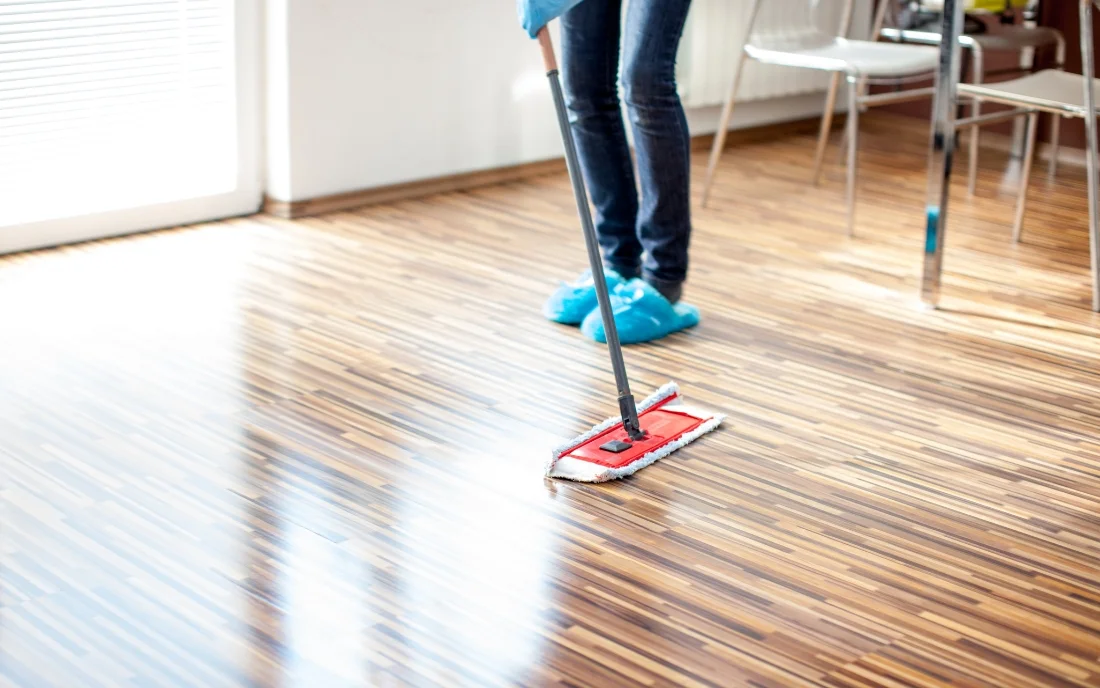
Dry cleanup first: sweeping, vacuuming, and lifting loose debris
Start by removing dust, crumbs, and grit with a broom or vacuum suitable for your floor type. Loose debris can turn into muddy film once you add water.
If you skip this step, the mop often pushes residue into corners and leaves the floor feeling worse. Dry cleanup also helps you see whether the stickiness is widespread or concentrated in certain spots. [Source: CDC]
Choosing the right cleaning solution for the residue type
For light film, plain warm water may be enough on some floors, especially if the residue came from a mild cleaner. For grease, a diluted floor-safe degreaser or a manufacturer-approved cleaner may work better.
Avoid defaulting to stronger chemistry right away. If the floor is still sticky after a normal wash, the issue may be product buildup, so a rinse step is often more useful than a harsher formula.
- Remove loose dirt first
- Use the mildest effective cleaner
- Test one small area before treating the whole room
- Rinse if the product can leave film
- Dry the floor fully after cleaning
Proper mopping technique to prevent spreading the sticky film
Work in small sections and rinse or refresh the mop head often. A dirty mop can spread residue instead of removing it.
Use controlled passes rather than soaking the floor. For many surfaces, a microfiber mop is a better choice than a string mop because it picks up film more effectively and uses less water.
Rinsing, drying, and repeating without over-wetting the floor
If the cleaner can leave residue, follow with a clean water rinse using a fresh mop pad or cloth. Then dry the floor with a towel or dry microfiber pass if the material allows it.
Repeat only if needed. Multiple wet passes can create the very stickiness you are trying to remove, especially on laminate, engineered wood, or older vinyl.
- Microfiber mops
- Small-section cleaning
- Low-residue solutions
- Soaking wet mop heads
- Over-foaming cleaners
- Repeated un-rinsed passes
Practical Examples: Sticky Floors in Kitchens, Entryways, and Bathrooms
Different rooms create different kinds of stickiness, so the fix should match the source. That is often faster and safer than using the same cleaner everywhere.
Kitchen grease and cooking spray buildup on tile or vinyl
Kitchens collect airborne grease from cooking, especially near stoves and cabinets. On tile or vinyl, that grease can mix with dust and feel like a thin tacky layer.
A degreasing floor cleaner that is safe for the surface may help, but rinsing matters. If the floor still feels sticky after cleaning, the problem may be old product buildup rather than fresh grease alone.
Entryway grime from shoes, winter salt, and outdoor debris
Entryways often get sticky because dirt, road salt, and damp shoe residue get ground into the finish. In winter, that buildup can feel gritty first and tacky later.
Frequent dry cleaning, plus a damp mop only when needed, usually works better than heavy weekly washing. If weekly mopping keeps leaving floors sticky, that pattern may point to residue rather than the room itself.
Bathroom residue from cleaning products, hard water, and humidity
Bathrooms are prone to film from soap, spray cleaners, and hard water droplets. Humidity can slow drying and make the floor feel slightly tacky even after cleaning.
Use less product than you think you need, and make sure the room dries fully. Good ventilation can matter as much as the cleaner choice.
Pet areas and kids’ play zones: frequent messes that leave tacky spots
Pet feeding areas and play zones collect spills, paw prints, and sticky drink residue. These spots often need more frequent spot cleaning than the rest of the house.
Use floor-safe cleaners that are appropriate for pets and children, and avoid leaving wet residue behind. A quick response is usually better than a stronger cleaner used later.
Common Cleaning Mistakes That Make Floors Stickier
Many sticky-floor problems come from the cleaning routine itself. A few small changes can make a big difference.
Using too much soap or all-purpose cleaner
More product does not mean more clean. In fact, too much soap is one of the most common reasons floors feel tacky after mopping.
If the bottle does not call for a strong mix, follow the dilution directions carefully. Stronger-than-needed solutions often leave a film that attracts dirt.
Skipping the rinse step after cleaning
Some cleaners are designed to stay on the floor, but many are not. If the label suggests rinsing, skipping that step can leave sticky residue behind.
This is especially important after using degreasers, multi-surface sprays, or homemade mixes. A clean water pass can remove what the first mop left behind.
Mixing incompatible products or using wax on the wrong surface
Mixing cleaners can create residue, reduce performance, or damage the finish. Wax and polish are also risky on surfaces that are not designed for them.
When in doubt, use one approved product at a time and check the flooring manufacturer’s care guidance. If the floor is expensive or under warranty, ask a professional before applying any coating.
Using dirty mop water or an over-saturated mop head
Dirty water redistributes grime, and an overly wet mop can push moisture into seams and edges. Both can make the floor feel worse after cleaning.
Change the water when it turns cloudy and wring the mop thoroughly. If a room is large, fresh water may be necessary more than once.
How to Prevent Slippery Messes and Future Stickiness
Prevention is mostly about controlling residue before it builds up. That means cleaner choice, routine, and quick spill response all matter.
Setting a floor-care routine based on traffic level and floor material
High-traffic rooms usually need more frequent dry cleaning and less frequent wet mopping than people expect. Low-traffic rooms may only need spot cleaning unless spills happen. [Source: Home Depot Guide]
Match the routine to the floor material too. A wood floor routine should be lighter than a tile routine, and laminate should usually be kept drier than both.
Choosing residue-free cleaners and the right mop type
Look for cleaners that are made for your floor type and are known for low residue. A microfiber mop pad often helps because it lifts soil without pushing around too much liquid.
If you are comparing products, a simple cleaner is often better than one that promises shine, fragrance, and deep cleaning all at once. Those extras can sometimes create buildup.
Using mats, shoe-off habits, and spill response to reduce buildup
Door mats help trap grit before it gets tracked across the floor. A shoe-off habit can also reduce salt, oil, and outdoor dirt in the home.
For spills, blot first and clean immediately. The longer a spill sits, the more likely it is to leave a sticky film.
Seasonal prevention tips for humid weather, winter slush, and holiday cooking
Humid weather slows drying, so use less water and improve airflow. In winter, slush and salt can leave residue that needs more frequent entryway cleaning.
During holiday cooking, kitchens may need extra degreasing and more frequent dry passes. This is also when many people make holiday cleaning mistakes by using too much product in a hurry.
When to Call a Flooring Professional and What Repairs May Cost
Some sticky floors are simple cleaning issues, but others point to finish failure or moisture problems. If the floor keeps feeling tacky after careful cleaning, it may be time for expert help.
Warning signs of finish damage, moisture intrusion, or adhesive failure
Watch for cloudiness that does not wash away, soft spots, swelling, lifting edges, or a sticky feel that returns quickly after cleaning. Those signs can suggest deeper damage.
If a floor has adhesive failure under vinyl or moisture intrusion under wood, cleaning alone will not solve it. That is especially important if the problem is getting larger over time.
When deep cleaning is no longer enough and refinishing or replacement is needed
If residue has been removed but the floor still feels rough, dull, or tacky, the finish may be compromised. In that case, refinishing, recoating, or replacement may be more appropriate than continued scrubbing.
The right repair depends on the floor type, age, and condition. A professional can help determine whether the surface can be restored or if the damage is permanent.
Typical cost comparison: DIY cleaning supplies vs. professional assessment or restoration
DIY cleaning usually costs less up front because it may only require a better mop, a floor-safe cleaner, and replacement pads. Professional assessment or restoration costs more, but it can prevent repeated damage from the wrong products.
If you are unsure whether to keep cleaning or call for help, compare the cost of a few safe DIY attempts against the risk of damaging an expensive floor finish. For planning, FloorsMop’s floor cleaning cost calculator can help frame the decision.
What to tell a flooring pro so they can diagnose the stickiness faster
Share the floor type, the cleaner brands or ingredients you used, how often you mop, and whether the problem is in one room or throughout the home. Mention any recent spills, water leaks, renovations, or new floor products.
The more specific you are, the easier it is to narrow down whether the issue is residue, finish damage, or moisture.
Final Recap: The Fastest Way to Clean Sticky Floors and Keep Them Safe
The fastest safe fix is to identify the floor type, remove loose dirt, use the mildest effective cleaner, and rinse or dry thoroughly when needed. For wood and laminate, keep moisture low; for tile and vinyl, focus on removing film without leaving soap behind.
Quick summary of the safest cleaning approach by floor type
Wood floors need minimal water and pH-safe products. Tile can handle more cleaning power, but grout and finish residue still need rinsing.
Laminate and LVP should be cleaned with a lightly damp mop and low-residue formula. Vinyl sheet and sealed concrete usually tolerate gentle cleaning, but finish compatibility still matters.
Key prevention habits to stop residue from coming back
Use less cleaner, change dirty water, dry the floor well, and clean spills quickly. Add mats, reduce tracked-in debris, and adjust your routine for humid seasons or heavy cooking periods.
If stickiness keeps returning, revisit the product choice before scrubbing harder. In many homes, the fix is not more cleaning—it is better cleaning.
Frequently Asked Questions
Sticky floors after mopping usually mean too much cleaner, dirty mop water, or a product that leaves film behind. Rinsing and using less solution often fixes the problem.
Use a barely damp microfiber mop and a pH-safe cleaner made for wood. Avoid soaking the floor, steam, and oily products unless the manufacturer approves them.
Vinegar may help with some residue, but it is not safe for every floor type. Always check whether your floor finish can handle it before using vinegar.
If a floor feels soft, swells, lifts, or stays tacky in one area, moisture may be involved. That usually needs a professional assessment rather than more cleaning.
A microfiber mop is usually the best choice because it lifts residue with less water. It also helps avoid spreading film around the floor.
Call a professional if the floor stays sticky after careful cleaning, shows cloudiness, swelling, lifting, or finish damage. Those signs can point to deeper problems that cleaning will not solve.
