
Types of Spin Mop Heads: A Complete Guide for 2026

Quick Answer
The main types of spin mop heads are microfiber string heads, triangular heads, round heads, chenille heads, scrubber heads, and dual-material heads. The best choice depends on your floor, the amount of dirt, and how much scrubbing you need. Whatever head you use, pair it with a floor cleaner suitable for your surface.
Main spin mop head types
- Microfiber string: A versatile choice for everyday dust, grime, and spills.
- Triangular: Reaches corners and edges more easily than round designs.
- Round: Covers open floor areas quickly and moves smoothly around furniture.
- Chenille: Soft, thick fibers work well for dust and lighter routine cleaning.
- Scrubber: Adds textured fibers for dried spills and stubborn marks.
- Dual-material: Combines absorbent microfiber with tougher scrubbing sections.
Spin mop heads look similar at first glance, but they can clean quite differently. I’ve found that changing the head can make a bigger difference than changing the bucket or handle.
This guide covers the main types of spin mop heads, their materials, shapes, floor compatibility, and everyday uses. It also explains how to choose a replacement without buying one that won’t fit.
In This Guide
- What Is a Spin Mop Head?
- What Are the Main Types of Spin Mop Heads?
- Round vs Triangular Spin Mop Heads
- Which Spin Mop Head Works Best on Each Floor?
- How Do You Choose the Right Spin Mop Head?
- How Do You Clean and Maintain a Spin Mop Head?
- When Should You Replace a Spin Mop Head?
- Spin Mop Head FAQs
- Which Spin Mop Head Should You Use?
What Is a Spin Mop Head?
A spin mop head is the removable cleaning section attached to a spin mop handle. Most designs use absorbent fibers that collect dust, loosen grime, and carry dirty water away from the floor.
The head works with a spinning bucket or wringing mechanism. That spinning action removes excess water, which gives you more moisture control than a soaking-wet traditional string mop.
How spin mop heads differ from regular mop heads
The biggest difference is the attachment system. A spin mop head must connect securely enough to remain stable while rotating at high speed.
Spin mop heads also tend to use lightweight synthetic fibers. Microfiber is common because it handles both dry debris and damp cleaning without becoming excessively heavy.
- Attachment: Usually snaps, clips, twists, or locks onto a compatible mop base.
- Material: Most commonly microfiber, chenille, or a mixed synthetic construction.
- Shape: Round and triangular designs dominate household spin mop systems.
- Cleaning action: Fibers spread outward while mopping and collapse during spinning.
- Maintenance: Many replacement heads can be washed and reused.
I pay close attention to how the fibers spread when the mop touches the floor. A generous fiber spread helps the mop reach around chair legs and along cabinet edges.
What Are the Main Types of Spin Mop Heads?
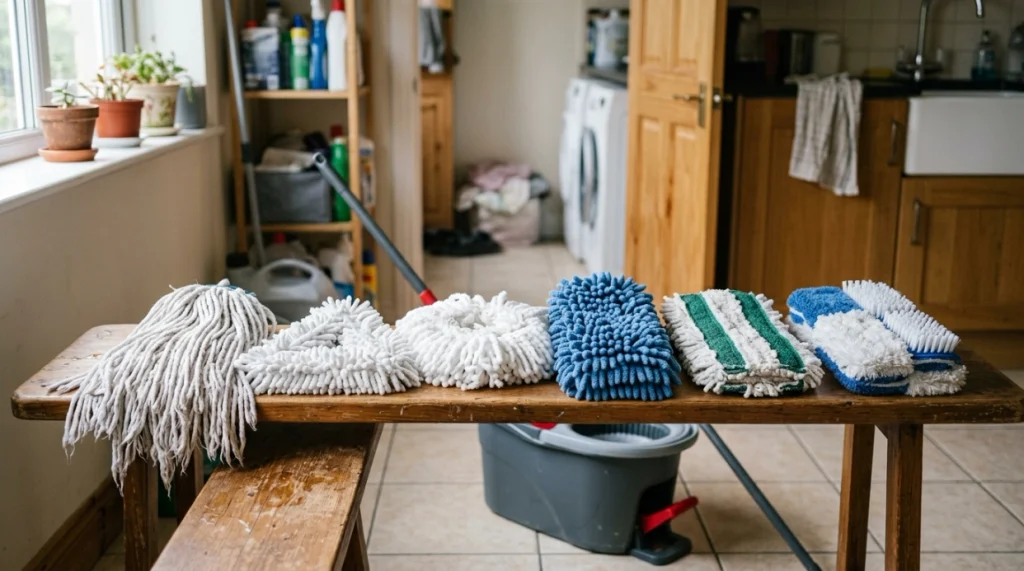
Spin mop heads can be grouped by material, fiber design, and cleaning purpose. As of 2026, six styles cover most household cleaning needs.
1. Microfiber string spin mop heads
Microfiber string heads are the most common all-purpose option. They use dozens of soft synthetic strands that spread across the floor as you move the mop.
These heads handle dust, footprints, crumbs, and light spills well. I use this style most often because it gives me a good balance between absorption and moisture control.
- Best for: General household cleaning.
- Good surfaces: Tile, vinyl, sealed hardwood, laminate, and other manufacturer-approved hard floors.
- Main advantage: Soft fibers pick up fine debris while holding cleaning liquid.
- Watch for: Cheap fibers can flatten or tangle after repeated washing.
2. Triangular microfiber heads
Triangular heads are designed for corners. The pointed edges can reach places a wide round head tends to glide past.
I notice the difference most in kitchens and bathrooms. A triangular base gets closer to cabinet toe kicks, toilet bases, and wall edges.
- Best for: Rooms with many corners and obstacles.
- Main advantage: Better edge and corner access.
- Tradeoff: The rigid triangular frame may feel less fluid in large open rooms.
3. Round spin mop heads
A round spin mop head works well when speed matters. Its circular shape rotates easily and changes direction without much effort.
I like round heads for open tile or vinyl areas. They move around table legs smoothly and cover broad spaces without frequent repositioning.
- Best for: Open kitchens, hallways, and larger rooms.
- Main advantage: Smooth movement in almost every direction.
- Tradeoff: The frame may not reach square corners as closely.
4. Chenille spin mop heads
Chenille heads use thick, soft strands that often look like short fuzzy fingers. They’re especially useful for collecting loose dust and hair.
I tend to think of chenille as a lighter-cleaning option. It works nicely when a floor needs refreshing rather than serious scrubbing.
- Best for: Dust, pet hair, and light everyday soil.
- Main advantage: Soft fibers glide gently over smooth flooring.
- Tradeoff: Heavy dried grime usually needs more agitation.
5. Scrubber spin mop heads
Scrubber heads include rougher or textured sections among softer fibers. Those sections increase friction against stuck-on residue.
I reach for this type after muddy footprints or dried kitchen splashes. It reduces how often I need to crouch down with a separate scrub pad.
- Best for: Stubborn spots and textured tile.
- Main advantage: Extra mechanical scrubbing power.
- Tradeoff: Aggressive fibers may not suit delicate finishes.
Safety note: Check your flooring manufacturer’s care guide before using abrasive fibers, strong cleaners, or excess water on an unfamiliar floor finish.
6. Dual-material or hybrid heads
Hybrid heads combine two cleaning textures. A common design pairs soft microfiber with firmer scrubbing strips.
This is convenient in mixed-mess areas. One section lifts loose dirt while another tackles marks that need extra friction.
| Spin Mop Head Type | Best Use | Scrubbing Level | Moisture Control | Main Limitation |
|---|---|---|---|---|
| Microfiber string | Everyday cleaning | Medium | High | Fibers can tangle |
| Triangular | Corners and edges | Medium | High | Less fluid in open areas |
| Round | Large open floors | Medium | High | Weak corner reach |
| Chenille | Dust and hair | Low | Medium | Limited heavy scrubbing |
| Scrubber | Stuck-on grime | High | Medium to high | May be too rough for delicate floors |
| Dual-material | Mixed everyday messes | Medium to high | High | Compatibility varies |
Section Takeaway: Microfiber is the most versatile starting point. Choose triangular, chenille, or scrubber variations when your floor layout or mess demands something more specialized.
Round vs Triangular Spin Mop Heads: What’s the Difference?
Round heads favor smooth movement and broad coverage, while triangular heads favor corners and edges. Neither shape is automatically better for every home.
A round head feels natural when making wide overlapping passes. I prefer it in larger spaces where furniture is spread apart.
A triangular head earns its place in tighter rooms. The corners of the frame can push fibers deeper into awkward edges.
- Choose round: For open tile, vinyl, or other large hard-floor areas.
- Choose triangular: For kitchens, bathrooms, small rooms, and wall-heavy layouts.
- Check compatibility: Shape alone does not tell you whether a refill fits your handle.
Does shape affect spinning?
Both shapes can spin effectively when designed for their matching bucket. The attachment mechanism matters more than whether the head is round or triangular.
A replacement that sits loosely can wobble during wringing. That makes compatibility more important than choosing a particular shape.
Which Spin Mop Head Works Best on Each Floor?
A soft microfiber head is the safest general starting point for many washable hard floors. The amount of moisture and the cleaner you use matter just as much as the fibers.
Hardwood and engineered wood
Use a soft microfiber head and wring it thoroughly. The goal is a lightly damp mop, not a saturated one.
Wood finishes differ, so follow the flooring manufacturer’s instructions. Avoid assuming that a cleaner safe for tile is also safe for wood.
Laminate
Microfiber works well because it lets you control water closely. I spin the head longer for laminate than I do for tile.
Standing liquid can work into seams. Clean small sections and avoid leaving puddles behind.
Vinyl and LVP
Standard microfiber, round, and triangular heads can all work well on vinyl flooring. Choose the shape based mainly on room layout.
A scrubber head can help with textured vinyl, but test rough fibers in a hidden area first.
Ceramic and porcelain tile
Tile is where I find spin mops most forgiving. Microfiber handles ordinary soil, while a scrubber or hybrid head helps around textured areas.
Grout may still need separate brushing when deep discoloration sits below the tile surface.
Natural stone
Use a soft head and a cleaner approved for the particular stone. Avoid improvising acidic cleaning mixtures on marble, limestone, or other acid-sensitive stone.
Safety note: Always check the floor manufacturer’s or stone supplier’s care instructions before using cleaners, vinegar solutions, disinfectants, or abrasive mop fibers.
How Do You Choose the Right Spin Mop Head?
Start with compatibility, then choose the fiber and shape that match your floor and cleaning habits. A great mop head is useless if it cannot lock securely onto your mop.
1. Confirm the attachment system
Look at the plastic base beneath your existing mop head. Compare its connector with the replacement rather than relying only on diameter.
Some spin mop families use similar-looking refills that are not interchangeable. Model-specific replacements are usually the safest choice.
2. Match the fibers to the mess
- Routine dirt: Standard microfiber.
- Dust and pet hair: Chenille or fluffy microfiber.
- Sticky residue: Scrubber or hybrid construction.
- Mixed household cleaning: Dual-material microfiber.
3. Consider your room layout
A triangular design can save time in a bathroom or narrow kitchen. Round heads feel smoother across an open living area.
4. Think about moisture control
Dense heads can hold a surprising amount of water. That’s helpful for tile but requires careful wringing on moisture-sensitive floors.
I usually do an extra spin cycle before touching hardwood or laminate. The head should feel damp rather than drip when lifted.
5. Check whether the head is washable
A reusable head makes sense for frequent cleaning. Check the replacement manufacturer’s washing and drying instructions before putting it into a machine.
Section Takeaway: Fit comes first. After compatibility, choose microfiber density, shape, and scrubbing texture based on your flooring and the kind of dirt you clean most often.
How Do You Clean and Maintain a Spin Mop Head?
Rinse the mop head after use, remove trapped debris, and let it dry completely before storage. A head left wet in the bucket can develop unpleasant odors quickly.
The CDC distinguishes routine cleaning from disinfection and notes that regular cleaning is enough in many household situations. When disinfecting is needed, follow the product label and clean the surface first.
For general mop-head care, I use this routine:
- Rinse immediately: Remove loose soil before it dries into the fibers.
- Detach the head: Follow the mop manufacturer’s removal method.
- Wash as directed: Hand wash or machine wash only when the manufacturer permits it.
- Skip fabric softener: It can leave coatings on some microfiber products and reduce their cleaning feel.
- Air dry completely: Store the head only after moisture has evaporated.
Don’t automatically reach for disinfectant after every floor cleaning. CDC household guidance says routine cleaning is generally adequate unless illness or another reason makes disinfection necessary.
If you do use a disinfectant, follow the label’s dilution, surface, ventilation, and contact-time instructions. Never mix cleaning chemicals unless the product directions specifically instruct you to do so.
When Should You Replace a Spin Mop Head?
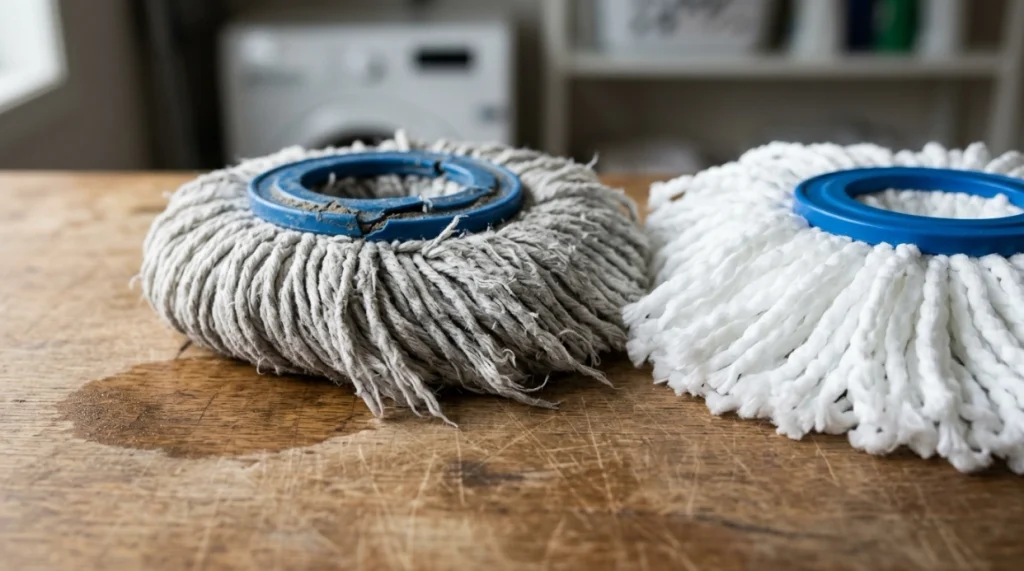
Replace a spin mop head when the fibers stop cleaning well, remain permanently matted, develop persistent odor, or no longer attach securely. Calendar age matters less than actual condition.
I inspect the head after washing rather than waiting for it to fail during cleaning. Damage is much easier to notice when the fibers are clean.
- Flattened fibers: The strands no longer spread across the floor.
- Persistent smell: Odor returns even after proper washing and drying.
- Fraying: Loose strands catch around furniture or detach during use.
- Poor absorption: Spills move around instead of being picked up.
- Damaged connector: The head feels loose, crooked, or unstable.
- Permanent staining: Heavy embedded soil remains after appropriate cleaning.
Should you keep more than one mop head?
I find two or three heads more practical than one. It lets one head dry completely while another is ready to use.
Separate heads can also be useful for different areas. For example, you may prefer not to use the same head in a bathroom and kitchen.
Spin Mop Head FAQs
Are all spin mop heads interchangeable?
No. Spin mop heads may look similar but use different connectors, base shapes, and dimensions. Match the replacement to your exact mop system or model whenever possible.
What is the best material for a spin mop head?
Microfiber is the most versatile choice for everyday household use. It handles fine dust, light spills, and routine floor soil while allowing good moisture control after spinning.
Is a round or triangular spin mop head better?
Round heads are convenient for broad open areas, while triangular heads have an advantage around corners and edges. Choose based on your room layout and compatible mop system.
Can spin mop heads be used on hardwood floors?
A soft microfiber head may be suitable for some sealed hardwood floors when used lightly damp. Always check the flooring manufacturer’s care instructions and avoid leaving standing water behind.
Can I use a scrubber spin mop head on laminate?
Use caution. Rough fibers can be inappropriate for some laminate finishes. A soft microfiber head is the safer general option, but your flooring manufacturer’s instructions should decide what cleaning materials are acceptable.
How often should I wash a spin mop head?
Clean it after dirty mopping sessions rather than repeatedly storing it wet. Rinse out visible debris promptly and allow the head to dry completely before the next use.
Why does my spin mop head smell?
Persistent odor often develops when soil and moisture remain trapped in the fibers. Wash the head according to its care instructions and dry it thoroughly before storage.
Which Spin Mop Head Should You Use?
For most homes, I would start with a soft microfiber spin mop head. It gives you the most flexible combination of dust pickup, absorption, and controlled damp cleaning.
From there, let the room and mess guide you. Choose triangular heads for corners, chenille for lighter dust, and scrubber or hybrid heads for tougher residue.
The most important detail is easy to overlook: make sure the replacement fits your exact mop. A well-matched head spins evenly, stays secure, and makes everyday floor cleaning much easier.
Once you find a head that suits your flooring, keep a spare clean one ready. That small habit makes it easier to avoid reusing a dirty or still-damp mop head.