
Types of Spin Mops: Complete 2026 Guide

Quick Answer
The main types of spin mops include foot-pedal spin mops, handle-pump models, single-bucket systems, dual-chamber systems, round microfiber mops, flat-head spin mops, and powered electric spin mops. The best choice depends on your floor, storage space, cleaning area, and how much control you want over mop moisture, especially on wood floors covered by NWFA wood-floor care guidance.
Main spin mop types
- Foot-pedal models: A pedal in the bucket powers the wringer while your hands stay on the mop handle.
- Handle-pump models: Pushing the mop handle activates the spinning wringer without a floor pedal.
- Dual-chamber systems: Separate sections help keep cleaner water away from dirtier rinse water.
- Compact single buckets: One bucket combines washing and wringing for easier storage.
- Different mop heads: Round microfiber heads cover uneven surfaces, while flat heads reach under low furniture.
- Powered spin mops: Electric models rotate cleaning pads with a motor rather than using a spinning bucket.
My quick rule
- Choose the system that gives you the best moisture control for the flooring you clean most often.
Spin mops all use rotation somewhere in the cleaning process, but they don’t all work the same way. Some spin the wringer, some rotate the mop head, and others separate clean and dirty water.
As of 2026, there are enough variations that choosing by the words “spin mop” alone can be confusing. I use this guide to break them down by wringing method, bucket design, mop-head style, floor compatibility, and cleaning job.
In This Guide
- What Are the Main Types of Spin Mops?
- Foot-Pedal vs. Handle-Pump Spin Mops: What’s the Difference?
- Single-Bucket vs. Dual-Chamber Spin Mops
- Which Spin Mop Head Type Works Best?
- Which Spin Mop Type Is Best for Each Floor?
- Spin Mop vs. Other Mop Types
- How Do You Choose the Right Spin Mop?
- How Do You Use a Spin Mop Without Damaging Floors?
- Spin Mop FAQs
- Which Type of Spin Mop Should You Buy?
What Are the Main Types of Spin Mops?
Spin mops can be grouped by their wringing mechanism, bucket layout, cleaning-head shape, and power source. Several features can appear in the same mop system.
Definition: A spin mop is a floor-cleaning system that uses rotational motion to wring water from a mop head or move cleaning pads across the floor.
1. Foot-pedal spin mops
A foot-pedal spin mop has a pedal connected to a rotating wringer inside the bucket. Pressing the pedal spins the mop head quickly and removes excess water.
This design is useful when you want hands-free wringing. You can also press the pedal several times to make the mop progressively drier.
- Best for: General household mopping and users who want strong moisture control.
- Main advantage: You don’t need to twist or squeeze a wet mop by hand.
- Main drawback: The pedal and gears add moving parts to the bucket.
2. Handle-pump spin mops
These systems activate the wringer by pushing downward on an unlocked mop handle. The handle converts that vertical movement into spinning motion.
They’re useful where a foot pedal would feel awkward. The bucket can also be mechanically simpler.
- Best for: Compact spaces and cleaners who prefer operating everything from the handle.
- Main advantage: No pedal needs to extend from the bucket.
- Main drawback: The push-to-spin motion takes some practice.
3. Dual-chamber spin mops
A dual-chamber design separates stages of cleaning inside the bucket. Depending on the system, one side may wash the mop while another handles rinsing or wringing.
The goal is simple. You want to reduce how quickly removed soil mixes back into cleaner water.
4. Compact single-bucket spin mops
A single-bucket system keeps the washing and wringing functions in one container. These designs usually take less storage space than larger multi-compartment systems.
I consider them practical for apartments and smaller homes. Carrying one compact bucket between rooms can also feel easier.
5. Electric spin mops
An electric spin mop is different from a traditional bucket-and-wringer system. A motor rotates two or more pads on the floor while you guide the machine.
Some cordless models include spray functions. They can reduce scrubbing effort, but they don’t necessarily collect dirty water.
Section Takeaway: The term “spin mop” covers several designs. Decide whether you need spinning for wringing, powered scrubbing, or both before comparing individual models.
Foot-Pedal vs. Handle-Pump Spin Mops: What’s the Difference?
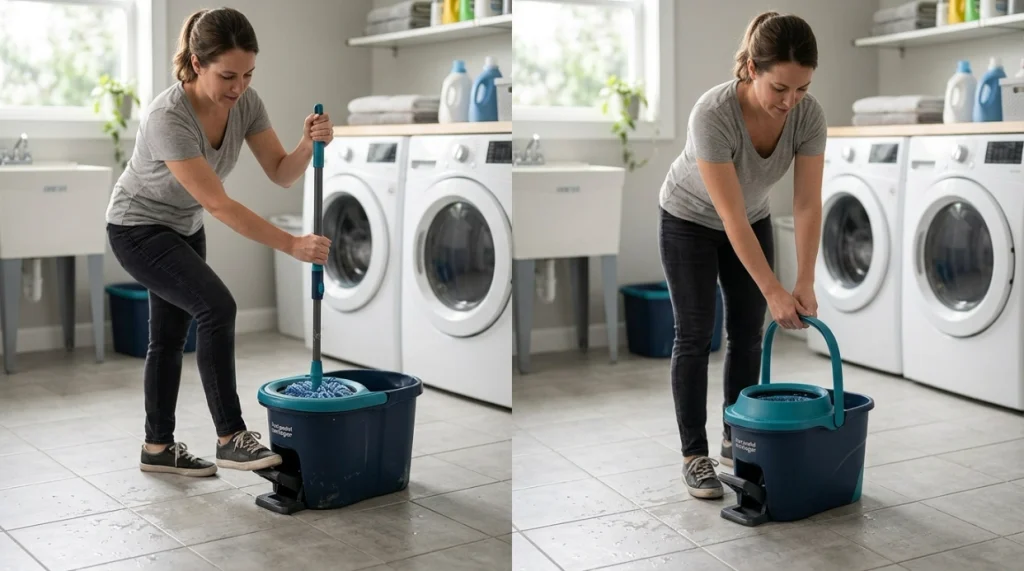
Both systems use centrifugal force to remove water from the mop head. The main difference is how you create that spinning motion.
| Feature | Foot-Pedal Spin Mop | Handle-Pump Spin Mop |
|---|---|---|
| Spin control | Bucket-mounted pedal | Downward handle movement |
| Hands during wringing | Stay mainly on handle | Operate handle directly |
| Bucket mechanism | Pedal, linkage, and spinner | Spinner with handle-driven action |
| Good match | Frequent whole-house cleaning | Small spaces and simpler buckets |
Neither system automatically cleans better. Mop-head material, technique, water control, and pad cleanliness matter more during actual floor contact.
My preference is the mechanism that lets me wring consistently without fighting the bucket. Consistent moisture matters more than spinning speed.
Single-Bucket vs. Dual-Chamber Spin Mops
A single-bucket spin mop is simpler and usually more compact. A dual-chamber design gives you more separation between stages of the cleaning process.
When a single bucket makes sense
- Limited storage: Smaller buckets fit more easily in closets and utility cabinets.
- Small cleaning areas: You may finish before the water becomes heavily soiled.
- Easy carrying: One simple container is convenient between rooms.
- Lower complexity: Fewer compartments can make rinsing the bucket easier.
When a dual-chamber system helps
- Large floor areas: Better separation becomes useful as you collect more soil.
- Busy households: Pet hair, outdoor dirt, and food spills can dirty mop water quickly.
- Frequent mopping: A dedicated rinse or cleaning section can improve workflow.
- Cleaner-water preference: Some systems limit how much dirty rinse water returns to the working side.
Don’t assume every two-section bucket works identically. Check whether the design truly separates water or simply separates washing from wringing.
Which Spin Mop Head Type Works Best?
The mop head changes how a spin mop reaches corners, follows uneven surfaces, and fits beneath furniture. Round microfiber heads are most common, but they’re not the only option.
Round microfiber spin mop heads
These heads use flexible strands arranged around a circular center. The strands spread as you mop and conform well to grout lines and uneven tile.
- Good for: Tile, vinyl, sealed concrete, and general hard-floor cleaning.
- Strength: Flexible fibers reach around chair legs and irregular edges.
- Limitation: A thicker round head may not fit beneath very low furniture.
Flat-head spin mops
A flat spin mop uses a low-profile rectangular or circular cleaning surface. Some systems still spin during rinsing and wringing.
- Good for: Open hardwood, laminate, and LVP areas when lightly damp.
- Strength: The thin head slides beneath sofas, cabinets, and beds.
- Limitation: It may conform less easily to deeply textured surfaces.
String-style heads
Longer microfiber or cotton-like strands hold more liquid and can cover rougher floors. They also become heavier when saturated.
For routine home cleaning, I prefer microfiber because it combines absorption with good soil pickup. It also works effectively with much less water than a dripping traditional mop.
Which Spin Mop Type Is Best for Each Floor?
The safest spin mop is the one you can wring to the moisture level your flooring allows. A soaked mop is unnecessary on most finished residential floors.
| Floor Type | Useful Spin Mop Style | Moisture Approach |
|---|---|---|
| Hardwood | Well-wrung microfiber | Minimal moisture |
| Engineered wood | Flat or microfiber head | Lightly damp only |
| Laminate | Highly wrung microfiber | Avoid standing water |
| Vinyl/LVP | Round or flat microfiber | Damp, not flooded |
| Ceramic/porcelain tile | Round microfiber | Moderate moisture |
| Natural stone | Soft microfiber | Use approved cleaner |
| Sealed concrete | Round/string microfiber | Moderate moisture |
Wood deserves extra care. NWFA guidance emphasizes well-wrung, minimally damp mopping rather than leaving substantial moisture on wood flooring.
For laminate and engineered products, I follow the flooring manufacturer’s instructions first. Seams and joints can be more vulnerable than the visible wear layer.
Safety note: Always check your flooring manufacturer’s care guide before changing cleaners, increasing water, or using a powered cleaning system.
Spin Mop vs. Other Mop Types
Spin mops are strongest when you want reusable microfiber, bucket cleaning, and adjustable wringing. Other mop styles can be better for quick touch-ups or specialized surfaces.
| Mop Type | Best Use | Water Control | Main Tradeoff |
|---|---|---|---|
| Spin mop | Whole-room wet cleaning | High when wrung well | Requires bucket storage |
| Flat microfiber mop | Low-moisture routine cleaning | High | Pad needs changing when dirty |
| Spray mop | Fast daily touch-ups | High | Limited rinsing during use |
| Steam mop | Compatible heat-safe surfaces | Machine controlled | Heat and steam aren’t safe for every floor |
| Traditional string mop | Large spills and rough floors | Depends on wringer | Can become heavy when wet |
A spin mop is not automatically more hygienic than another mop. Clean pads, fresh solution, correct technique, and proper drying all matter.
The CDC’s cleaning and disinfecting guidance also distinguishes ordinary cleaning from disinfection. Routine cleaning is often enough in homes unless illness or another specific reason makes disinfection necessary.
How Do You Choose the Right Spin Mop?
Start with the flooring you clean most often. Then consider the bucket and wringer instead of focusing only on brand names.
- Check moisture control. The wringer should let you take the mop from wet to lightly damp without hand squeezing.
- Check mop-head reach. A flexible head should enter corners and fit around furniture legs.
- Measure storage space. Large dual-chamber buckets need more closet or utility-room space.
- Consider carrying weight. Water quickly makes any bucket heavier, especially when cleaning several rooms.
- Look at replacement heads. Easy-to-find washable replacements help keep a mop useful longer.
- Check the drain design. A drain plug or manageable bucket shape makes dirty-water disposal easier.
- Match the mechanism to your mobility. A foot pedal and a handle-pump system use different body movements.
My rule is to prioritize the wringer before accessories. A mop that leaves too much water behind can create more work than a simpler system with strong moisture control.
For pets or children, washable spare mop heads are also useful. Changing a dirty head halfway through a large cleaning job can prevent spreading visible soil between rooms.
How Do You Use a Spin Mop Without Damaging Floors?
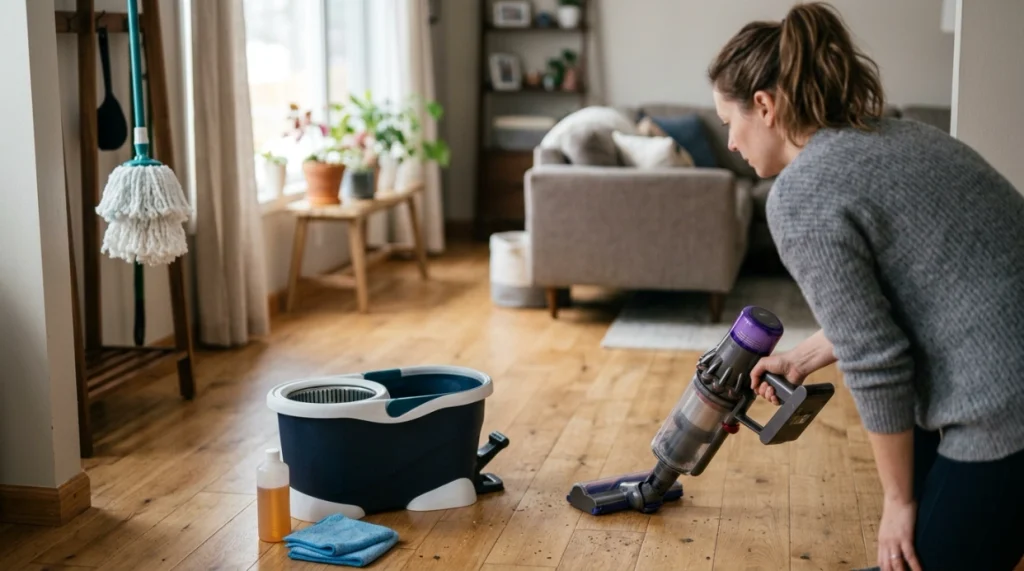
Sweep or vacuum loose grit before wet mopping. Sand, crumbs, and hard particles can move under the mop head and contribute to scratches.
Use less water than you think
Soak the mop head, then spin it until it feels damp instead of saturated. On moisture-sensitive floors, repeat the spin cycle before touching the floor.
Use a floor-compatible cleaner
A pH-neutral cleaner is often the safest starting category for finished hard floors. Use the amount directed on the product label because excess cleaner can leave residue.
Natural stone needs special attention because acidic cleaners can damage certain stone surfaces. Don’t assume a vinegar-based DIY solution is suitable for every floor.
Clean before you disinfect
The EPA distinguishes cleaning, sanitizing, and disinfecting. A normal spin-mop pass should not automatically be described as disinfection.
- Cleaning: Removes dirt, organic matter, and many germs from the surface.
- Sanitizing: Uses an appropriate process or product to reduce certain germs.
- Disinfecting: Uses an approved product and required contact time to kill specified microorganisms.
If you use a disinfectant, follow its label for dilution and wet-contact time. Never mix cleaning chemicals unless the manufacturer specifically instructs you to do so.
Safety note: Check both the cleaner label and flooring manufacturer’s care instructions before applying disinfectants, bleach solutions, acids, or strong alkaline products.
Wash the mop head after use
Rinse away visible dirt before storage. Machine-wash a reusable microfiber head when its care instructions permit it.
Let the head dry completely before putting it into an enclosed cabinet. Storing damp cleaning textiles can contribute to odor and unwanted microbial growth.
Section Takeaway: Good spin-mop technique is mostly about controlling moisture, removing loose grit first, using a compatible cleaner, and keeping the mop head clean.
Spin Mop FAQs
What type of spin mop is best?
The best type depends on your floor and cleaning routine. Foot-pedal systems offer convenient wringing, handle-pump models save pedal space, and dual-chamber buckets appeal to people who want more separation between cleaning and dirty water.
Are all spin mops microfiber?
No. Microfiber is common because it absorbs water and picks up fine soil well, but mop heads can also use string-style or blended materials. Replacement material varies by system.
Is a spin mop good for hardwood floors?
A well-wrung microfiber spin mop can suit some finished hardwood floors when the flooring manufacturer permits damp cleaning. Keep water minimal and wipe spills quickly rather than allowing moisture to remain on the wood.
Which is better, a spin mop or flat mop?
A spin mop is convenient for bucket-based whole-room cleaning and repeated rinsing. A flat microfiber mop is often better for low-moisture cleaning, tight storage, and fast maintenance between deeper cleaning sessions.
Is a dual-chamber spin mop better than a single bucket?
It can be better for larger or dirtier cleaning jobs because the design may separate stages of washing and rinsing. A single bucket remains easier to store and can work well for smaller homes.
What is the difference between a spin mop and an electric spin mop?
A traditional spin mop normally spins inside its bucket to remove water. An electric spin mop uses a motor to rotate pads against the floor, so the spinning action performs scrubbing rather than bucket wringing.
How often should I replace a spin mop head?
Replace it when fibers remain matted after washing, the head develops persistent odor, attachments become damaged, or cleaning performance drops. Washing frequency and floor conditions affect lifespan more than a fixed calendar interval.
Which Type of Spin Mop Should You Buy?
For most homes, a microfiber spin mop with strong wringing control is the most versatile starting point. Choose foot-pedal or handle-pump operation according to which movement feels easier for you.
A dual-chamber system makes more sense for large, busy floors. A compact single bucket is easier to store in apartments and smaller utility spaces.
If low furniture is your main problem, look for a flat or low-profile head. If textured tile and irregular edges dominate your home, a flexible round microfiber head can be more forgiving.
Most importantly, match the mop to the floor rather than forcing one cleaning method onto every surface. The right spin mop should help you remove dirt while leaving the floor only as wet as necessary.