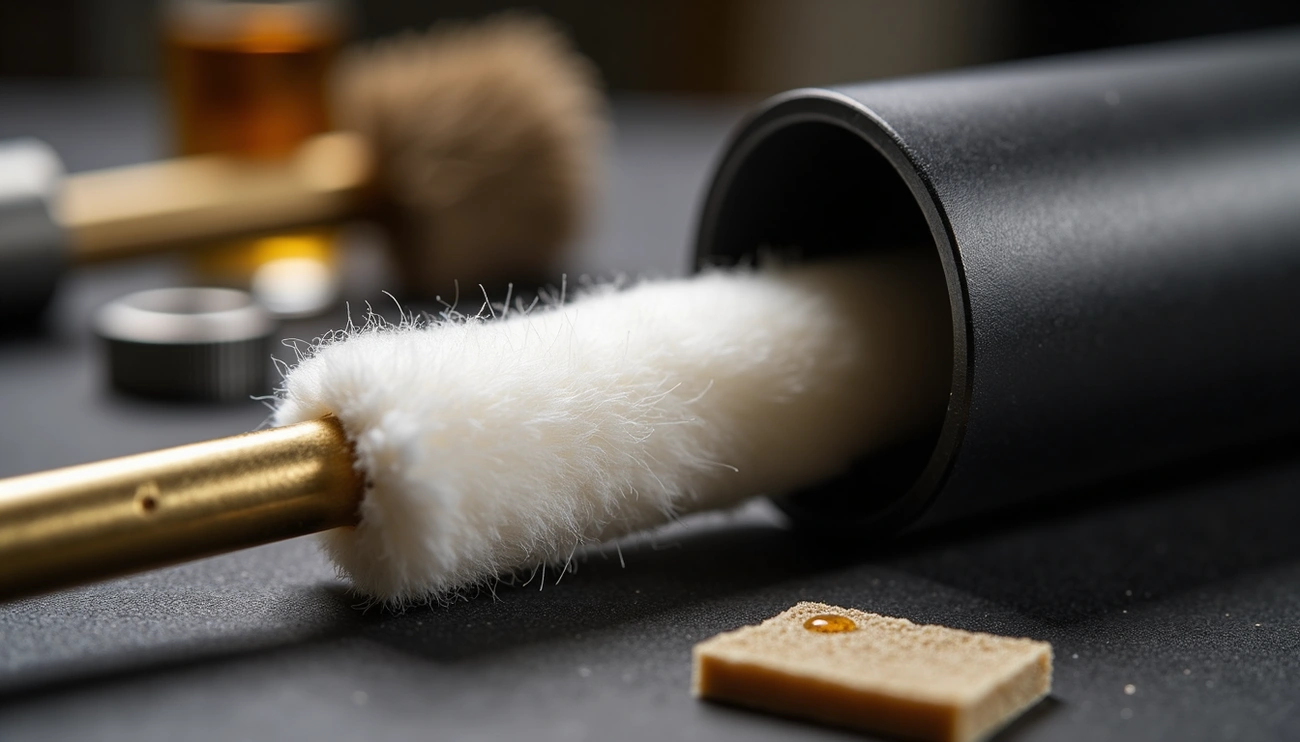
A bore mop is a soft cotton firearm-cleaning tool with a brass core used to apply lubricants, solvents, and rust preventatives inside a gun barrel. Bore mops remove loose fouling, clean chamber areas, and spread protective oils evenly. The soft cotton fibers protect the rifling and prevent scratches during routine firearm maintenance.
What Is a Bore Mop and Its Purpose
Definition of a Bore Mop
A bore mop consists of densely packed cotton fibers designed to match your barrel’s diameter. The construction features highly absorbent cotton material attached to a core with standard 8/32 threads that connect to cleaning rods. These mops come in various calibers ranging from .17 cal to .50 cal, accommodating both rifles and pistols. Quality bore mops use non-brass cores and threads to prevent false copper fouling indications when you apply copper-removing chemicals.
Primary Purpose of Bore Mop
The primary purpose involves applying cleaners and oils to your bore while also serving for polishing and drying. I use bore mops to create a light protective coating inside the barrel that prevents moisture-induced corrosion. The absorbent cotton soaks up gun oil efficiently, allowing you to spread it evenly throughout the bore with minimal product waste. Bore mops excel at flushing out any remaining fouling after brushing, ensuring your barrel stays clean between shooting sessions.
When to Use a Bore Mop in the Cleaning Process
Use a bore mop after completing the brushing and initial cleaning steps. Attach the mop to your cleaning rod, apply one or two drops of gun oil like Rem Oil or Hoppe’s oil in the chamber, then run it through from chamber to muzzle. Be sparing with oil application at this stage. The foaming action created by cotton mops helps distribute lubricant effectively throughout the bore. This step represents the final phase where you protect the cleaned barrel from environmental damage.
Why Bore Mops Are Essential for Firearm Maintenance
Bore cleaning directly impacts performance, safety, and longevity. A clean bore ensures accuracy by preventing buildup of fouling, copper, and lead deposits that alter bullet trajectory. In addition, proper bore maintenance promotes reliability and reduces the risk of malfunctions or misfires. Neglected bores can lead to dangerous overpressure situations caused by obstructions. Regular maintenance with bore mops combats corrosion and rust, safeguarding structural integrity and extending your firearm’s overall lifespan. By the same token, applying protective oil with a bore mop after each cleaning session keeps moisture away from vulnerable metal surfaces.
How to Use a Bore Mop Properly
Step 1: Prepare Your Cleaning Rod and Bore Mop
Confirm your firearm is completely unloaded before starting any maintenance work. Prepare your cleaning area with proper ventilation if you plan to use solvents. Select the bore mop that matches your firearm caliber, then attach it to your cleaning rod using the correct thread size: .17 and .20 caliber use 5-40 thread, .22 through .45 caliber use 8-32 thread, .50 caliber uses 8-32 thread, and shotguns require 5/16″-27 thread. Verify the mop attaches securely to prevent it from detaching mid-cleaning.
Step 2: Apply Solvent or Oil to the Mop
Apply your chosen solvent or lubricant directly to the bore mop. For oil application during the final protection stage, use only one or two drops in the chamber or on the mop itself. Excessive lubrication can cause problems, so err on the side of using less product.
Step 3: Run the Mop Through the Barrel
Insert the bore mop into the firearm’s bore gently. Pull the mop through the barrel in a smooth motion from chamber to muzzle. Move the mop back and forth to distribute the solvent or oil evenly. Make a few passes through the bore to flush out any remaining fouling and create an even protective coating.
Step 4: Inspect and Repeat if Necessary
Hold your bore up to the light and look through the chamber to inspect your work. You should see bright light reflected off a clean, mirror-like surface. Repeat the process as necessary until the bore appears clean.
Common Mistakes to Avoid When Using a Bore Mop
Never skip the unloading verification step. Over-lubricating ranks among the most frequent errors; excess oil attracts dust and can seep into ammunition, potentially causing malfunctions. Failing to use a bore guide on bolt-action rifles allows cleaning rods to damage the bore entrance and permits fouling to enter the action. Skipping visual inspection means you might miss remaining fouling or damage that affects accuracy and safety.
Bore Mop vs Patches and Other Cleaning Tools
Bore Mop vs Patches: Key Differences
Cleaning patches work alongside a jag or patch holder to clean your bore, apply solvents, and remove excess oils. Most patches come from cotton material, providing high absorbency and softness that won’t scratch your barrel. Patches are disposable, meaning you discard them after each use.
Bore mops, in contrast, are bulkier than patches and require cleaning after use. While patches excel at wiping and applying solvent when attached to a jag, mops distribute oil more evenly throughout the bore. Patches allow you to monitor cleaning progress since you can inspect each one for residue. However, mops collect and hold abrasives with every pass, which makes regular cleaning necessary to prevent damage.
Bore Brush vs Bore Mop: Understanding Their Roles
Bore brushes serve as your primary scrubbing tool for dislodging persistent fouling consisting of gunpowder remnants, lead, copper, and other residues. Bronze or brass brushes provide enough strength to remove tough deposits while remaining soft enough not to damage rifling. Nylon brushes work for lighter cleaning tasks and delicate barrels.
A cotton mop comes after brushing to apply oil or remove excess solvent. It’s not designed to scrub fouling but excels at finishing touches and protecting metal surfaces from corrosion. I use the bore brush first for aggressive cleaning, then switch to the mop for final oiling.
Chamber Brush vs Bore Brush: Which One to Use When
Chamber brushes measure roughly the same size as the outer diameter of your brass cartridge case, while bore brushes match the projectile diameter. Chamber brushes typically use stainless steel bristles that are stiffer than bore brush bristles. The bristles wind differently on chamber brushes compared to bore brushes.
Use chamber brushes for removing lead ring buildup in chambers, especially common when shooting lead bullets. Bore brushes clean the barrel itself. Chamber brushes sometimes won’t fit all the way down barrels due to their larger diameter.
How to Clean a Bore Mop and Maintain Your Cleaning Kit
Cleaning Your Bore Mop After Use
Cleaning methods for bore mops vary among shooters. Some rinse mops in rubbing alcohol similar to bore brushes, then let them dry completely. Others hand-scrub under hot water and dry thoroughly with a towel. Carb cleaner or electrical contact cleaner works well for removing stubborn residue. A mixture of dishwashing soap with a small amount of bleach cleans effectively, though you must rinse well and dry in a ventilated area.
That said, many shooters question whether reusing mops makes sense. Grit embedded in cotton fibers can scratch your bore if not completely removed. Given the low cost of replacement mops compared to harsh cleaning chemicals, disposing of heavily soiled mops and buying fresh ones proves more practical. If you choose to reuse mops, tie them in a sock and wash with work clothes to protect both the mops and your washing machine.
Drying and Storing Bore Mops Correctly
Store cotton bore mops in a cool, dry place away from direct sunlight and moisture. After cleaning your mops, ensure they’re completely dry before storage to prevent mildew growth. Zip-top bags work well for keeping individual mops separated and clean, though bags eventually wear out and need replacement. Keep oiler mops separate from dry mops to avoid cross-contamination.
When to Replace Your Bore Mop
Regularly inspect your mops for wear and tear. Replace mops when cotton fibers become matted, frayed, or discolored beyond cleaning. Damaged mops lose their absorbency and can introduce contaminants into your bore.
Conclusion
Bore mops represent an essential tool in your firearm maintenance arsenal. As shown above, they serve a specific purpose in the final protection stage, applying oil efficiently while removing excess solvent. By and large, using the right tool at the right time matters most. Choose bore mops for oiling, patches for monitoring cleaning progress, and brushes for scrubbing. Most important, clean or replace your mops regularly to prevent bore damage and keep your firearms performing safely for years to come.