
What Is a Dual Bucket Spin Mop? Complete 2026 Guide

Quick Answer
A dual bucket spin mop is a floor-cleaning system that separates clean water from dirty water while using a spinning wringer to control moisture in the mop head. Unlike a standard one-bucket spin mop, a two-bucket design helps stop used water from mixing back into your fresh cleaning supply. You can see this layout in the O-Cedar RinseClean two-bucket system.
What makes it different?
- Separate water: Fresh solution stays apart from water removed from the dirty mop head.
- Spin wringer: A pedal or handle mechanism spins excess water from the mop head.
- Moisture control: Extra spinning lets you make the mop head damp instead of dripping wet.
- Reusable head: Most systems use removable microfiber mop heads that can be washed after cleaning.
- Less dirty-water reuse: The design reduces the repeated dipping of a mop into increasingly dirty cleaning water.
Best use
- I find this style most useful for kitchens, tiled rooms, entryways, and other spaces where the mop water becomes dirty quickly.
If you’ve wondered what a dual bucket spin mop is, the basic idea is simple: it’s a spin mop designed to keep your floor-cleaning water cleaner during the job.
I’ve used enough traditional buckets to know how quickly clear water can turn gray. A two-bucket spin mop tackles that problem while keeping the easy wringing that makes spin mops popular.
In This Guide
- What is a dual bucket spin mop?
- How does a dual bucket spin mop work?
- Dual bucket vs single bucket spin mop
- Is a dual bucket spin mop cleaner?
- What floors can you clean with one?
- How do you use a dual bucket spin mop?
- What should you look for before buying?
- Common dual bucket spin mop mistakes
- Frequently asked questions
- Is a dual bucket spin mop worth it?
What Is a Dual Bucket Spin Mop?
A dual bucket spin mop is a manual mop system with separate areas for fresh cleaning water and used water. It also includes a spinning mechanism that removes excess moisture from the mop head.
You may also see it called a two-bucket spin mop, twin-bucket mop, clean-water spin mop, or clean-and-dirty-water mop.
Definition: A dual bucket spin mop is a floor mop that combines water separation with a rotating wringer, helping you rinse or wet the mop without continually mixing all collected dirt into the fresh-water supply.
What parts does the system usually include?
- Clean-water compartment: Holds fresh water or an approved diluted floor cleaner.
- Dirty-water compartment: Collects water removed from the used mop head.
- Spin basket: Rotates the mop head to remove excess liquid.
- Microfiber mop head: Absorbs liquid and collects loose soil from the floor.
- Pivoting handle: Helps the mop reach corners, edges, and areas under furniture.
- Pedal or push mechanism: Activates the spinner without hand-wringing.
Not every product uses exactly the same plumbing. Some models have two physical buckets, while others use stacked or divided chambers.
That’s an important detail. The words “dual bucket” can describe different layouts, so check where the dirty wringing water actually goes.
How Does a Dual Bucket Spin Mop Work?
The mop works by controlling where clean water and removed dirty water travel. You wet the mop, clean a section of floor, then spin excess contaminated water away from the mop head.
The exact process changes by model. Still, most systems follow the same general cycle.
- Fill the clean-water section. Add water and only the cleaner approved for your flooring and mop system.
- Wet the microfiber head. Dip or activate the system so clean water reaches the mop.
- Spin out excess water. Use the pedal or handle mechanism until the mop is damp enough for your floor.
- Mop a small area. Let the microfiber collect dust, residue, spills, and loose grime.
- Return the mop to the bucket. The system rinses or rewets the head according to its design.
- Spin again. Used liquid drains toward the dirty-water area instead of returning to the fresh supply.
- Repeat. Continue until the room is clean, changing water when needed.
That last point still matters. A two-bucket mop reduces dirty-water reuse, but it doesn’t mean you can clean an entire filthy house without changing anything.
When I clean a muddy entryway, I watch the mop head and dirty-water chamber. Once either becomes heavily soiled, I stop and rinse the system.
Dual Bucket vs Single Bucket Spin Mop: What’s the Difference?
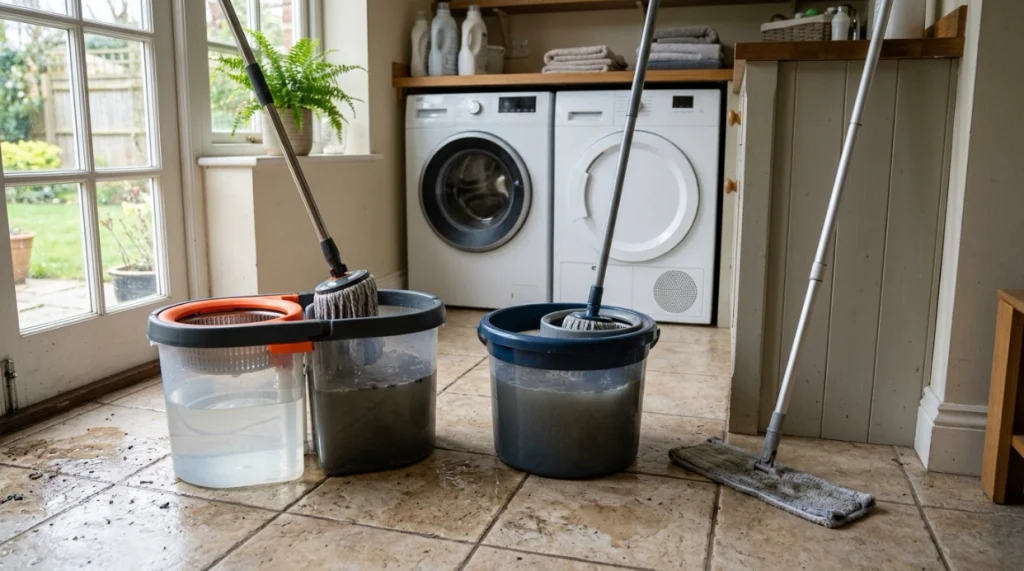
The main difference is water separation. A conventional single-bucket mop usually wets and rinses the mop in the same body of water.
A dual-bucket design tries to keep the fresh supply apart from the water removed after mopping.
| Feature | Dual Bucket Spin Mop | Single Bucket Spin Mop | Flat Microfiber Mop |
|---|---|---|---|
| Clean/dirty water separation | Yes, on true separation systems | Usually no | No bucket required |
| Wringing method | Spinner | Spinner | Pad absorbs limited liquid |
| Moisture control | Good | Good | Excellent for light damp mopping |
| Heavy soil | Well suited | Suitable, but water dirties quickly | May require several clean pads |
| Storage space | Usually highest | Moderate | Lowest |
I prefer dual buckets when I’m dealing with visible dirt that quickly darkens rinse water. For a lightly dusty bedroom, a flat microfiber mop is often simpler.
The best system depends on the mess. More complicated isn’t automatically better.
Is a Dual Bucket Spin Mop Cleaner?
A dual bucket spin mop can provide a cleaner mopping process because it reduces how much used water returns to the floor. It doesn’t sterilize the floor, however.
That’s an important distinction. Cleaning and disinfecting aren’t the same process.
The CDC’s household cleaning guidance explains that regular cleaning removes dirt and many germs. Routine home disinfection is generally unnecessary unless circumstances call for it, such as illness.
Why separate water helps
- Less recirculated soil: Used water has fewer chances to return to the fresh-water reservoir.
- Cleaner final passes: The mop can receive fresher water later in the cleaning job.
- Better visual feedback: A separate dirty-water chamber makes it easier to see what you’ve removed.
- Controlled dampness: Spinning limits the amount of water left on the floor.
Microfiber also matters. The fine fibers provide many contact points that collect dust and damp soil instead of relying only on water.
Don’t assume stronger chemicals make the process cleaner. For ordinary dirt, the correct cleaner, good agitation, fresh mop material, and proper moisture usually matter more.
The EPA Safer Choice program is also useful when you’re comparing household cleaning products with ingredients reviewed against its criteria.
Safety note: Always follow your flooring manufacturer’s care instructions and the cleaner label. Never mix cleaning chemicals unless the labels specifically direct you to do so.
What Floors Can You Clean With a Dual Bucket Spin Mop?
A dual bucket spin mop can work on many sealed hard floors, but the bucket design doesn’t determine floor safety. The amount of moisture and cleaning solution matters more.
Spin until the mop feels damp rather than saturated whenever the floor is sensitive to water.
| Floor Type | Dual Bucket Spin Mop? | Main Precaution |
|---|---|---|
| Sealed ceramic tile | Usually suitable | Avoid leaving puddles around grout |
| Porcelain tile | Usually suitable | Use a residue-free compatible cleaner |
| Vinyl/LVP | Usually suitable | Keep moisture away from damaged seams and edges |
| Laminate | Use cautiously | Wring thoroughly and avoid standing water |
| Sealed hardwood | Only when approved | Use minimal moisture and wood-floor-safe cleaner |
| Natural stone | Depends on stone and sealer | Avoid acidic cleaners unless specifically approved |
| Sealed concrete | Usually suitable | Match cleaner to the coating or sealer |
Wood deserves extra care because excess water can reach seams and unfinished areas. The National Wood Flooring Association provides technical and homeowner resources for wood-floor care.
My rule is simple: if I can see pools of water behind the mop, it’s wetter than I want on laminate or wood.
Safety note: Check the flooring manufacturer’s instructions before wet-mopping hardwood, engineered wood, laminate, natural stone, or any floor with damaged seams.
How Do You Use a Dual Bucket Spin Mop Correctly?
Good technique starts before the mop touches water. Remove dry grit first so it doesn’t turn into muddy residue or scratch-sensitive flooring.
- Vacuum or sweep. Remove crumbs, hair, sand, and loose debris.
- Check the floor instructions. Confirm that damp mopping and your chosen cleaner are allowed.
- Start with a clean mop head. Don’t begin with microfiber that already smells dirty or contains grit.
- Fill the clean-water chamber. Stay below the manufacturer’s maximum line.
- Add cleaner carefully. Use the label’s dilution instructions instead of pouring by eye.
- Wet the mop head. Make sure the fibers become evenly damp.
- Spin to the right moisture level. Use extra spins for laminate or other moisture-sensitive floors.
- Work in sections. A roughly 4-by-4-foot area is manageable for most routine cleaning.
- Rinse and spin regularly. Don’t wait until the mop is heavily gray with soil.
- Let the floor dry. Keep traffic off wet areas until they’re dry enough to walk safely.
Wet floors can create a slip risk. OSHA’s slip and fall guidance stresses keeping walking surfaces clean and dry in workplace settings, and the same practical caution makes sense at home.
When I’m mopping a kitchen, I start at the far side and work toward the exit. That keeps me from walking over freshly cleaned areas.
What Should You Look for Before Buying a Dual Bucket Spin Mop?
The words “dual bucket” alone aren’t enough to judge the design. Look closely at how the clean and dirty water actually move through the system.
- True water separation: Confirm that wrung-out liquid drains somewhere other than the clean-water reservoir.
- Easy wringing: A smooth foot pedal or push-to-spin handle should work without excessive effort.
- Stable bucket: A wide, balanced base helps prevent tipping during spinning.
- Useful drain: A drain plug can make a heavy dirty-water compartment easier to empty.
- Replaceable microfiber heads: Check whether refills are easy to purchase.
- Washable mop material: Reusable heads are more practical for frequent cleaning.
- Comfortable handle length: The handle should let you mop without staying bent forward.
- Bucket weight: Remember that several gallons of water quickly make a system heavy.
- Storage dimensions: Two-chamber systems can occupy more closet space than flat mops.
Does the spinner matter?
Yes. A good spinner gives you useful control over how wet the microfiber stays.
For tile, I may use a slightly wetter mop on sticky soil. For laminate, I keep spinning until the head feels only lightly damp.
Do you need wheels?
Wheels can help with a large bucket, but they’re not essential. A comfortable carry handle and stable shape can matter more in a small home.
Compact nesting buckets are especially useful if storage space is tight.
Common Dual Bucket Spin Mop Mistakes
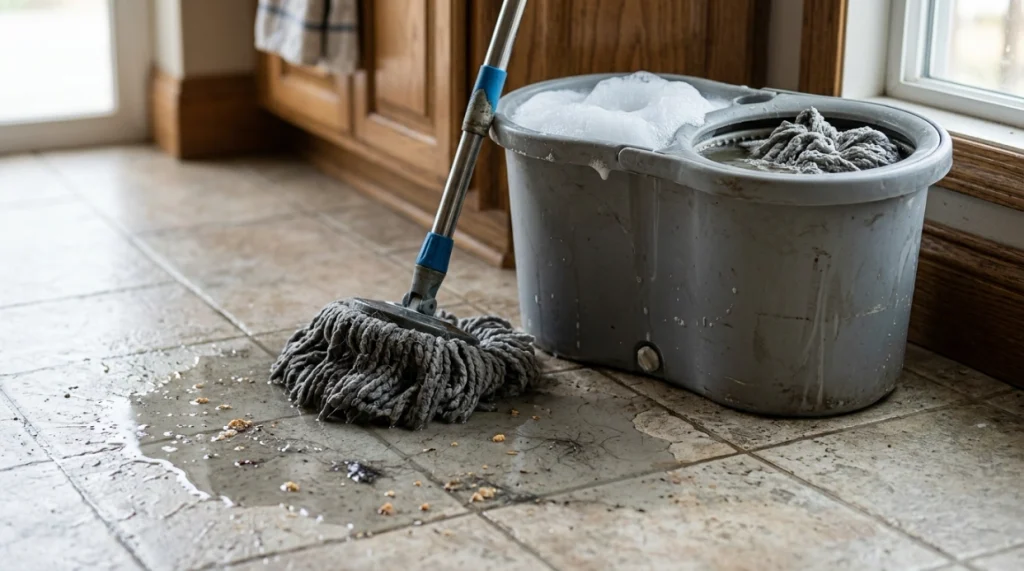
A better bucket cannot compensate for poor cleaning technique. These are the mistakes I see cause the most trouble.
- Skipping dry cleaning: Loose hair and grit quickly contaminate both the microfiber and water.
- Using too much cleaner: Excess detergent can leave a dull, sticky, or slippery film.
- Mopping too wet: A dripping head increases drying time and moisture exposure.
- Ignoring dirty microfiber: A badly soiled mop head won’t keep cleaning effectively just because the water supply is separated.
- Leaving dirty water overnight: Empty, rinse, and air-dry the bucket after use.
- Storing the mop head wet: Wash or rinse it and let it dry completely before storage.
- Using one cleaner everywhere: Tile, wood, laminate, vinyl, and stone may need different products.
- Assuming cleaning equals disinfecting: A spin mop removes soil; it doesn’t automatically disinfect a floor.
I also avoid homemade cleaner experiments on unfamiliar flooring. Vinegar, bleach, strong alkaline cleaners, and concentrated detergents can all create compatibility problems.
Safety note: Never combine bleach with ammonia, vinegar, or other household cleaners. Follow the product label and floor manufacturer’s instructions.
Frequently Asked Questions About Dual Bucket Spin Mops
Does a dual bucket spin mop always use clean water?
It keeps the fresh-water supply separate from dirty water on a true clean-and-dirty-water system. However, the mop head itself can still carry soil, so you’ll need to maintain the microfiber and empty the system when heavily soiled.
Is a dual bucket spin mop better than a regular mop?
It can be more convenient for larger or dirtier hard-floor areas because it combines easier wringing with cleaner water management. A simple flat microfiber mop may still be faster for small rooms, light dust, or quick daily cleaning.
Can I use a dual bucket spin mop on hardwood?
Only if your hardwood flooring manufacturer allows damp mopping. Wring the head thoroughly, use a wood-compatible cleaner, and never leave standing water on the floor or around plank seams.
Can I put floor cleaner in the clean-water bucket?
Usually, but follow both the mop manufacturer’s directions and the cleaner label. Some systems have restrictions on concentrates, oils, foaming products, or other formulas that could affect the mechanism.
How often should I change the dirty water?
Change it whenever the reservoir becomes full, heavily soiled, or starts making the mop difficult to rinse effectively. Very dirty kitchens and entryways may require an extra empty-and-rinse cycle during one cleaning session.
How often should I wash the microfiber mop head?
I wash it after each substantial floor-cleaning session. If you clean several dirty rooms, swapping to a fresh head during the job can prevent one overloaded mop head from carrying soil through the whole house.
Does a dual bucket spin mop disinfect floors?
No. The mop itself is a cleaning tool. Disinfection requires an appropriate disinfectant, correct surface compatibility, label-directed concentration, and the required wet contact time when disinfection is necessary.
Is a Dual Bucket Spin Mop Worth It?
A dual bucket spin mop makes the most sense when you like traditional wet mopping but dislike repeatedly putting your mop into visibly dirty water. The separate-water design gives that familiar method a useful upgrade.
It’s especially practical for tile, vinyl, sealed concrete, busy kitchens, and entryways where the water gets dirty fast.
I wouldn’t buy one solely because it has more parts. Look for true clean-and-dirty-water separation, a reliable spinner, washable microfiber, and a bucket you can comfortably empty and store.
For moisture-sensitive flooring, technique remains more important than the bucket. Spin thoroughly, use the correct cleaner, and leave the floor damp rather than soaked.
Choose the system that fits your floors and cleaning habits. A well-used simple mop will always beat a complicated mop used incorrectly.