
What Is a Rotary Mop? A Complete Spin Mop Guide for 2026

Quick Answer
A rotary mop is a floor-cleaning mop designed around a spinning or rotating action that helps rinse, wring, or clean the mop head. In most homes, the term refers to a spin mop with a round microfiber head and bucket-mounted spinner. It lets you control how wet the mop stays, which can make routine floor cleaning faster and less messy. For general household cleaning principles, see the CDC home-cleaning guidance.
What makes a rotary mop different?
- Rotating action: A spinner removes water from the mop head with centrifugal force.
- Moisture control: Extra spinning leaves the microfiber head drier for moisture-sensitive floors.
- Round mop head: The flexible head reaches around chair legs, corners, and tight spaces.
- Hands-free wringing: Most systems use a foot pedal or handle mechanism instead of hand squeezing.
- Reusable microfiber: Many rotary mop heads can be removed, washed, dried, and reused.
Best quick-use tip
- Spin the mop until it feels damp rather than dripping, then work in small sections toward the room exit.
If you’ve seen a round mop head spinning inside a bucket, you’ve already seen a rotary mop in action. I use this style of mop when I want the scrubbing reach of a traditional mop without leaving a floor covered in excess water.
The name can be confusing because “rotary mop” and “spin mop” are often used for the same floor-cleaning system. This guide explains what the term means, how the mechanism works, and where this type of mop makes sense.
In This Guide
- What Is a Rotary Mop?
- How Does a Rotary Mop Work?
- Rotary Mop vs Spin Mop, Flat Mop, and Steam Mop
- What Floors Can You Clean With a Rotary Mop?
- How Do You Use a Rotary Mop Correctly?
- What Are the Advantages and Disadvantages?
- How Do You Clean and Maintain a Rotary Mop?
- Rotary Mop FAQ
- Is a Rotary Mop Worth Using?
What Is a Rotary Mop?
A rotary mop is a reusable floor mop that uses a rotating mechanism to help rinse, wring, or move its cleaning head. In household cleaning, it usually means a bucket-style spin mop with a round microfiber mop head.
The “rotary” part describes the spinning action. It doesn’t mean you need an electric motor.
Rotary mop and spin mop terminology
In everyday product listings, rotary mop and spin mop often describe the same basic tool. The mop head connects to a handle and spins rapidly inside a wringer basket.
Some manufacturers also use “rotary mop” for powered floor cleaners with two rotating pads. Those machines are a separate category, so check the design before assuming both terms mean the same thing.
Main parts of a rotary mop
- Mop handle: Usually telescoping or sectional, with a joint near the cleaning head.
- Microfiber head: Absorbs water while its fibers collect dust, soil, and residue.
- Bucket: Holds clean water or floor-cleaning solution.
- Spinner basket: Rotates the mop head rapidly to remove excess liquid.
- Spin mechanism: May be operated by a foot pedal, handle movement, or built-in bucket mechanism.
Better systems may separate washing water from the wringing area. Some buckets also include splash guards, drains, wheels, or soap dispensers.
How Does a Rotary Mop Work?
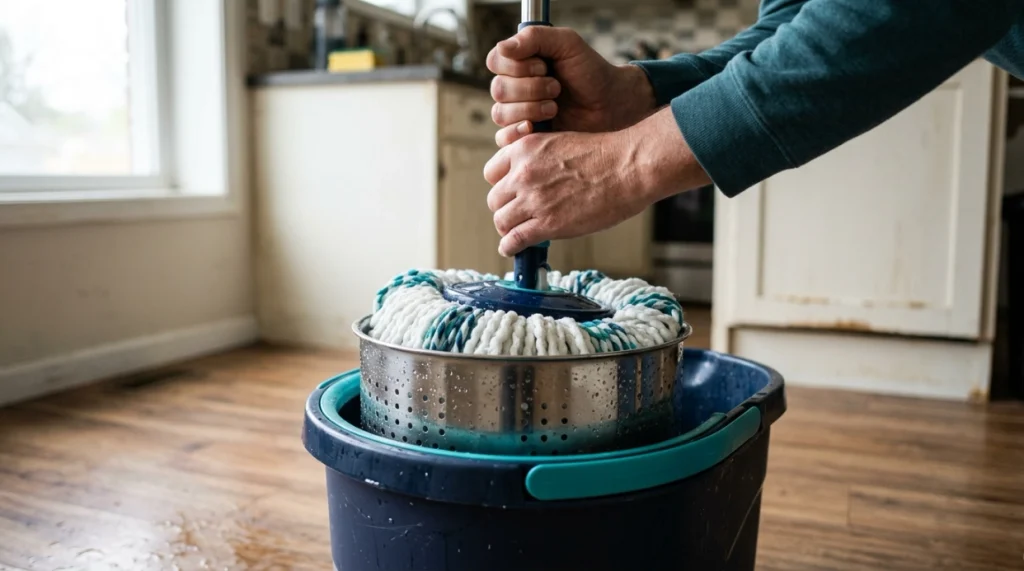
A rotary mop works by spinning its mop head at high speed inside a basket. That spinning action throws excess water away from the microfiber strands, leaving the head damp enough for controlled floor cleaning.
The same idea is used in a washing machine’s spin cycle. The mechanism does the wringing for you.
The basic cleaning cycle
- Wet the mop: Dip the microfiber head into clean water or correctly mixed floor cleaner.
- Loosen dirt: Move or agitate the mop in the washing side of the bucket.
- Transfer to the spinner: Place the mop head inside the wringing basket.
- Activate rotation: Press the pedal or pump the handle, depending on the design.
- Control moisture: Spin longer when you need a drier mop head.
- Clean the floor: Mop a small section using overlapping strokes.
- Repeat: Rinse before the head becomes heavily loaded with soil.
Why microfiber matters
Microfiber contains many fine synthetic fibers that create a large cleaning surface. Those fibers help collect small particles and absorb moisture instead of simply pushing water across the floor.
I notice the biggest difference in kitchens. A clean microfiber rotary head picks up fine crumbs and light greasy residue more effectively than an old cotton mop that has become saturated.
Rotary Mop vs Spin Mop, Flat Mop, and Steam Mop
A rotary bucket mop is usually another name for a spin mop, while flat and steam mops use different cleaning systems. The right choice depends on how much water you want, how dirty the floor gets, and what your flooring manufacturer allows.
| Mop Type | Wringing / Moisture Control | Best Use | Main Limitation |
|---|---|---|---|
| Rotary / spin mop | Spinner basket removes water | General hard-floor cleaning and larger rooms | Requires a bucket |
| Flat microfiber mop | Pad can be lightly dampened | Low-moisture maintenance and quick cleaning | Small pad may need frequent changes |
| String mop | Manual or lever wringer | Rough tile and heavier wet cleaning | Easy to leave excessive water |
| Spray mop | Controlled onboard spray | Fast everyday spot cleaning | Less rinsing capacity for dirty floors |
| Steam mop | Uses heated steam | Approved sealed surfaces | Not suitable for every floor |
Rotary mop vs regular string mop
The biggest practical difference is wringing control. A rotary spinner can remove much more loose water without forcing you to squeeze a dirty mop head by hand.
That control also makes it easier to adjust moisture between rooms. I might leave the mop slightly wetter for durable ceramic tile, then spin it several more times before moving onto a moisture-sensitive surface.
Rotary mop vs flat microfiber mop
A flat microfiber mop is lighter and easier to store. It’s one of my preferred tools for quick maintenance when a bucket would be unnecessary.
A rotary mop makes more sense when the floor needs repeated rinsing. The bucket gives you somewhere to release collected dirt before cleaning the next section.
What Floors Can You Clean With a Rotary Mop?
A rotary mop can clean many sealed hard floors, but the amount of moisture matters more than the spinning mechanism itself. Always match your cleaner and water level to the flooring manufacturer’s instructions.
Tile and sealed ceramic surfaces
Tile is one of the easiest places to use a rotary mop. The flexible round head moves around toilets, cabinets, chair legs, and irregular edges well.
Textured tile may require extra passes because dirt can sit inside low spots and grout lines. Don’t assume harder pressure is always better.
Vinyl and luxury vinyl plank
Rotary mops work well for many vinyl and LVP floors when the head is properly wrung. I aim for a damp surface that dries quickly rather than visible puddles between plank edges.
Use a cleaner approved for your particular product. Excess detergent can leave vinyl looking hazy or sticky.
Laminate flooring
Laminate usually calls for tighter moisture control. Spin the mop thoroughly and clean small areas so liquid doesn’t remain around seams.
If your flooring brand restricts wet mopping, follow that instruction instead. The mop’s versatility never overrides the floor’s care requirements.
Hardwood and engineered wood
Wood requires the most caution. The National Wood Flooring Association’s care guidance emphasizes minimal moisture and manufacturer-approved maintenance products.
I would use a rotary mop on wood only when the specific finish and manufacturer permit damp mopping. The mop head should feel well wrung rather than wet.
Natural stone
Stone such as marble, limestone, and travertine can react badly to acidic products. Choose a cleaner approved for your specific stone and finish.
Safety note: Always check your flooring manufacturer’s care guide before using water, steam, vinegar, disinfectants, or unfamiliar cleaning chemicals.
How Do You Use a Rotary Mop Correctly?
For the cleanest result, remove dry debris first, use the least moisture the floor needs, and rinse the mop before it becomes heavily soiled. Good technique matters more than spinning the mop as fast as possible.
Step-by-step rotary mopping method
- Clear the room: Move small objects, rugs, and lightweight furniture when practical.
- Dry-clean first: Sweep, vacuum, or dust mop hair, sand, crumbs, and grit.
- Check the cleaner: Confirm that it is approved for your flooring.
- Fill correctly: Add water and cleaner according to the product label.
- Wet the mop head: Submerge the microfiber without overfilling the bucket.
- Spin to the right dampness: Use additional spins for floors that need less moisture.
- Mop small zones: Work backward toward the exit with overlapping strokes.
- Rinse often: Don’t keep cleaning once the mop head looks gray or heavily soiled.
- Change dirty water: Replace solution when it becomes visibly cloudy or gritty.
- Let the floor dry: Keep foot traffic away until the surface is dry and no longer slippery.
How much cleaner should you add?
Use the amount printed on the cleaner’s label rather than adding an extra splash for “more cleaning power.” Too much product can create residue, streaks, dullness, or a sticky feel.
If ingredient selection matters to your household, the EPA maintains a searchable list of Safer Choice-certified products. Floor compatibility still needs to come first.
Safety note: Never mix household cleaning chemicals unless the product labels explicitly instruct you to do so.
What Are the Advantages and Disadvantages of a Rotary Mop?
A rotary mop’s main advantage is controlled wringing without touching the dirty mop head. Its main drawback is the bucket, which takes more storage space than a flat or spray mop.
Advantages
- Hands-free wringing: You don’t need to squeeze a dirty microfiber head manually.
- Adjustable dampness: More spinning removes more loose water.
- Good corner reach: Round heads flex around furniture legs and fixtures.
- Washable heads: Many microfiber replacements can be reused numerous times when cared for correctly.
- Useful for larger rooms: A bucket lets you rinse repeatedly without returning to a sink.
- No electricity required: Standard spin mops work mechanically.
Disadvantages
- Bulkier storage: The bucket occupies more space than a simple flat mop.
- Dirty-water management: Basic models may rinse and clean from the same water.
- More components: Pedals, bearings, handles, and spinner baskets can wear over time.
- Bucket lifting: A full bucket can become heavy and awkward to move.
- Not universal: Some flooring products require different cleaning methods.
Who benefits most from one?
I find rotary mops most useful in homes with several hard-floor rooms. They also suit people who dislike bending down to wring traditional mop heads.
For a studio apartment or quick daily touch-ups, a spray or flat microfiber mop may be more convenient. Tool choice should match the size and type of cleaning job.
How Do You Clean and Maintain a Rotary Mop?

Rinse the mop head after every use, wash it according to its care label, empty the bucket, and let every component dry before storage. A damp mop left inside a closed bucket can develop unpleasant odors.
After each cleaning session
- Empty dirty water immediately.
- Rinse loose debris from the mop head.
- Rinse detergent film from the bucket and spinner.
- Allow the bucket to drain and air-dry.
- Hang or position the mop head where air can circulate.
Washing a reusable microfiber head
Many detachable microfiber heads are machine washable, but check the manufacturer’s label first. Washing instructions can vary by fiber blend and mop design.
Avoid products the manufacturer says can coat or damage microfiber. A coated mop head may become less effective at collecting soil and absorbing liquid.
Cleaning is not always disinfecting
Routine floor care mainly focuses on removing dirt and grime. The EPA explains the distinction between cleaning, sanitizing, and disinfecting, and these processes are not interchangeable.
Disinfection may make sense in certain situations, but follow the disinfectant label and floor manufacturer’s directions. A chemical can be effective against germs yet still be unsuitable for a particular floor finish.
Safety note: Keep cleaning products away from children and pets, ventilate the room when labels require it, and never combine different disinfectants or cleaning chemicals.
Rotary Mop FAQ
Is a rotary mop the same as a spin mop?
Usually, yes. In household floor cleaning, “rotary mop” commonly describes a spin mop with a circular microfiber head and spinning wringer basket. However, some companies use rotary mop for powered machines with rotating pads, so check the product design before buying.
Does a rotary mop need electricity?
A standard bucket-style rotary mop doesn’t need electricity. The head usually spins through a foot pedal, handle-pumping mechanism, or manual bucket system. Powered rotary floor cleaners are different products and require a battery or electrical connection.
Can I use a rotary mop on hardwood floors?
Only use one when your hardwood flooring or finish manufacturer allows damp mopping. Wring the microfiber head thoroughly and avoid standing water. Wood-floor finishes vary, so a method that’s suitable for one hardwood floor may not suit another.
Can you use only water in a rotary mop?
Yes, plain water may handle light dust and some everyday soil on compatible surfaces. Grease, sticky residue, or heavier grime may need a floor-approved cleaner. Always follow your flooring manufacturer’s care instructions when choosing a solution.
How often should I change the mop water?
Change the water once it becomes visibly dirty, cloudy, greasy, or gritty. A busy kitchen may need fresh water sooner than a lightly used bedroom. Continuing with heavily soiled water can redistribute dirt instead of removing it effectively.
Why is my floor sticky after rotary mopping?
Sticky floors often point to too much cleaning solution, dirty mop water, or cleaner residue left behind. Check the recommended dilution, start with a clean mop head, and avoid repeatedly applying extra detergent to the same area.
How wet should a rotary mop be?
The head should usually be damp rather than dripping. Durable tile may tolerate more moisture, while laminate and approved wood surfaces need tighter control. Spin the mop longer whenever you need to reduce the amount of water reaching the floor.
Is a Rotary Mop Worth Using?
A rotary mop is a practical choice when you want a reusable microfiber mop, a full-size rinse bucket, and better control over wringing. For many homes, it’s an easier-to-manage version of the traditional mop-and-bucket setup.
The spinner is useful, but it isn’t what makes the floor clean. Start with loose-dirt removal, use a suitable cleaner, keep the mop head reasonably clean, and avoid excessive water.
As of 2026, I still see the biggest advantage in one simple feature: you can adjust moisture without touching the mop head. That makes a rotary mop especially useful when your home has several types of sealed hard flooring.
Before using one on laminate, hardwood, engineered wood, or natural stone, check the floor maker’s care instructions. With the right surface and technique, a rotary mop can be a convenient everyday floor-cleaning tool.