
What Is a Spin Mop Wringer? How It Works and Why It Matters

Quick Answer
A spin mop wringer is the rotating basket inside a spin-mop bucket that removes excess water from the mop head. Instead of twisting microfiber by hand, you place the mop head inside the basket and activate its spinning mechanism. Good moisture control matters because the CDC recommends using cleaning products appropriate for the surface you’re cleaning.
What the wringer does
- Removes water: Fast spinning pushes water out of the microfiber mop head.
- Controls dampness: More spinning usually leaves the mop head drier.
- Reduces hand wringing: Your hands don’t need to squeeze a wet, dirty mop.
- Speeds cleaning: Wringing can take only a few seconds between floor sections.
- Helps limit puddles: A properly wrung mop deposits less unnecessary water on the floor.
Quick tip
- For moisture-sensitive flooring, keep spinning until the mop feels damp rather than dripping wet.
If you’ve looked inside a spin mop bucket and wondered what the round basket does, that’s the wringer. It’s one of the features that makes a spin mop different from a traditional string mop and bucket.
I’ve found that understanding the wringer also makes it easier to control how wet the mop becomes. In this 2026 guide, I’ll explain the mechanism, common designs, floor compatibility, correct technique, and maintenance.
In This Guide
- What Is a Spin Mop Wringer?
- How Does a Spin Mop Wringer Work?
- What Types of Spin Mop Wringers Are There?
- Spin Mop Wringer vs Traditional Wringer
- How Do You Use a Spin Mop Wringer Correctly?
- Can You Use a Spin Mop on Every Floor Type?
- Why Is My Spin Mop Wringer Not Working?
- How Do You Clean and Maintain a Spin Mop Wringer?
- Spin Mop Wringer FAQ
What Is a Spin Mop Wringer?
A spin mop wringer is a rotating basket that removes water from a wet mop head through rapid spinning. It usually sits inside or above one side of the mop bucket.
The basket normally has slots or openings around its sides. Water leaves the microfiber strands during spinning and passes through those openings into the bucket.
Is the wringer the same thing as the bucket?
No. The bucket holds water, while the wringer is the spinning component used to control moisture in the mop head.
A complete spin mop system can include several separate parts:
- Mop handle: Connects your hand to the rotating mop head.
- Microfiber head: Absorbs cleaning solution and picks up floor soil.
- Water reservoir: Holds water or an approved cleaning solution.
- Wringer basket: Spins water out of the mop head.
- Drive mechanism: Uses a pedal, handle, lever, or other movement to create rotation.
Some buckets combine the washing and wringing areas closely together. Others separate them so the mop moves from the rinse area to a dedicated spinning basket.
Why does moisture control matter?
A dripping mop leaves more water behind than most floors need. That can mean longer drying times, streaks, wet footprints, and unnecessary exposure to moisture.
The wringer lets you adjust that moisture without squeezing microfiber by hand. In practice, I often spin longer for wood-look flooring and leave the head slightly wetter for durable tile.
How Does a Spin Mop Wringer Work?
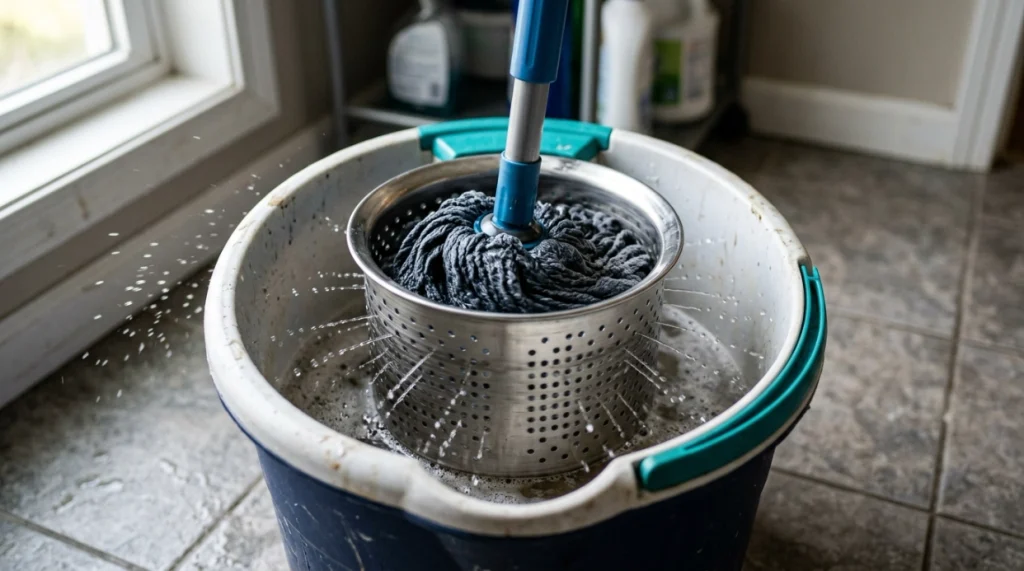
A spin mop wringer works by rotating the mop head at speed inside a perforated basket. The spinning action throws water outward from the microfiber and into the surrounding bucket area.
What happens inside the basket?
- The wet mop enters the basket. The strands should sit evenly inside rather than hanging over the rim.
- The drive mechanism starts spinning. A pedal, moving handle, or built-in system rotates the mop and basket.
- Water moves away from the mop head. It passes through the basket openings.
- The mop becomes progressively drier. Additional spins generally remove more moisture.
- You return to mopping. The head should feel damp enough to clean without constantly dripping.
The outward effect of the rotation is commonly described using centrifugal force. You don’t need to understand the physics to use it effectively.
Does spinning clean the mop head too?
Wringing and washing aren’t exactly the same job. The wringer mainly removes liquid already trapped in the mop fibers.
You normally loosen soil by rinsing or agitating the mop head first. Then you move it into the wringer to remove the dirty water.
When I clean a muddy kitchen entry, that distinction becomes obvious. Spinning a heavily soiled mop without rinsing first can leave plenty of grime trapped in the fibers.
What Types of Spin Mop Wringers Are There?
Most home spin mops use either a foot-pedal mechanism or a handle-activated mechanism. The cleaning principle is similar, but the way you create the rotation changes.
Foot-pedal wringer
A foot-pedal system has a pedal near the bottom of the bucket. Pressing it repeatedly powers the spinning basket.
- Main advantage: Your hands can keep holding the mop upright.
- Moisture control: Extra pedal presses can increase wringing.
- Possible drawback: The pedal and gears add moving parts to the bucket.
Handle-activated wringer
With this design, pushing the mop handle downward starts the spinning action. Some designs use a telescoping or pump-style motion.
- Main advantage: There’s no separate foot pedal to operate.
- Moisture control: Repeated downward motions produce additional spins.
- Possible drawback: Incorrect handle alignment can make spinning awkward.
Separate rinse-and-wring systems
Some newer buckets give rinsing and drying their own zones. The goal is to reduce how much dirty water remains in the mop before it returns to the floor.
These designs can be useful for larger areas. However, extra chambers can make the bucket bulkier to store and clean.
Spin Mop Wringer vs Traditional Wringer
A spin wringer usually offers easier moisture adjustment than the squeeze mechanisms found on traditional mop buckets. It also reduces how often you need to touch the wet mop head.
| Wringer Type | How It Removes Water | Moisture Control | Hand Contact | Best Fit |
|---|---|---|---|---|
| Spin wringer | Rapid rotation | High | Low | Routine home mopping |
| Side-press wringer | Compression | Moderate | Low | Commercial-style string mops |
| Roller wringer | Pressure between rollers | Moderate | Low | Compatible sponge or specialty mops |
| Hand wringing | Manual twisting or squeezing | Variable | High | Simple mop-and-bucket setups |
A spin mop also differs from a steam mop. A standard spin mop controls water mechanically, while a steam mop heats water and delivers hot vapor through a pad.
It also differs from an electric spin mop. Electric models use powered rotating pads to scrub the floor, while a bucket-style spin mop usually performs its high-speed spinning during wringing.
How Do You Use a Spin Mop Wringer Correctly?
The correct method is simple: wet the mop, rinse or agitate it, place it centrally in the wringer, spin, and check the moisture level. The mop shouldn’t splash heavily when you lift it out.
- Remove loose debris first. Sweep or vacuum grit, crumbs, hair, and dust.
- Fill the bucket appropriately. Stay below any maximum-fill marking.
- Wet the mop head. Let the microfiber absorb enough solution to clean.
- Rinse or agitate it. Loosen trapped dirt before wringing.
- Center the head in the basket. Keep loose strands away from the rim.
- Activate the wringer. Use the pedal or handle according to its design.
- Check the moisture level. Spin again if the mop still drips heavily.
- Mop a manageable section. Rinse again once the fibers become dirty.
How dry should the mop be?
For most routine floor cleaning, I aim for damp microfiber rather than saturated microfiber. The floor should receive enough solution to loosen soil without being flooded.
For cleaning-product selection, the EPA Safer Choice program provides information about products made with ingredients that meet its safety and performance criteria.
Safety note: Always follow your flooring manufacturer’s care instructions and the cleaner’s product label before applying a solution.
Can You Use a Spin Mop on Every Floor Type?
A spin mop can work on many hard floors, but the wringer doesn’t make every cleaner or moisture level safe for every surface. Floor-specific care guidance still comes first.
Tile
Sealed ceramic and porcelain tile usually tolerate damp mopping well. A spin mop can also reach textured areas where a light flat-mop pass may struggle.
Vinyl and LVP
Vinyl and luxury vinyl plank usually benefit from controlled moisture. I wring the head well and avoid leaving standing water around seams and edges.
Hardwood and engineered wood
Wood needs greater moisture control. The National Wood Flooring Association’s consumer resources emphasize proper maintenance and care for real wood floors.
I would use a spin mop on compatible wood only when the head is thoroughly wrung and the flooring maker permits damp mopping. More water isn’t better cleaning.
Laminate
Laminate should generally be cleaned with minimal moisture according to its manufacturer’s instructions. Pay particular attention to edges, damaged joints, and areas where liquid could sit.
Natural stone
Stone can react badly to unsuitable cleaners even when the mop itself is gentle. Use a cleaner approved for your particular stone and finish.
Safety note: Check the flooring manufacturer’s care guide before using a spin mop, vinegar solution, disinfectant, or unfamiliar floor cleaner.
Why Is My Spin Mop Wringer Not Working?
A wringer that stops spinning usually has an alignment, blockage, drive-mechanism, or wear problem. Start with simple checks before assuming the entire bucket has failed.
The basket will not spin
- Check mop placement: A badly angled head may prevent smooth rotation.
- Inspect for debris: Hair, string, or mop fibers can catch around moving parts.
- Check the pedal or handle: Make sure it moves through its normal range.
- Look for damage: Cracked gears or loose internal parts may need replacement.
The mop stays too wet
First, make sure the basket reaches a useful spinning speed. Slow or incomplete rotation will remove much less water.
Try several additional spins with the mop centered correctly. An overloaded or tangled mop head can also reduce wringing efficiency.
The bucket shakes or slides
Uneven mop placement can make the spinning basket wobble. Stop the mechanism and recenter the head rather than holding a shaking bucket with your foot.
Place the bucket on a level, stable surface. Wet floors themselves are a slip risk, and OSHA’s housekeeping guidance highlights the importance of keeping walking surfaces clean and dry.
The pedal feels stuck
Don’t force a jammed pedal repeatedly. Inspect the accessible parts according to the manufacturer’s instructions and remove visible debris with the bucket empty.
If gears, springs, or internal components are broken, replacement is safer than improvised repairs that may fail while the wringer is spinning.
How Do You Clean and Maintain a Spin Mop Wringer?

Rinse the bucket and wringer after dirty cleaning jobs, and let the system dry before storage. Residue left inside the basket can create odors and interfere with moving parts.
After normal mopping
- Empty dirty water. Don’t store the mop bucket full.
- Rinse the bucket. Remove visible soil and cleaner residue.
- Rinse the wringer basket. Clear microfiber strands or hair caught around it.
- Clean the mop head. Follow its washing instructions.
- Dry the parts. Store the bucket open until trapped moisture has evaporated.
What should you avoid?
- Don’t overload the basket: Use the mop head size designed for the system.
- Don’t force jams: Stop and inspect the mechanism first.
- Don’t store dirty water: Empty and rinse the bucket after cleaning.
- Don’t assume every chemical is compatible: Check both mop and flooring instructions.
- Don’t store the mop head soaking wet: Clean and dry it as directed.
One habit has made the biggest difference in my routine: I rinse the wringer before residue dries around its openings. That takes less effort than scrubbing old grime from the basket later.
Spin Mop Wringer FAQ
What does the wringer do on a spin mop?
The wringer spins a wet mop head to remove excess liquid. Water leaves the microfiber through the openings in the basket, giving you more control over how damp the mop remains before it returns to the floor.
Is a spin mop wringer better than hand wringing?
It is usually more convenient because you don’t need to squeeze the dirty mop head directly. A spinning basket can also provide repeatable moisture control, although performance depends on the mop design and condition of its mechanism.
How many times should I spin a spin mop?
There’s no universal number because mechanisms spin at different speeds. Start with a few full pedal presses or handle cycles, then check the mop; continue until it is damp enough for your floor without dripping excessively.
Can I use the wringer without water in the bucket?
The wringer itself may mechanically spin without a full bucket, depending on the design. However, follow the manufacturer’s operating instructions because the correct water level, balance, and operating method vary among spin mop systems.
Why does my spin mop still leave the floor wet?
The mop head may need more wringing, the basket may not be reaching full speed, or the mop may be overloaded with water. Cleaner overuse can also leave a wet-looking film or residue after the water itself starts drying.
Can a spin mop wringer damage microfiber?
A compatible wringer should be designed for its matching microfiber head. Damage is more likely when fibers become trapped around the basket, the wrong replacement head is installed, or the mechanism is operated while the mop sits crooked.
Do spin mops separate clean and dirty water?
Not automatically. Some systems have separate washing and wringing zones or clean-water features, while basic spin mop buckets use one main water reservoir. Check the bucket design rather than assuming the wringer itself separates clean and dirty water.
The main takeaway is simple: the wringer is what gives a spin mop its useful moisture control. Use it to make the mop damp enough to clean while avoiding more water than your flooring needs.
Before your next cleaning session, check how smoothly the wringer turns and how wet the mop feels after spinning. Those two details can make routine floor cleaning faster, cleaner, and easier to control.