
What Is the Best Mop for Kitchen Floors?

Quick Answer
For most kitchen floors, the best all-around choice is a microfiber spray or flat mop because it controls moisture and works on many surfaces. A steam mop is excellent for sticky grease on steam-approved ceramic or porcelain tile, but it should not be treated as a universal option, especially on wood; the National Wood Flooring Association maintenance guidance advises against steam mopping wood floors.
What matters most
- Floor compatibility: Choose a mop that matches your exact kitchen flooring material.
- Moisture control: Wood, laminate, and plank floors need much less water than tile.
- Grease removal: Steam or a washable microfiber pad helps with dried food and cooking residue.
- Easy pad changes: Fresh pads stop dirty kitchen grime from being spread across the room.
- Fast setup: A lightweight mop encourages quick cleanup after spills instead of letting messes dry.
My practical rule
- Use microfiber for versatility and reach for steam only when your floor manufacturer specifically permits it.
Kitchens put more pressure on a mop than almost any other room. Crumbs, cooking oil, footprints, spilled drinks, and dried food often appear on the same floor.
I have found that choosing the best mop for kitchen floors is less about buying the most powerful machine. It is about matching the cleaning method to the surface, mess, and amount of moisture that floor can safely handle.
In This Guide
- What Is the Best Mop for Kitchen Floors?
- Which Mop Type Works Best in a Kitchen?
- Are Steam Mops Good for Kitchen Floors?
- What Mop Should You Use for Each Kitchen Floor Type?
- What Features Should a Kitchen Mop Have?
- How Do You Mop a Kitchen Floor Properly?
- What Kitchen Mopping Mistakes Should You Avoid?
- Kitchen Mop FAQs
- Which Kitchen Mop Should You Choose?
What Is the Best Mop for Kitchen Floors?
A microfiber spray mop is the best general-purpose kitchen mop for most households. It combines good dirt pickup with precise moisture control and quick setup.
A microfiber mop uses thousands of fine synthetic fibers to trap dust, crumbs, grease, and small particles. Unlike a dripping string mop, it can clean with a lightly damp pad.
I especially like this design for kitchens with laminate, vinyl, engineered flooring, or several connected floor surfaces. You can treat a dirty patch without flooding the whole room.
- Best overall: Microfiber spray mop for routine cleaning.
- Best for steam-safe tile: Steam mop for dried spills and greasy residue.
- Best for heavily soiled tile: Spin mop with a well-wrung microfiber head.
- Best for wood: Flat microfiber mop with minimal moisture.
- Best for quick spills: Lightweight spray mop.
- Best for crumbs plus wet messes: Vacuum-mop or floor washer approved for the surface.
Kitchen floors also benefit from washable pads. I prefer keeping at least three clean pads available because one pad can become greasy surprisingly quickly near a stove.
Changing the pad midway through a dirty kitchen often produces a cleaner finish than adding more solution. Once microfiber becomes saturated, it starts pushing residue instead of collecting it.
Which Mop Type Works Best in a Kitchen?
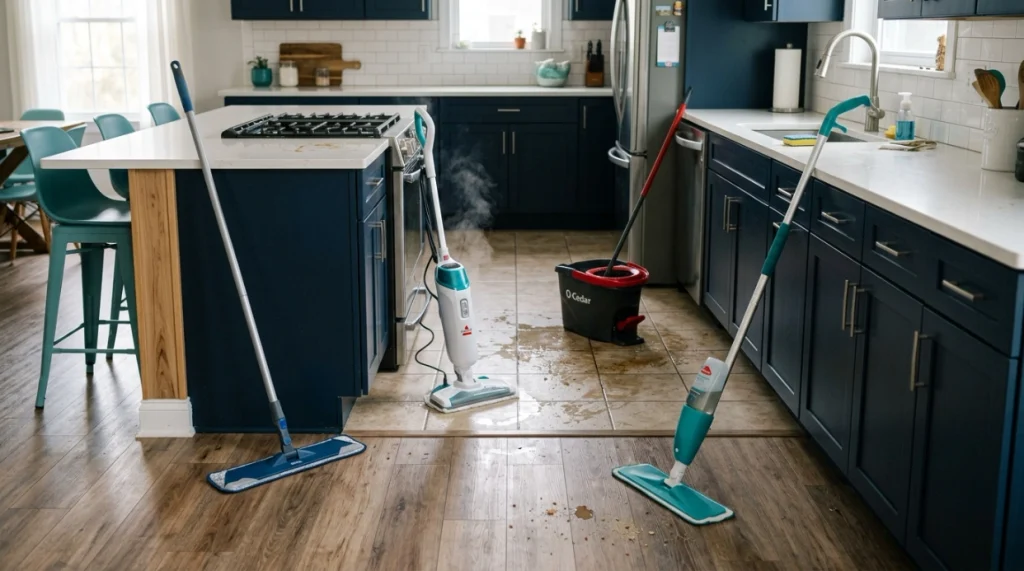
No single mop wins every kitchen cleaning job. The main differences are moisture control, scrubbing ability, floor compatibility, and setup time.
| Mop Type | Best Kitchen Use | Moisture Control | Main Limitation |
|---|---|---|---|
| Microfiber spray mop | Routine dirt, footprints, small spills | Excellent | Limited heavy scrubbing |
| Steam mop | Sticky grime on approved tile | Moderate | Restricted floor compatibility |
| Spin mop | Larger dirty areas and textured tile | Good when well wrung | Requires bucket and more setup |
| Flat microfiber mop | Wood and moisture-sensitive floors | Excellent | Cleaner applied separately |
| Vacuum-mop | Crumbs plus wet messes | Machine controlled | Heavier and more maintenance |
A spray mop is normally my first choice for weekday cleaning. I can pull it out, clean the cooking zone, rinse the pad, and put it away quickly.
For a tile kitchen after a large cooking session, I may prefer steam or a spin mop. Dried sauce and greasy footprints often need more agitation than a light spray provides.
Are Steam Mops Good for Kitchen Floors?
Steam mops can be excellent kitchen cleaners when the flooring is both sealed and approved for steam. They are particularly useful for sticky food residue on ceramic and porcelain tile.
A steam mop is an electric floor-cleaning appliance that heats water and delivers vapor through a washable pad. Heat loosens the mess, while the pad provides the wiping action needed to remove it.
Where steam works particularly well
- Dried juice and sugary drink spills
- Light cooking grease
- Food splatters near a stove
- Tracked-in dirt on textured tile
- Surface grime around kitchen work zones
Steam does not remove loose crumbs by itself. Sweep or vacuum first unless your machine has a genuine vacuum function.
I also avoid letting the mop sit steaming in one spot. Continuous movement reduces concentrated heat and moisture exposure.
Does a steam mop disinfect a kitchen floor?
Do not assume every quick steam pass disinfects a floor. A machine needs validated temperature, technique, and contact-time instructions before a specific sanitizing or disinfecting claim should be relied upon.
The CDC’s cleaning and disinfecting guidance notes that routine cleaning is enough in many household situations. Disinfection becomes more relevant when illness or another specific contamination concern exists.
Safety note: Always check both the flooring manufacturer’s care instructions and the steam mop manual before using heat or moisture on a kitchen floor.
What Mop Should You Use for Each Kitchen Floor Type?
Your kitchen flooring material should decide the cleaning method before convenience does. A mop that is excellent on tile can be unnecessarily risky on wood or laminate.
Ceramic and porcelain tile
Tile is one of the best candidates for steam when the tile, grout, and installation are in good condition. A steam mop can soften sticky residue without requiring a bucket of cleaning solution.
A microfiber spray or spin mop also works well. Choose one of those when you need more liquid control or the grout manufacturer discourages steam.
Hardwood and engineered wood
Use a flat microfiber mop with a slightly damp pad. Keep water out of plank joints and wipe spills promptly.
The NWFA recommends avoiding wet mops and steam mops on wood flooring. That makes low-moisture microfiber cleaning the safer general choice.
Laminate
A microfiber spray mop is usually my first choice for laminate kitchens. It gives you control over exactly how much cleaner reaches the floor.
Water should not pool along the plank edges. Steam should only be considered when the manufacturer of your exact laminate specifically permits it.
Vinyl and LVP
Flat microfiber and spray mops work well for most vinyl kitchen floors. They clean footprints and cooking residue without leaving excessive water behind.
Do not assume that a floor marketed as waterproof automatically tolerates high-temperature steam. Installation method, adhesives, seams, and manufacturer instructions still matter.
Natural stone
Use a soft microfiber mop and a cleaner approved for your specific stone and sealer. Marble, limestone, and other acid-sensitive stone require particular care.
A pH-neutral cleaner is often the safer category. Avoid experimenting with acidic homemade mixtures unless your stone-care instructions permit them.
Safety note: Floor finishes and installation systems differ, so follow the care guide supplied with your exact flooring before changing cleaners or mopping methods.
Section Takeaway: Match the mop to the floor first. Microfiber is broadly useful, while steam is a more specialized tool for surfaces specifically approved for heat and moisture.
What Features Should a Kitchen Mop Have?
The best kitchen mop should be easy enough to use immediately after a spill. Complicated setup often turns a two-minute cleanup into something you postpone.
Washable microfiber pads
Look for pads that attach securely and come off without touching the dirtiest area. Multiple pads are useful for kitchens because grease builds up faster than ordinary dust.
Good moisture control
A spray trigger, well-designed wringer, or adjustable steam control helps prevent overwetting. This matters most on plank floors and around seams.
Low-profile swivel head
Kitchen dirt collects around toe kicks, table legs, islands, and appliances. A thin rotating head reaches those areas more easily than a bulky fixed mop.
Comfortable weight
Heavy machines can clean well but become annoying during quick daily jobs. Try to balance cleaning power against the amount of lifting and steering required.
Easy tank or bottle access
If you choose steam or a spray system, check how quickly the reservoir can be removed and refilled. Complicated tanks make small cleanups less convenient.
Replaceable pads and parts
Check replacement-pad availability before buying. A mop loses much of its value if compatible pads disappear after a year.
How Do You Mop a Kitchen Floor Properly?
Good technique matters almost as much as the mop itself. Kitchen grease becomes harder to remove when you simply smear it into loose crumbs and dust.
- Remove loose debris. Sweep or vacuum crumbs, grit, hair, and food particles first.
- Spot-treat dried messes. Give stubborn residue time to soften with a floor-safe cleaning method.
- Start with a clean pad. A dirty pad can leave haze before you finish the first section.
- Work in small zones. I usually divide the kitchen into cooking, sink, dining, and traffic areas.
- Use only enough moisture. The floor should not remain covered with standing water.
- Change dirty water or pads. Stop once the mop starts redistributing grime.
- Let the floor dry. Keep people and pets away until it is dry to reduce footprints and slips.
More cleaner is not automatically better. Excess detergent can leave a film that catches dirt and makes a freshly mopped kitchen look dull.
If you want a product with ingredients screened against EPA criteria, the EPA Safer Choice product search is a useful place to investigate cleaning options. Floor compatibility still needs to be checked separately.
Safety note: Follow cleaner-label dilution instructions and never mix cleaning chemicals unless the product directions explicitly tell you to do so.
What Kitchen Mopping Mistakes Should You Avoid?
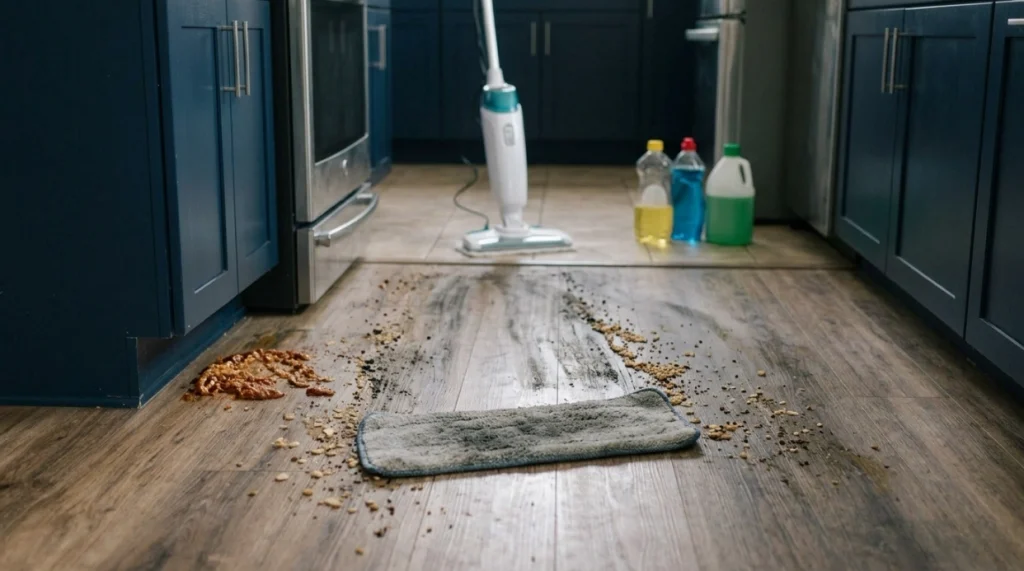
The most common kitchen mopping problems come from too much water, dirty pads, and using the wrong product for the surface. These mistakes can create residue or damage rather than a cleaner floor.
- Mopping over crumbs: Wet crumbs become paste and collect along edges.
- Using too much cleaner: Excess product can leave sticky or hazy residue.
- Soaking plank seams: Standing liquid increases moisture exposure around joints.
- Using one pad too long: A saturated pad redistributes grease.
- Leaving spills overnight: Dried food usually requires more scrubbing later.
- Assuming steam is universal: Heat-safe tile and moisture-sensitive wood need different care.
- Mixing chemicals: Combining household cleaners can create dangerous reactions.
- Ignoring the product label: Cleaner concentration and contact instructions matter.
I pay extra attention to the strip directly in front of the stove. It can look clean from standing height while still carrying a thin greasy film.
A fresh microfiber pad often fixes that better than repeatedly adding cleaner. Run a clean hand over the dry floor afterward and check whether it still feels tacky.
Kitchen Mop FAQs
Is a steam mop better than a regular mop for kitchens?
A steam mop can be better for sticky residue on steam-approved tile. A regular microfiber mop is more versatile because it can be used with controlled moisture on a wider range of kitchen floors.
What is the best mop for greasy kitchen floors?
For compatible ceramic or porcelain tile, a steam mop can loosen light greasy residue effectively. For wood, laminate, vinyl, or sensitive surfaces, use microfiber with a manufacturer-approved cleaner designed to cut kitchen soil safely.
How often should kitchen floors be mopped?
Spot-clean spills immediately and remove crumbs as often as needed. Many busy kitchens benefit from damp mopping about weekly, but homes with pets, children, or heavy cooking may need more frequent cleaning.
Can I use vinegar when mopping my kitchen floor?
Only use vinegar if your flooring manufacturer permits acidic cleaners. Vinegar can be unsuitable for some natural stone, finishes, sealers, and other surfaces, so a pH-neutral product is often the safer default.
Should I vacuum before mopping a kitchen?
Yes. Removing grit, crumbs, hair, and other dry debris first keeps them from mixing with water and helps the mop pad make better contact with the actual floor surface.
Are microfiber mops good for kitchen floors?
Yes. Microfiber mops are among the most versatile kitchen options because they pick up fine debris, work with little moisture, and use washable pads that can be changed when grease builds up.
Can steam damage a kitchen floor?
Yes. Heat and moisture can damage some wood, laminate, vinyl, adhesives, finishes, and unsealed materials. Only steam a floor when the flooring manufacturer’s instructions explicitly allow that cleaning method.
Which Kitchen Mop Should You Choose?
For most homes in 2026, I would start with a microfiber spray mop. It is fast, easy to control, and suitable for a broader range of kitchen flooring than a steam mop.
Choose a steam mop when your kitchen has steam-approved tile and sticky residue is a recurring problem. The extra heat can make dried cooking messes easier to lift.
A spin mop makes sense for large tiled kitchens that frequently become heavily soiled. A flat microfiber mop remains the cautious choice for wood and other moisture-sensitive surfaces.
The simple rule is to buy for your floor rather than the most impressive feature list. Once the mop matches the surface, keeping a kitchen clean becomes much easier.
