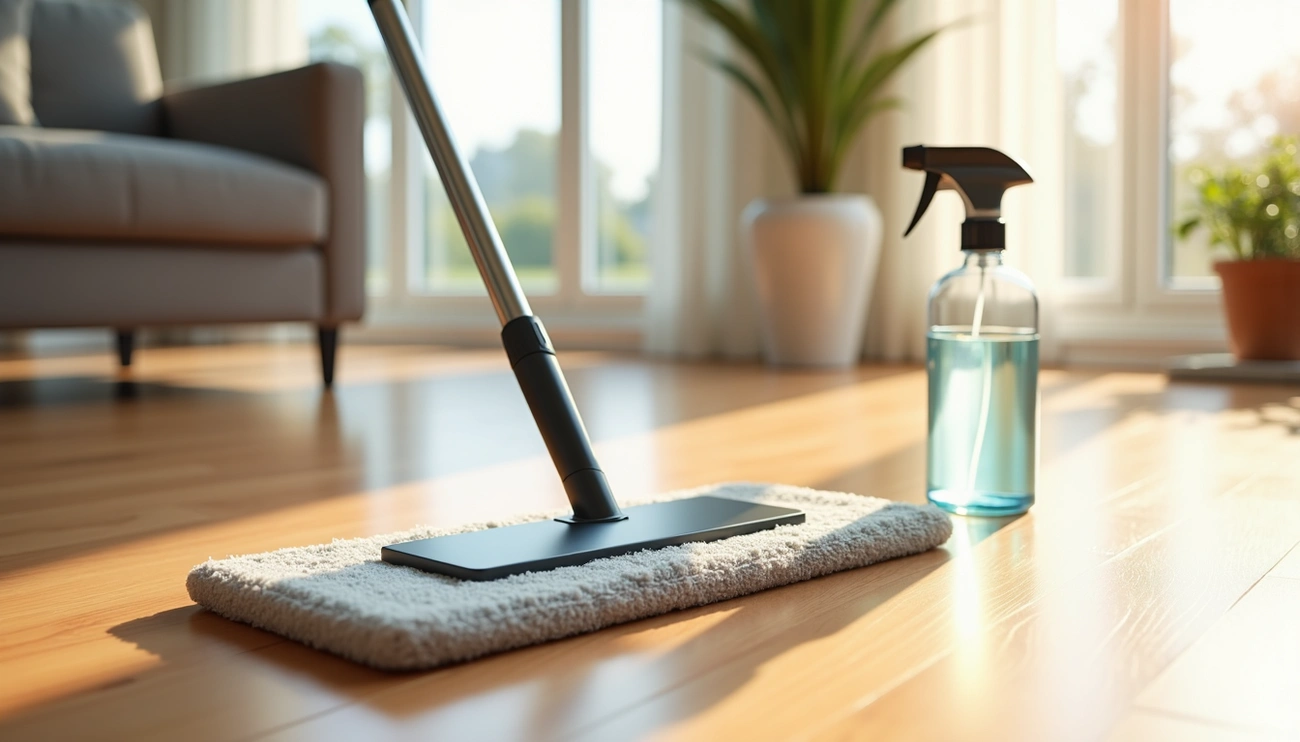
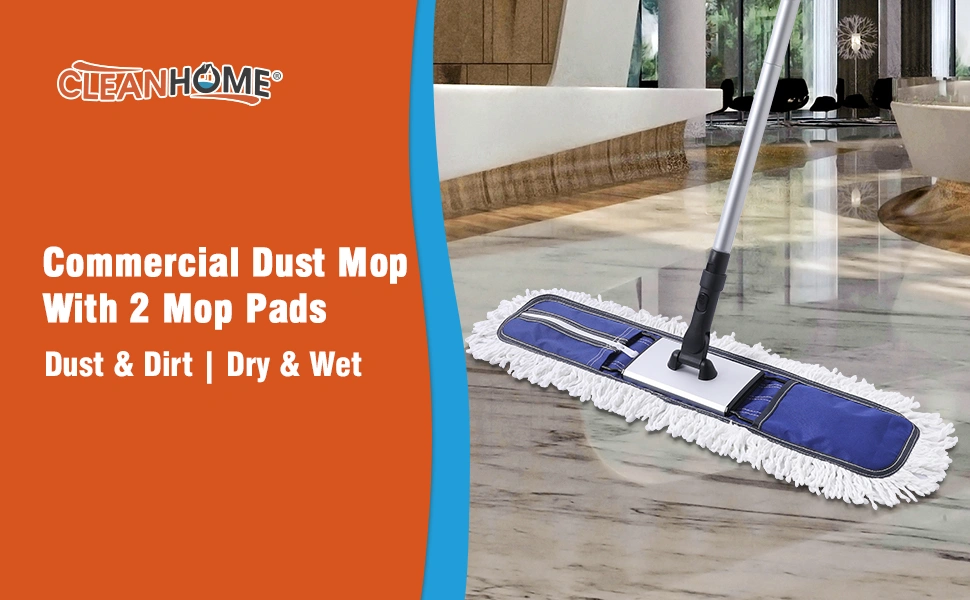
The best dust mop for concrete floors is an 18–36 inch flat microfiber mop. Microfiber fibers trap fine dust and debris without scratching polished or stained concrete. Synthetic closed-loop industrial mops also perform well on concrete surfaces in garages, warehouses, and residential spaces with heavy dust and dirt buildup.
Why Dust Mopping Matters for Concrete Floors
Concrete floors face constant assault from abrasive particles that settle on their surface daily. Dust, grit, and debris act like sandpaper under foot traffic, gradually wearing away at your floor’s finish and sealer. When you skip dust mopping and move straight to wet cleaning, any remaining grit gets ground deeper into the surface, creating scratches that require frequent recoating to prevent long-term damage. This abrasive action becomes particularly destructive in high-traffic areas like entrances and aisles where the floor endures repeated friction.
Prevents Surface Abrasion and Wear
Sand and dirt particles accumulate on concrete surfaces between cleanings, and each footstep pushes these abrasive materials against the floor finish. Without regular dust mopping, these particles wear through the concrete sealer and stain, compromising the protective layers you’ve invested in. The damage extends beyond the floor itself. Fine dust and grit migrate into equipment components, particularly forklift wheels and bearings in warehouse settings. Replacing a set of forklift wheels or bearings costs around $1,000, an expense that multiplies quickly when floors remain dirty day after day.
Removes Allergens and Improves Air Quality
Dust mopping tackles the health hazards lurking on your concrete floors. The more dust you remove from the floor, the less ends up circulating in the air where people breathe it. Fine concrete dust contains silica particles that pose serious respiratory risks. In fact, exposure to concrete dust can exacerbate conditions in individuals with heart or lung disease, trigger dangerous asthma attacks, and reduce lung function through persistent coughing and breathing difficulties. Airborne particles from concrete floors can also lead to progressive conditions like COPD and, in extreme cases, silicosis. Using a broom to clean concrete simply redistributes dust rather than capturing it, which is why mops for concrete floors equipped with proper dust-trapping capabilities become necessary.
Extends Time Between Deep Cleaning
Regular dust mopping reduces the necessity for heavy-duty cleaning tasks by preventing dirt accumulation. When you routinely remove debris, you protect expensive flooring materials from premature wear, extending the lifespan of your concrete investment. This approach delivers cost savings by reducing floor replacement frequency and minimizing the labor hours your team spends on intensive cleaning sessions.
Types of Dust Mops for Concrete Floors
Selecting the right dust mop for concrete floors starts with understanding the material options available and how each performs on hard surfaces.
Microfiber Dust Mops
Microfiber mops dominate the professional cleaning sector for good reason. The fine fibers trap dust, dirt, and allergens effectively, making them ideal for maintaining indoor air quality. These mops hold up to seven times their weight in water, which translates to superior absorbency for wet mopping tasks. High-grade professional microfiber withstands frequent use and washing, with some models lasting through 200+ wash cycles. Unlike cotton alternatives, microfiber requires no special treatments to attract dust. The material naturally generates static electricity when rubbed over floor surfaces, capturing particles without chemical additives.
Cotton Dust Mops
Cotton remains the most popular dust mop material, primarily because of its affordability. These mops feature looped-end construction that prevents fraying and unraveling, particularly when using 2-ply or 3-ply twisted yarn. Cotton dust mops can withstand up to 300 machine washings depending on laundry consistency. The catch with cotton mops is their reliance on oil-based treatment for effective dust pickup and retention. Treated cotton collects up to 80% more dust than untreated versions. Cotton yarn requires thorough treatment application, typically two ounces per foot of mop, followed by an 8-hour curing period before use.
Disposable Dust Mops
Disposable options provide an economical solution when laundering isn’t feasible. These mops come pre-treated with dust-attracting compounds and feature industrial-grade construction for demanding environments. The 36-inch disposable cotton models offer extensive coverage for industrial cleaning without the hassle of washing.
Treated vs Untreated Dust Mops
Treated mops deliver twice the efficiency of untreated alternatives. The treatment system enables waterless mopping that captures dirt with every pass. Synthetic mops cannot accept treatment, limiting this advantage to cotton varieties.
What Makes the Best Dust Mop for Concrete Floors
Evaluating dust mops for concrete floors requires examining specific features that determine cleaning performance and longevity.
Mop Head Size and Coverage Area
Mop sizes range from 9 inches to 72 inches, with the most common options falling between 16 and 24 inches. Smaller mops work well in tight spaces with obstacles, while larger mops between 36 and 60 inches suit expansive areas like warehouses and gymnasiums. The wide coverage reduces cleaning time by covering more surface area with each pass. Consequently, matching mop size to your space dimensions improves efficiency.
Material Composition and Static Pickup
Premium microfiber delivers maximum capture capability through its split polyester construction. The 80/20 microfiber yarn blend combined with fringe yarn creates static attraction that holds dust particles effectively. This static property eliminates the need for chemical treatments. Microfiber can hold up to seven times its weight in water, compared to cotton alternatives that require oil-based treatments for optimal performance.
Handle Design and Adjustability
Telescopic handles adjust from 29 inches to 52 inches, allowing you to customize the mop length for your height and task requirements. This adjustability improves ergonomics and reduces strain on your back and shoulders. The extendable design enables you to reach under furniture and into tight corners without excessive bending.
Attachment Mechanism and Durability
Steel construction provides the foundation for long-lasting frames. Clip-on mechanisms make attaching and removing mop heads quick and hassle-free. Velcro or snap systems ensure the mop head stays secure during use, preventing it from shifting or detaching. The powder-coated finish protects against corrosion and wear.
Washability and Reusability
High-quality microfiber mops withstand 250 washings, while cotton options remain launderable throughout their service life. This washability reduces replacement costs and supports sustainable cleaning practices.
Best Dust Mops for Concrete Floors (Tested)
After testing multiple dust mops for concrete floors across various settings, four categories emerged with distinct advantages for different cleaning scenarios.
Best Overall: Large Microfiber Flat Mop
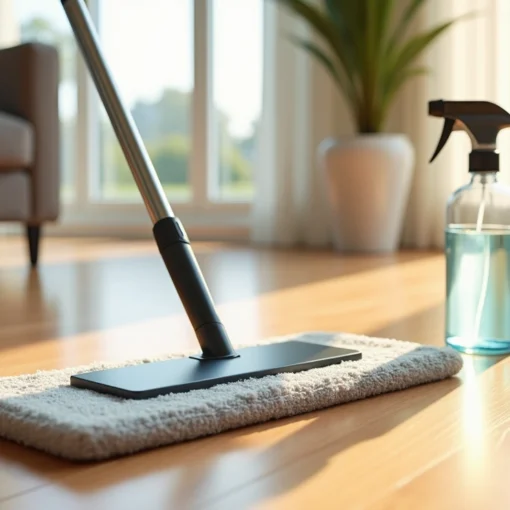
Large microfiber flat mops cover more surface area with each pass, making them faster and more efficient for cleaning concrete floors. The wide mop head suits warehouses, gymnasiums, and commercial buildings where speed matters. These mops handle both dust mopping and wet mopping tasks, eliminating the need for separate tools. Research shows microfiber picks up 75% more dirt and dust per swipe than traditional cotton dust mops.
Best for Small Spaces: 18-Inch Microfiber Mop
The 18-inch professional microfiber mop system balances coverage with maneuverability. Built with solid aluminum frames and ergonomic handles, these mops withstand professional use and laundering hundreds of times. The size works well in homes, offices, and smaller commercial spaces where larger mops become cumbersome.
Best Heavy-Duty Option: Commercial-Grade Microfiber Mop
Industrial microfiber dust mops feature 80/20 blend microfiber yarn with closed-loop construction. The closed loops prevent snagging and tearing, providing more surface area on each strand to attract and hold particles. This construction makes them more durable than standard microfiber alternatives.
Best Budget Choice: Basic Cotton Dust Mop
Cotton dust mops remain inexpensive and ideal for daily maintenance of concrete floors. Options start around USD 30.00 for 36-inch models with Infinity Twist yarn that resists fraying.
Conclusion
All things considered, microfiber mops deliver the best results for concrete floors based on our testing. They capture more dust than cotton alternatives, require no chemical treatments, and last through hundreds of wash cycles. Choose your mop size based on your space dimensions, and remember that regular dust mopping protects your concrete investment while improving air quality. The right dust mop makes maintenance simple and keeps your floors looking their best for years.