
Which Microfiber Spray Mop Is Best?

Quick Answer
For most homes, the O-Cedar ProMist MAX is the best microfiber spray mop because its washable double-sided pad, refillable bottle, battery-free trigger, and controlled spray work well across sealed hardwood, laminate, vinyl, and tile. If finished hardwood is your main concern, the Bona Premium Spray Mop is an excellent alternative because its cleaning system is specifically designed around low-moisture wood-floor care, which matters because the National Wood Flooring Association recommends avoiding wet mopping on wood floors.
What I would choose
- Best overall: O-Cedar ProMist MAX for reusable pads, controlled moisture, and mixed hard-floor homes.
- Best for hardwood: Bona Premium Spray Mop for sealed, polyurethane-finished wood floors.
- Best for custom cleaner: Rubbermaid Reveal if you like keeping separate refillable bottles for different floors.
- Best feature to prioritize: A washable microfiber pad and spray trigger that lets you control moisture.
- What to avoid: A spray mop that soaks seams, forces proprietary disposable pads, or feels difficult to maneuver.
I’ve used enough floor-cleaning systems to know that a spray mop can look simple until you actually live with it. Pad quality, spray control, head shape, and the refill system matter far more than flashy extras.
This guide compares the microfiber spray mops I’d consider in 2026 and explains which one makes the most sense for hardwood, laminate, LVP, tile, pets, and quick everyday cleaning.
In This Guide
- Which microfiber spray mop is best overall?
- Microfiber spray mop comparison
- What is a microfiber spray mop?
- Which spray mop is best for each floor type?
- What should you look for in a spray mop?
- How do you get better results from a microfiber spray mop?
- Spray mop vs flat mop, spin mop, and steam mop
- Frequently asked questions
- Final verdict
Which Microfiber Spray Mop Is Best Overall?
The O-Cedar ProMist MAX is my best overall microfiber spray mop for typical household cleaning. It combines a refillable bottle, reusable microfiber pad, manual trigger, and double-sided cleaning head without making the system complicated.
The double-sided design is particularly useful. Instead of stopping as soon as one side gets dirty, you can flip the head and keep cleaning.
Why O-Cedar ProMist MAX stands out
- Reusable microfiber: The pad can be washed rather than discarded after each cleaning session.
- Double-sided head: You can flip the mop 180 degrees and use the second surface.
- Refillable bottle: You aren’t locked into disposable cleaning cartridges.
- Manual spray: The trigger works without batteries and lets you decide how much liquid reaches the floor.
- Mixed-floor compatibility: O-Cedar lists sealed wood, laminate, vinyl, and tile among appropriate surfaces.
- Simple maintenance: The manufacturer recommends washing the microfiber without bleach or fabric softener.
For me, moisture control is one of the biggest advantages. A spray mop should leave a light film of cleaner ahead of the pad, not a puddle that has to evaporate later.
When I would choose Bona instead
I would lean toward the Bona Premium Spray Mop when a home consists mainly of finished hardwood. Bona pairs its mop with a pH-neutral hardwood cleaner and a washable microfiber cleaning pad.
Bona states that its hardwood version is intended for unwaxed, unoiled, polyurethane-finished wood floors. That specificity is useful when protecting a costly wood finish matters more than maximum flexibility.
When Rubbermaid Reveal makes more sense
The Rubbermaid Reveal is a practical choice if you want to mix and store different cleaning solutions. Its 22-ounce refillable bottle can be removed and swapped.
That makes it convenient in homes where one cleaner is used on tile and another manufacturer-approved cleaner is used elsewhere.
Section Takeaway: O-Cedar ProMist MAX is the strongest all-around choice, while Bona deserves special consideration for finished hardwood.
Microfiber Spray Mop Comparison
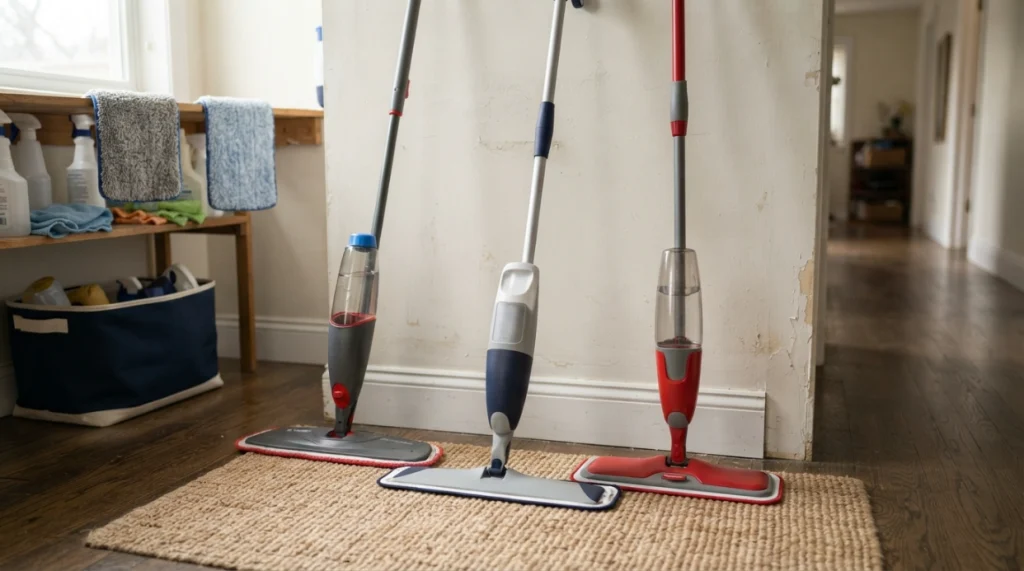
The best model depends on your floor and cleaning habits. Here is how the three systems compare on the features that matter during regular use.
| Feature | O-Cedar ProMist MAX | Bona Premium Spray Mop | Rubbermaid Reveal |
|---|---|---|---|
| Best for | Mixed hard floors | Finished hardwood | Custom cleaning solutions |
| Pad | Washable, double-sided microfiber | Washable microfiber | Washable microfiber |
| Reservoir | Refillable | Refillable cartridge | 22-ounce refillable bottle |
| Batteries | No | No | No |
| Standout feature | 180-degree double-sided pad | Hardwood-focused cleaning system | Replaceable solution bottles and scrubber |
| My verdict | Best overall | Best for hardwood | Best for solution flexibility |
These differences look small on paper. In practice, they determine how often you’ll stop, refill, change pads, or deal with excess moisture.
What Is a Microfiber Spray Mop?
A microfiber spray mop is a flat mop with a built-in liquid reservoir and trigger-operated spray system. It applies a controlled amount of water or floor cleaner directly ahead of a reusable microfiber pad.
Microfiber consists of extremely fine synthetic fibers. The dense fabric helps lift dust, fine debris, and loosened grime rather than simply pushing dirty water around.
Why spray mops use less water
A traditional string mop normally gets submerged in a bucket. Even after wringing, it can carry substantial water onto the floor.
A spray mop works differently:
- Fill the reservoir with an appropriate cleaner or water.
- Pull the trigger to mist a small area ahead of the mop.
- Move the microfiber pad through the mist to loosen and collect soil.
- Repeat only as needed instead of wetting the entire surface.
That control is useful on floors where standing moisture is undesirable.
Cleaning is different from disinfecting
Routine floor cleaning doesn’t automatically require disinfectant. The CDC’s cleaning and disinfecting guidance says regular cleaning with soap or detergent is sufficient in many home situations.
Disinfection becomes more relevant in specific circumstances, such as illness in the household.
Safety note: Never put bleach, disinfectant, vinegar, or another chemical into a spray mop unless both the mop instructions and your flooring manufacturer’s care guide allow it.
Which Spray Mop Is Best for Each Floor Type?
Floor compatibility matters more than brand loyalty. I would rather use a basic mop correctly than an expensive mop with the wrong amount of water or cleaner.
Hardwood
For polyurethane-finished hardwood, I prefer the Bona Premium Spray Mop. Its microfiber pad and controlled application suit the low-moisture approach wood floors need.
The NWFA recommends dry cleaning methods for routine debris and advises against wet mops and steam mops. Spills should be handled quickly with a dry or slightly damp cloth.
That doesn’t mean every spray mop is unsafe. It means you should spray sparingly and use a cleaner approved for your particular finish.
Laminate
For laminate, I would choose the O-Cedar ProMist MAX with a lightly damp pad. Pay special attention to seams and edges.
Laminate’s surface can tolerate normal cleaning, but excessive liquid around joints may create problems. More spray isn’t better.
Luxury vinyl plank and vinyl
A microfiber spray mop is one of my favorite tools for routine LVP cleaning because you can control moisture easily. O-Cedar and Rubbermaid are both sensible choices.
Use a cleaner approved by the flooring manufacturer. Avoid leaving a concentrated film that turns a clean vinyl floor cloudy or sticky.
Ceramic and porcelain tile
All three mops work well for routine tile cleaning. The Rubbermaid Reveal’s non-scratch scrubber can help with isolated dried spots.
A spray mop isn’t a replacement for grout scrubbing, though. Deeply textured grout may still need a dedicated brush and cleaner.
Natural stone
Use extra caution with marble, limestone, travertine, and other natural stone. Some acidic or aggressive cleaners can damage stone surfaces.
Choose a pH-appropriate product specifically approved for your stone rather than filling the mop with a homemade mixture.
Safety note: Check your floor manufacturer’s care instructions before using any cleaner, especially on wood, laminate, natural stone, or specialty finishes.
Section Takeaway: Match the cleaning solution to the floor first. The spray mop is only the delivery tool.
What Should You Look for in a Microfiber Spray Mop?
The best spray mop doesn’t need an electronic display or motor. The features I value are simpler.
1. A refillable reservoir
A refillable system gives you more control and creates less dependence on disposable cartridges. It also makes plain-water cleaning possible when appropriate.
2. A washable microfiber pad
I prefer washable pads because I can begin each cleaning session with clean microfiber. Reusing a dirty pad defeats the purpose of mopping.
Keep two or three pads if you have a larger home. Swap the pad once it becomes visibly loaded with grime.
3. Good spray control
The trigger should produce a usable mist without flooding the floor. A mechanical trigger also removes batteries from the maintenance equation.
4. Easy maneuverability
A flat, swiveling head should move around chair legs and under cabinets without fighting you. This makes a noticeable difference in kitchens and smaller apartments.
5. Replaceable parts
Before buying, check whether replacement pads and bottles are readily available. A perfectly good mop becomes wasteful if a small worn component cannot be replaced.
6. Cleaner flexibility
Refillable doesn’t mean every chemical belongs in the bottle. Use only products compatible with the mop and flooring.
If you’re trying to select cleaners with safer ingredient profiles, the EPA Safer Choice program provides a useful starting point for identifying certified products.
How Do You Get Better Results From a Microfiber Spray Mop?
Vacuum first, spray lightly, work in small sections, and change the pad before it becomes saturated with dirt. Those four habits solve many of the problems people blame on the mop itself.
My routine for streak-free cleaning
- Remove dry grit first. Vacuum or dust mop before adding moisture.
- Check the cleaner. Make sure it’s approved for the floor.
- Start with a clean pad. Don’t reuse yesterday’s dirty microfiber.
- Spray lightly. One or two trigger pulls may cover more area than you expect.
- Use overlapping passes. An S-pattern or gentle figure-eight works well.
- Flip or change the pad. Don’t continue once microfiber is loaded with dirt.
- Let the surface dry. Keep foot traffic away until visible moisture disappears.
One mistake I see often is repeated spraying over a stubborn mark. That leaves more cleaner behind without necessarily providing more scrubbing action.
Instead, let the damp microfiber sit over the spot briefly. Then use several controlled passes.
Why microfiber pads sometimes leave streaks
A microfiber spray mop can still leave streaks when the pad or cleaning routine is wrong.
- Too much cleaner: Excess product may dry as a visible film.
- Dirty microfiber: A saturated pad starts redistributing grime.
- Too much spray: Uneven drying can create marks.
- Hard-water residue: Minerals may remain after water evaporates.
- Wrong floor product: Some formulas aren’t suited to every finish.
Wash microfiber correctly
Follow the manufacturer’s pad instructions. Fabric softener is usually a poor match for microfiber because coatings can reduce its cleaning performance.
O-Cedar specifically advises washing its ProMist MAX pad without bleach or fabric softener. Rubbermaid likewise instructs users to avoid fabric softener on Reveal pads.
Section Takeaway: A clean pad and minimal liquid usually matter more than adding stronger chemicals.
Spray Mop vs Flat Mop, Spin Mop, and Steam Mop
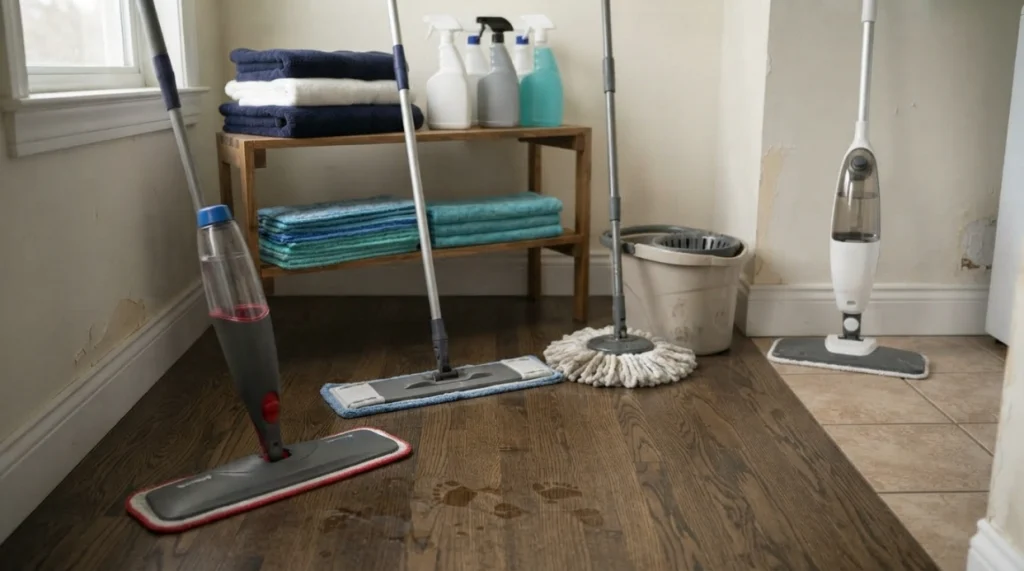
A microfiber spray mop isn’t automatically best for every mess. Its strength is quick, controlled everyday cleaning.
| Mop Type | Best Use | Main Limitation |
|---|---|---|
| Microfiber spray mop | Daily cleaning and quick spills | Small pad can load with soil during heavy cleaning |
| Flat microfiber mop | Large areas and controlled damp mopping | Cleaner must be applied separately |
| Spin mop | Heavier soil and larger wet-cleaning jobs | Requires a bucket and more setup |
| Steam mop | Steam-approved ceramic or porcelain tile | Heat and moisture limit floor compatibility |
I reach for a spray mop when cleaning footprints, kitchen drips, dust film, and light everyday grime. For a large muddy floor, I would rather use several fresh flat-mop pads or a spin-mop system.
Steam deserves special caution. Many surfaces shouldn’t receive concentrated heat and moisture, and the NWFA specifically advises against steam mopping wood floors.
Safety note: Never assume a floor is steam-safe or chemical-safe because it appears waterproof. Check the flooring manufacturer’s written care instructions.
Frequently Asked Questions
Is O-Cedar or Bona spray mop better?
O-Cedar ProMist MAX is the better all-purpose choice for mixed hard floors because of its double-sided pad and flexible refill system. Bona is my preference for homes focused on polyurethane-finished hardwood because the mop and cleaner are designed as a wood-floor care system.
Can I use only water in a microfiber spray mop?
Some spray mops can be used with water alone, including the O-Cedar ProMist MAX. Water may be sufficient for light dust and routine soil, but greasy or sticky residue may require a floor-compatible cleaner.
Are microfiber spray mops good for hardwood floors?
They can work well on compatible sealed hardwood when used sparingly. Apply minimal moisture, use a cleaner approved for the finish, and never leave puddles sitting on the floor. Follow your flooring manufacturer’s care instructions first.
Can I put vinegar in my spray mop?
Only if both the mop manufacturer and flooring manufacturer permit it. Vinegar is acidic and isn’t suitable for every floor or finish, so a generic vinegar-and-water recipe shouldn’t be treated as universally safe.
How often should I wash the microfiber pad?
I recommend starting each major cleaning session with a clean pad. Wash it sooner if it becomes visibly dirty, saturated, or starts pushing debris around instead of collecting it.
Why does my spray mop leave my floor sticky?
A sticky floor usually points to excess cleaner, incorrect dilution, a dirty pad, or incompatible product residue. Reduce the amount of cleaner and use a fresh microfiber pad before assuming the mop itself is defective.
Is a spray mop better than a steam mop?
A microfiber spray mop is more versatile across common household floors because it doesn’t add high heat. Steam mops can be useful on approved tile, but they should only be used where the flooring manufacturer specifically allows steam cleaning.
Which Microfiber Spray Mop Should You Buy?
For most people asking which microfiber spray mop is best, my answer is the O-Cedar ProMist MAX. Its washable double-sided pad, refillable bottle, manual trigger, and mixed-floor versatility cover the features I use most often.
Choose the Bona Premium Spray Mop instead if finished hardwood dominates your home and you want a cleaning system built around that surface.
The Rubbermaid Reveal remains a useful alternative for people who value refillable bottles and a built-in non-scratch scrubber for stubborn spots.
No matter which one you choose, technique matters. Vacuum first, use the least moisture necessary, keep your microfiber clean, and match the cleaning solution to the floor.
Do those things consistently, and a simple microfiber spray mop can handle a surprising amount of everyday floor cleaning without dragging out a bucket.