
Why Do Steam Mops Leave Streaks? Causes and Easy Fixes

Quick Answer
Steam mops usually leave streaks because the pad is dirty, the floor already has cleaner residue, tap water contains minerals, or too much moisture remains behind. A fresh microfiber pad and distilled water solve many cases, which also matches Bissell’s steam-mop guidance. Existing wax, polish, grease, or incompatible floor coatings may need separate removal before the floor looks clear again.
Most Common Causes
- Dirty mop pad: A saturated microfiber pad redistributes loosened grime instead of collecting it.
- Hard tap water: Dissolved minerals can remain as pale streaks or water marks after moisture evaporates.
- Cleaner residue: Old detergent, polish, wax, or spray-mop solution can become visible when steam loosens it.
- Excess steam: Too much moisture can dry unevenly and create visible tracks.
- Wrong floor surface: Heat or moisture may affect certain finishes instead of simply cleaning them.
Fastest Fix
- Vacuum first, install a clean pad, use distilled water, lower the steam setting, and test a small section without adding floor cleaner to the tank.
If you’re wondering why do steam mops leave streaks, the steam itself often isn’t the only problem. In my floor-cleaning tests, streaks usually come from what the mop pad, water, or previous cleaner leaves behind.
I’ve seen the same steam mop produce a cloudy floor one day and a clear finish the next after changing only the pad and water. This guide shows you how to identify the cause before buying another mop or adding more cleaner.
In This Guide
- Why Does My Steam Mop Leave Streaks?
- How Do You Remove Steam Mop Streaks?
- Is the Water in My Steam Mop Causing Streaks?
- Can a Dirty Steam Mop Pad Leave Streaks?
- Can Old Floor Cleaner or Wax Cause Cloudy Streaks?
- Which Floors Are Most Likely to Show Steam Mop Streaks?
- How Do You Steam Mop Without Leaving Streaks?
- Are the Streaks Actually Floor Damage?
- Frequently Asked Questions
- Final Takeaway
Why Does My Steam Mop Leave Streaks?
A steam mop leaves streaks when moisture, dissolved minerals, loosened soil, or existing floor residue dries unevenly. The problem often becomes easier to diagnose once you look at the appearance of the marks.
Definition: A steam-mop streak is a visible line, haze, film, or water mark left on a floor after steam cleaning and drying. It can come from residue rather than permanent floor damage.
What different streak patterns usually mean
- White or chalky lines: Check for mineral deposits from hard tap water.
- Greasy-looking smears: Look for cooking grease, oily soil, polish, or detergent residue.
- Parallel mop tracks: The pad may be dirty, overloaded, or unevenly attached.
- Cloudy haze: Old floor cleaner, wax, or finish may be reacting to moisture and heat.
- Water-shaped marks: The mop may be producing more moisture than the pad can absorb.
One mistake I see often is continuing to mop after the microfiber pad has turned gray. At that point, you’re dragging suspended dirt across every new section.
Microfiber is made from extremely fine synthetic fibers that grab fine dirt and moisture. Once those fibers become loaded, their cleaning performance drops.
Why steam can expose residue you didn’t notice before
Steam loosens grime that may have accumulated through repeated use of spray cleaners or traditional mops. If the pad doesn’t lift all that material, part of it dries again as a film.
The streak can therefore appear after steam mopping even though the steam mop didn’t create all the residue. It may simply have disturbed an older layer.
How Do You Remove Steam Mop Streaks?
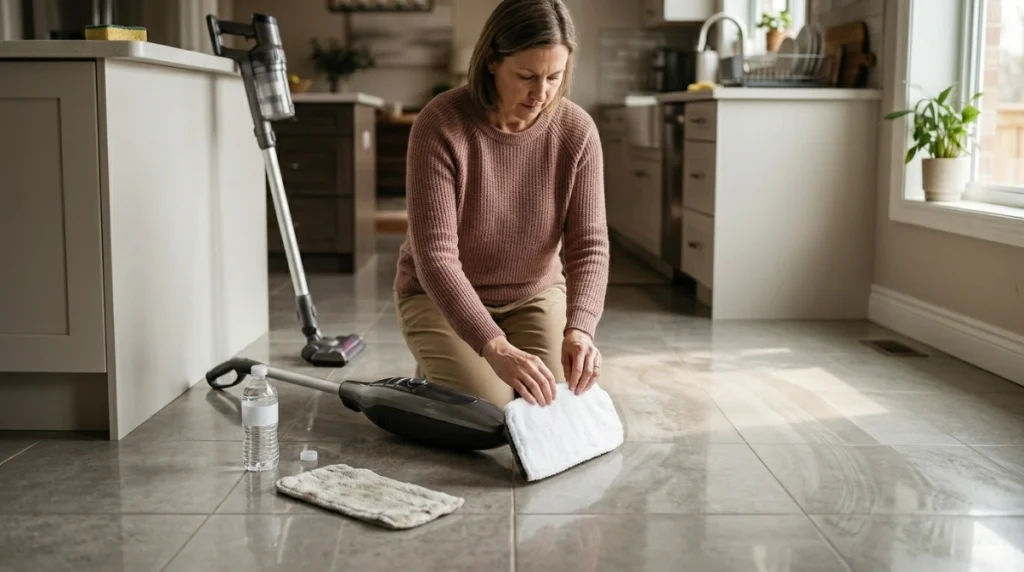
The safest first approach is to simplify the cleaning process. Remove loose soil, switch to a clean pad, and use the least complicated cleaning method your flooring allows.
Try this five-step streak reset
- Let the floor cool and dry. This makes it easier to tell true residue from temporary moisture.
- Vacuum or dry-mop thoroughly. Remove hair, grit, crumbs, and fine dust before adding moisture.
- Install a freshly washed pad. Don’t reuse the pad that created the streaks.
- Fill with distilled water if your model permits it. Avoid adding random floor cleaners to a water-only reservoir.
- Clean a small test area. Use a lower steam setting and keep the mop moving steadily.
If that test patch dries clear, the original problem was probably the water, pad, soil load, or steam level. You can continue in small sections and swap pads before they become visibly dirty.
If the floor still looks cloudy
Stop steaming and check the floor manufacturer’s care instructions. Repeated passes won’t necessarily remove polish, wax, soap film, or an incompatible coating.
For ordinary household cleaning, the CDC’s cleaning guidance notes that routine cleaning removes dirt and impurities, while disinfection is a separate process. You don’t need to turn every floor-cleaning session into a chemical treatment.
Safety note: Never mix cleaning chemicals or put a solution into a steam-mop tank unless the mop manufacturer specifically allows it. Also check the flooring manufacturer’s care guide before treating stubborn residue.
Is the Water in My Steam Mop Causing Streaks?
Yes, water can contribute to steam-mop streaks. Hard tap water contains dissolved minerals that may become more noticeable after the water evaporates.
Bissell recommends distilled or demineralized water for some steam-mop models. This is especially useful when your tap water regularly leaves white spots on faucets, shower doors, or kettles.
Tap water vs. distilled water
| Water Type | Streak Risk | Best Use | What to Know |
|---|---|---|---|
| Hard tap water | Higher | Only when approved | Can contain enough minerals to leave visible deposits. |
| Soft tap water | Lower | Routine use when permitted | Mineral content varies by location. |
| Distilled water | Lowest mineral risk | Troubleshooting visible water marks | Contains far fewer dissolved minerals than ordinary tap water. |
Don’t assume bottled drinking water is the same as distilled water. Drinking water may still contain added or naturally occurring minerals.
I like distilled water as a diagnostic tool because it removes one variable immediately. If the streaks disappear, you’ve found a simple cause without changing cleaners or equipment.
Can a Dirty Steam Mop Pad Leave Streaks?
Yes. A dirty or oversaturated pad is one of the most common reasons a steam mop starts smearing a floor that looked fine at the beginning.
The pad collects dust, oily soil, food residue, pet debris, and loosened cleaner. Eventually, it begins transferring some of that material back onto the floor.
When should you change the pad?
Don’t wait for a fixed number of rooms. Change it based on how quickly it becomes dirty.
- Replace the pad when the cleaning surface becomes visibly gray or brown.
- Use more than one pad for a large kitchen or open-plan area.
- Change pads sooner when cleaning greasy kitchen floors.
- Start every streak-troubleshooting session with a completely clean pad.
- Wash pads according to the mop manufacturer’s instructions.
Avoid fabric softener unless your pad manufacturer allows it. Fabric-softening products can coat absorbent fibers and reduce how well the material picks up water and soil.
Pad installation matters too
Check that the pad sits flat and evenly across the mop head. Folded edges or poorly aligned pads can create repeating lines that resemble floor damage.
I’ve diagnosed this by turning the mop over after seeing two perfectly parallel streaks. One side of the pad had bunched underneath the head.
Can Old Floor Cleaner or Wax Cause Cloudy Streaks?
Yes. Cleaner buildup, polish, wax, oily products, and incompatible coatings can create a cloudy or greasy finish after steam mopping.
This problem is common when several cleaning products have been used on the same floor over time. Each product may leave a small amount of material behind.
Signs you’re dealing with residue
- The floor looks worse under sunlight or bright overhead lighting.
- Marks appear cloudy instead of sharply defined.
- Fresh distilled water and a clean pad don’t solve the problem.
- The floor feels slightly tacky after drying.
- Streaks return shortly after each cleaning session.
Don’t automatically reach for vinegar, bleach, ammonia, or a stronger detergent. The right residue-removal method depends on the flooring and its finish.
The EPA explains the difference between cleaning, sanitizing, and disinfecting, which is useful when choosing products. More chemicals don’t automatically produce a cleaner-looking floor.
Safety note: Check both the flooring manufacturer’s care guide and the cleaning-product label before using a residue remover, disinfectant, vinegar mixture, or other chemical treatment.
Which Floors Are Most Likely to Show Steam Mop Streaks?
Glossy tile and other reflective surfaces can make small streaks easy to see, but appearance isn’t the only concern. Some floor types may not be suitable for steam cleaning at all.
Ceramic and porcelain tile
Properly installed tile is often one of the more steam-tolerant floor surfaces. Even here, check the tile, grout, sealer, and steam-mop instructions before use.
Tile often shows mineral marks clearly because the surface is smooth and reflective. Dirty pads also create obvious tracks on glossy tile.
Hardwood and engineered wood
Be cautious with steam on wood floors. The National Wood Flooring Association’s consumer guidance advises avoiding wet and steam mops because excess water and steam can affect wood and its finish.
If a wood floor becomes cloudy after steaming, don’t keep steaming to remove the haze. Check the floor maker’s instructions before doing anything else.
Laminate flooring
Laminate usually has seams and a layered construction that can be vulnerable to heat and moisture. Unless the flooring manufacturer explicitly approves steam cleaning, use a lightly damp microfiber method instead.
Vinyl and luxury vinyl plank
Vinyl and LVP vary by manufacturer, construction, adhesive, and installation method. Don’t assume that a waterproof label means the floor is automatically steam-safe.
Natural stone
Stone floors may include sealers that need specific care. Check the stone and sealer manufacturer’s instructions before applying steam, acids, alkaline cleaners, or homemade solutions.
Safety note: Floor compatibility matters more than the steam mop’s marketing claims. Follow the care requirements for your exact flooring product whenever they differ from general cleaning advice.
How Do You Steam Mop Without Leaving Streaks?
For a streak-free result, control four things: loose dirt, pad cleanliness, water quality, and moisture. Most streak problems become manageable when those variables stay consistent.
Use this routine
- Vacuum first. Fine grit turns into muddy residue when mixed with moisture.
- Check floor compatibility. Steam only surfaces approved by the flooring manufacturer.
- Start with a clean pad. Keep one or two spare pads nearby for larger rooms.
- Use suitable water. Try distilled water if hard-water marks are a recurring problem.
- Choose the lowest effective steam level. More moisture isn’t automatically better.
- Keep the mop moving. Avoid holding the hot mop head in one place.
- Work in small sections. Watch each section dry before moving too far ahead.
- Change dirty pads early. Don’t use one overloaded pad for the entire house.
Don’t put ordinary floor cleaner into a water-only tank
Many steam mops are designed for water only. Adding detergent, fragrance, essential oils, vinegar, or other liquids may cause residue or affect the machine.
Always follow the instructions for your specific model. A solution approved for one electric mop isn’t automatically suitable for another.
Watch your drying pattern
Under normal conditions, a properly controlled steam pass should leave limited surface moisture rather than puddles. If you see standing water or broad wet trails, stop and investigate.
Wet floors also create a slip risk. OSHA’s workplace guidance identifies wet floors as a slip-and-fall hazard, so keep people and pets away until the cleaned area is dry.
Are the Streaks Actually Floor Damage?

Most removable steam-mop streaks are residue or water marks. However, a mark that doesn’t change after gentle, manufacturer-approved cleaning may be a change in the floor finish itself.
Signs the problem may be more than residue
- Permanent dull patches: The sheen stays uneven after the floor is clean and dry.
- Raised seams: Plank edges appear swollen or higher than surrounding areas.
- Bubbling: A laminate or vinyl surface develops visible blisters.
- Peeling finish: The top coating begins flaking or separating.
- Discoloration: Heat or moisture leaves a persistent change in color.
- Warping: Boards or planks no longer lie flat.
If you see these signs, stop using steam on that floor until you’ve checked the manufacturer’s guidance. More heat and moisture can make some problems harder to correct.
Try the light-angle test
Look across the floor from a low angle near a window. Residue often appears like a film sitting on top, while finish damage may show a consistent change in gloss or texture.
Don’t scrape or aggressively scrub a suspicious area. A soft microfiber cloth and an approved cleaner are safer first steps.
Safety note: If you suspect damaged hardwood, laminate, LVP, stone sealer, or another floor coating, stop experimenting with chemicals and contact the flooring manufacturer or a qualified flooring professional.
Frequently Asked Questions
Why does my Shark or Bissell steam mop leave streaks?
Start by checking the pad, water, and moisture level. A dirty pad can spread grime, while mineral-rich tap water can leave marks after drying.
Also check whether previous cleaners, polishes, or waxes remain on the floor. Follow the troubleshooting instructions for your exact steam-mop model.
Should I use distilled water in a steam mop?
Distilled water can help reduce mineral-related streaks and scale, especially in hard-water areas. Some manufacturers specifically recommend distilled or demineralized water for certain models.
Always confirm the recommendation in your own mop’s manual before changing your routine.
Why is my floor sticky after steam mopping?
A sticky floor usually suggests residue rather than insufficient steam. Old detergent, spray cleaner, wax, grease, or another product may have loosened without being fully removed.
Stop adding more cleaner and check the approved residue-removal method for your flooring.
Can I put vinegar in my steam mop to stop streaks?
Don’t put vinegar into the steam-mop reservoir unless the manufacturer explicitly allows it. Acids may affect internal components or certain floor finishes.
If vinegar is permitted for your floor but not your machine, use only the floor manufacturer’s approved cleaning method.
Why does my steam mop leave water marks?
Water marks can appear when the pad becomes saturated, the steam setting is too high, or hard-water minerals remain after evaporation. Replace the pad, reduce steam output, and test distilled water.
Can I use floor cleaner with a steam mop?
Only use cleaner if your steam-mop manufacturer specifically says the model is designed for it. Water-only machines should not be filled with ordinary floor detergent, essential oils, or homemade cleaning mixtures.
Do I need to disinfect my floors every time I mop?
Usually not in a normal household. Routine cleaning focuses on removing dirt and impurities, while disinfection is more appropriate for situations involving illness or specific contamination concerns.
When disinfection is needed, use a product suitable for the floor and follow its label directions.
Final Takeaway
If your steam mop leaves streaks, don’t immediately assume the machine is defective. Start with the simple causes: a dirty pad, mineral-heavy water, existing cleaner residue, or excess moisture.
My preferred troubleshooting test is straightforward: vacuum the floor, install a fresh pad, add distilled water when allowed, and steam a small compatible section on a lower setting. Let it dry completely before judging the result.
If the patch dries clear, you’ve probably identified a routine cleaning problem. If haze, swelling, peeling, or discoloration remains, stop steaming and check the care instructions for your exact flooring.
A streak-free floor comes from using the right method for the surface, not from using more heat, more water, or more cleaner.
