
Why Does the Spin Basket Spin? How a Spin Mop Basket Works

Quick Answer
The spin basket in a spin mop rotates to remove excess water from the microfiber mop head. Centrifugal force pushes water outward through the basket openings as the wet mop spins, leaving the mop damp enough for effective floor cleaning. The basket works with a rotating mechanism powered by the mop handle or a foot pedal, depending on the design.
What makes the basket spin?
- Handle movement: Pushing or pumping the mop handle activates the spinner in many manual models.
- Foot pedal: Pedal-operated buckets use a mechanical linkage to turn the basket.
- Centrifugal force: Rotation throws water away from the mop fibers and through the basket openings.
- Drainage openings: The perforated basket allows expelled water to flow back into the bucket.
- Controlled moisture: Removing excess water helps prevent puddles and reduces the risk of overwetting floors.
Quick troubleshooting tip
- If the basket won’t spin, check the mop’s handle lock, pedal mechanism, basket alignment, and any visible hair or debris before trying again.
A spin mop basket is more than a holder for your mop head; it’s the part that helps control how much water stays in the fibers. Once you understand why it spins, it’s easier to use your bucket correctly and spot problems before they damage the mechanism.
In this guide, I’ll explain how the spinner works, why different buckets use different mechanisms, and what to check when the basket slows down or stops. I’ll also cover how to wring a mop safely across common household flooring.
In This Guide
- What is a spin mop basket?
- How does the spin basket work?
- Why does the spin basket spin instead of squeezing?
- What makes a spin mop basket rotate?
- Why is my spin mop basket not spinning?
- How do you use the spin basket correctly?
- How dry should the mop be for each floor type?
- How do you maintain a spin mop basket?
- Frequently asked questions
What Is a Spin Mop Basket?
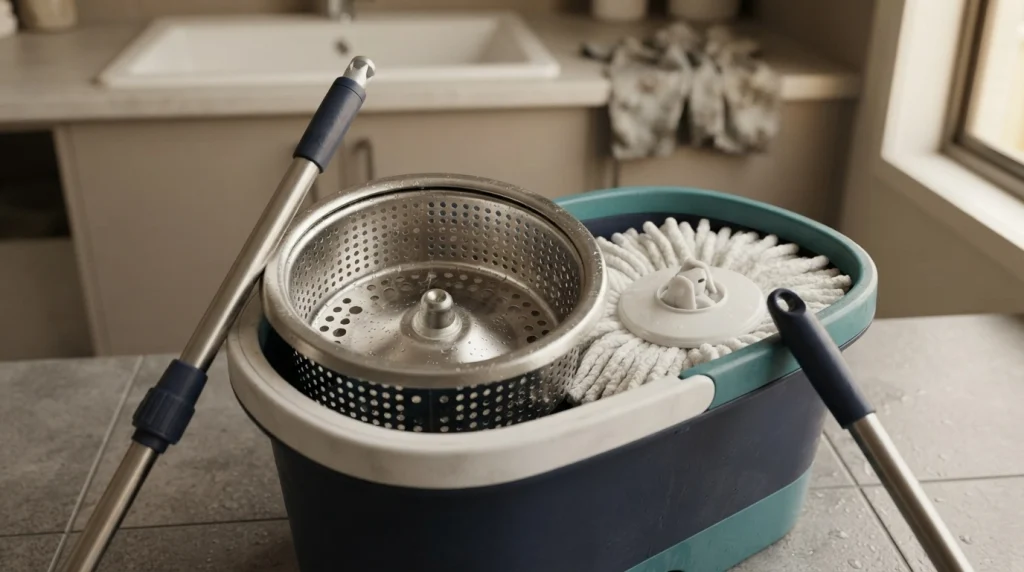
A spin mop basket is a perforated, rotating insert inside a mop bucket that removes excess water from a wet mop head. It lets you control moisture without wringing the mop fibers by hand.
You’ll find this component in many spin mop systems, including manual handle-operated and pedal-operated models. The exact design varies, but the goal stays the same: remove surplus water while leaving enough moisture for cleaning.
What parts make up the spinning system?
The basket is only one part of the system. Several components work together to turn the mop head and direct water back into the bucket.
- Spinner basket: Holds the mop head during wringing and contains openings for water drainage.
- Central spindle: Supports the basket and allows it to rotate.
- Drive mechanism: Transfers movement from the handle or pedal to the basket.
- Bucket base: Supports the assembly and collects the expelled water.
- Mop handle lock: On many models, controls whether the handle extends, locks, or rotates during wringing.
Not every spin mop includes the same parts. Some models use a simple manual spinner, while others use gears, springs, or pedal-driven linkages.
Is the spin basket the same as a wringer?
Not exactly. A traditional wringer squeezes water from a mop head using pressure, while a spin basket removes water mainly through rotation.
A flat microfiber mop may use a hinged plate or squeeze mechanism instead. These systems also control moisture, but they don’t depend on a rapidly rotating basket.
How Does the Spin Basket Work?
The spin basket works by rotating the wet mop head quickly enough to move water outward from the fibers. The basket’s openings let that water escape into the surrounding bucket.
This process relies on centrifugal effects, which describe how water moves outward in a rotating system. The basket doesn’t need to absorb the water; it provides support while allowing the water to drain away.
What happens when you push the mop handle?
On a common handle-operated spin mop, you place the mop head inside the basket and move the handle in the position specified by the manufacturer. The mechanism converts that movement into rotation.
- Position the mop: Center the wet mop head inside the basket.
- Engage the spinner: Unlock or adjust the handle as instructed by the manual.
- Start rotating: Pump or move the handle to drive the spinning mechanism.
- Remove excess water: Rotation pushes water out through the basket openings.
- Stop and inspect: Check the mop’s dampness before moving to the floor.
Follow the instructions for your specific model because handle locks and pumping actions aren’t universal. Never force a locked handle or push down on a mechanism that resists movement.
Where does the extracted water go?
Water leaves the mop fibers, passes through the basket’s perforations, and falls into the bucket below. The basket therefore separates the mop head from much of the water it previously held.
Some moisture remains trapped in the microfiber strands. That remaining moisture helps the mop pick up dirt and fine particles, while the removed water helps prevent unnecessary puddles.
Does spinning faster always make the mop better?
No. Faster rotation can remove more water, but the best setting depends on the mop design and the floor you’re cleaning.
A mop that’s too wet may leave streaks, puddles, or moisture around floor joints. A mop that’s too dry may struggle to loosen stuck-on dirt.
I recommend testing the dampness over a small, inconspicuous area first. That simple check helps you find a useful balance without soaking the floor.
Why Does the Spin Basket Spin Instead of Squeezing?
The basket spins because rotation removes water without requiring a pair of plates to press tightly against the entire mop head. This makes the design practical for bulky microfiber strings that need room to spread out.
The rotating action also helps you wring the mop without twisting wet fibers by hand. It’s a convenient option for routine floor cleaning.
What are the main advantages of spinning?
- Adjustable moisture: You can usually change how damp the mop remains by controlling the wringing cycle.
- Less direct handling: You don’t need to squeeze dirty mop fibers with your hands.
- Reusable mop heads: Many spin mops use washable microfiber heads.
- Water collection: The bucket catches most expelled water instead of allowing it to splash freely across the room.
These benefits depend on proper use and maintenance. A clogged basket or damaged drive mechanism can make wringing less effective.
Spin basket vs. traditional mop wringer vs. flat mop
Each mop system handles moisture differently. The right choice depends on how much floor area you clean and how much control you need.
| Feature | Spin mop basket | Traditional wringer | Flat microfiber mop |
|---|---|---|---|
| Moisture removal | Rotational water removal | Pressure or squeezing | Squeeze plate or manual wringing, depending on design |
| Mop-head shape | Usually round and string-like | Often string or sponge | Usually flat rectangular |
| Moisture control | Adjustable by spinning time and technique | Depends on pressure and wringer design | Depends on pad dampness and squeeze mechanism |
| Best suited for | General household mopping and rinsing | Users who prefer a conventional bucket system | Targeted cleaning and easy storage |
| Main limitation | Moving parts need occasional maintenance | Can require more physical pressure | Pads may need frequent changing or rinsing |
For most households, a spin mop is useful when you want reusable fibers and adjustable dampness. A flat microfiber mop can be more convenient for small rooms or quick cleanups.
What Makes a Spin Mop Basket Rotate?
The mechanism that drives the basket depends on the mop’s design. Most manual spin mop buckets use either handle-driven rotation or a foot pedal that transfers pressure through mechanical parts.
Handle-operated spin mop systems
In a handle-operated system, the mop pole drives the spinning action through a mechanism near the mop head or inside the bucket assembly. Some designs use a telescoping handle that converts repeated pumping into rotation.
The handle lock matters. If you leave a lock engaged when it should be released, the mop may resist movement or fail to spin properly.
Foot-pedal spin mop systems
A pedal-operated basket uses downward foot pressure to activate a mechanical drive system. Depending on the model, gears, linkages, or springs transfer that movement to the basket’s spindle.
When you release the pedal, a return mechanism may reset it for another press. If the pedal clicks without turning the basket, the drive system could be slipping, obstructed, or damaged.
Why do some baskets spin freely while others feel stiff?
A basket should move according to its intended mechanism, but it shouldn’t require excessive force. Resistance can come from trapped debris, misalignment, a locked handle, or worn components.
Before troubleshooting, identify your mop’s design and consult its manual. A pedal-operated bucket and a handle-driven bucket won’t necessarily respond to the same repair steps.
Why Is My Spin Mop Basket Not Spinning?
A spin mop basket that won’t rotate often has a simple operating problem, an obstruction, or a damaged drive component. Start with the easiest checks before considering replacement parts.
Common problems and practical fixes
| Symptom | Possible cause | What to check |
|---|---|---|
| Basket won’t turn | Handle lock or obstruction | Check the lock and remove visible debris. |
| Pedal clicks without spinning | Slipping drive or damaged gears | Inspect for visible damage and stop forcing the pedal. |
| Basket rotates unevenly | Poor alignment or trapped fibers | Check the basket seating and spindle area. |
| Spinner feels unusually stiff | Engaged lock or mechanical wear | Verify the correct operating position. |
| Mop stays too wet | Short spinning cycle or overloaded mop head | Try a clean, properly positioned mop head. |
How can you troubleshoot the basket step by step?
- Stop operating the mechanism. Don’t force a pedal or handle that suddenly becomes difficult to move.
- Empty the bucket if necessary. This makes inspection easier and reduces the chance of spilling dirty water.
- Check the handle lock. Set the handle to the correct position according to the manufacturer’s instructions.
- Inspect the basket. Look for tangled hair, mop fibers, grit, or visible damage around the spinner.
- Check alignment. Make sure the basket sits correctly on its support and hasn’t come loose.
- Test the mechanism gently. Reassemble the parts and try the normal operating action without excessive pressure.
Never put your fingers near a moving basket or reach into the drive mechanism while someone operates the pedal. If internal parts are damaged, follow the manufacturer’s repair guidance or replace the affected assembly.
For an electric mop such as the BISSELL SpinWave troubleshooting guide, the checks differ because powered rotating pads don’t use a bucket’s manual spinner.
How Do You Use the Spin Basket Correctly?
To use a spin basket correctly, place the mop head securely inside it, engage the appropriate mechanism, and spin until the mop reaches a suitable dampness. Avoid pressing harder than the design requires.
Follow a simple wringing routine
- Rinse first: Swish the mop head in the water to loosen dirt and cleaning residue.
- Position it centrally: Keep the mop head inside the basket rather than resting it against the rim.
- Use the intended action: Pump the handle or press the pedal as directed by the manual.
- Check the moisture: Stop and inspect the mop before applying it to the floor.
- Repeat if needed: Use another brief cycle if the mop remains too wet for your flooring.
How long should you spin the mop?
There isn’t one correct spinning time for every spin mop. Basket size, mop-head thickness, water absorption, and the drive mechanism all affect how quickly excess water leaves the fibers.
Start with a short cycle and check the result. If the mop still drips, use another brief cycle rather than assuming that every model needs the same number of seconds.
In my floor-care routine, I judge the result by the mop’s dampness and how the floor dries, not by the sound of the spinner alone. A quiet, properly functioning basket can be more useful than a noisy one that removes too much water.
What mistakes should you avoid?
- Overloading the basket: Don’t force a bulky or tangled mop head into a small spinner.
- Forcing the pedal: Excessive pressure can damage plastic components or internal drive parts.
- Ignoring the handle lock: Incorrect positioning can prevent the mechanism from operating as intended.
- Using a damaged basket: Cracks, wobbling, or a loose spindle can make spinning unsafe.
- Skipping rinsing: A dirty mop head can spread soil and leave residue across the floor.
How Dry Should the Mop Be for Each Floor Type?
The correct moisture level depends on your flooring. Porous materials, wood-based floors, and floors with vulnerable joints generally need more careful moisture control than many sealed tile surfaces.
Choose moisture levels by flooring
| Floor type | Recommended approach | Main precaution |
|---|---|---|
| Sealed hardwood | Use a barely damp, well-wrung mop. | Remove moisture promptly and avoid standing water. |
| Engineered wood | Use minimal moisture if approved by the manufacturer. | Protect seams and exposed edges. |
| Laminate | Use a lightly damp microfiber head when permitted. | Avoid puddles and water entering joints. |
| Vinyl or LVP | Use a damp mop and compatible floor cleaner. | Follow the flooring maker’s care instructions. |
| Ceramic or porcelain tile | Use a damp mop appropriate for the tile and grout. | Avoid excess cleaner and slippery residue. |
| Natural stone | Use a compatible cleaner and controlled moisture. | Avoid unapproved acidic products. |
| Concrete | Adjust moisture to the sealant and finish. | Check for coating or sealer restrictions. |
These are general starting points, not universal manufacturer specifications. The finish, sealant, installation, and condition of your floor can change what is safe.
Safety note: Check your flooring manufacturer’s care guide and your cleaner’s label before use. The National Wood Flooring Association’s maintenance guidance recommends avoiding wet mopping and steam cleaning on wood floors.
Can an overly wet mop cause streaks or damage?
Yes. Too much water can leave visible marks, slow drying, and allow moisture to reach vulnerable seams or unfinished areas.
Excess cleaner can also leave a film that makes floors look dull or feel slippery. Use the correct dilution and rinse the mop when it collects dirty water.
Safety note: Use only cleaning products approved for your floor type. If you need to disinfect, follow the product label for application, dilution, and contact time; ordinary mopping alone doesn’t establish that a floor has been disinfected.
How Do You Maintain a Spin Mop Basket?
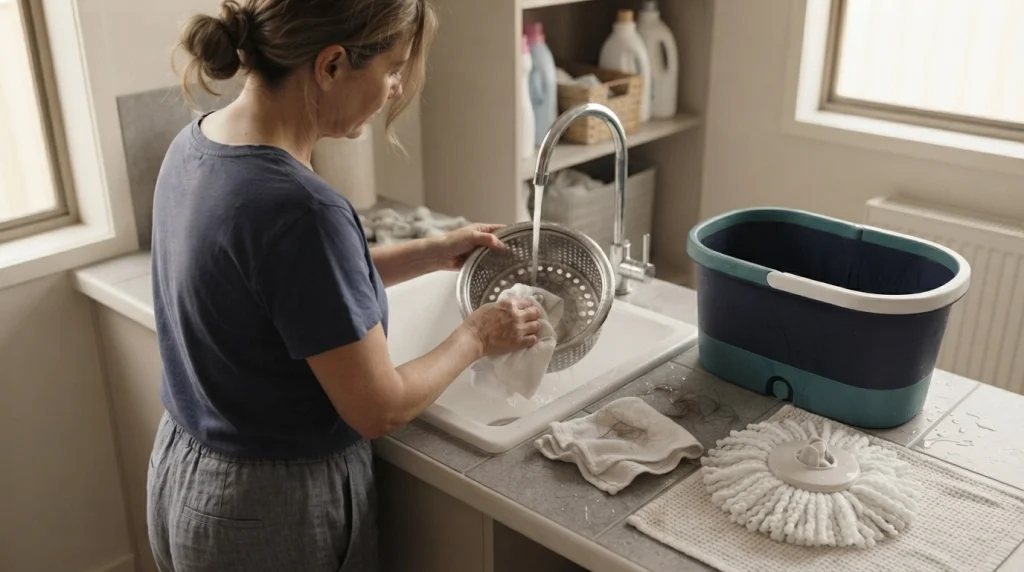
Regular cleaning helps the basket rotate smoothly and reduces the buildup of hair, grit, detergent residue, and dirty water. Maintenance also makes it easier to spot wear before a small problem becomes a broken mechanism.
What should you clean after each use?
- Empty the bucket: Discard dirty water rather than leaving it sitting in the bucket.
- Rinse the basket: Wash away loose dirt and cleaning residue using the method permitted by the manufacturer.
- Remove visible debris: Clear accessible hair and fibers around the basket and its support.
- Wash the mop head: Follow the care label for washing and drying reusable microfiber.
- Dry the components: Allow the bucket, basket, and mop head to dry thoroughly before storage.
How often should you inspect the spinner?
Give the basket a quick visual inspection after use and a closer check whenever rotation becomes noisy, uneven, or difficult. The appropriate deep-cleaning interval depends on how often you mop and how dirty your floors get.
Look for cracks, a loose central spindle, unusual wobbling, or a pedal that fails to return. These signs can indicate that a component needs adjustment or replacement.
Should you lubricate the basket mechanism?
Only lubricate the mechanism if the manufacturer specifically recommends it and identifies a suitable product. Unapproved oils or sprays can attract dirt, damage certain materials, or contaminate the mop water.
Don’t dismantle sealed gears or springs unless the manual provides safe service instructions. If the mechanism continues to bind after visible debris is removed, contact the manufacturer or replace the damaged part.
When should you replace the basket?
Replace the basket or its associated parts when cracks, severe wobbling, damaged supports, or repeated mechanical failures make normal operation unreliable. A replacement may be more practical than attempting to repair worn internal gears.
Check compatibility before buying parts. Two buckets that look similar may use different basket diameters, spindle fittings, or drive mechanisms.
Frequently Asked Questions
1. Why does the spin basket spin when I push the mop handle?
The handle activates a drive mechanism that transfers your movement into rotation. As the basket spins, water moves outward from the wet mop fibers and drains through the openings into the bucket.
2. Does a spin mop basket need electricity?
No. Most traditional spin mop buckets use manual handle movement or a foot pedal. Electric hard-floor mops are different appliances that rotate powered cleaning pads and don’t rely on the same bucket-based wringing system.
3. Why does my spin mop basket spin but not remove much water?
The mop head may be overloaded, incorrectly positioned, or too saturated for the current spinning cycle. Check the basket alignment and handle operation, then try another brief cycle if the manufacturer permits it.
4. Why is my spin mop basket making a clicking noise?
Clicking may come from normal engagement in some mechanisms, but new or repeated clicking can indicate a slipping drive, worn gears, or a jam. Stop using the spinner if the noise comes with resistance or failed rotation, and inspect it according to the manual.
5. Can I use a spin mop on hardwood floors?
Yes, if the flooring manufacturer’s care instructions allow the mop and you remove enough water to leave the head barely damp. Avoid standing water, excessive cleaner, and prolonged moisture because these can harm wood and its finish.
6. Why does the basket wobble while spinning?
A wobbling basket may be incorrectly seated, have a loose support, or contain a damaged spindle. Stop spinning, empty the bucket, and check the accessible components; replace damaged parts rather than continuing to use an unstable basket.
7. Is a spin mop better than a flat microfiber mop?
Neither is best for every home. A spin mop offers convenient wringing for a reusable string-style head, while a flat microfiber mop is often easier to store and maneuver in tight spaces. Choose according to your floors, cleaning routine, and preferred moisture control.
Final Takeaway: The Spin Basket Controls Mop Moisture
The spin basket rotates to remove excess water through centrifugal effects, helping you prepare a mop head for effective floor cleaning. Its handle or pedal mechanism creates the rotation, while the basket openings let expelled water drain into the bucket.
For the best results, use the correct operating technique, inspect the basket when it becomes stiff or noisy, and match mop dampness to your flooring. A little routine maintenance can keep the spinner working properly and help prevent unnecessary moisture on your floors.
If your current mop repeatedly jams or fails to wring out water, compare replacement baskets or consider a simpler mop design that suits your cleaning routine. Always verify part compatibility and follow the manufacturer’s instructions before attempting repairs.
For additional cleaning guidance, the CDC’s cleaning and disinfecting guidance explains when routine cleaning is sufficient and when disinfection may be needed.