
How to Clean Hardwood Floors (Without Damaging the Finish)

Disclosure: FloorsMop is reader-supported. As an Amazon Associate, we earn from qualifying purchases. If you buy through a link on this page, we may earn a small commission at no extra cost to you. Learn more.
Quick answer: To clean hardwood floors, remove dust and grit first with a microfiber dust mop or vacuum, then mop with a pH-neutral hardwood cleaner and a microfiber pad that is only barely damp. Mop with the grain, in small sections, and wipe up any standing water. Skip steam, vinegar, oil soap, and soaking-wet mops.
Hardwood itself is tough, but the finish on top is what you are really cleaning. Treat that finish gently and the wood underneath stays protected. If you want a full refresher on mopping technique for any floor, see how to mop a floor properly.
First, Figure Out What Finish You Have
The right method depends on the finish, not just the wood species. Drop a little water on a low-traffic spot and watch what happens.
| What you see | Likely finish | How to clean it |
|---|---|---|
| Water beads up and sits on top | Polyurethane or factory finish (sealed) | Damp mop with a wood cleaner, as in this guide |
| Water soaks in and darkens the wood | Unsealed, oiled, or worn finish | Dry clean only, or follow oiled-floor care |
| Surface smudges when you rub it with a fingertip | Paste wax | Dry clean and buff; no water-based cleaners |
Nearly all hardwood installed in the last 30 years is sealed with polyurethane, so the steps below fit most homes. Waxed and oiled floors need a lighter touch and get their own guides on this site.
What You’ll Need
- A microfiber dust mop or a vacuum with a hard-floor setting (brush roll off).
- A flat microfiber mop or spray mop. The Bona Premium Spray Mop is made for wood and uses very little liquid.
- A pH-neutral hardwood floor cleaner, such as Bona Hardwood Floor Cleaner, or the product your flooring maker recommends.
- Spare microfiber pads and a dry towel for spills.
How to Clean Hardwood Floors: 6 Steps
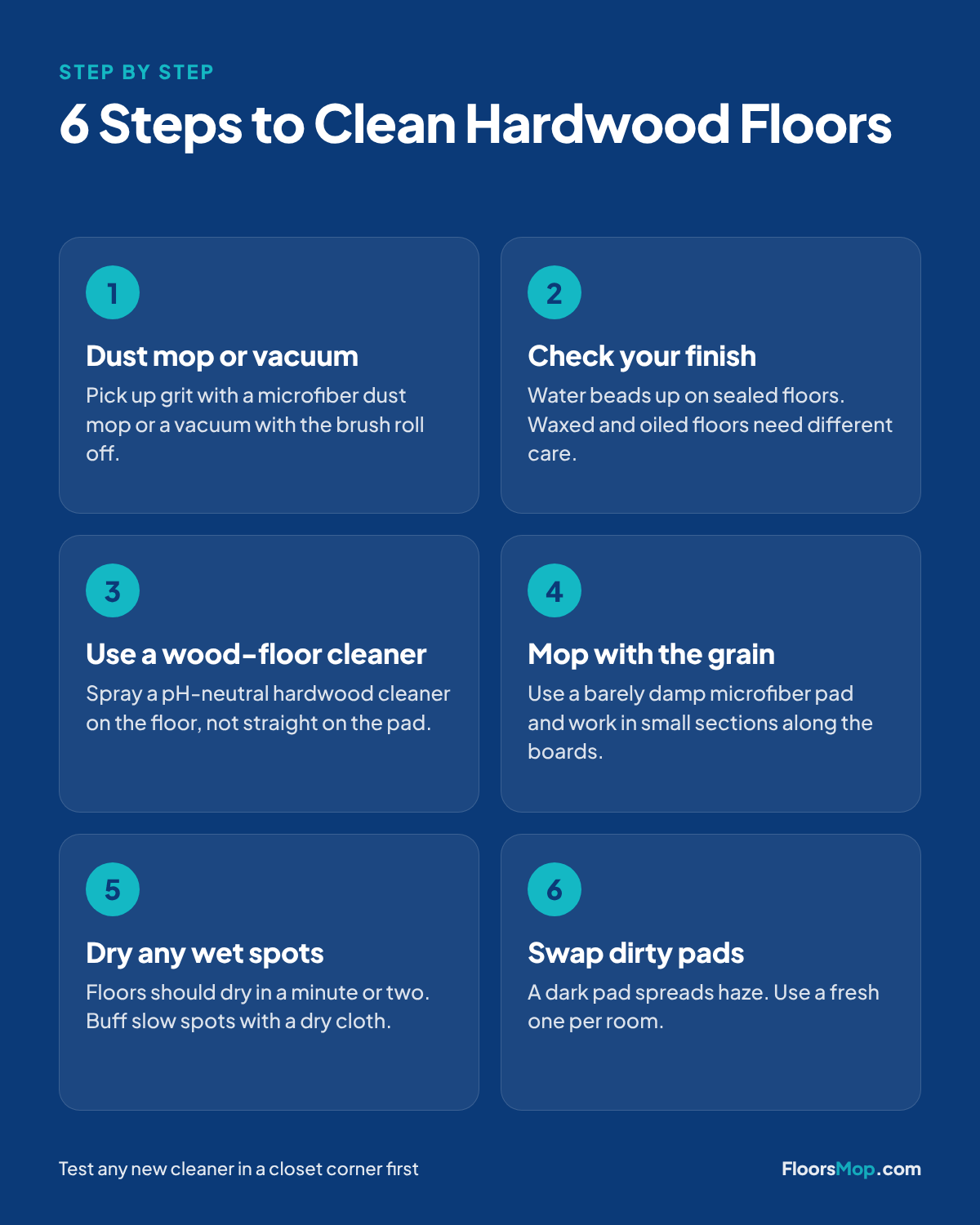
Step 1: Dust mop or vacuum the whole floor
Grit is the main cause of dull, scratched hardwood. A microfiber dust mop grabs fine dust and pet hair without pushing it around. If you vacuum, turn off the spinning brush roll so it does not scuff the finish. Our guide on how to use a dust mop shows the figure-eight technique that keeps dirt in front of the mop.
Step 2: Confirm the finish is sealed
Do the water-drop test above if you are not sure. If water soaks in, stop here and dry clean only. Damp mopping is for sealed floors.
Step 3: Apply a wood-safe cleaner lightly
Spray the cleaner onto a small area of floor ahead of you, about 4 by 4 feet. Spraying the floor instead of the pad helps you control how much liquid goes down. If you mix your own solution, follow the label ratio exactly. Too much cleaner leaves a hazy film that looks like the floor is dirty again.
Step 4: Mop with the grain, using a barely damp pad
Push the mop in the same direction as the boards. This follows the wood grain and hides any light marks. The pad should never drip. Work from the far side of the room toward the door so you are not walking over clean areas.
Step 5: Dry any slow-drying spots
A properly cleaned hardwood floor should dry in a minute or two. If any area stays wet, go over it with a dry microfiber pad or towel. Standing water is what causes cupping, dark stains, and gaps between boards over time.
Step 6: Swap the pad when it gets dirty
A dark, dirty pad leaves a gray haze behind. In an average home, plan on one fresh pad per room. Wash pads without fabric softener, which coats the fibers and causes streaks.
What’s Safe on Hardwood (and What to Avoid)
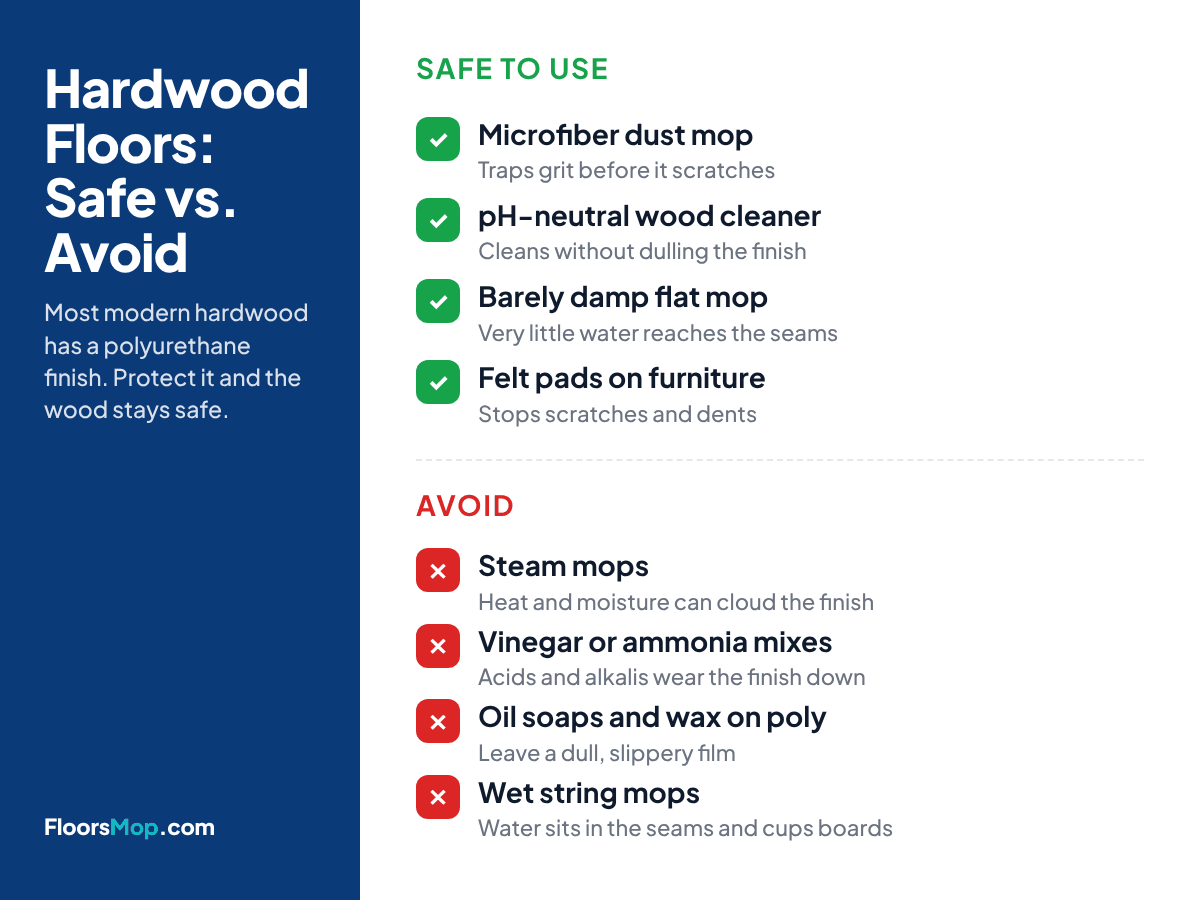
| Product or tool | Safe on sealed hardwood? | Why |
|---|---|---|
| pH-neutral hardwood cleaner | ✅ Yes | Made to clean polyurethane without residue |
| Plain warm water, barely damp | ✅ Yes | Fine for light weekly cleaning |
| Microfiber dust mop | ✅ Yes | Removes grit without scratching |
| Vinegar and water | ⚠️ Not recommended | Acid can slowly dull the finish over time |
| Dish soap | ⚠️ Rarely | Leaves a film that attracts dirt |
| Steam mop | ❌ No | Heat and moisture can break down the finish and swell boards |
| Oil soap or furniture polish | ❌ No | Builds up into a slippery, dull layer on poly |
| Bleach or ammonia | ❌ No | Can discolor wood and strip the finish |
Some people do clean with steam and say it works, but most hardwood makers void the warranty if you do. See are steam mops safe for hardwood floors for the full answer. And while a steam mop does a good job on tile, do steam mops actually clean floors explains why that is not the same as being safe for wood.
How Often Should You Clean Hardwood?
| Task | High-traffic rooms | Low-traffic rooms |
|---|---|---|
| Dust mop or vacuum | Daily or every other day | Once or twice a week |
| Damp mop with wood cleaner | Once a week | Every 2 to 4 weeks |
| Spot-clean spills | Right away | Right away |
| Deep clean or recoat | Every 3 to 5 years | As needed |
For a room-by-room breakdown, read how often should you mop hardwood floors.
Mistakes to Avoid
- Mopping before you dust. You turn dust into muddy streaks and drag grit across the boards.
- Using too much cleaner. More product leaves more residue, not a cleaner floor.
- Letting the mop pad get filthy. A dirty pad spreads a gray haze. Swap it when it looks dark, and see how do you clean a mop head for washing tips.
- Using “shine” products on polyurethane. Acrylic polishes and wax-based shine products layer up and need to be stripped later.
- Wearing shoes with grit or high heels indoors. Both scratch and dent the finish fast.
How to Handle Common Hardwood Problems
| Problem | Quick fix |
|---|---|
| Cloudy or hazy film | Mop once with plain warm water on a well-wrung pad, then buff dry |
| Sticky spots | Spot clean with your wood cleaner and a damp cloth |
| White water rings | Usually trapped moisture in the finish; a hair dryer on low or a dry cloth over time can help |
| Fine scratches | A wood floor touch-up marker or a professional screen-and-recoat |
| Dark stains that soak in | Water or pet urine reached the wood; these may need sanding |
Best Products for Cleaning Hardwood Floors
- Spray mop: Bona Premium Spray Mop. Comes with a washable microfiber pad and a refillable cartridge for wood floors.
- Cleaner: Bona Hardwood Floor Cleaner. pH-neutral, sold almost everywhere, and approved by many flooring makers.
- Dust mop: a wide microfiber dust mop speeds up daily cleaning in open-plan rooms.
If you are still choosing a mop, our list of the best mops for wooden floors compares the main options.
FAQs
What is the best thing to clean hardwood floors with?
A pH-neutral cleaner made for wood, applied lightly with a flat microfiber mop. For quick weekly cleaning, a microfiber pad dampened with plain water also works on sealed floors.
Can I use vinegar on hardwood floors?
It is not recommended. Vinegar is acidic, and over months it can wear down the protective finish and leave the floor looking dull. Many flooring makers say not to use it.
Is Swiffer WetJet safe for hardwood?
Swiffer makes a WetJet solution labeled for wood floors. Use light sprays and dry any wet areas. Avoid the general-purpose solution on unsealed or waxed wood.
Why do my hardwood floors look dull after mopping?
Usually it is residue from too much cleaner, a dirty pad, or an old polish product. Mop with plain warm water and a clean pad to rinse it, then buff dry.
Can you use a wet mop on hardwood?
Only if it is wrung out until it is barely damp. Wet string mops leave water in the seams, which can cause boards to swell, cup, or stain.
Related Guides
- How Often Should You Mop Hardwood Floors?
- Are Steam Mops Safe for Hardwood Floors?
- How to Use a Dust Mop
- Best Spray Mops for Hardwood Floors
- How to Use Bona Floor Cleaner With a Regular Mop