
How to Clean Marble Floors Safely

Disclosure: FloorsMop is reader-supported. As an Amazon Associate, we earn from qualifying purchases. If you buy through a link on this page, we may earn a small commission at no extra cost to you. Learn more.
Quick answer: To clean marble floors safely, dust mop daily to remove grit, then damp mop with a pH-neutral stone cleaner (or warm water with a drop of mild dish soap) and a soft microfiber pad. Rinse if you used soap and dry the floor with a soft towel. Never use vinegar, lemon, bleach, ammonia, or abrasive cleaners on marble.
Marble looks hard, but it is a relatively soft stone made of calcium carbonate. That means two things: grit scratches it, and acids eat into it. Most marble damage in homes comes from the wrong cleaner, not from dirt. This guide gives you a safe routine. For general mopping technique, see how to mop a floor properly.
Polished vs. Honed Marble
| Finish | How it looks | Cleaning notes |
|---|---|---|
| Polished | Glossy, mirror-like shine | Shows etching and water spots most; dry after mopping |
| Honed | Matte, smooth, satin look | Hides etching better but stains more easily; seal regularly |
| Tumbled | Rough edges, aged look | Dirt sits in pits; use a soft brush in textured areas |
Knowing your finish helps you set expectations. A polished floor shows every mistake, while honed marble forgives small etches but soaks in spills faster.
What You’ll Need
- A clean microfiber dust mop for daily dry cleaning
- A pH-neutral stone floor cleaner such as Granite Gold or a similar product labeled safe for marble
- A flat microfiber mop with a soft pad
- Two buckets (one for cleaning solution, one for rinse water) if you use a string or flat mop
- Soft, absorbent towels or a dry microfiber pad for drying
How to Clean Marble Floors: Step by Step
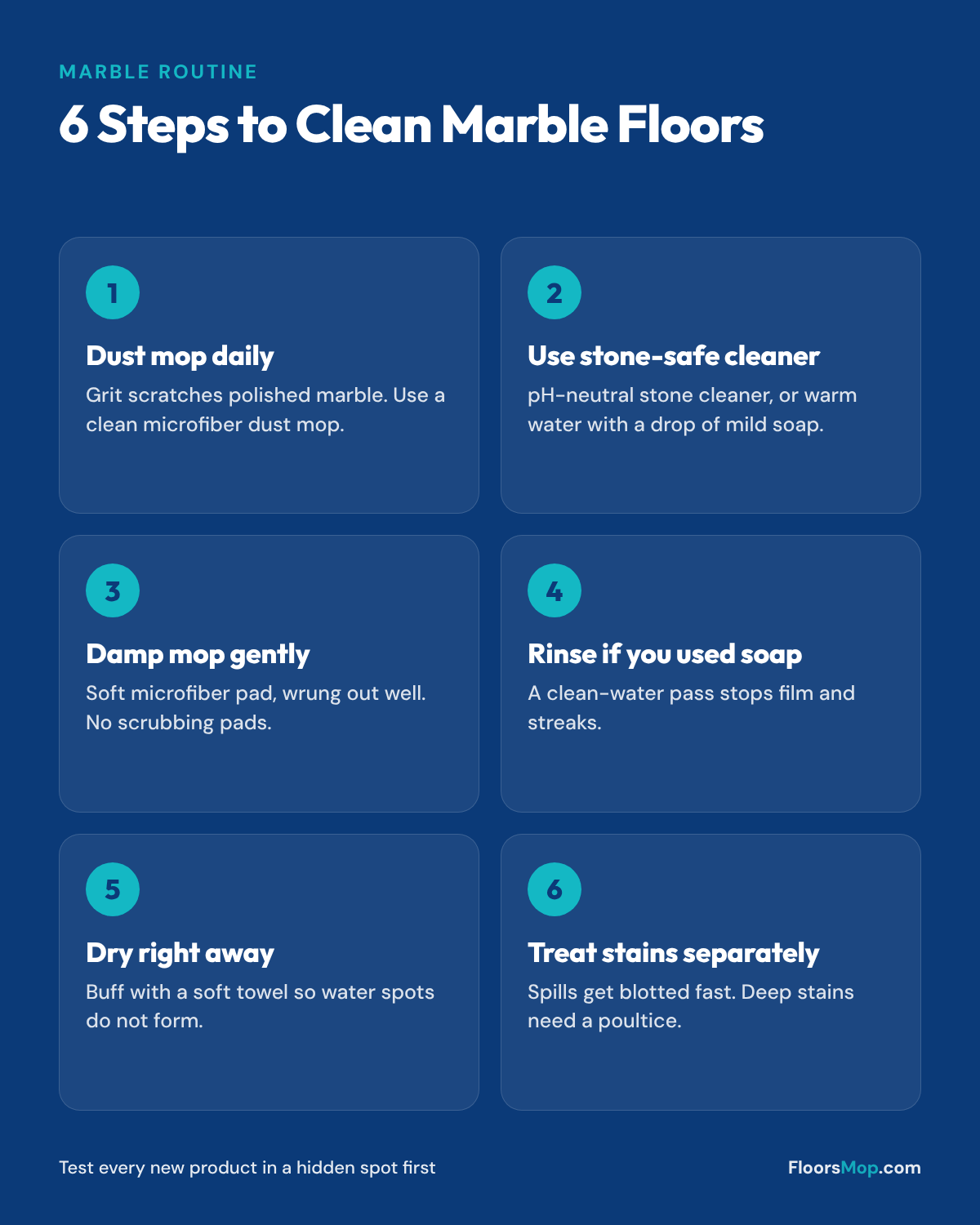
Step 1: Dust mop every day in busy areas
Sand and grit act like sandpaper on polished marble, especially near entry doors. A daily pass with a dry microfiber dust mop does more to protect the shine than any cleaner. Vacuums are fine too, but make sure the wheels and the head are clean and the brush roll is off.
Step 2: Mix a stone-safe solution
Use a cleaner labeled pH-neutral and safe for marble. If you do not have one, a gallon of warm water with a few drops of mild, dye-free dish soap works for light cleaning. Do not add vinegar, lemon, or “natural” citrus cleaners. They etch the surface even when diluted.
Step 3: Damp mop with a soft pad
Dip and wring the mop until it is only damp. Mop in small sections. Avoid scrub pads or brushes with stiff bristles on polished marble.
Step 4: Rinse if you used soap
Soap leaves a thin film that dulls marble over time. A second pass with clean water removes it. Stone cleaners that say “no rinse” can skip this step.
Step 5: Dry the floor
Buff the floor dry with a soft towel or dry microfiber pad. This prevents water spots, especially in areas with hard water.
Step 6: Deal with stains separately
Do not scrub stains with your mop. Spot-treat them as shown below.
What’s Safe on Marble (and What to Avoid)
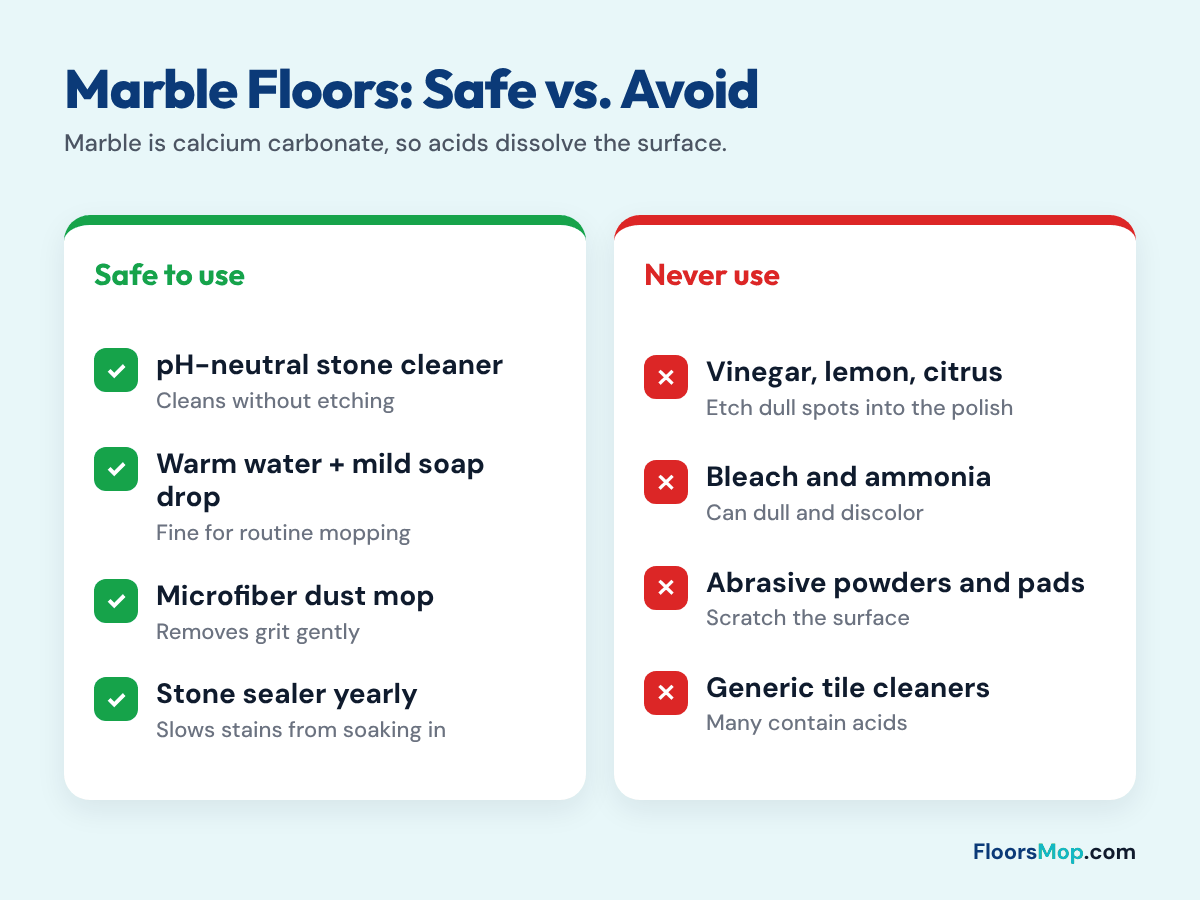
What about steam? Light steam on sealed, polished marble is used by some owners, but repeated heat can weaken the sealer and dull the finish. Read are steam mops good for marble floors before you try it. If you want to know what steam does well, see do steam mops actually clean floors.
How to Remove Common Marble Stains
| Stain type | Looks like | Treatment |
|---|---|---|
| Oil (cooking oil, lotion) | Darker, wet-looking patch | Baking soda and water poultice, covered with plastic wrap for 24 hours |
| Organic (coffee, tea, wine) | Pink-brown or tan | Poultice with a little 12% hydrogen peroxide (light marble only) |
| Water spots and rings | Cloudy marks on polish | Buff with a dry cloth; persistent rings may need marble polishing powder |
| Etching | Dull, rough spot, not a stain | Marble polishing compound for light etches, professional honing for deep ones |
| Rust | Orange-brown | Commercial rust poultice for stone; avoid acid rust removers |
A poultice is a paste that pulls the stain out of the stone as it dries. Apply it about a quarter-inch thick over the stain, cover, let it sit, then scrape it off and rinse. You may need two or three rounds for older stains.
Mistakes to Avoid
- Using vinegar or “natural” citrus cleaners. This is the most common cause of dull marble.
- Letting spills sit. Wine, juice, and sauces etch within minutes. Blot, do not wipe.
- Using a dirty mop. It leaves a gray film and grit. Rinse and wash pads often; see how do you clean a mop head.
- Skipping the sealer. Sealing does not stop etching, but it slows stains from soaking in.
- Placing rubber-backed rugs. They can trap moisture and leave marks.
How Often to Seal Marble Floors
Most marble floors should be sealed every 12 to 18 months, more often in kitchens. To check, drip a little water on the floor. If it darkens the stone within a few minutes, it is time to reseal. Use a penetrating sealer made for natural stone and follow the drying time on the label before walking on it.
Best Products for Marble Floors
- Cleaner: Granite Gold Stone Floor Cleaner. pH-neutral and labeled for marble.
- Sealer: a penetrating natural stone sealer applied yearly.
- Mop: a soft microfiber spray mop so you control how much liquid goes down.
FAQs
Can I use vinegar to clean marble floors?
No. Vinegar is an acid and will etch marble, leaving dull spots that do not wipe away. Use a pH-neutral stone cleaner instead.
Can I use Swiffer WetJet on marble?
Swiffer’s standard solutions are not made for natural stone. Use the mop with a stone-safe cleaner in a spray bottle, or pick a mop with a refillable tank.
How do I make my marble floor shine again?
Dust and damp mop with a stone cleaner, dry thoroughly, then use a marble polishing powder on dull spots. Badly etched floors need professional polishing.
Is dish soap safe on marble?
A few drops of mild, dye-free dish soap in a gallon of water is safe for occasional cleaning, but rinse afterward to avoid film.
How do I know if my marble floor is sealed?
Drip water on a quiet spot. If it beads for several minutes, the sealer is working. If it darkens the stone quickly, reseal.
Related Guides
- Are Steam Mops Good for Marble Floors?
- Best Steam Mops for Stone Floors
- How to Mop Travertine Floors
- Water Spots: How to Remove and Prevent Them