
Bad Smell After Mopping Guide to Fix It Fast

Bad smells after mopping usually come from dirty mop water, trapped moisture, or residue left on the floor. The fastest fix is to clean with fresh solution, dry the area well, and check whether the odor is actually coming from the floor or a hidden moisture problem. Related: floor smell after mopping. Related: mop water odor. Related: musty floor smell. Related: dirty mop head smell. Related: residue after mopping.
If your floors smell worse after mopping, the problem is usually not the room itself—it is trapped moisture, dirty mop water, or residue left behind on the surface. This bad smell after mopping guide walks through the most common causes, how to diagnose them quickly, and the safest ways to fix the odor without damaging your floors.
- Dirty tools: A sour mop head or bucket can spread odor back onto the floor.
- Too much water: Over-wetting traps smell in seams, grout, and edges.
- Residue issues: Excess soap or fragrance can leave a film that holds grime.
- Floor match: Tile, vinyl, laminate, wood, and stone each need different care.
- Warning signs: Persistent musty odors can mean leaks, mold, or subfloor damage.
Why Floors Smell Worse After Mopping: What’s Actually Happening
When a floor smells unpleasant after cleaning, it usually means the mop moved odor around instead of removing it. In many homes, the smell becomes more noticeable once water activates grime, soap residue, or mildew hiding in small gaps.
Moisture trapped in grout, seams, and under furniture
Water can sit in grout lines, plank seams, and along baseboards long after the visible floor looks dry. If furniture blocks airflow, those damp spots may hold a sour or musty smell until they fully dry.
This is especially common in bathrooms, kitchens, laundry rooms, and any space with textured flooring or deep grout. If you want a broader drying strategy, see how to dry a floor after mopping for practical airflow and timing tips.
Dirty mop water spreading odor instead of removing it
Once mop water turns gray, it stops cleaning effectively and starts redistributing soil. That can make a room smell stale, greasy, or even sour because the mop is pressing old residue back into the floor.
A mop head that has not been rinsed well can do the same thing. If the smell seems strongest right after cleaning, the mop itself may be part of the problem.
Residue from soap, disinfectant, or hard-water minerals
Too much cleaner can leave a thin film that traps dirt and holds odor. Fragranced products may smell pleasant at first, but once they mix with grime or dry unevenly, they can leave a sticky or off smell behind.
Hard water can also leave mineral residue, especially on tile, stone, and glassy surfaces. That residue does not always smell on its own, but it can make the floor feel dull and hold onto grime more easily.
Fast Diagnosis: Pinpoint the Source of the Bad Smell After Mopping
Before you mop again, figure out whether the odor is coming from the floor, the tools, or something nearby. A quick diagnosis saves time and helps prevent repeat cleaning that only makes the issue worse.
Stale or sour odor from a dirty mop head
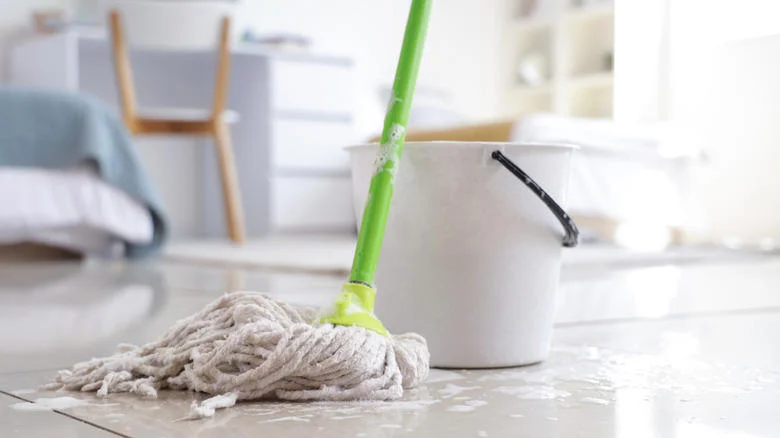
If the smell follows the mop from room to room, the mop head may be holding bacteria, old soil, or detergent buildup. This often creates a sour, wet-cloth smell that becomes stronger when the mop is damp.
That is a strong sign to clean or replace the head before you try anything else. For a deeper reset, FloorsMop’s clean mop head without washing machine guide can help when laundry access is limited.
Mildew smell from excess water on sealed or porous floors
A mildew-like odor often means water sat too long on the floor or seeped into a porous area. Even sealed floors can hold moisture at edges, transitions, and around trim.
Porous stone, grout-heavy tile, and older concrete surfaces are more likely to trap dampness. If the smell gets stronger in humid weather, moisture retention is probably part of the issue.
Rotten, ammonia-like, or musty odors that point to hidden issues
Rotten or ammonia-like smells are not typical cleaning odors. They can point to pet accidents, decaying organic material, drain problems, or hidden water damage under the surface.
Musty odors that return quickly after mopping may also suggest mold or mildew in the subfloor, underlayment, or behind baseboards. If the smell does not improve after a proper clean, it is worth treating as more than a surface problem.
How to test whether the smell is coming from the floor, baseboards, or drain nearby
Try smelling the floor in small sections, then compare it with the baseboards, corners, and nearby drains. If the odor is strongest at one edge of the room, the source may be hidden there rather than on the main walking area.
You can also wipe a dry white cloth across the floor and another across the baseboard. If one cloth picks up more odor or residue, that area likely needs targeted cleaning.
Work in small sections so you can tell which area is actually causing the odor. That makes it easier to avoid over-wetting the whole room.
Floor-Type Compatibility: What Works on Tile, Vinyl, Laminate, Hardwood, and Stone
The right odor fix depends on the floor surface. A cleaner that works well on tile may be too wet, too acidic, or too harsh for wood, laminate, or natural stone.
Best approach for ceramic tile and grout-heavy floors
Ceramic tile can usually handle more moisture than wood or laminate, but grout needs special attention. Grout lines hold dirt and odor, so a cleaner that reaches into the joints matters more than a heavily scented product.
For routine care, a neutral cleaner and a microfiber mop are usually safer than strong chemicals. If grout is the main odor source, spot-treat it instead of soaking the whole floor.
Safe methods for luxury vinyl plank and sheet vinyl
Luxury vinyl plank and sheet vinyl usually do best with low-moisture cleaning and mild solutions. Too much water can work into seams, and oily or waxy residue can make the floor smell off after drying.
If you use a product that leaves a film, the floor may feel tacky and hold onto odors. That is why a light rinse or a cleaner designed for vinyl is often the better choice. [Source: CDC]
Why laminate and engineered wood need low-moisture cleaning
Laminate and engineered wood can swell or lift if too much water reaches the edges or joints. Even when the surface looks sealed, the seams may still absorb moisture and trap odor.
Use a well-wrung microfiber mop and avoid puddling. If the floor has been repeatedly over-wet, a lingering smell may come from the board edges rather than the finish.
Hardwood caution: avoiding swelling, dulling, and trapped odor
Hardwood is especially sensitive to excess water and harsh cleaners. A floor that smells bad after mopping may actually be reacting to moisture sitting in the finish or seams.
If you notice dullness, cupping, or a long-drying surface, stop short of heavy re-mopping. For wood-specific timing and frequency, FloorsMop’s how often should you mop hardwood floors guide can help you avoid over-cleaning.
Natural stone and sealed concrete: pH-safe cleaners and residue control
Stone and sealed concrete need cleaners that will not etch, haze, or leave film behind. Strong acids and harsh alkaline products can create their own odor issues by damaging the finish or causing buildup.
If the floor is stone, check the product label carefully and stay with pH-safe options whenever possible. When in doubt, ask a flooring professional before trying a new chemical on a valuable surface.
Do not assume a stronger cleaner will remove odor faster. On sensitive floors, harsh chemicals can create residue, damage the finish, or make the smell worse.
Step-by-Step Fix for the Smell Right Now
Once you know the likely source, reset the cleaning process from the start. In many cases, the fastest fix is not more product—it is cleaner water, a cleaner mop, and faster drying.
Empty dirty water immediately and refill with fresh water plus the right amount of cleaner. If the bucket smells sour or greasy, wash it before using it again.
A contaminated mop head can reintroduce odor in seconds. Rinse it thoroughly, launder it if the material allows, or swap in a fresh pad if the smell is lingering.
Follow the label carefully. Too much cleaner can leave residue, while too little may not lift the grime causing the odor in the first place.
Open windows if weather allows, run fans, and use dry towels on damp spots. Cleaning in sections helps prevent moisture from spreading under furniture or into seams.
Go back only to the spots that still smell or feel dirty. Re-mopping the entire room can add more water than the floor can handle.
If the room still feels damp after cleaning, pause before adding more solution. A simple drying routine often matters as much as the cleaner itself, especially in humid rooms or homes with limited airflow.
- Fresh mop water mixed at the correct dilution
- Clean or replaced mop head
- Dry towels for corners and seams
- Fan or open window for airflow
- Targeted spot-cleaning instead of full-room re-mopping
Common Cleaning Mistakes That Make the Odor Come Back
Many recurring floor smells come from well-intended cleaning habits that leave behind moisture or residue. Fixing the method is often more effective than switching products again and again.
Using too much soap or fragrance-heavy products
More soap does not mean more clean. Excess cleaner can leave a film that traps dirt, and heavy fragrance can mask the real issue for a few minutes before the odor returns.
Mopping with dirty water across the whole room
Once the bucket turns cloudy, the water is no longer helping much. It can spread grime into corners and seams, which is why the smell may return as soon as the floor dries.
Leaving floors damp for too long in humid rooms
Humidity slows drying and gives mildew more time to develop. Bathrooms, basements, and kitchens with poor ventilation are especially prone to this problem.
Ignoring grout lines, corners, and under-appliance areas
Odor often hides where the mop does not reach well. Corners, fridge edges, stove gaps, and baseboard lines can collect moisture and debris even when the open floor looks clean.
Using bleach, vinegar, or steam in the wrong situations
Bleach can be too harsh for many finishes, vinegar is not suitable for every floor type, and steam can damage wood, laminate, or vinyl. If you are unsure about a product, check the floor manufacturer’s guidance first.
- Neutral cleaners on most everyday floors
- Microfiber mops for low-residue cleaning
- Spot treatment for grout, seams, and corners
- Overuse of scented or foaming products
- Steam on wood, laminate, or vinyl
- Any cleaner that leaves a sticky film
Best Odor-Fighting Cleaning Methods for 2025 Homes
For most homes, the best odor control comes from simple, low-residue cleaning rather than aggressive chemical use. The goal is to remove the source of the smell and leave as little behind as possible.
Neutral pH cleaners for everyday maintenance
Neutral pH cleaners are a good default for many floor types because they clean without being overly harsh. They are especially useful when the issue is dust, light grime, or leftover film from previous mopping. [Source: WebMD]
Enzyme-based cleaners for organic spills and pet odors
If the smell is tied to food spills, pet accidents, or other organic matter, an enzyme cleaner may help more than a standard floor solution. These products work best when used according to the label and given enough time to act.
Microfiber flat mops vs. string mops for odor control
Microfiber flat mops usually hold less dirty water and leave less residue than traditional string mops. That makes them a strong choice when odor control matters more than heavy scrubbing.
String mops can still work for some jobs, but they are easier to overload with dirty water. If the room already has a smell issue, a lower-moisture tool is often the safer choice.
When a deep clean is worth the extra cost compared with regular mopping
A deep clean can be worth it when the odor keeps returning after normal mopping or when grout, corners, and under-furniture areas need attention. In those cases, targeted work may save time compared with repeated surface cleaning.
Cost Note
In many homes, the main cost difference is cleaner refills, replacement pads, or extra time spent drying the floor. A targeted deep clean can be more efficient than repeatedly mopping the entire room with the wrong method.
When the Smell Means More Than a Cleaning Problem
Some odors are a warning sign that the floor needs inspection, not just another mop bucket. If the smell is strong, persistent, or tied to visible damage, it is time to think beyond routine cleaning.
Signs of mold or mildew under flooring or in subflooring
A musty odor that returns quickly after cleaning can point to mold or mildew below the surface. Other clues include soft spots, discoloration, warped edges, or a smell that gets stronger in damp weather.
Water damage, leaks, or plumbing issues near bathrooms and kitchens
If the smell is strongest near sinks, toilets, dishwashers, or laundry appliances, a leak may be feeding the problem. Water can travel under flooring before it becomes visible, so the source is not always where the odor shows up first.
When to contact a flooring professional for inspection or repair
Ask a professional when the odor continues after careful cleaning, when boards are warped, or when the floor has visible separation, lifting, or soft spots. This is especially important for expensive materials or if a warranty may be involved.
What a pro may check: seal failure, warped boards, grout breakdown, and underlayment issues
A flooring professional may look for failed sealant, damaged grout, moisture in the underlayment, or boards that have shifted after repeated wet cleaning. Those issues can trap odor even when the surface looks fine.
In some cases, the fix is not a new cleaner but repair or replacement of the affected area. That is why a stubborn smell should be treated as a possible flooring issue, not only a housekeeping problem.
Quick Recap: The Fastest Way to Stop Bad Smell After Mopping
The quickest way to stop a bad smell after mopping is to identify whether the odor is coming from dirty tools, leftover residue, or trapped moisture. Then clean with the right method for the floor type and dry the area thoroughly.
Match the cleaning method to the floor type
Tile, vinyl, laminate, hardwood, and stone all need different moisture levels and cleaner choices. Matching the method to the material prevents damage and helps the odor stay gone.
Eliminate dirty water, residue, and over-wetting
Fresh water, a clean mop head, and the correct dilution solve many odor problems on the first retry. If the floor stays damp too long, the smell is more likely to return.
Know when the odor is a warning sign, not just a cleaning mistake
If the smell persists after careful cleaning, look for leaks, mold, or hidden damage. That is the point where calling a flooring professional is safer than repeating the same mop routine.
Frequently Asked Questions
It usually happens because dirty water, residue, or trapped moisture is still on the floor. The mop may also be spreading odor instead of removing it.
Yes. A damp, dirty mop head can hold sour or musty odors and transfer them back to the floor.
A neutral pH cleaner is often the safest starting point for many floor types. Always check the label and the floor manufacturer’s guidance first.
That usually means the source is still there, such as residue in grout, hidden moisture, or a dirty mop head. It can also point to a leak or mildew under the floor.
Not always. Vinegar and bleach can damage or dull some floor finishes, so they should only be used when they are safe for that specific floor type.
Call a professional if the smell persists after proper cleaning, or if you notice warping, soft spots, lifted edges, or signs of water damage.
