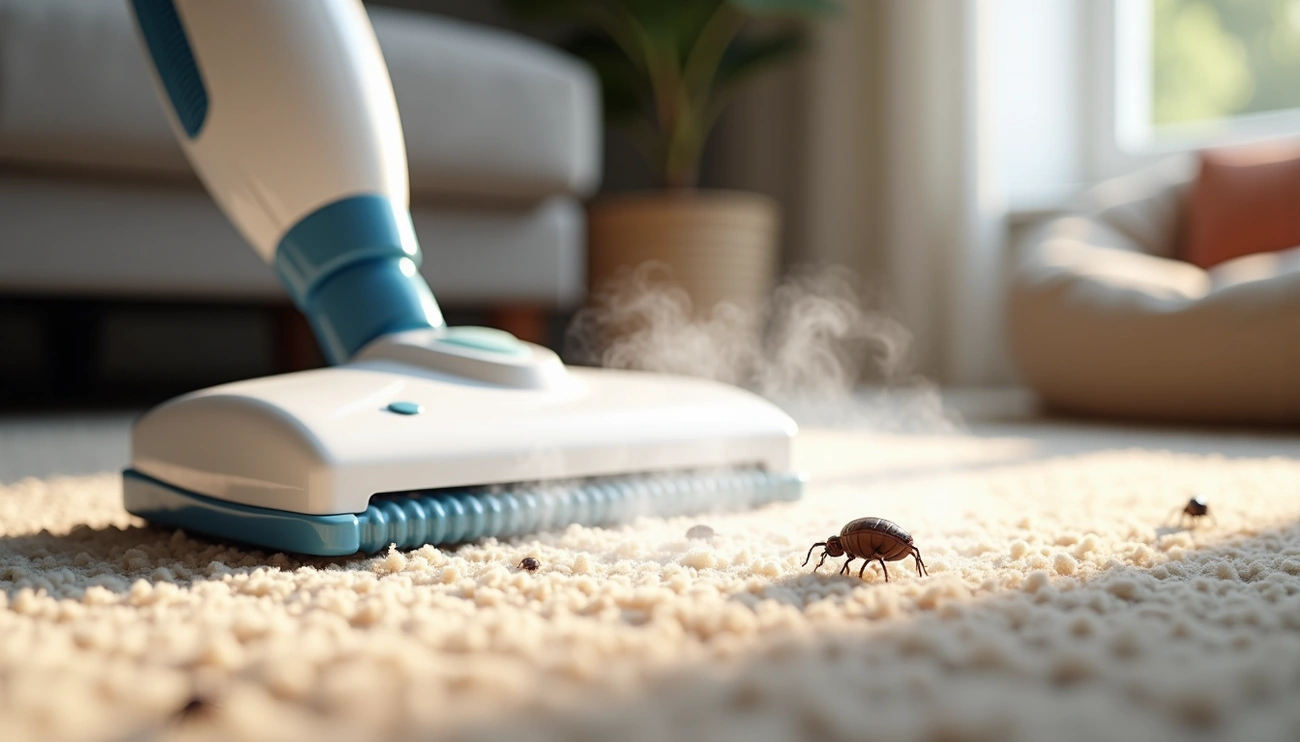
Yes, a steam mop kills adult fleas, larvae, and eggs instantly on contact. Steam temperatures exceed 200°F (93°C), which destroys fleas at all life stages without chemicals. Steam works best on sealed hard floors and low-pile carpets. Move the mop slowly over each section to allow heat to penetrate seams and crevices.
Does Steam Kill Fleas? The Science Behind It
How High Temperature Kills Fleas at All Life Stages
High heat attacks fleas at a cellular level by denaturing proteins and disrupting the physiological systems they need to survive. Adult fleas face stress when exposed to temperatures over 103°F, which breaks down crucial enzymes required for basic survival functions. In fact, research shows that temperatures above 104°F kill adult fleas on contact. Steam above 140°F kills adult fleas almost instantly.
Different life stages require varying temperature thresholds. Flea eggs die at temperatures above 100.4°F. At slightly lower temperatures around 95°F, approximately 40% of eggs still survive to hatch. Higher temperatures around 120°F may be needed to eliminate eggs and pupae effectively. Professional steam cleaning at 200°F can achieve up to 95% population reduction in a single pass.
Steam Penetration Into Hidden Flea Habitats
Steam reaches deep into areas where standard surface cleaning methods fail. The high-temperature vapor penetrates carpets, cushioned furniture, cracks, crevices on floors, and along baseboards where fleas hide and lay eggs. This ability to access hidden micro-habitats makes steam treatment effective against flea populations that occupy spaces between carpet fibers and under furniture edges.
The EPA specifically recommends steam cleaning these hard-to-reach areas to kill fleas in all stages of the life cycle. Hot water extraction sprays water heated to around 200°F deep into carpet and immediately extracts it with powerful suction.
Why Heat and Moisture Work Together
Steam combines intense heat with moisture to enhance flea mortality through dual action. The heat denatures proteins and disrupts physiological systems, while moisture helps steam penetrate deeper into fabrics, carpets, and crevices. This combination creates conditions that few fleas can survive. The moisture component carries heat further into materials than dry heat alone could reach.
Does Steam Kill Flea Eggs Effectively?
Steam does kill flea eggs when temperatures exceed 100.4°F. The intense heat denatures the egg’s proteins and disrupts its internal systems, preventing development. However, eggs and pupae deep in carpet padding or under baseboards may avoid direct heat contact. For optimal results, steam should be applied for 10 to 15 seconds per spot.
How to Use a Steam Mop to Kill Fleas
Proper technique determines whether steam cleaning eliminates your flea problem or just temporarily reduces it. I’ve found that following a systematic approach makes all the difference between success and frustration.
Step 1: Vacuum Thoroughly Before Steaming
Vacuuming before steam treatment removes loose debris, adult fleas, and eggs from surfaces. Focus on carpets, cushioned furniture, cracks and crevices on floors, along baseboards, and areas where your pets rest or sleep. Research from Ohio State University found that vacuuming kills 96% of adult fleas and 100% of larvae and pupae through mechanical agitation and pressure changes. After vacuuming, immediately seal the debris in a plastic bag and dispose of it in an outdoor garbage bin to prevent surviving fleas or eggs from re-entering your home.
Step 2: Choose the Right Steam Mop Temperature
Use a steam cleaner that operates at approximately 212°F (100°C). This temperature kills adult fleas, eggs, and larvae all in one go. Professional-grade equipment that reaches around 200°F can achieve up to 95% population reduction in a single pass.
Step 3: Target Carpets, Upholstery, and Pet Bedding
Concentrate on fabrics where fleas live and breed. Pay extra attention to pet beds, carpets, upholstery, and baseboards where fleas often hide and lay eggs. Note that steam cleaning works best on shallower floor coverings and low pile rugs, as steam may not penetrate deeply into thick carpets.
Step 4: Move Slowly and Overlap Your Passes
Move the steam cleaner slowly and methodically across surfaces. Taking your time ensures that every nook and cranny gets treated effectively. The heat needs sufficient contact time to penetrate fibers and kill fleas at all stages.
Step 5: Allow Surfaces to Dry Completely
After steaming, allow treated areas to dry completely before allowing pets or children back into the space. Open windows and provide ventilation to prevent musty smells.
What Surfaces Can You Steam Clean for Flea Control
Steam cleaning works on multiple surfaces throughout your home, but knowing which materials respond best helps you target flea infestations more effectively.
Carpets and Area Rugs
Carpets serve as primary breeding grounds where fleas thrive at all life stages. Steam cleaning eliminates fleas, larvae, and eggs while removing dirt, allergens, and bacteria from deep within carpet fibers. The high heat penetrates into the fibers to kill fleas, eggs, larvae, and pupae. However, steam cleaning proves more effective for shallower floor coverings and low-pile rugs. Steam can’t always penetrate deeply into thick carpets where fleas and their eggs often hide. Water-based carpet cleaners remain superior to vacuums at removing debris and destroying fleas at all stages, from egg to adult.
Furniture and Upholstered Items
Upholstered furniture harbors fleas in fabric folds and seams. Steam cleaning furniture penetrates deep into the fabric, killing fleas on contact. The heat also removes dust mites and allergens, contributing to a healthier environment. Focus on pet’s favorite spots where they spend considerable time. Pay particular attention to sofa cushions, seams, and areas under furniture legs.
Mattresses and Bedding
Mattresses and bedding represent prime hiding spots for fleas and their eggs. Steam cleaning these surfaces ensures thorough eradication by targeting all crevices and disrupting the flea lifecycle. Anything not machine washable becomes a candidate for steam treatment.
Hard Floors and Baseboards
Fleas hide in crevices, baseboards, and areas beneath furniture. Steam cleaning penetrates these spots, ensuring thorough eradication. Target cracks in floorboards and along baseboards where eggs accumulate. Steam pulls fleas from cracks and crevices that other cleaning methods miss.
Best Practices for Long-Term Flea Prevention
Steam treatment alone won’t solve your flea problem long-term. Besides killing existing fleas, you need ongoing prevention strategies that address the root causes of infestation.
Treat Your Pets Simultaneously
Treating your home while ignoring your pets guarantees failure. Adult fleas live primarily on animals, using your home’s environment only for reproduction. All pets in your household need treatment, not just the ones showing visible flea activity. Use veterinarian-recommended flea preventatives year-round, as warmer winters have made fleas a constant threat rather than seasonal.
Wash Bedding in Hot Water Regularly
Wash all pet bedding, family bedding, and any fabric your pets rest on in hot water every two to three weeks. Hot water combined with soap kills fleas at all life stages. If bedding is heavily infested with flea dirt and eggs, discard it entirely.
Seal Cracks and Crevices in Your Home
Focus on cracks in hardwood floors and crevices around baseboards where flea eggs fall and develop. Permanently caulking these openings prevents eggs from accessing protected spaces.
Vacuum Daily During Active Infestations
Vacuum every single day for at least two to three weeks during active infestations. Dispose of vacuum contents in sealed bags outside immediately after each use.
When to Call Professional Pest Control
If DIY methods fail after three to four weeks, or if fleas keep returning, contact professional pest control. Professionals access stronger products and identify infestation sources directly.
Conclusion
Steam mops offer a powerful, chemical-free solution for flea control when used correctly. As I have shown, temperatures above 200°F eliminate fleas at all life stages, but success depends on proper technique and targeting the right surfaces. Remember that steam treatment alone won’t solve persistent infestations. Treat your pets simultaneously, maintain regular cleaning routines, and contact professionals if the problem persists after several weeks. Your flea-free home depends on consistency, not just one-time treatments.