
Dust Mop vs Broom: Which Is Better for Your Floors?

Disclosure: FloorsMop is reader-supported. As an Amazon Associate, we earn from qualifying purchases. If you buy through a link on this page, we may earn a small commission at no extra cost to you. Learn more.
Quick answer: A dust mop is better for smooth, indoor hard floors like hardwood, laminate and vinyl. Its microfiber or cotton head traps fine dust and pet hair instead of flicking it into the air. A broom is better for larger debris, rough or textured surfaces, corners, and outdoor areas. Most homes are best served by a wide dust mop for daily passes and a small angled broom for crumbs and corners.
Both tools remove dry dirt before you mop, which is the step that prevents scratches. If you already own a dust mop, our guide on how to use a dust mop correctly will help you get more out of it. Here is how the two compare on the things that matter.
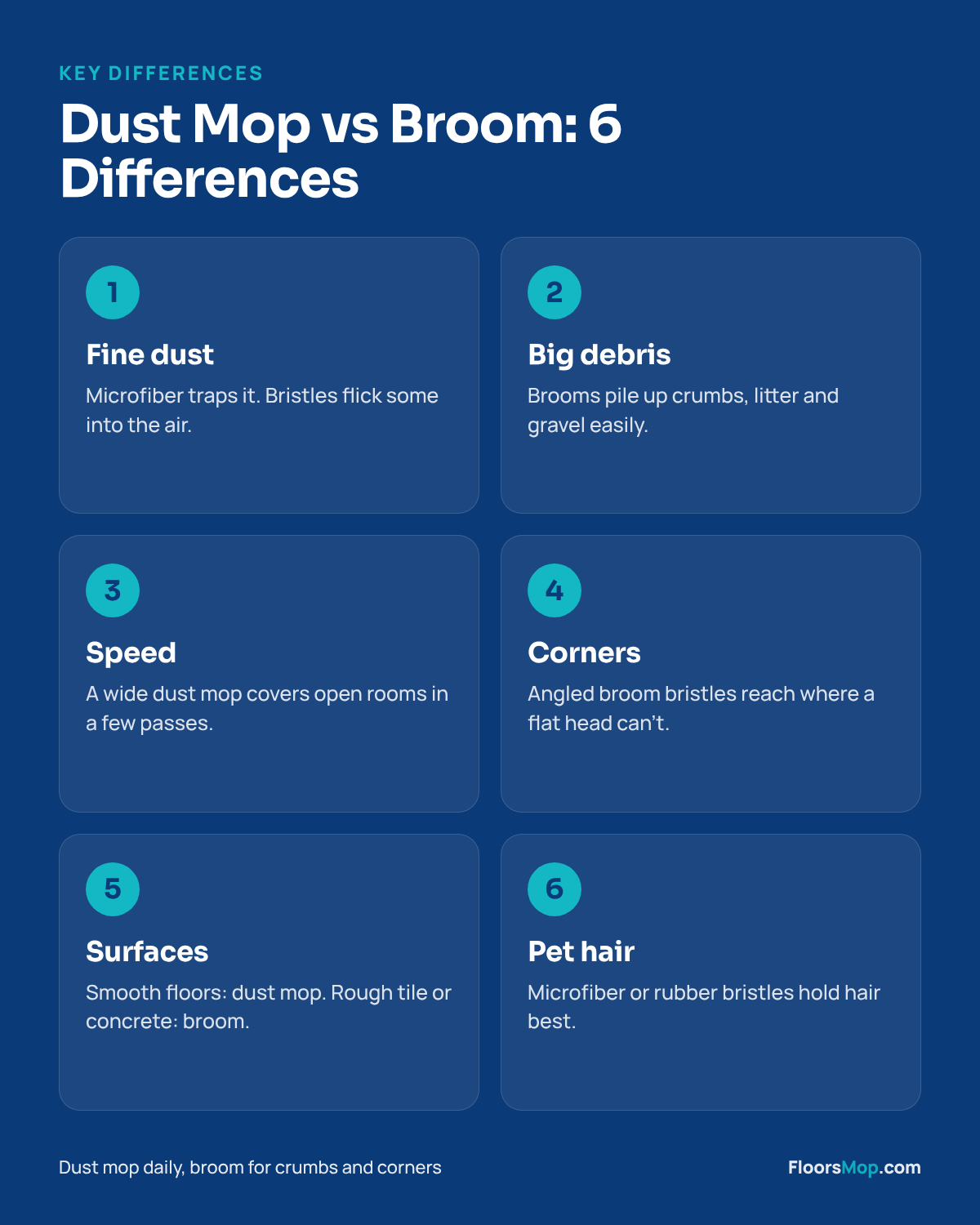
Dust Mop vs Broom at a Glance
| Feature | Dust mop | Broom | Edge |
|---|---|---|---|
| Fine dust and pet hair | Traps it in the fibers | Moves much of it into the air | Dust mop |
| Crumbs, cereal, litter, gravel | Pushes small bits; struggles with larger ones | Sweeps them into a pile easily | Broom |
| Speed on open floors | Fast, wide head (18 to 36 in.) | Slower, short strokes | Dust mop |
| Corners and tight spots | Rectangular head misses some corners | Angled bristles reach in | Broom |
| Textured tile, grout, concrete | Snags or skips | Stiff bristles dig in | Broom |
| Outdoor use | No | Yes (with the right bristles) | Broom |
| Noise and dust in the air | Quiet, very little airborne dust | Quiet, but kicks up dust | Dust mop |
| Upkeep | Wash or shake out the head | Tap out bristles, replace when splayed | Tie |
Key Differences
Cleaning performance
A dust mop works by contact. Microfiber strands hold a slight static charge and have tiny gaps that grab dust, hair and the fine grit that dulls a floor’s finish. As you push the mop, that dirt stays in the head instead of rolling ahead of it. A broom works by flicking. Bristles push debris into a pile, which is perfect for crumbs and pebbles but lets the lightest particles float up and settle again a few minutes later.
That is why dust mops are standard in gyms, schools and stores with large smooth floors. Brooms still win when the mess is chunky, like spilled cereal, cat litter, or dirt tracked in from the yard.
Ease of use
Dust mops cover more ground per stroke. You push them in long, overlapping S-shaped paths and never lift the head, so the dirt stays trapped. A broom asks for short strokes, a dustpan, and some bending. If you have back or wrist pain, a lightweight dust mop on a long handle is usually easier on the body.
Floors and surfaces
Smooth floors favor the dust mop: sealed hardwood, laminate, luxury vinyl, polished concrete and smooth tile. On rough tile, deep grout lines, brick, and exterior concrete, a broom’s bristles get into the low spots that a flat mop rides over. For wet cleaning those same rough surfaces, a water broom can be a useful middle ground.
Pet hair and allergies
If you have shedding pets or dust allergies, a microfiber dust mop is the better daily tool. It collects hair into the head rather than sending fine dander into the air. A rubber-bristle broom is a good second choice for hair because the rubber grips it. Classic straw or plastic bristles spread fine hair around the most.
Cost and upkeep
Both are cheap. A good dust mop with a washable microfiber head and a decent broom-and-dustpan set each cost about the same as a takeout lunch for two. Dust mop heads should be shaken out after each use and machine washed (no fabric softener) when they look gray. Broom bristles last until they splay or bend, then the head should be replaced.
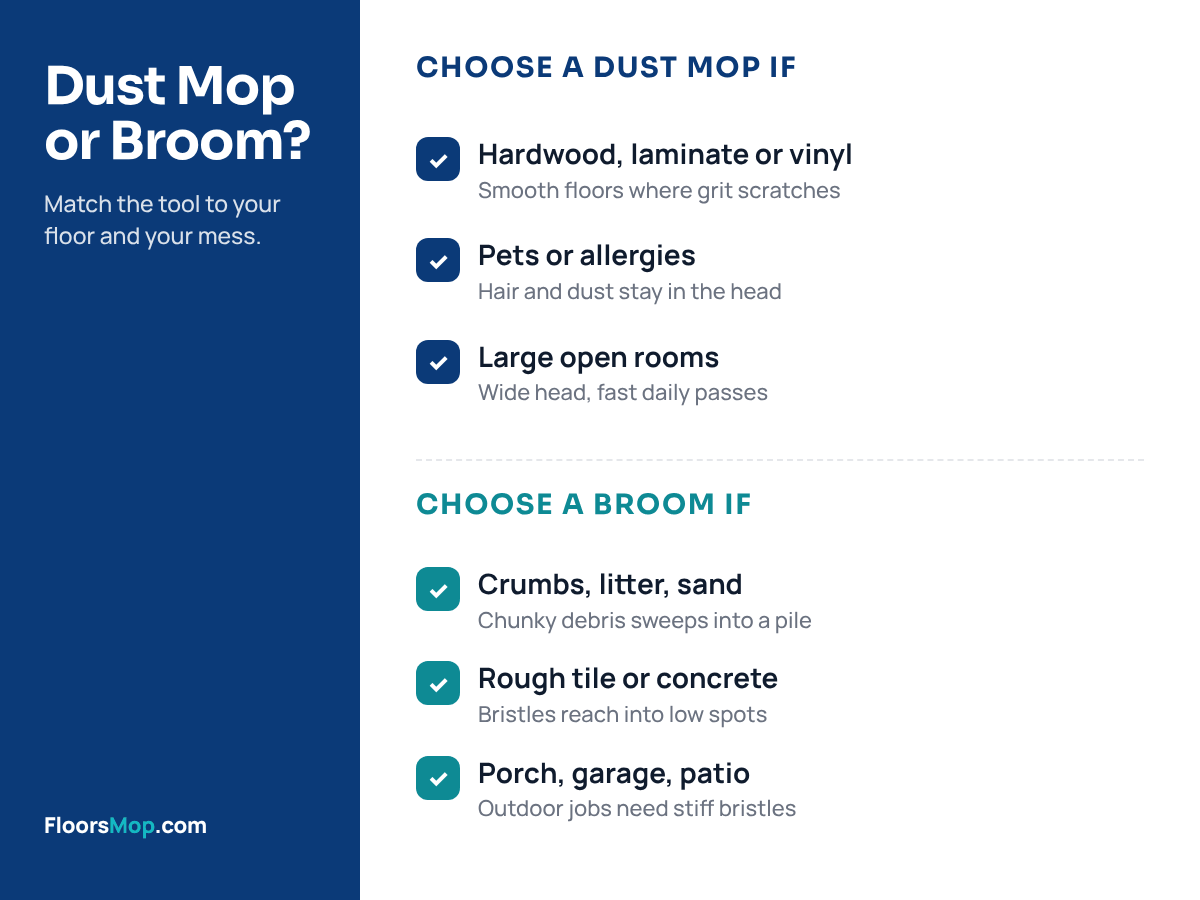
Choose a Dust Mop If…
- Most of your floors are smooth hardwood, laminate, vinyl or polished concrete.
- You want to remove fine dust and pet hair, not just crumbs.
- You have large, open rooms or long hallways.
- Someone in the home has allergies to dust or dander.
- You want a fast daily pass that takes a few minutes.
Good options include the Libman microfiber dust mop for home use and a wider 24-inch microfiber dust mop for big open spaces. Disposable-pad sweepers such as the Swiffer Sweeper work the same way with throwaway cloths.
Choose a Broom If…
- You deal with chunky messes: cereal, litter, sand, leaves.
- Your floors are textured tile, brick, slate or rough concrete.
- You need to sweep porches, garages or patios too.
- You have lots of corners, stair edges or tight spaces between furniture.
An angled indoor broom like the O-Cedar Power Corner broom reaches into corners well. For pet hair on hard floors and rugs, consider a rubber-bristle broom.
The Best Routine: Use Both
You do not have to choose only one. A simple routine that works in most homes:
| Task | Tool | How often |
|---|---|---|
| Quick pass in living areas and halls | Dust mop | Daily or every other day |
| Kitchen crumbs and spills of dry food | Small angled broom + dustpan | As needed |
| Entryway grit and pebbles | Broom | 2 to 3 times a week |
| Before wet mopping | Dust mop, then broom for corners | Every time |
| Patio, garage, porch | Stiff outdoor broom | Weekly |
Sweeping or dust mopping first matters because wet mopping over grit grinds it into the finish. See how to mop a floor properly for the full routine.
How to Get Better Results From Each
Dust mop tips
- Never lift the head mid-room. Push in a continuous S pattern so the dirt stays trapped, then lift once at the end over a trash bag.
- Lead with one edge. Keep the same side of the head forward so the dirt collects on that edge and does not drop out.
- Start at the walls. Run the mop along the baseboards first, where dust gathers, then work the middle of the room.
- Keep it dry. A damp head turns dust into streaks. Save liquid for the mopping step.
Broom tips
- Use short, controlled strokes toward you, not big sweeps that throw dust into the air.
- Sweep toward a single pile in the middle of the room, then use the dustpan at a low angle so the last line of dirt goes in.
- Store it hanging or bristles up. Standing a broom on its bristles bends them and ruins the edge. Our guide on storing brooms and mops has simple hook ideas.
- Keep indoor and outdoor brooms separate so you do not drag mud and sand into the house.
Consider Instead: A Cordless Stick Vacuum
If you have the budget, a cordless stick vacuum with a soft hard-floor roller picks up both fine dust and larger crumbs, which covers the strengths of both tools. It is louder and needs charging, but it removes debris completely instead of piling it up. Many people still keep a dust mop around for silent, quick touch-ups.
FAQs
Is a dust mop better than a broom for hardwood floors?
Yes, for routine cleaning. A microfiber dust mop removes the fine grit that scratches hardwood finishes and does not scatter dust. Keep a small broom for crumbs and corners.
Should you sweep before using a dust mop?
Only if there are large crumbs or pebbles. A dust mop can push small debris, but bigger pieces roll out of the head. Pick those up with a broom first, then dust mop.
Can you use a dust mop wet?
Some microfiber dust mops can be lightly dampened for a quick wipe, but a dust mop is designed for dry dirt. For wet cleaning, switch to a flat mop or spray mop with its own pads.
How often should you wash a dust mop head?
Shake it out outdoors or over a trash bag after every use. Machine wash microfiber heads every week or two with no fabric softener, and air dry or tumble dry on low.
Which is better for pet hair, a broom or a dust mop?
A microfiber dust mop is better on hard floors because it holds hair in the fibers. A rubber-bristle broom is the next best choice and also works on low-pile rugs.
Verdict
For smooth indoor floors, the dust mop is the better everyday tool. It is faster, quieter, and keeps fine dust and pet hair out of the air. The broom is still the right choice for chunky debris, rough surfaces, corners and outdoor areas. Own one of each, and you will rarely need anything else to keep floors ready for mopping.
Related Guides
- How to Use a Dust Mop Correctly
- Different Types of Mops and When to Use Each
- Water Broom Guide
- How to Store Brooms and Mops