
What Are the Different Types of Mops? A Complete 2026 Guide

Quick answer: The main types of mops are flat microfiber mops, spray mops, spin mops, string mops, sponge mops, strip mops, steam mops, electric spinning mops, vacuum (wet-dry) mops, robot mops and dust mops. Pick by floor first and mess second. For most homes, a washable flat microfiber mop is the best all-round choice, because it controls water well and is safe on most sealed hard floors.
The right mop is the gentlest one that removes the mess without leaving extra water behind. This guide explains how each mop type works, which floors it suits, and how to choose one without buying the wrong tool.
How Different Types of Mops Work
All mops do three jobs: hold water (or none), loosen dirt, and pick it up. They differ in how much water they carry and how they scrub.
- Dry mops pick up dust, hair, grit and crumbs with no liquid.
- Damp mops use a small amount of water for routine cleaning of sealed floors.
- Wet mops carry more solution for water-tolerant floors and large spills.
- Steam mops heat water and push steam through a cloth pad.
- Powered mops use a motor to spin, vibrate, vacuum or move the cleaning head.
Water control matters more than most shoppers expect. A mop that works well on ceramic tile can leave too much water on wood or laminate.
The Main Types of Mops at a Glance
| Mop type | How it works | Best for | Main drawback |
|---|---|---|---|
| Flat microfiber | Flat head with a washable pad | Everyday cleaning on most hard floors | Not great for big spills |
| Spray mop | Built-in bottle mists cleaner ahead of the pad | Quick cleanups, small homes | Small tank, pads get dirty fast |
| Spin mop | Round head, bucket with a spinning wringer | Mixed floors, controlled dampness | Bucket takes space |
| String mop | Cotton or blend strings, wrung by hand or press | Tile, concrete, big spills | Hard to control water |
| Sponge mop | Flat sponge with a lever wringer | Smooth floors, scrubbing spots | Sponge holds bacteria if not dried |
| Strip mop | Synthetic strips instead of strings | General wet cleaning | Still uses more water than flat mops |
| Steam mop | Heats water into steam under a pad | Sealed tile, stuck-on grime | Not safe for many floors |
| Electric spin mop | Motor spins or vibrates the pads | Dried-on spots, less effort | Battery, more parts |
| Vacuum (wet-dry) mop | Vacuums and washes at once, dirty water tank | Pets, kids, kitchens | Cost, cleaning the machine |
| Robot mop | Drives itself with a damp pad | Frequent light upkeep | Weak on edges and stuck mess |
| Dust mop | Wide dry head grabs dust | Large rooms, wood, concrete | Dry only |
Manual Mops for Everyday Cleaning
Flat microfiber mops
A flat mop has a low rectangular head covered by a washable or disposable pad. Microfiber has very fine fibers that grab dust and soil well, so it cleans with little water. That makes it the safest daily choice for hardwood, laminate and vinyl. Read how to use a microfiber mop for the right technique.
Spray mops
A spray mop is a flat mop with a small bottle on the handle. You squeeze a trigger, mist a small area and wipe, so there is no bucket. It is ideal for kitchens and small apartments. If you are unsure, our guide on whether spray mops are worth it covers the pros and cons.
Spin mops
A spin mop pairs a round microfiber head with a bucket that has a spinning basket. You push a pedal or the handle to spin water out, so you choose how damp the mop stays. This gives good control on mixed floors. See how a spin mop works for the details.
String, strip and sponge mops
String mops absorb a lot of liquid and reach into grout lines and uneven floors, which suits tile, concrete, garages and big spills. Strip mops use synthetic strips that dry faster than cotton. Sponge mops have a flat sponge and a lever wringer; they scrub smooth floors well but must be rinsed and dried after each use to stop odors.

Powered Mops for Deeper Cleaning
Steam mops
A steam mop heats water in a tank and releases steam through a microfiber pad. The heat loosens grease and dried soil without a cleaning solution. It works best on sealed ceramic and porcelain tile. It is not a good choice for real hardwood, unsealed floors or many laminates. Our page on what floors you can use steam mops on lists each floor type.
Electric spinning mops
These cordless mops have one or two pads that spin or vibrate. They reduce the scrubbing effort on sticky spots. They need charging, and the pads and parts need regular washing.
Vacuum mops (wet-dry floor cleaners)
A wet-dry cleaner vacuums loose debris and washes the floor in one pass. It keeps dirty water in a separate tank, so you never put a dirty pad back into clean water. They suit busy homes with pets or kids, but they cost more and the brush roll and tanks need cleaning after use.
Automated and Dry Mops
Robot mops
Robot mops drive themselves and drag, vibrate or spin a damp pad. They keep daily dust and light dirt down, but they miss edges and do not remove dried spills well. Think of them as upkeep, not deep cleaning. Our guide on whether a robot mop is worth it explains when they help.
Dust mops
A dust mop has a wide dry microfiber or treated head. It picks up dust and hair before wet cleaning, which protects the floor from grit scratches. It is especially useful on hardwood, laminate and large concrete floors. See how to use a dust mop.
Brands such as O-Cedar, Swiffer, Shark, Bissell, Tineco, Bona and iRobot sell mops in several of these groups. The design matters more than the brand.
Which Mop Is Best for Each Floor Type?
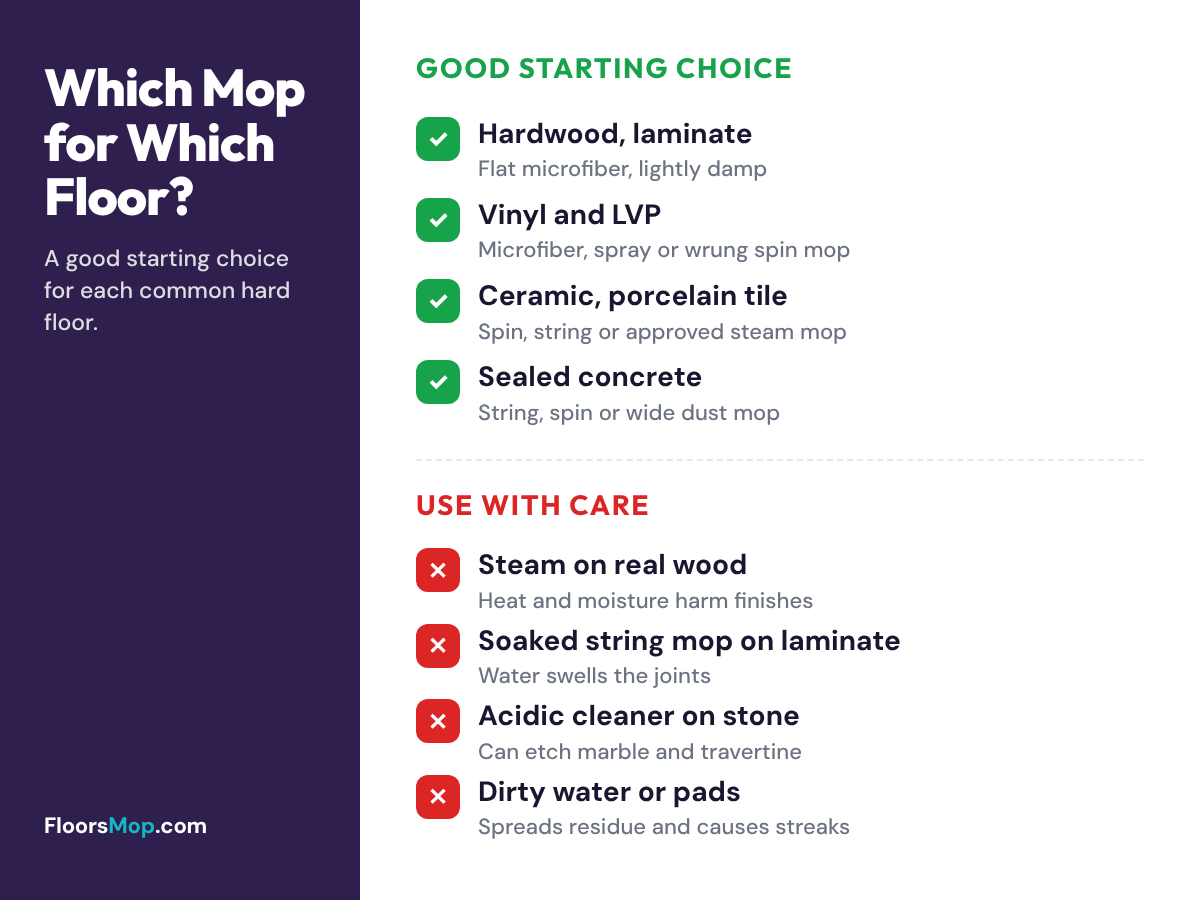
| Floor type | Good starting choice | Water level | Watch out for |
|---|---|---|---|
| Hardwood | Flat microfiber mop | Lightly damp | Standing water and steam |
| Engineered wood | Microfiber or approved spray mop | Very little | Wet seams, wrong cleaner |
| Laminate | Flat microfiber mop | Very lightly damp | Water in the joints |
| Vinyl and LVP | Microfiber, spray or well-wrung spin mop | Damp, not wet | Cleaner residue |
| Ceramic or porcelain tile | Spin, string or steam mop | Moderate | Dirty grout water |
| Natural stone | Soft microfiber mop | Controlled | Acidic cleaners |
| Sealed concrete | String, spin or dust mop | Depends on sealer | Grit and harsh chemicals |
For wood floors, the National Wood Flooring Association maintenance guidance recommends dry cleaning first and advises against wet mops and steam mops. Natural stone like marble and travertine needs care too, because acidic cleaners such as vinegar can etch it. Always check the flooring maker’s care guide before using steam, lots of water, or a new cleaner.
When Does a Steam Mop Make Sense?
A steam mop helps on sealed, heat-safe hard floors where you want to clean without a bucket of solution. The Consumer Reports steam mop buying guide describes them as machines that heat water into steam and collect grime with absorbent pads.
- Good fit: sealed ceramic or porcelain tile, kitchens with greasy spots, homes that want to use less detergent.
- Be careful: laminate and vinyl, unless the floor maker says steam is allowed.
- Avoid: real hardwood, unsealed wood or stone, and any floor with an unknown finish.
Cleaning and disinfecting are not the same job. A steam mop only sanitizes if it reaches the right heat for the right time, so do not assume it disinfects unless the maker’s manual says how.
Manual vs Electric vs Robot Mops
| Type | Main strength | Main limit | Best fit |
|---|---|---|---|
| Manual | Full control of water | More effort | Most homes, mixed floors |
| Electric | Powered scrubbing | More parts to maintain | Frequent dried-on messes |
| Robot | Cleans on its own | Misses edges and spots | Frequent light upkeep |
If you buy only one mop, a washable microfiber mop with good water control is the safest choice. It works when batteries are flat and handles one stubborn spot well. Add a second tool only when it solves a real problem, such as a vacuum mop for pet mess or a steam mop for a large tiled kitchen.
How to Choose the Right Mop
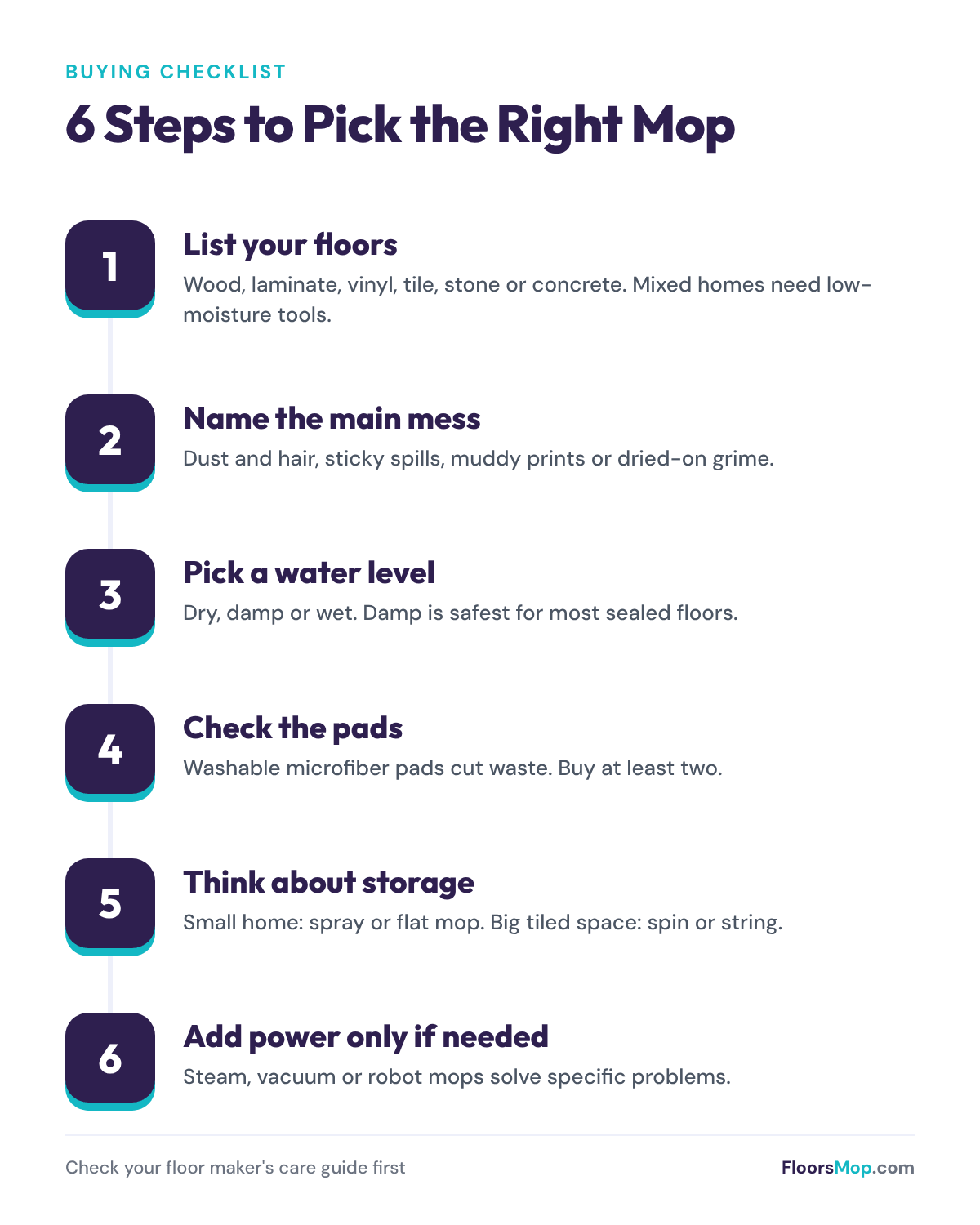
- List every floor you will clean. A home with hardwood and tile needs a low-moisture mop that suits both.
- Name the mess you clean most. Dust, pet hair, sticky food, muddy prints and big spills each favor a different mop.
- Choose a water level. Microfiber and spray mops give fine control. String mops carry more water.
- Check the pads. Washable pads cut waste, but buy at least two so you can swap a dirty one mid-clean.
- Think about storage. A slim spray mop suits a small apartment better than a large bucket system.
- Add power only if needed. Steam, vacuum and robot mops cost more and need upkeep.
Pick a cleaner that suits the floor, too. A pH-neutral cleaner is a safe starting point for most sealed floors. The EPA Safer Choice product search lists cleaning products that meet its ingredient standards. Never mix cleaning chemicals. For more help, see how to choose the right mop.
How to Mop Without Streaks or Damage

- Remove dry dirt first. Sweep, vacuum or dust-mop so grit does not scratch under the wet pad.
- Use the least water that works. Damp is safer than dripping wet.
- Measure the cleaner. More cleaner does not mean a cleaner floor. Extra soap leaves a sticky film.
- Work in small sections. Clean one area at a time and move toward the door.
- Change dirty water or pads. A dirty pad spreads residue around.
- Let the floor dry. Keep people and pets off until it is dry to avoid slips and footprints.
Wash microfiber pads without fabric softener, because it coats the fibers and stops them grabbing dirt. If a floor feels sticky after mopping, the usual cause is too much cleaner or dirty water. Our guide on the most common mopping mistakes covers the other causes. If you see swelling, lifted seams or white haze on the finish, stop wet cleaning and check the floor maker’s advice.
Frequently Asked Questions
What is the most common type of mop?
Flat microfiber, string, spray and spin mops are the most common household mops. Flat microfiber mops are the most versatile, because they work for dry dusting and damp cleaning on most sealed hard floors.
What type of mop is best for everyday use?
A washable flat microfiber mop is the best everyday choice for most homes. It is light, easy to store and uses little water. See our guide to the best mop for home use for picks.
Is a spin mop better than a regular mop?
For most homes, yes. The spin wringer lets you control how wet the head is without touching dirty water. A traditional string mop still absorbs big spills faster and works well on rough concrete.
Are steam mops better than regular mops?
Not always. Steam mops loosen stuck-on grime on sealed tile and some vinyl, but they are not safe for real hardwood, many laminates or unsealed floors. A microfiber or spin mop works on more floor types.
What mop should I use on hardwood floors?
Use a microfiber dust mop for loose dirt and a lightly damp flat microfiber mop with a wood-safe cleaner. Avoid steam and standing water. Our best mop for wooden floors guide has more detail.
Do I need more than one mop?
Most homes manage with one washable microfiber mop plus a vacuum or broom. A second tool helps if you have large tiled areas, pets or heavy mud, where a spin mop or vacuum mop saves time.
The Bottom Line
There are about ten types of mops, but most homes need only one or two. Start with a washable flat microfiber or a well-wrung spin mop, because they control water and suit most floors. Add a steam mop for sealed tile, a vacuum mop for pet and kid mess, or a robot mop for daily upkeep only if you have that need. Check your floor maker’s care guide before you buy.