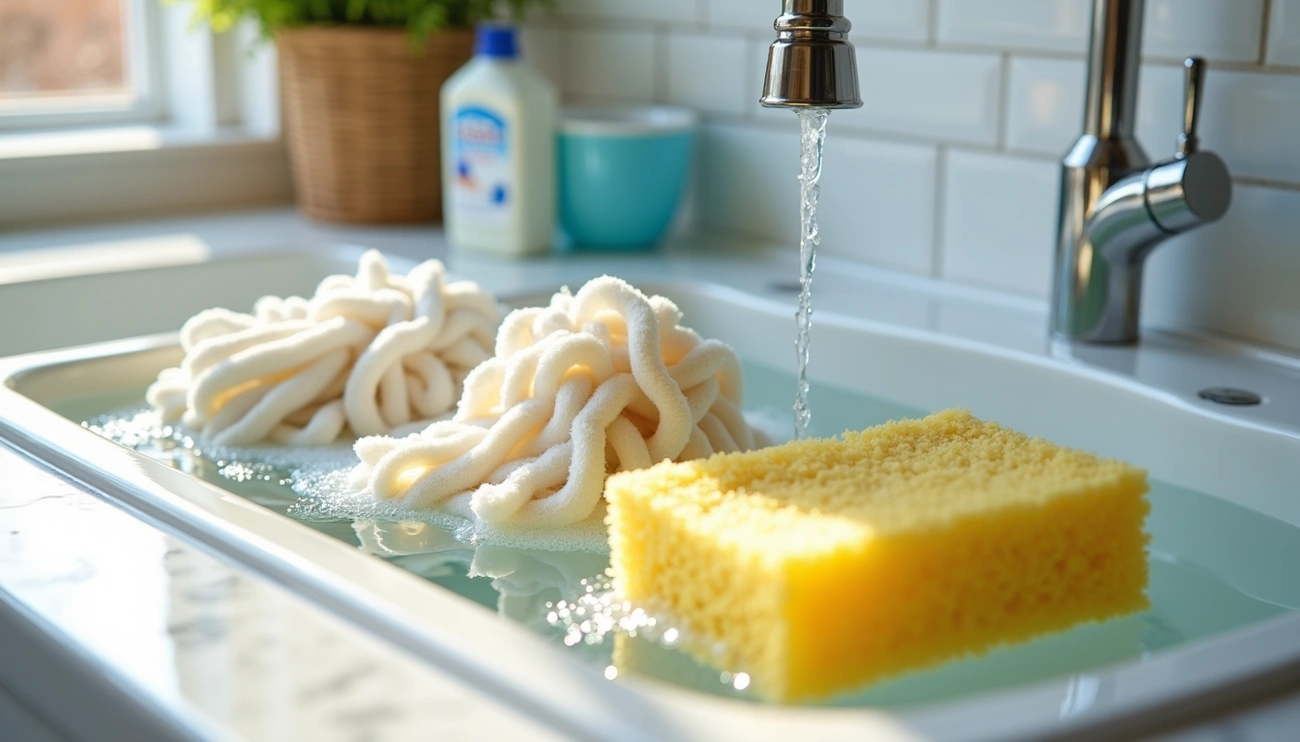
Clean a mop head by removing it and machine washing it in hot water with laundry detergent. Do not use fabric softener. Alternatively, soak the mop head in hot water with 1/2 cup of bleach or vinegar for 15–30 minutes. Rinse thoroughly and air dry completely to prevent odors and mildew.
Understanding Different Mop Head Types Before Cleaning
Each mop head material requires a specific cleaning approach. Before you wash a mop head, you need to identify what type you own, as the wrong cleaning method can damage the fibers or reduce effectiveness.
Microfiber Mop Heads
Microfiber mop heads consist of synthetic fibers made from polyester and polyamide, split repeatedly until they’re much finer than a human hair. This design increases surface area, allowing the fibers to absorb up to eight times their weight in liquid. When moved across surfaces, microfiber generates a static electric charge that acts like a magnet, picking up and containing dust and dirt instead of spreading it around.
These synthetic fibers trap and hold bacteria, dust, and debris within the actual fibers. According to the American Journal of Infection Control, microfiber mops removed 95% of microbes with standard detergent, while cotton string mops only removed 68%. Microfiber mop heads are machine washable and can withstand 150-200 washes, with some lasting through 500+ washes.
Cotton String Mop Heads
Cotton string mops feature long strands of natural fibers attached to the mop head. Cotton is highly absorbent and excels at soaking up liquids quickly, making these mops particularly effective for cleaning large floor areas and handling big spills. The numerous strands hold substantial amounts of water or cleaning solution.
However, cotton takes considerable time to dry, which can lead to bacterial growth if not properly maintained. Cotton mop heads normally last around 15-30 washes, significantly shorter than microfiber alternatives. Despite these limitations, cotton remains a common choice in commercial kitchens due to its affordability and versatility.
Sponge Mop Heads
Sponge mop heads feature highly absorbent, porous heads made from cellulose material that absorbs liquids faster than comparable alternatives. The sponge material soaks up spills and dirty water effectively, holding significant amounts of cleaning solution.
These mops clean without scratching, making them particularly suited for delicate flooring materials like hardwood, laminate, marble tiles, and linoleum. The porous nature of sponge mops necessitates vigilant maintenance, as regular cleaning and timely replacement are crucial to prevent bacterial buildup.
Spin Mop Heads
Spin mops typically feature round, microfiber mop heads with a built-in spinning system operated by a foot pedal or hand press. This mechanism allows hands-free wringing without bending down. The spinning action uses centrifugal force to fling dirt and debris from the mop head.
These washable and reusable mop heads provide excellent absorbency and effective dirt removal. The spinning mechanism controls moisture levels, allowing you to clean delicate surfaces with minimal water or tackle stubborn stains with a damper mop head.
How to Clean a Mop Head: Step-by-Step Process
Cleaning a mop head follows a systematic process that works across all types. Follow these steps to restore your mop to sanitary condition.
Step 1: Rinse Away Loose Debris
Initially, rinse the mop head under running water until the water runs clear. This mechanically purges loose dirt and grime, preventing the wash water from becoming immediately saturated with soil. For mops with intricate fibers like microfiber, use a hose nozzle or handheld showerhead to flush out stubborn particles effectively. Detach spin mops or removable heads first to rinse thoroughly.
Step 2: Choose Your Cleaning Method
Machine washing works for detachable cotton or microfiber heads. For sponge mops or non-detachable heads, hand soaking is required. Check the manufacturer’s instructions to confirm your mop head can be machine-washed.
Step 3: Machine Wash for Removable Heads
Place the mop head in a mesh laundry bag to prevent tangling. Use warm or hot water on a gentle cycle for microfiber, or hot water on a normal cycle for cotton. Add a small amount of mild liquid detergent for microfiber or heavy-duty detergent for cotton. Avoid fabric softener on microfiber as it reduces absorbency. Wash mop heads separately from other linens.
Step 4: Hand Soak for Non-Detachable Heads
Fill a bucket with warm water and add a few drops of dish soap for sponge mops or laundry detergent for fiber mops. Let the mop head soak for 10-15 minutes[61], then agitate vigorously in the bucket to dislodge grime. Drain the dirty water and rinse meticulously under clean running water until no suds remain.
Step 5: Dry Completely Before Storage
Hang the mop in a well-ventilated area with the head up and fibers hanging down to allow maximum air circulation. Sunlight acts as a natural sanitizer. Never store a wet or damp mop head, which promotes bacteria and odor buildup.
Best Way to Clean Mop Heads by Material Type
Material-specific considerations determine how effectively you clean a mop head and maintain its performance over time. While the basic process remains consistent, each material demands tailored care.
Cleaning Microfiber Mop Heads
Machine wash microfiber in warm water using a mild detergent. Wash microfiber separately from cotton towels or other lint-prone items, as microfiber will pick up and hold fiber particles that reduce cleaning effectiveness. Water temperature should not exceed 210°F in the washer, with dryer temperatures between 120-140°F. Never use bleach, fabric softener, or dryer sheets on microfiber, as these products harm the fibers and reduce their capacity to retain dirt and grime. Air dry or tumble dry on low heat to preserve the material.
Cleaning Cotton Mop Heads
Detach cotton mop heads from the handle and machine wash on a hot cycle. Use heavy-duty laundry detergent, and add bleach if deep disinfecting is needed. Cotton tolerates bleach without damage, unlike synthetic materials. Avoid fabric softener. Cotton mops typically last 15-30 washes before requiring replacement. Air dry fully before storage.
Cleaning Sponge Mop Heads
Fill a bucket with warm water and mild detergent for sponge mop heads. Soak for 10-15 minutes, then rinse thoroughly. Wring out excess water and air dry completely. Never use bleach on sponge mops, as it causes material degradation.
Maintaining Your Mop Head Between Deep Cleans
Daily maintenance extends your mop’s lifespan and prevents the buildup that necessitates frequent deep cleaning.
Rinse After Every Use
Rinse all mop heads thoroughly with warm water after every use to remove built-up dirt and chemicals. Wringing out the mop properly prevents moisture retention. This simple habit keeps threads from being broken down by residual cleaning solutions.
Proper Storage to Prevent Odors
Hang the mop head up in a well-ventilated area to dry completely. Never leave it on the handle or face down on the floor, as this leads to mold growth. Store the mop head up rather than touching the ground. A damp mop that hasn’t dried properly becomes an incubator for bacteria and mildew, spreading germs with every use. Owing to moisture retention, improper storage creates persistent odors that signal bacterial growth.
When to Replace Your Mop Head
Replace traditional cotton and string mops every 2-3 months with weekly use. Microfiber mop heads last longer, requiring replacement after 3-6 months. Notably, cotton mop heads typically withstand 15-50 washes while microfiber endures 200-500+ washes.
Signs Your Mop Head Needs Cleaning
Persistent odors that remain after washing indicate bacterial accumulation. Watch for loose threads, thinning fabric, fraying bristles, or structural damage. Reduced absorbency, permanent discoloration, streaks on floors, and poor cleaning performance all signal replacement time[211].
Conclusion
You now have all the knowledge needed to properly clean every type of mop head in your home. Accordingly, dirty floors will become a thing of the past once you implement these cleaning methods consistently.
Remember, the key is matching the right cleaning technique to your mop material and maintaining it between deep cleans. Keep your mop heads fresh, replace them when necessary, and your floors will stay genuinely clean instead of just looking clean.