
How to Clean Cork Floors

Disclosure: FloorsMop is reader-supported. As an Amazon Associate, we earn from qualifying purchases. If you buy through a link on this page, we may earn a small commission at no extra cost to you. Learn more.
Quick answer: To clean cork floors, vacuum or sweep often to remove grit, then damp mop with a pH-neutral cleaner and a microfiber pad wrung out until it is almost dry. Wipe the floor dry right away. Never use a steam mop, a soaking-wet mop, ammonia, or abrasive cleaners on cork.
Cork is warm, quiet, and comfortable underfoot. It is also soft and made from tree bark, so it needs a gentler routine than tile or vinyl. The good news is that sealed cork is easy to keep clean once you know the rules. For the basics of any mopping job, see how to mop a floor properly.
Know Your Cork Floor
| Type | Finish | Cleaning notes |
|---|---|---|
| Glue-down cork tiles | Usually polyurethane, sometimes wax | Most water-resistant; damp mop is fine |
| Floating cork planks (click) | Factory finish | Seams are the weak point; very little water |
| Unsealed or worn cork | None or worn through | Dry clean only until resealed |
| Waxed cork | Paste wax | No water-based cleaners; dust and buff |
Not sure if your cork is sealed? Drop a little water on it. If it beads, it is sealed. If it soaks in or darkens the surface, the finish is worn and you should dry clean only until it is resealed.
What You’ll Need
- A vacuum with a soft brush or hard-floor setting, or a microfiber dust mop
- A flat microfiber spray mop so you can control water
- A pH-neutral floor cleaner
- Dry microfiber cloths or a dry pad
- Felt furniture pads
How to Clean Cork Floors: Step by Step
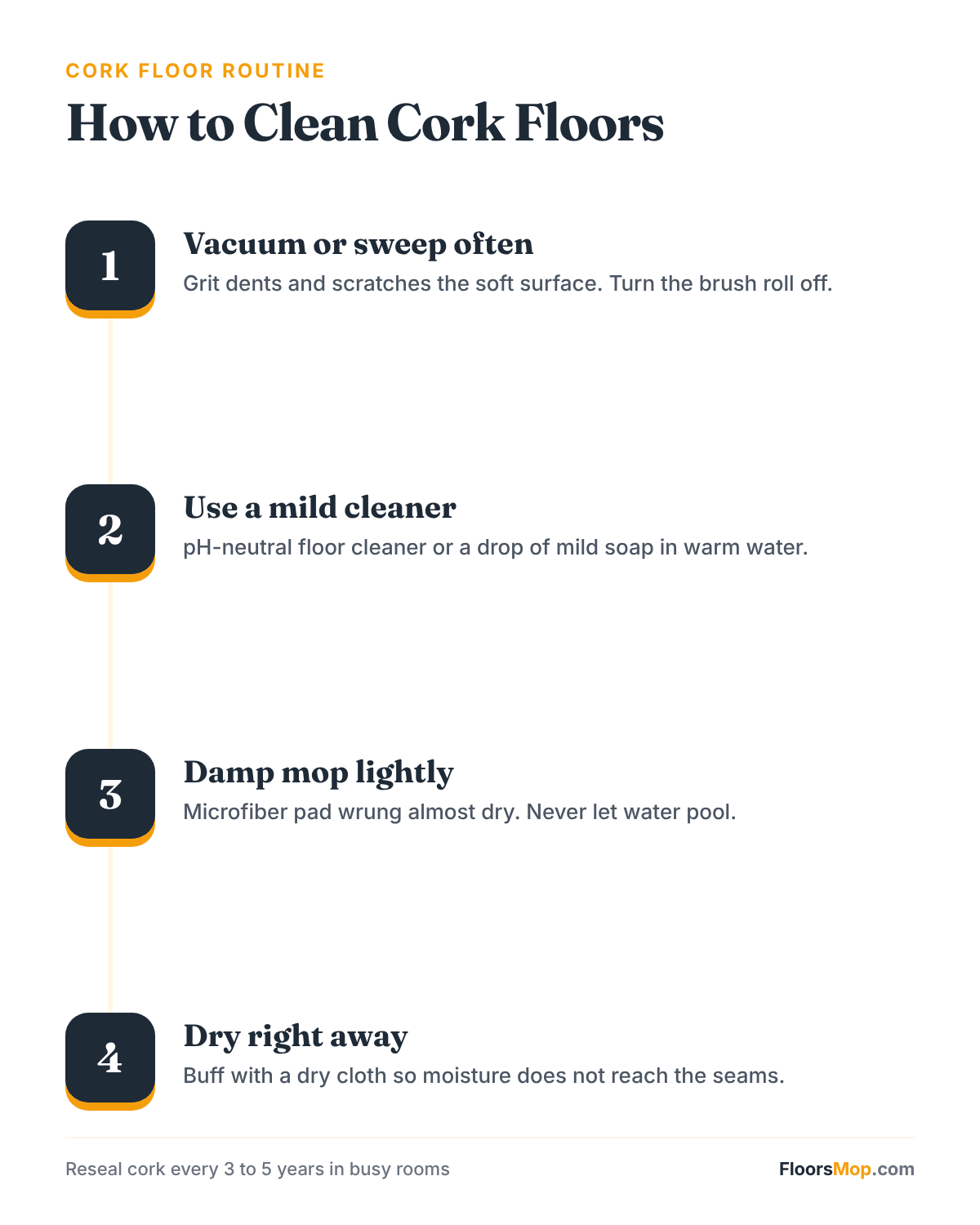
Step 1: Vacuum or sweep often
Cork is soft, so grit presses into the surface and leaves tiny dents and scratches. Vacuum two or three times a week, more in entryways and kitchens. Use a soft brush head and turn off any spinning beater bar.
Step 2: Prepare a mild cleaner
Use a pH-neutral cleaner labeled for wood or cork, mixed at the label strength. A few drops of mild dish soap in a gallon of warm water also works. Skip ammonia, bleach, and strong all-purpose cleaners, which wear down the finish.
Step 3: Damp mop lightly
Wring the microfiber pad until it is almost dry, or mist a small area with a spray mop. Work in small sections. The floor should look barely damp and dry in under a minute.
Step 4: Dry the floor
Go over each section with a dry microfiber cloth. Water left on cork can seep into seams and cause swelling or lifting edges, especially on floating floors.
What’s Safe on Cork (and What to Avoid)
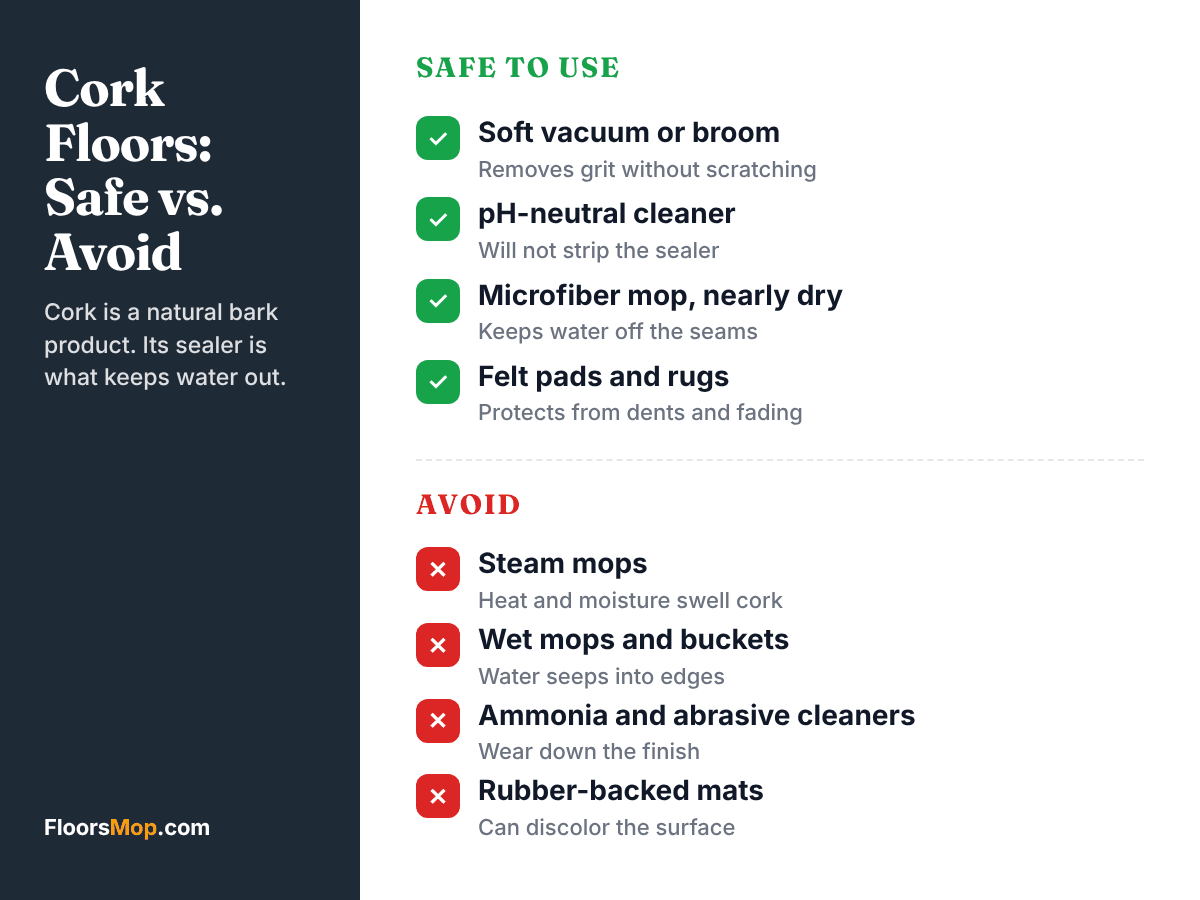
A steam mop is a hard no. Cork is compressible and absorbs heat and moisture, which can cause swelling and break down the sealer. If you want to understand what steam suits, read do steam mops actually clean floors and what floors can you use steam mops on.
How to Handle Stains and Dents
| Problem | What to do |
|---|---|
| Food or drink spill | Blot right away, then wipe with a damp cloth and dry |
| Sticky residue | pH-neutral cleaner on a cloth, then dry |
| Scuffs | Rub gently with a dry microfiber cloth or a tennis ball |
| Small dents from furniture | Often recover over time; cork is elastic |
| Fading near windows | UV exposure; use blinds or rugs and rotate furniture |
| Dark water stains | Moisture got under the finish; may need sanding and resealing |
Cleaning Cork in Kitchens and Bathrooms
Cork is often installed in kitchens because it is soft to stand on, and sometimes in bathrooms because it feels warm. Both rooms bring extra moisture, so a few extra habits help:
- Kitchens: put a washable mat in front of the sink and dishwasher, and wipe drips the same day. Grease spots lift with a drop of dish soap on a damp cloth, followed by a dry cloth.
- Bathrooms: use a bath mat that dries fast and is not rubber-backed. Wipe up splashes after showers and keep the room ventilated.
- Entryways: cork is soft, so a doormat inside and outside the door is worth it. Grit from shoes is the fastest way to wear the finish.
In wet rooms, check the finish more often. A worn sealer in a bathroom can let water reach the cork quickly.
Cork vs. Other Floors: Cleaning at a Glance
| Floor | Water tolerance | Steam OK? | Main risk |
|---|---|---|---|
| Sealed cork | Low | No | Swelling at seams |
| Hardwood | Low | No | Cupping, finish damage |
| LVP | Medium | Usually no | Seams and adhesive |
| Ceramic tile | High | Yes, if grout is sealed | Grout stains |
When to Reseal Cork Floors
Sealed cork is what makes damp mopping safe. In busy areas, the finish wears down in 3 to 5 years. Signs it needs resealing: water no longer beads, the surface looks dull even after cleaning, or traffic paths look lighter. A light sanding (screening) and a fresh coat of water-based polyurethane restore protection. Follow your flooring maker’s guidance or hire a pro for large areas.
Mistakes to Avoid
- Using a steam mop or wet mop.
- Leaving spills. Cork stains and swells if liquid sits.
- Mopping with a dirty pad. It spreads grit. Learn how to clean a mop head between uses.
- Skipping felt pads. Chair legs dent soft cork fast.
- Using rubber-backed rugs. They can stain and trap moisture.
How Often to Clean Cork Floors
Vacuum or dust mop every few days. Damp mop once a week in kitchens and every two weeks in bedrooms and living rooms. Check the finish once a year with the water drop test.
Best Products for Cork Floors
- Spray mop: a refillable microfiber spray mop puts down a light mist instead of a wet layer.
- Cleaner: a wood and cork floor cleaner that is pH-neutral.
- Protection: felt furniture pads for every chair and table leg.
FAQs
Can you mop cork floors?
Yes, if they are sealed and you use a barely damp microfiber mop. Never flood the floor or use a soaking-wet mop.
What is the best cleaner for cork floors?
A pH-neutral cleaner made for wood or cork floors, or warm water with a drop of mild soap.
Can I use vinegar on cork floors?
Very diluted vinegar is used by some owners, but it can wear down the finish over time. A neutral cleaner is the safer choice.
Are cork floors hard to maintain?
Not really. They need regular vacuuming, light damp mopping, and resealing every few years. They do not handle water or heavy grit well.
Can I use a Swiffer WetJet on cork?
Lightly, on sealed cork. Use few sprays and dry any wet spots. A refillable spray mop with a neutral cleaner is better long term.
Related Guides
- How to Use a Microfiber Mop
- What Floors Can You Use Steam Mops On?
- What Is Dry Mopping?
- How to Dry a Floor After Mopping