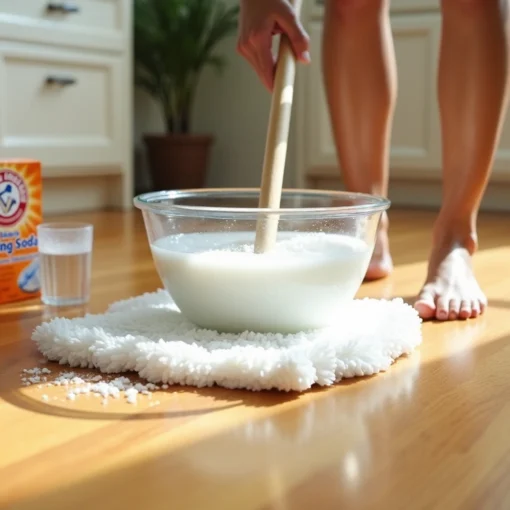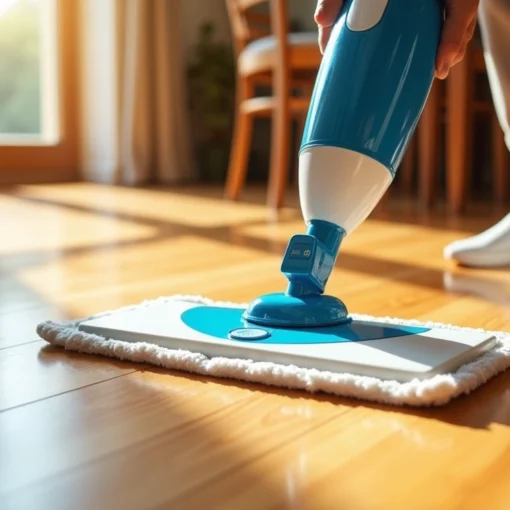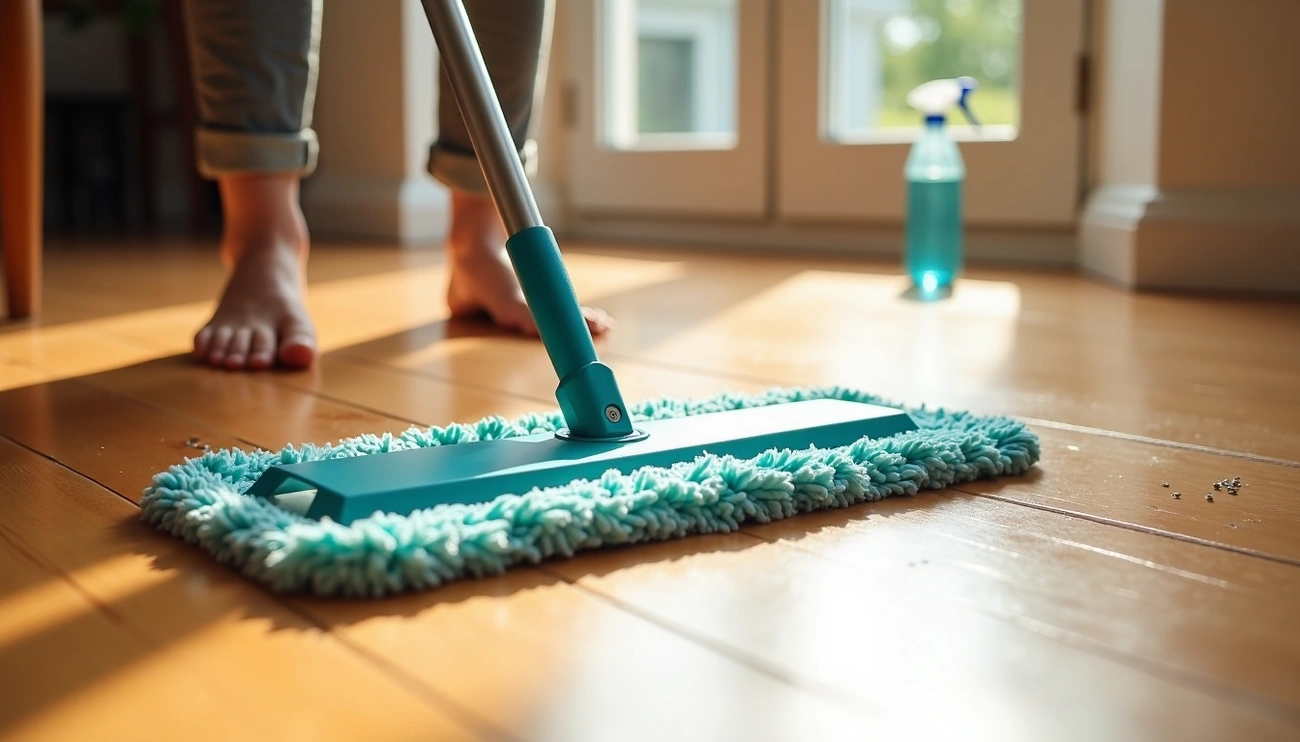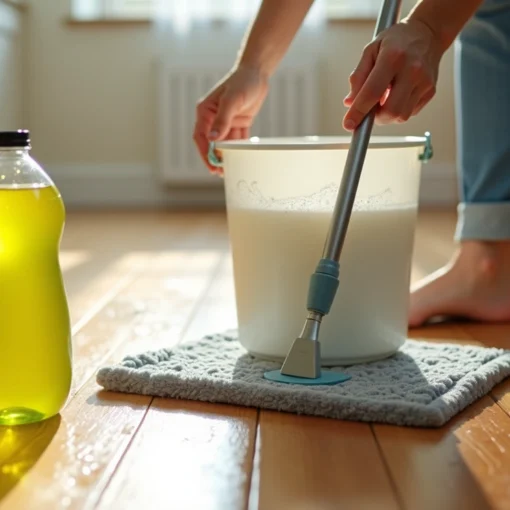
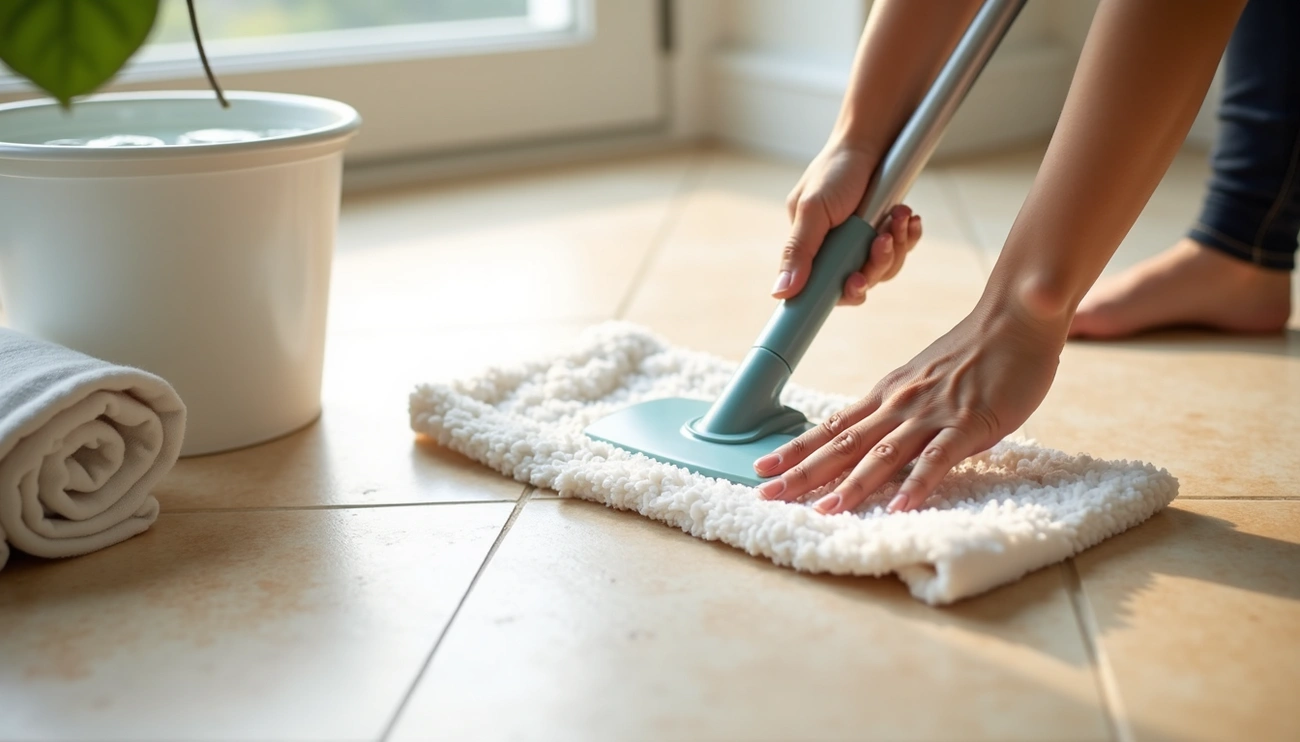
Mop travertine floors by using a pH-neutral cleaner or mild dish soap mixed with warm water and a lightly damp microfiber mop. Avoid acidic cleaners like vinegar or lemon, which etch the stone. Sweep or vacuum first, mop in small sections, and dry with a towel to prevent water spots.
What You Must Avoid When Mopping Travertine Floors
Before you start mopping, know what damages travertine permanently.
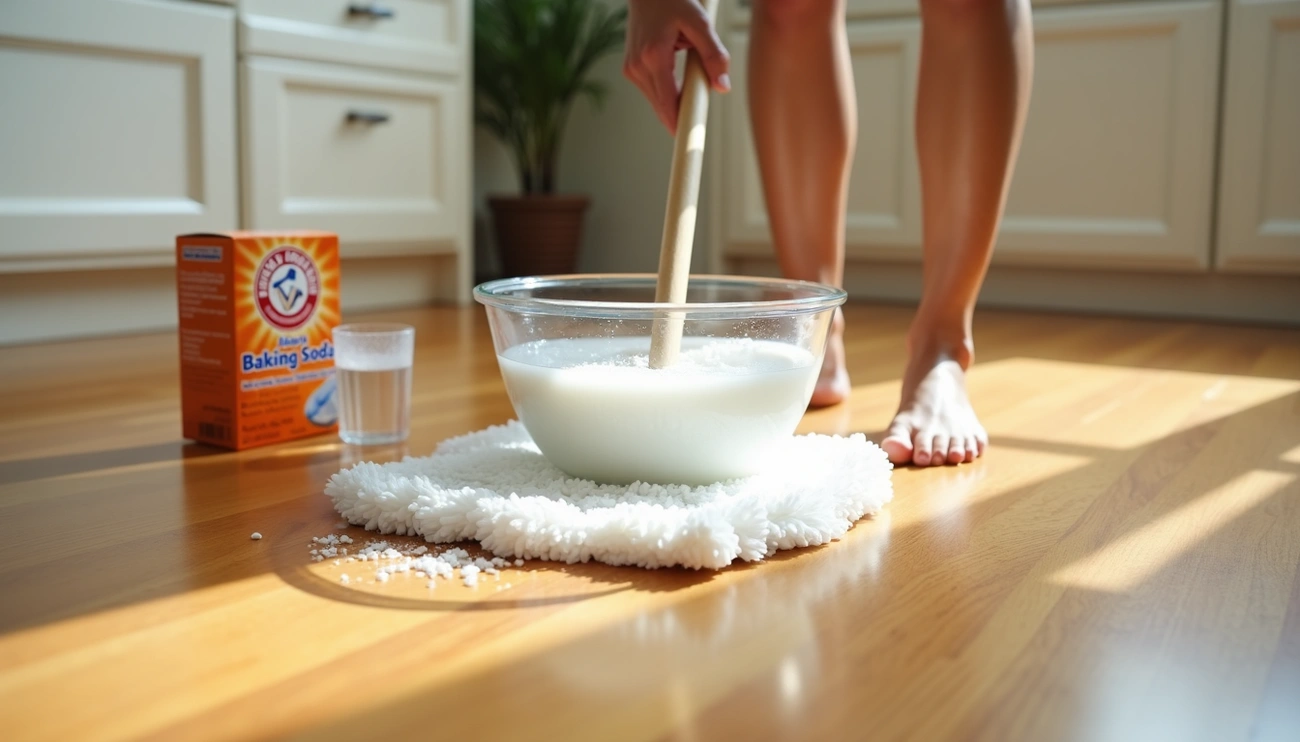
Never Use Acidic Cleaners or Vinegar
Vinegar seems like a safe cleaning choice, but it causes irreversible damage to travertine. The stone contains calcium carbonate, which reacts chemically with acidic substances. This reaction dissolves portions of the stone’s surface and creates etching, which appears as dull, cloudy patches or rough, uneven texture. The damage cannot be wiped away. Professional restoration becomes necessary to repair etched surfaces.
Common acidic cleaners to avoid include vinegar, lemon juice, citrus-based products, and most bathroom cleaners. Many store-bought all-purpose cleaners contain acids or harsh chemicals unsafe for natural stone. Even products marketed as “natural” or “eco-friendly” often contain plant-based acids equally harmful to travertine. Stick to pH-neutral cleaners specifically designed for stone surfaces.
Avoid Excessive Water and Wet Mopping
Travertine absorbs moisture because of its porous nature. Excess water seeps below the surface and causes dark spots, uneven color, or staining after the floor dries. Traditional string mops hold more water than travertine can safely handle, leading to pooling moisture that penetrates pores and grout lines.
A damp mop works best for cleaning travertine floor surfaces. Never soak the mop in water. Too much moisture increases the risk of mildew growth and can leave water spots or streaks, especially with hard water.
Don’t Use Abrasive Tools or Dirty Mop Heads
Abrasive brushes, rough pads, or dirty mop heads scratch the travertine surface. Hard-bristled brushes, wire brushes, and steel wool strip sealers and create permanent surface damage. These scratches trap dirt and make the tile appear older and more worn.
Always use soft tools and clean microfiber pads for travertine floor cleaning. Dirty mop heads drag grit across the tiles, acting like sandpaper on the surface. This erodes the finish achieved through proper maintenance.
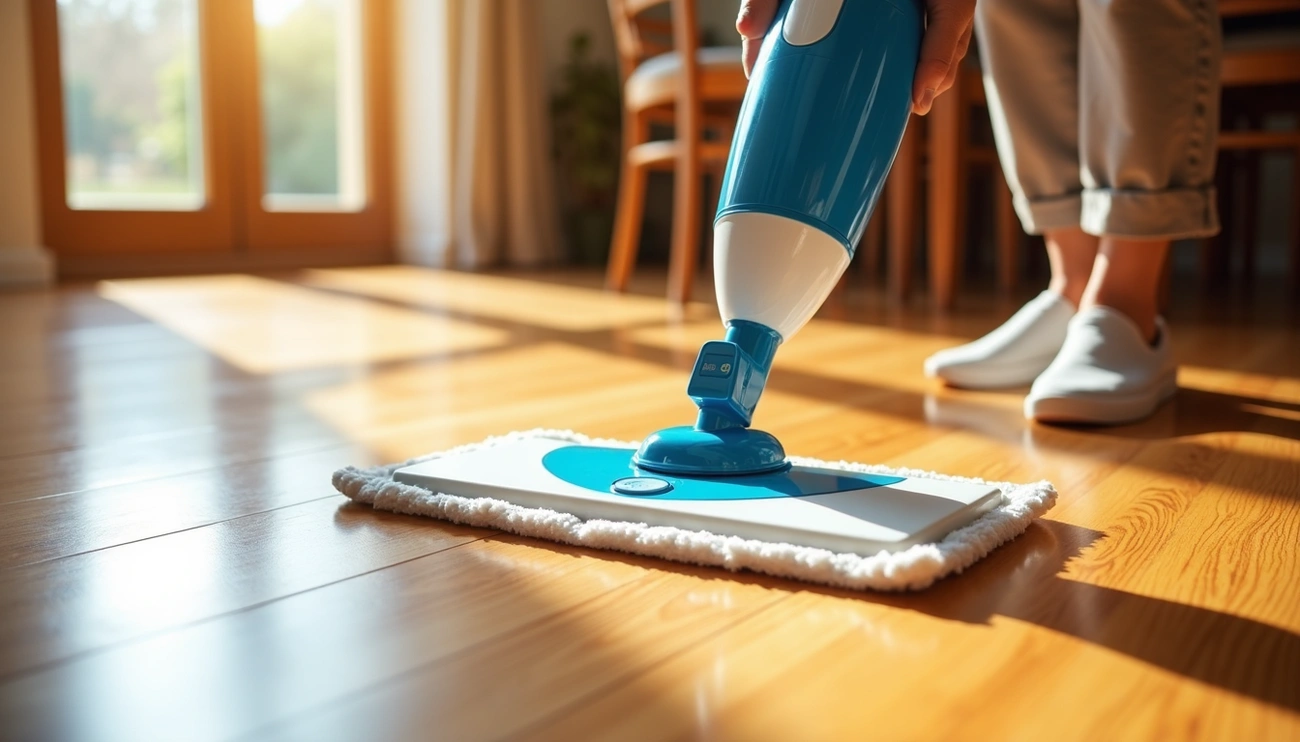
Skip Steam Mops on Travertine
Steam mops force heat and moisture deep into the stone simultaneously. Heat and pressure push water vapor into pores, stripping protective sealers and causing physical stress to the stone’s structure. A single steam cleaning session degrades the sealer significantly, and repeated use strips it entirely.
Once the sealer breaks down, the stone becomes absorbent. Spills penetrate immediately and settle deep into the material. Steam also weakens grout and creates an environment for mold growth beneath tiles.
Tools and Supplies You Need to Mop Travertine Floors
Having the right supplies makes travertine floor cleaning straightforward and safe.
Microfiber Mop and Clean Pads
Microfiber mops are designed for natural stone. The fine synthetic fibers trap dirt particles within the material rather than dragging them across the surface. This prevents scratches during cleaning. Microfiber also absorbs significantly more water than cotton, which helps travertine dry faster and reduces the risk of water spots.
Flat microfiber mop heads distribute cleaning solution evenly and allow better contact with travertine’s textured surface. Quality microfiber mops and cloths can be washed and reused hundreds of times, making them cost-effective. Always keep extra clean pads on hand to maintain consistent results across the floor.
Neutral pH Stone Cleaner
pH-neutral cleaners are specifically formulated for natural stone surfaces. They effectively remove dirt and oils without the acids or alkalis that damage travertine. These cleaners work on both sealed and unsealed travertine without breaking down protective sealers.
Professional-grade concentrated stone cleaners dilute with water according to cleaning needs. Unlike many all-purpose cleaners, pH-neutral stone cleaners rinse clean without leaving film that dulls travertine’s natural luster. Dilution ratios typically range from 1:5 to 1:50 depending on the product and cleaning intensity required.
Soft Broom or Vacuum for Pre-Cleaning
A soft-bristled broom or vacuum removes loose debris before mopping. Small particles of dust or dirt can cause minor scarring to travertine tiles if spread around during wet mopping. When vacuuming, use a soft brush attachment to avoid damaging the surface.
Dry Towels for Post-Mopping
Dry microfiber cloths or towels remove remaining moisture after mopping. Drying the floor quickly prevents water spots that make the floor appear dirty. This step is equally important for maintaining travertine’s appearance.
Bucket for Diluted Cleaning Solution
A bucket allows you to properly dilute concentrated stone cleaner with warm water. Warm water cuts through soil and grease effectively.
How to Mop Travertine Floors Step-by-Step
Follow these steps for safe and effective travertine floor cleaning.
Step 1: Sweep or Vacuum to Remove Loose Dirt
Start by vacuuming or sweeping the floor to remove dust, sand, and grit. Focus on entryways, corners, and high-traffic areas. Use a soft-bristled broom or vacuum cleaner with a soft brush attachment. Small particles of dust or dirt can cause minor scarring to the surface of travertine tiles if spread around with a mop. The surface should feel free of loose particles underfoot before proceeding.
Step 2: Prepare Your Cleaning Solution
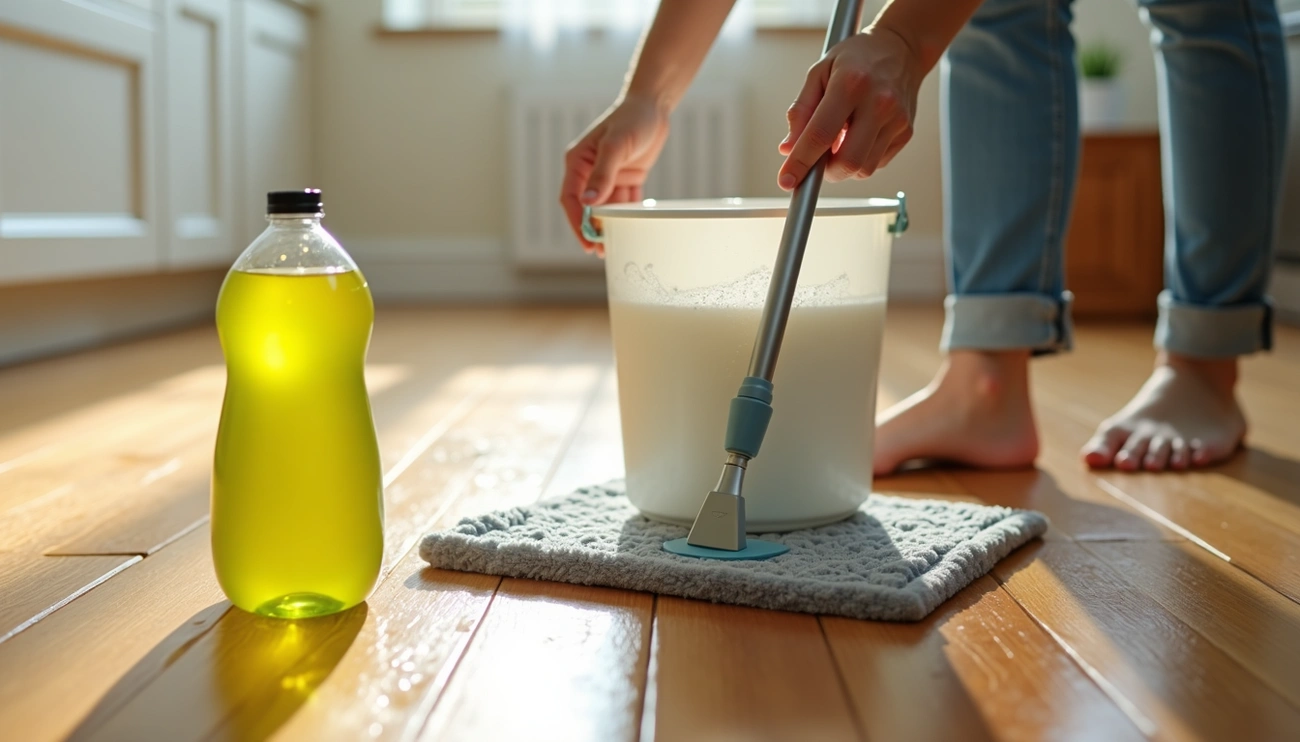
Fill your bucket with warm water and mix a small amount of pH-neutral stone cleaner according to the manufacturer’s instructions. Warm water cuts through most soil and grease effectively. Mix the cleaner properly, as too much soap doesn’t mean better cleaning.
Step 3: Dampen Your Mop (Not Soaking Wet)
Dip your mop into the cleaning solution and wring it out thoroughly so it’s slightly damp. The mop should feel moist, not wet. Apply a small amount of solution to a mop that is nearly wrung so the travertine surface gets just barely damp. Excess moisture can seep into grout lines or penetrate the stone.
Step 4: Mop in Small Sections
Clean one small area at a time. This limits how long moisture stays on the surface. Move steadily across the room and replace mop pads as they become damp or dirty. Rinse your mop regularly in clean water to avoid spreading dirt from one area to another. Once mopping is complete, go over the floor a second time with clean water to remove any cleaning solution residue.
Step 5: Dry the Floor Immediately After Mopping
Go over the floor with a soft towel or microfiber cloth to pick up any remaining water. Remove remaining moisture after each section with a dry microfiber cloth. Drying quickly prevents water spots.
Step 6: Allow Proper Air Circulation
Open windows or use fans to help speed up drying. Good airflow helps the surface dry evenly and reduces moisture buildup. The surface should feel dry to the touch before allowing foot traffic.
Tips to Keep Your Travertine Floors Clean Between Mopping
Proper maintenance between mopping sessions extends the life of your travertine floors.
Wipe Up Spills Immediately
Travertine absorbs liquids through capillary action, pulling spills downward into pores. Even plain water leaves rings and cloudy spots when minerals settle into the stone. Wine, coffee, juice, and oils penetrate quickly and create permanent stains if left sitting. Soap residue attracts dirt and alters the texture of travertine tiles. Blot spills right away to prevent moisture from settling, which causes discoloration or mold growth.
Use Mats at Entryways
Place rugs or mats in high-traffic areas and entryways to catch dirt, grit, and sand before they reach your floors. These particles act like fine sandpaper on travertine, creating scratches and wear over time. Mats protect the surface and reduce the need for frequent deep cleaning.
Maintain Your Floor Sealer
Reseal travertine every 6 to 12 months depending on foot traffic. Perform a water test to check sealer effectiveness: if water absorbs into the stone instead of beading on the surface, reseal immediately.
Establish a Regular Cleaning Schedule
Create a predictable routine that includes daily maintenance, periodic deep cleaning, and occasional inspections. Sweep or vacuum one to two times weekly, with more frequent attention to high-traffic areas. Consistent care prevents minor issues from becoming expensive problems.
Conclusion
You now have everything you need to keep your travertine floors looking beautiful for years. The key is consistency: stick to pH-neutral cleaners, use a damp microfiber mop, and always dry the surface immediately after cleaning.
Most importantly, make wiping up spills a habit and establish a regular cleaning schedule. Your travertine will reward you with lasting elegance and natural beauty. Keep these techniques in mind, and you’ll avoid costly restoration down the road.