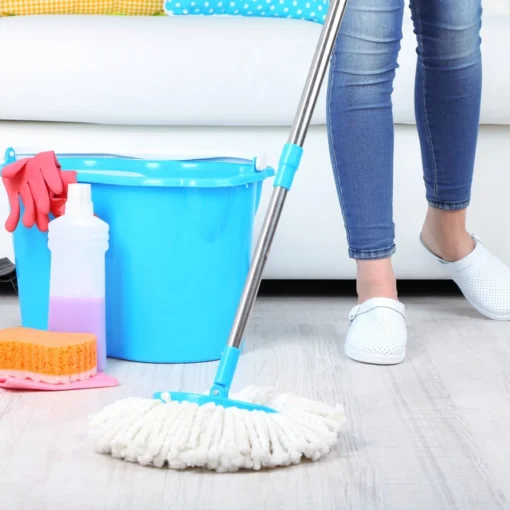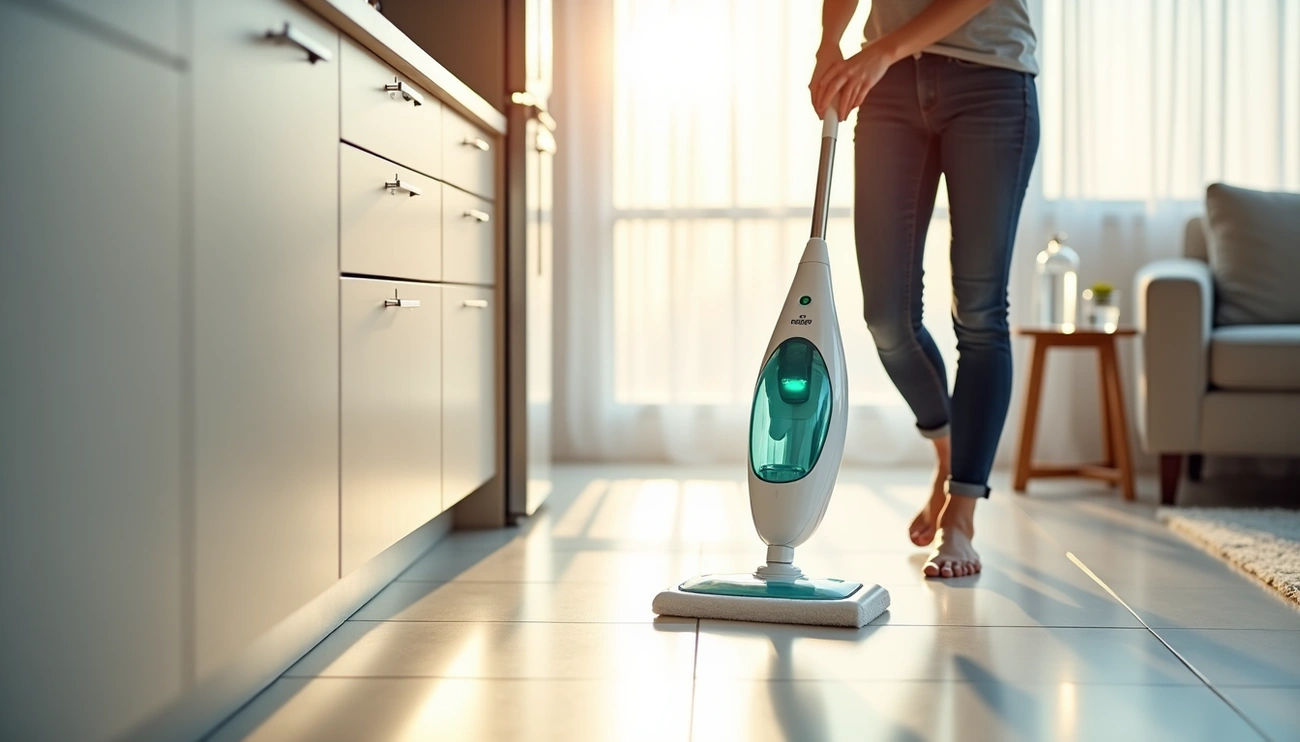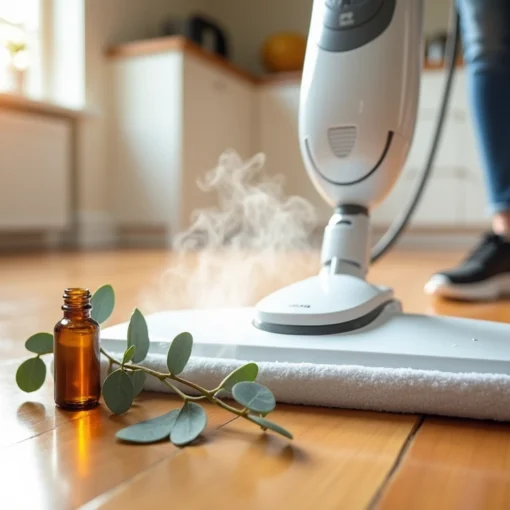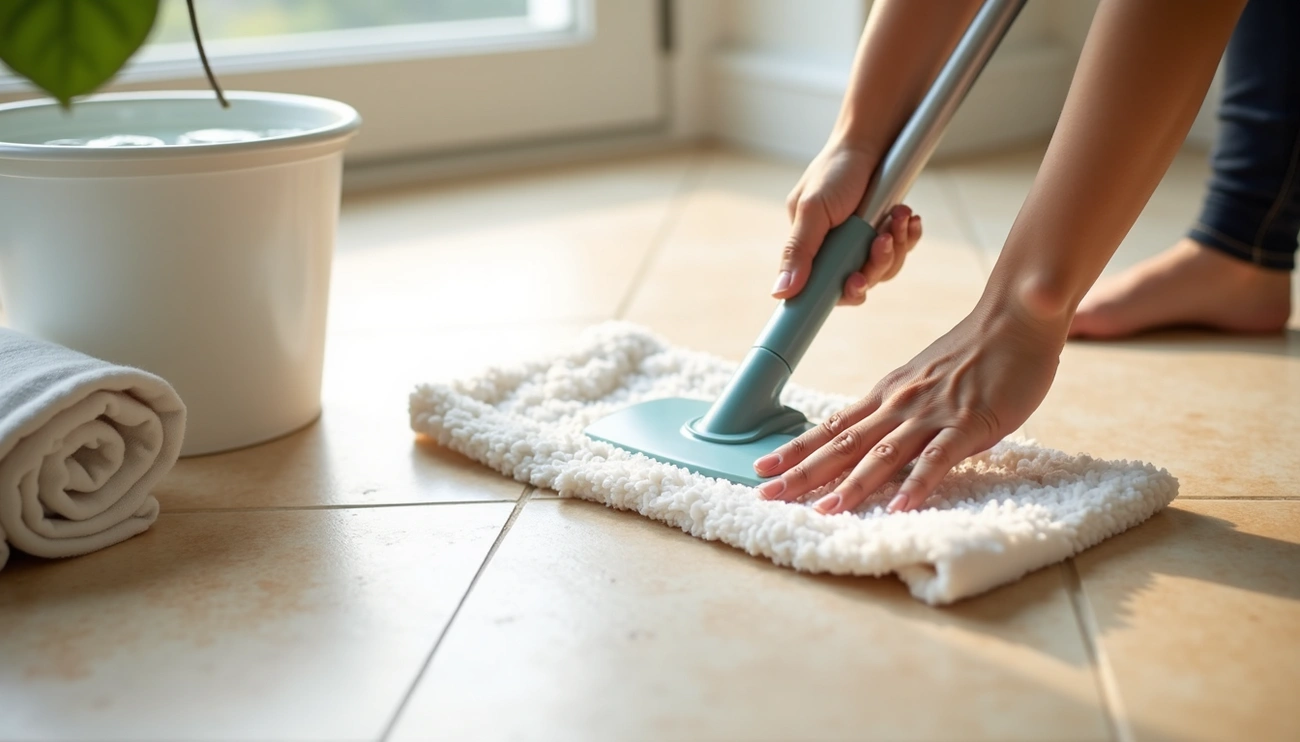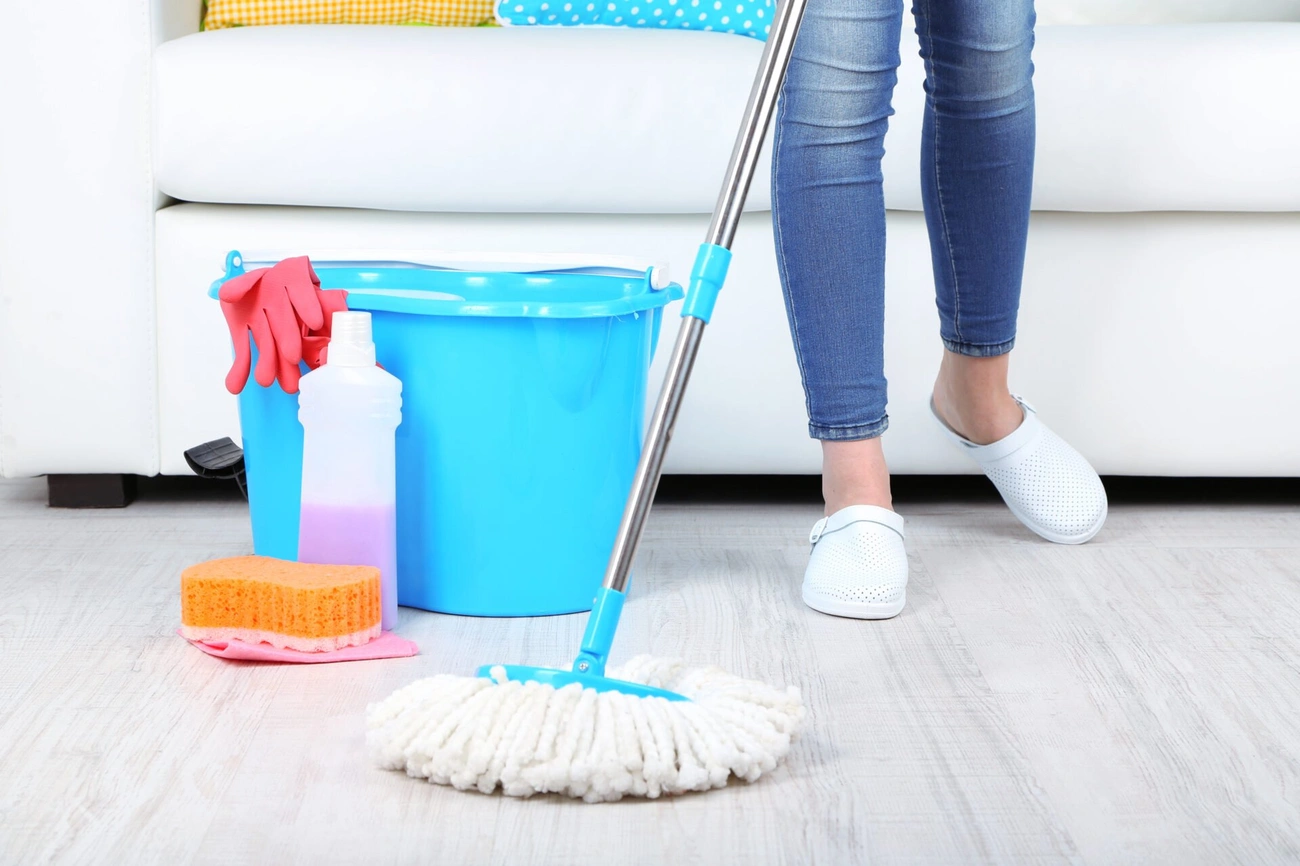
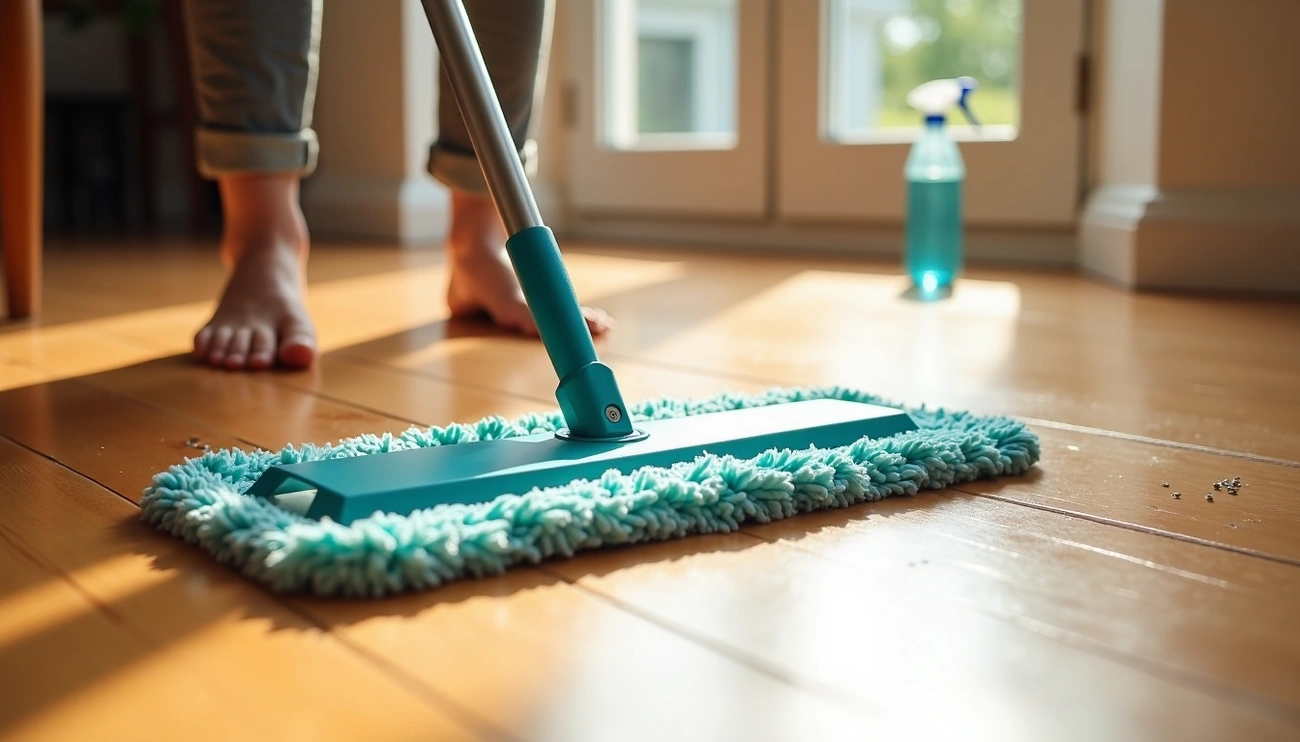
Use a microfiber mop by dampening the pad with water or cleaning solution and wringing it out until slightly damp, not soaking. Attach the pad, adjust the handle to chin height, and mop in a figure-eight motion while walking backward to avoid stepping on the damp floor.”
What is a Microfiber Mop and Why It Works Better
How Microfiber Technology Cleans Floors
Microfiber mops contain synthetic fibers made from polyester and polyamide (nylon) blends. During manufacturing, these materials get split repeatedly until each strand measures about one-sixteenth the size of a human hair. Some fibers become so fine that 1,000 microfiber strands equal the thickness of just one cotton fiber.
This splitting process creates something remarkable. When examined under a microscope, the split fibers form star-shaped bundles with millions of tiny spaces and grooved channels between them. These microscopic hooks and crevices work like physical traps, mechanically capturing dirt particles that cotton fibers simply push around. The curled ends reach deep into floor cracks and surface pores, pulling out debris that traditional mops miss.
Static electricity adds a second cleaning force. As microfiber strands rub together during mopping, they generate a positive electrostatic charge[4]. Dirt, dust, and oils carry negative charges, so microfiber literally attracts contaminants like a magnet. This dual-action system (mechanical trapping plus electrostatic attraction) explains why microfiber can absorb up to seven times its weight in liquid and remove particles without chemicals.
Benefits Over Traditional Mops
Studies reveal microfiber mops reduced bacteria by 95% when used with detergent, while cotton mops only achieved 68% reduction. Using water alone, microfiber removes 98% of surface bacteria compared to cotton’s 30%. The same research shows microfiber captures 99.5% of dirt and germs, whereas cotton only picks up 67%, dropping 33% back onto floors.
Weight matters for daily use. Wet microfiber flat mops weigh roughly three pounds, while traditional string mops tip the scale at eight to 10 pounds when saturated. Microfiber pads can be laundered hundreds of times, outlasting cotton mop heads that deteriorate after about 20 washes.
Types of Microfiber Mops Available
Different mop styles suit specific cleaning needs:
- Microfiber dust mops capture fine particles and pet hair without water, working silently on any hard floor surface
- Microfiber wet flat mops offer the most versatility, gliding under furniture and into tight spaces on hardwood, tile, and laminate
- Tube mops handle large commercial spaces and rough surfaces like concrete, functioning with standard wringers for big spills
Preparing to Mop Your Floors
Gather Your Supplies
Microfiber flat mops represent the professional standard for floor cleaning. You’ll need a flat mop with an extendable handle (reaching over six feet) and a 360-degree swivel head for reaching under furniture. Sizes range from 10-inch mini mops for tight spaces to 60-inch versions for large areas. Stock multiple microfiber pads since you’ll swap them during cleaning. Water alone works effectively, though you can add your preferred floor cleaner.
Clear and Sweep the Floor First
Vacuuming before mopping prevents a critical mistake. Skipping this step pushes debris around, creating a wet, sticky mess while risking floor scratches. Dust and dirt particles cling to your mop, making water dirtier faster. Solution from the mop can interact with dirt, turning it into mud that spreads across floors, requiring re-mopping. Remove obstacles like displays, shelves, and furniture from the cleaning path. Roll up mats and pick up sticky substances like gum or dried food before starting.
Choose the Right Mop Pad
Dust mop pads feature finer microfiber designed to attract small particles. They include loop fringes extending the pad’s reach into corners. However, fine fibers create excessive friction when damp. Wet mop pads use a twist pattern with alternating microfiber and polyester fibers. The polyester provides scrubbing ability while limiting friction. Chenille pads offer maximum soaking capacity for spills. Scrubber pads have rows of abrasive material between microfiber rows for dried spills.
Dampen Your Mop Pad Correctly
Use 100ml to 125ml of water per 40cm to 45cm mop pad. The pad should feel damp, not dripping wet. Wring it out firmly before attaching to the mop. A dry pad simply absorbs floor cleaner, leaving streaks and sticky residue as it dries into the microfiber. Allow moisture to wick through for at least one hour, or overnight ideally.
How to Use a Microfiber Dust Mop for Daily Cleaning
Attach the Dry Mop Pad
Lay the dust mop pad on the floor with any logo printing facing up. Place the mop base squarely on top of it. For closed-loop dust mops, slide the wire frame into the dust mop backing, then pinch the handle clip to connect the handle to the frame. To remove the pad after cleaning, peel it off slowly from one of the corners.
Adjust the handle height so it sits right under your chin. You don’t want to bend over or extend your arms, which strains your back and reduces control.
Use the Figure-8 Mopping Pattern
Start in the furthest corner of the room and work backwards toward the door. Think of painting the floor, covering every inch. Instead of pushing the mop in straight lines, guide it in a sweeping figure-eight pattern. This looping motion resembles a slow infinity symbol on the floor.
Each curve of the figure-8 guides dust, crumbs, and grit toward the center of the mop head, trapping particles rather than pushing them away. The movement keeps both sides of the mop in contact with the floor, so you’re cleaning with every inch of the surface. Straight-line mopping shoves dirt toward edges and scatters debris into areas you’ve already cleaned.
Overlap each pass slightly to avoid missing any areas. Apply light pressure as you move in smooth, connected loops.
When to Use Dry Mopping
Dry mopping works best for daily light cleaning on relatively clean spaces. Studies found dry mops can remove more dirt, dust, and bacteria from floors than wet mop heads when performed correctly. Due to its waterless method, dry mopping can be done throughout the workday without creating obstacles or leaving slippery floors.
Use your microfiber dust mop every couple of days or as needed.
How to Use a Microfiber Wet Mop for Deep Cleaning
Wet Your Mop Pad Properly
Submerge the microfiber pad in warm water, then wring it out lightly to remove excess. The pad should be damp without dripping. Oversaturated pads result in streaks and insufficient absorption, whereas dry pads lack cleaning power. If using cleaning agents, mix them in warm water before soaking the pad. Re-wet as needed during cleaning to maintain optimal performance.
Start From the Farthest Point
Begin mopping at the furthest corner from your exit. Work backwards systematically to ensure all areas get cleaned without stepping on wet floors. Clean detailed edges and corners first before tackling open larger areas, similar to painting a room.
Mop in a Figure-8 Motion
The figure-8 motion keeps the same leading edge throughout, ensuring nothing gets left behind. The path should be 1 to 1.2 meters wide. This pattern allows the scrubbing rows within the pad to engage from various angles, enhancing dirt removal efficiency.
Change Mop Pads When Dirty
Switch out the pad once it starts drying out or feels heavy with accumulated dirt. A saturated pad won’t absorb well and leaves streaks. Regularly change pads when switching zones to prevent cross-contamination.
Let Floors Dry Before Walking
Most floors dry within 15 to 20 minutes under normal conditions. Hardwood and laminate require 30 to 45 minutes. Walking too early creates footprint streaks and presses residue into the finish.
Best Practices for Microfiber Mop for Hardwood Floors
Avoid excessive water on hardwood, as moisture can seep into seams causing warping or discoloration. Wring the mop thoroughly. Mop following the wood grain to distribute cleaning solution evenly and prevent streaking. Subsequently, go over floors with a dry mop to prevent water damage and ensure a streak-free finish.
Conclusion
You now have everything you need to achieve streak-free floors with microfiber technology. The figure-8 motion, properly dampened pads, and switching between dry and wet mopping will transform your cleaning routine. Basically, microfiber mops deliver professional results while using less water and fewer chemicals than traditional methods.
Start implementing these techniques today, and you’ll notice cleaner floors with far less effort. Your floors will thank you for it!