
Rotary Spin Mop Types: Complete Guide to Choosing the Right One

Quick Answer
The main rotary spin mop types are foot-pedal spin mops, push-down handle spin mops, dual-chamber spin mops, flat-head rotary systems, and electric spin mops. They differ in how they remove water, scrub floors, and handle dirty rinse water. For most households, a manual microfiber spin mop offers a practical balance of cleaning control, cost, and maintenance. Always follow your flooring manufacturer’s care instructions, particularly for wood and laminate.
Main Rotary Spin Mop Types
- Foot-pedal spin mop: Uses a pedal-operated bucket spinner to remove water without hand-wringing.
- Push-down spin mop: Uses pressure on the handle to activate the spinning mechanism.
- Dual-chamber spin mop: Separates clean and dirty water to improve rinsing.
- Flat-head rotary mop: Combines a flat cleaning pad with a bucket-based rinsing or spinning system.
- Electric spin mop: Uses powered rotating pads to assist floor scrubbing.
Which Type Should You Choose?
- Everyday cleaning: Choose a manual microfiber spin mop.
- Cleaner rinse water: Choose a dual-chamber system.
- Motor-assisted scrubbing: Consider an electric rotary mop.
Rotary spin mops can make floor cleaning less messy, but not every design works the same way. I’ve found that moisture control, bucket design, and mop-head shape matter more than flashy features.
In this guide, I’ll explain the main rotary spin mop types, their strengths, their limitations, and which flooring situations suit each design.
In This Guide
- What Is a Rotary Spin Mop?
- What Are the Main Types of Rotary Spin Mops?
- How Do Rotary Spin Mop Types Compare?
- Which Rotary Spin Mop Is Best for Each Floor Type?
- How Do You Choose the Right Rotary Spin Mop?
- How Do You Use a Rotary Spin Mop Correctly?
- What Problems Can Rotary Spin Mops Have?
- Frequently Asked Questions
- Final Takeaway: Which Type Is Worth Buying?
What Is a Rotary Spin Mop?
A rotary spin mop is a floor-cleaning tool that uses rotation for wringing, rinsing, or scrubbing. Manual models usually have a spinning bucket basket, while electric models rotate their cleaning pads.
The key benefit is better control over cleaning moisture or scrubbing motion. You don’t need to twist a wet string mop by hand.
How Does the Spinning Mechanism Work?
Most manual spin mops use centrifugal force. When the wet mop head rotates inside a perforated basket, water moves outward and drains into the bucket.
Repeated spinning usually removes more moisture. That lets you adjust the mop head for different cleaning needs.
- Light wringing: Leaves more water for suitable tile or other water-tolerant surfaces.
- Thorough wringing: Produces a less-wet head for floors that permit only controlled damp cleaning.
- Repeated rinsing: Helps release dirt from the microfiber strands.
What Makes a Rotary Mop Different From a Regular Mop?
A traditional string mop needs a separate wringer or manual squeezing. A rotary mop incorporates a spinning mechanism into its cleaning system.
That difference becomes noticeable when you clean several rooms. You can switch between rinsing and wringing without repeatedly touching the dirty mop head.
However, a rotary mop doesn’t automatically clean better. Pad condition, floor suitability, and cleaning technique still determine the result.
What Are the Main Types of Rotary Spin Mops?
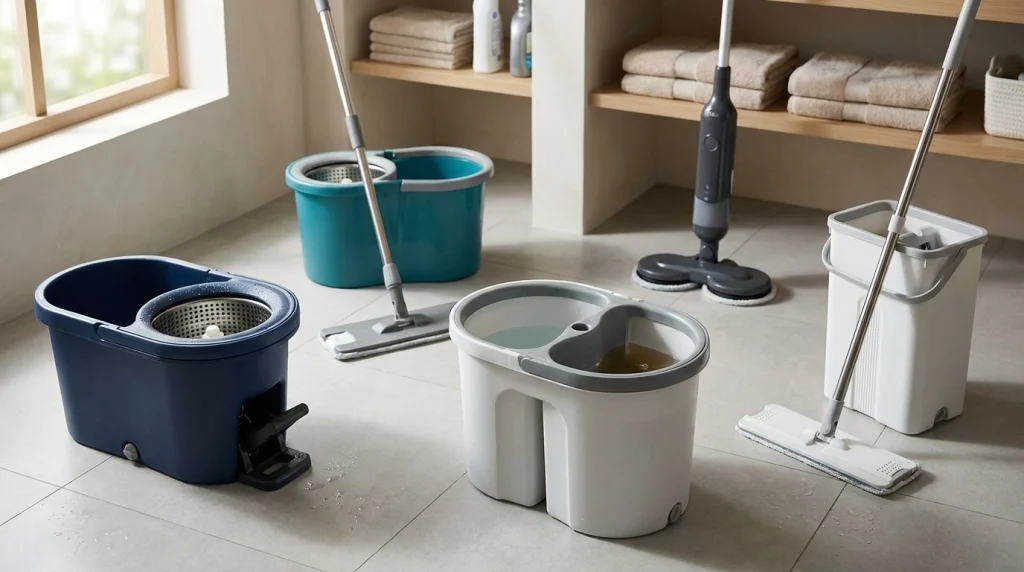
Rotary spin mops fall into several overlapping design categories. Some describe the wringing mechanism, while others describe water separation or powered scrubbing.
Understanding these differences helps you compare products without confusing marketing names.
1. Foot-Pedal Rotary Spin Mop
A foot-pedal spin mop uses a pedal connected to the bucket’s spinning wringer. Pressing the pedal rotates the basket and removes moisture from the mop head.
The familiar O-Cedar EasyWring design illustrates this category. Its popularity comes from straightforward operation and adjustable wringing.
Its main advantages include:
- Minimal hand contact with dirty mop water.
- No batteries or electrical charging.
- Convenient control over wringing cycles.
- Reusable microfiber mop heads.
- Suitable operation for many everyday floor-cleaning tasks.
The downside is the pedal mechanism itself. Gears and moving parts can wear, and the bucket needs stable placement.
My practical advice is to test the pedal’s comfort before buying. A poorly positioned pedal can feel awkward during repeated use.
2. Push-Down Handle Rotary Spin Mop
A push-down spin mop uses pressure on the mop handle to activate rotation. You typically unlock its spinning mechanism, place the head inside the basket, and pump downward.
This eliminates the separate foot-pedal mechanism. Some buckets also offer distinct washing and drying positions.
Its strengths include:
- Simple bucket construction on many models.
- No need to operate a foot pedal.
- Easy transitions between rinsing and wringing.
- Compact options for smaller homes.
However, this design requires repeated downward pressure. People with wrist, shoulder, or hand discomfort may prefer a different mechanism.
I would also check the locking collar carefully. If it slips, the mop can rotate when you’re trying to scrub normally.
3. Dual-Chamber Rotary Spin Mop
A dual-chamber spin mop separates clean water from dirty water during cleaning. Depending on the design, it may use two reservoirs or separate rinsing and collection areas.
The O-Cedar RinseClean is one example of a system built around water separation. It addresses a common weakness of traditional single-bucket mopping.
Its practical advantages include:
- Reduced reuse of visibly dirty rinse water.
- More controlled rinsing between floor sections.
- Useful design for kitchens, entryways, and busy households.
- Less need to replace the entire bucket’s water repeatedly in certain designs.
Still, two chambers don’t make the cleaning water permanently clean. You must empty, rinse, and maintain the compartments.
These systems can also be larger and more complicated to wash after use.
4. Flat-Head Rotary Spin Mop
A flat-head rotary system combines a rectangular cleaning head with a specialized rinsing or spinning bucket. Unlike round string-style heads, it uses a flat pad against the floor.
Not every flat mop has a true rotary wringer. Check the product description to distinguish rotating mechanisms from simple squeeze-wringing buckets.
Flat-head designs are useful for:
- Cleaning along straight baseboards.
- Reaching beneath low furniture.
- Working across open floor sections.
- Using washable microfiber pads.
The tradeoff is reduced flexibility around tight corners in some designs. Round microfiber heads may maneuver more naturally around chair legs.
Flat pads also need regular cleaning because dirt can become concentrated across the contact surface.
5. Electric Rotary Spin Mop
An electric rotary mop uses a motor to spin one or more cleaning pads against the floor. It helps provide scrubbing movement rather than relying entirely on manual strokes.
Some models use rechargeable batteries, while others have power cords. Water delivery may come from a spray system or separately dampened pads.
Common advantages include:
- Motor-assisted scrubbing movement.
- Less manual back-and-forth effort on some messes.
- Reusable cleaning pads on many models.
- Convenient cleaning across larger open areas.
Electric spinning pads don’t necessarily remove dirty water. Many machines spread or absorb moisture until the pads are changed or washed.
That distinction matters. A powered rotary mop isn’t the same as a wet-dry vacuum that actively extracts dirty liquid.
Electric models also introduce battery care, charging, and motor maintenance.
Section Takeaway: Manual rotary systems mainly improve wringing and moisture control. Electric rotary systems mainly assist scrubbing, while dual-chamber designs improve water separation.
How Do Rotary Spin Mop Types Compare?
The best rotary spin mop depends on which part of cleaning you want to simplify. Compare water handling, physical effort, storage, and maintenance rather than focusing only on spinning speed.
| Mop Type | Rotation Method | Main Benefit | Main Limitation |
|---|---|---|---|
| Foot-pedal | Foot-powered basket | Hands-free wringing | Pedal and gear wear |
| Push-down | Handle-powered basket | Simple manual operation | Requires downward force |
| Dual-chamber | Varies by model | Separates rinse water | More parts to clean |
| Flat-head rotary | Model-specific wringer | Broad, flat contact area | Less flexible around obstacles |
| Electric rotary | Motor-driven pads | Powered scrubbing | Power and pad maintenance |
Manual Spin Mop vs Electric Spin Mop
A manual spin mop usually makes sense when you want reliable wringing without charging equipment. It also lets you rinse the mop head directly in a bucket.
An electric model suits people who want assistance moving cleaning pads across the floor. However, it may require more frequent pad changes to prevent dirt redistribution.
Spin Mop vs Steam Mop
Steam mops use heated water vapor, while spin mops usually clean with damp fibers and an appropriate solution. They are different cleaning technologies.
Steam isn’t suitable for many moisture-sensitive floors. The National Wood Flooring Association advises against steam cleaning wood floors.
For most mixed-floor households, I would prioritize a mop with dependable moisture control over one that simply produces more water or heat.
Safety note: Always follow the floor manufacturer’s cleaning instructions before using steam, water, or chemical cleaners.
Which Rotary Spin Mop Is Best for Each Floor Type?
Flooring material matters more than mop branding. A design that works well on ceramic tile may introduce moisture risks on wood or laminate.
Tile and Sealed Grout
Manual microfiber spin mops are practical for routine cleaning of ceramic and porcelain tile. You can adjust moisture and repeatedly rinse accumulated dirt.
For textured tile, use a suitable microfiber head and gentle overlapping strokes. Deeply stained grout may still require a dedicated brush.
Hardwood and Engineered Wood
Wood flooring requires careful moisture control. A spin mop should only be used where the manufacturer permits that cleaning method.
The NWFA recommends avoiding excessive moisture and using manufacturer-approved products. A near-dry cleaning pad is safer than a visibly wet mop head.
If your wood flooring instructions prohibit bucket mopping, choose a recommended microfiber floor-care method instead.
Laminate Flooring
Laminate can be vulnerable to water entering seams and edges. Use only the damp-cleaning methods permitted by its manufacturer.
Never leave puddles behind. If you see water collecting near joints, stop and dry the area promptly.
Luxury Vinyl Plank and Sheet Vinyl
Many vinyl floors tolerate controlled damp mopping, although care requirements vary. A manual spin mop can remove ordinary dirt without requiring powered equipment.
Choose a cleaner approved for the specific floor. Avoid flooding seams or using abrasive pads.
Natural Stone and Concrete
Natural stone often needs a stone-safe, pH-neutral cleaner. Acidic cleaners can damage certain surfaces, including marble and limestone.
Sealed concrete may be easier to damp-clean, but unfinished or specialty-coated surfaces need separate care instructions.
Safety note: Check your flooring manufacturer’s guide and cleaning-product label before use. Never assume one cleaner works on every floor material.
How Do You Choose the Right Rotary Spin Mop?
Start with your floors, storage space, and cleaning habits. A good mop should make routine maintenance easier without creating another complicated chore.
Look at the Wringing Mechanism
Try to identify how much force the mechanism requires. Pedal systems use your foot, while push-down models require arm pressure.
Check whether the wringer operates smoothly and whether spare components are available.
Check the Mop-Head Material
Microfiber contains fine synthetic fibers that help collect dust and dirt. Washable microfiber heads offer a reusable alternative to disposable cleaning pads.
Look for the following features:
- Removable and replaceable cleaning heads.
- Clear machine-washing instructions.
- Soft material suitable for the intended flooring.
- Secure attachment during spinning.
- Replacement heads available at a reasonable cost.
Evaluate Bucket Size and Stability
A larger bucket may reduce refill trips, but it also becomes heavier when filled. Compact buckets are easier to store in apartments.
I prefer a stable bucket with a comfortable carrying handle. Water spills during transport can create more cleanup than the original mess.
Consider Clean-Water Separation
Single-bucket systems mix rinse water with collected dirt. They remain useful, but water should be replaced as it becomes dirty.
Dual-chamber models reduce that problem by separating water flows. Check how easily both chambers can be emptied and rinsed.
Don’t Overlook Replacement Parts
A low-priced mop loses value if its replacement heads are difficult to find. Confirm the attachment style and refill availability before purchase.
As of 2026, shoppers can find several manual and powered rotary designs. The right choice still depends on maintenance needs rather than the newest feature.
How Do You Use a Rotary Spin Mop Correctly?
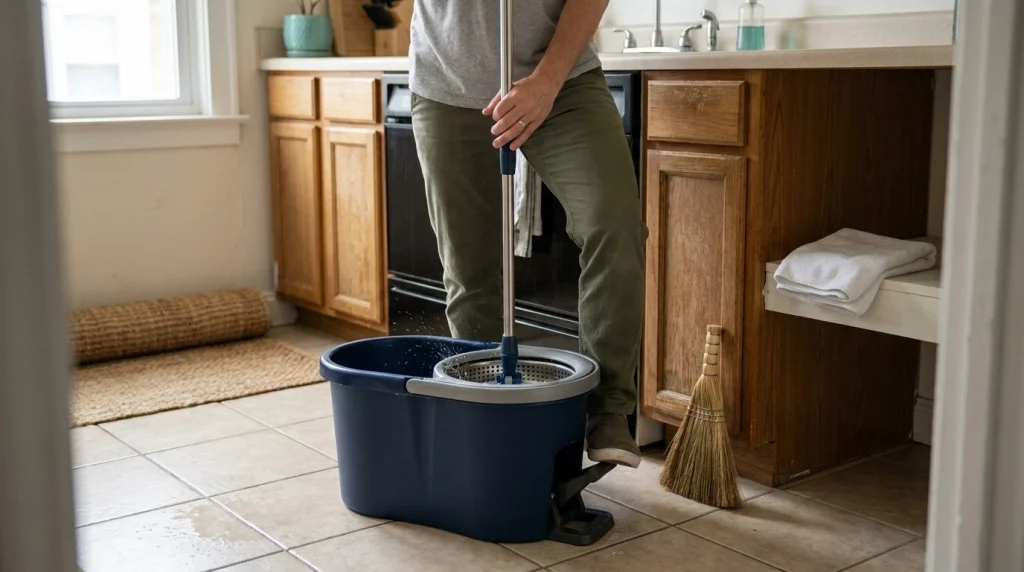
The best results come from removing dry debris before adding moisture. Spinning controls water content, but it doesn’t replace proper rinsing.
Step-by-Step Rotary Mop Cleaning Method
- Sweep or vacuum: Remove grit, hair, crumbs, and loose dust before wet cleaning.
- Prepare the bucket: Add the recommended amount of water and floor-compatible cleaner.
- Wet the mop: Submerge the cleaning fibers according to the mop’s directions.
- Spin the head: Operate the pedal or handle until the mop reaches the permitted moisture level.
- Clean small sections: Use gentle overlapping strokes rather than heavy pressure.
- Rinse frequently: Release accumulated dirt before moving into another section.
- Replace dirty water: Empty the bucket when the rinse water becomes visibly soiled.
- Dry and maintain: Wash the mop head and let the bucket dry before storage.
How Wet Should a Spin Mop Be?
That depends on the flooring material. A tile floor may tolerate more moisture than a manufacturer-approved damp-cleaned laminate floor.
As a simple visual check, the mop shouldn’t leave standing water. Floors should dry promptly under normal indoor conditions.
How Often Should You Mop?
There’s no universal schedule for every household. Traffic, pets, cooking habits, and floor materials influence cleaning frequency.
- Busy kitchens: Spot-clean spills promptly and mop as needed, often several times weekly.
- Entryways: Clean when dirt, footprints, or tracked-in moisture appear.
- Low-traffic bedrooms: Damp-clean less often, depending on visible soil.
- Pet households: Increase cleaning when muddy paws or food spills occur.
The CDC’s household cleaning guidance explains that routine cleaning usually removes dirt and many germs. Disinfecting is generally more relevant when someone is sick or at increased risk.
Safety note: Never mix cleaning chemicals. Follow dilution instructions, floor-care guidance, and disinfectant contact times when applicable.
What Problems Can Rotary Spin Mops Have?
Most everyday spin mop problems involve worn mechanisms, dirty pads, excess water, or incorrect handling. Basic maintenance often prevents them.
Why Is My Spin Mop Not Spinning?
A jammed wringer, locked handle, damaged mechanism, or incorrectly seated head can stop rotation. The exact cause depends on the model.
Try these checks:
- Confirm the handle is in its spinning position.
- Check whether the mop head is seated correctly.
- Remove hair and debris from accessible moving parts.
- Inspect the pedal or spinning mechanism for visible damage.
- Follow the manual before disassembling anything.
If you have an electric mop, switch it off before examining the pads. Never reach into moving components.
Why Does My Floor Look Streaky?
Streaks often result from cleaner residue, contaminated water, or excessive product use. Dirty cleaning fibers can also redistribute soil.
Start with a freshly washed head and the correct cleaning-product dilution. Replace rinse water as needed.
Why Does My Mop Smell Bad?
Wet microfiber stored inside a closed bucket can develop unpleasant odors. Dirt trapped in the fibers makes the problem worse.
Remove the mop head after cleaning. Wash it according to the care label and allow it to dry thoroughly.
How Long Does a Rotary Mop Last?
Service life varies with construction, usage, and maintenance. There isn’t one reliable replacement interval that applies to every rotary mop.
Replace damaged heads, inspect loose connections, and stop using mechanisms that crack or jam. Regular cleaning helps preserve moving parts.
Section Takeaway: Keep the bucket clean, replace worn microfiber, and avoid forcing jammed mechanisms. Proper care is more useful than aggressive spinning.
Frequently Asked Questions About Rotary Spin Mop Types
Are rotary spin mops better than traditional mops?
Rotary spin mops can make wringing easier and improve moisture control compared with traditional hand-wrung string mops. However, cleaning performance depends on the head material, surface, cleaner, and technique. A traditional microfiber mop may still be suitable for light cleaning or small areas.
Which rotary spin mop is best for beginners?
A foot-pedal microfiber spin mop is a practical starting point for many beginners. Its bucket wringer is easy to understand, and replacement heads are available for established systems. Choose a model that fits your storage space and floor-care requirements.
Can you use a rotary spin mop on hardwood floors?
Only use one if your hardwood floor manufacturer permits that method. Excess moisture can damage wood flooring, including its finish and joints. Many manufacturers recommend a near-dry microfiber cleaning method with an approved wood-floor product instead of conventional bucket mopping.
Do electric spin mops clean better than manual spin mops?
Electric spin mops provide motor-assisted scrubbing, which can reduce repetitive manual movement. They don’t automatically outperform manual mops on every stain or surface. Pad cleanliness, moisture control, and the specific machine design remain important.
Are dual-chamber spin mops worth buying?
Dual-chamber systems are worth considering when dirty rinse water is a frequent problem. They help separate clean water from collected dirt, although both chambers still require maintenance. Their extra bulk may be less appealing in small apartments.
Can you put disinfectant in a rotary spin mop bucket?
Only if the disinfectant label permits that application, the mop manufacturer allows it, and the product is compatible with your floor. Disinfection also requires the correct concentration and contact time. Never mix chemicals or assume ordinary mopping disinfects a surface.
How often should I replace a spin mop head?
Replace the head when its fibers become damaged, cleaning performance declines, or odors remain after proper washing. Replacement frequency depends on usage and care. Follow the manufacturer’s instructions rather than relying on a fixed number of weeks or months.
Final Takeaway: Which Rotary Spin Mop Type Is Worth Buying?
For most routine household cleaning, I’d start with a dependable manual microfiber spin mop. It’s straightforward to maintain, requires no charging, and makes wringing easier.
Choose a dual-chamber system when water separation matters most. Consider an electric rotary mop when powered scrubbing is your priority.
Before buying, confirm floor compatibility, inspect the wringing mechanism, and check replacement-head availability. The best rotary spin mop is the one you’ll use comfortably and maintain properly.