
What Is a Cuban Mop? How the Wooden T Mop Works and How to Use It

Quick answer: A Cuban mop is a simple wooden mop shaped like an upside-down T: a long handle joined to a short crossbar. Instead of a mop head, you wrap a damp towel, rag or microfiber cloth around the crossbar and push it across the floor. It has no plastic parts or refills, and the cloth goes in the washing machine after each use.
You will also hear it called a Cuban stick mop, a T-mop, a palo de trapear or a “trapeador” in Spanish-speaking homes. It is common in Cuba, across Latin America and the Caribbean, and in parts of Southern Europe, and it is a familiar sight in Miami homes.
How a Cuban Mop Is Made
The design is just two pieces of wood. A handle, usually around four feet long, screws or fits into the center of a shorter crossbar, roughly a foot wide. Some versions use bamboo or a metal handle. There is no clamp, sponge or strings: the cloth is held in place by the way you fold it around the bar.
Because the head is flat and thin, it slides under sofas and beds more easily than a bulky string mop. It is also very light, which helps if you find a full spin mop or steam mop tiring to push.
Cuban Mop vs. Other Mops
| Feature | Cuban mop | String mop | Spin mop | Flat microfiber mop |
|---|---|---|---|---|
| Head | Any towel or cloth | Cotton or blend strings | Round microfiber head | Rectangular microfiber pad |
| Refills | None needed | Replacement heads | Brand-specific heads | Brand-specific pads |
| Wringing | By hand | Bucket wringer | Spin basket | Usually by hand or no wring |
| Water control | Good if you wring well | Often too wet | Good | Very good |
| Washing | Toss the cloth in the wash | Hard to dry fully | Machine-wash the head | Machine-wash the pad |
| Best for | Small homes, tile, quick wipes | Large, rough floors | Most homes | Wood, laminate, vinyl |
If you are still picking a mop, our guide to the different types of mops compares more options, and how to choose the right mop helps match one to your floor.
How to Use a Cuban Mop
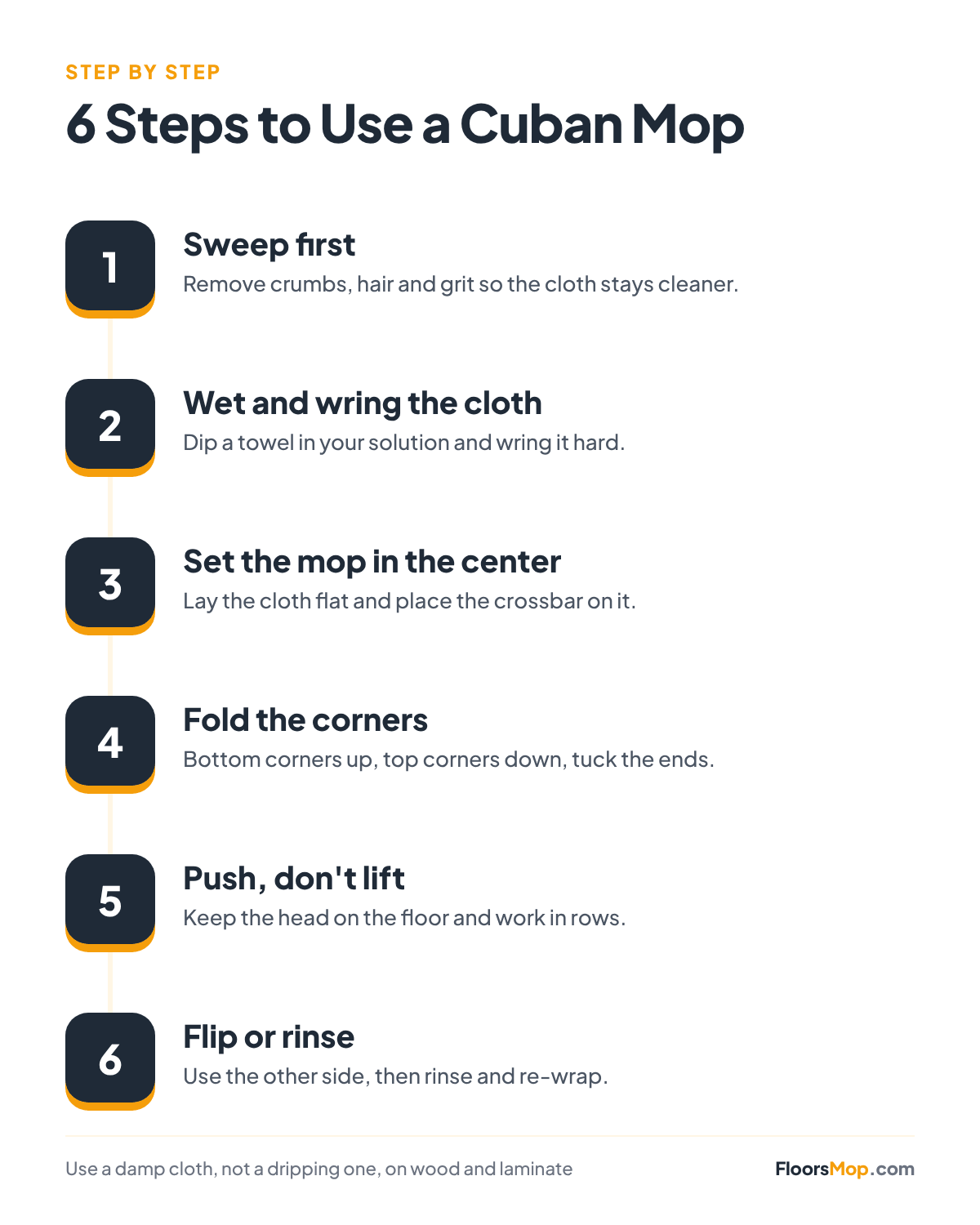
- Sweep or vacuum first. Pick up crumbs, hair and grit so the cloth doesn’t just push them around.
- Wet and wring the cloth. Dip a medium towel or cloth in your cleaning solution and wring it out firmly. It should be damp, not dripping.
- Set the mop in the center. Lay the cloth flat on the floor and place the crossbar across its middle.
- Fold the corners. Fold the two corners nearest you up and over the bar, then fold the two far corners down toward you. Tuck the loose ends under as you lift the mop. Some people use two binder clips to hold the cloth.
- Push, don’t lift. Keep the head on the floor and work in rows or a figure-eight, moving backward toward the door.
- Flip or rinse. When one side is dirty, unwrap it and re-fold with the clean side out. When both sides are dirty, rinse the cloth, wring it, and wrap it again.
Which cloth works best?
Any absorbent cloth big enough to wrap the crossbar will do. Old bath or hand towels, cotton floor cloths, and microfiber cloths are the most common. Microfiber picks up fine dust well and wrings out drier, which is useful on wood and laminate. Thick terry towels hold more water and work well on tile.
What to put in the bucket
Keep it simple. Warm water with a few drops of dish soap or a pH-neutral floor cleaner is enough for most floors. Diluted vinegar works on many tiles, but avoid it on natural stone, and check your floor maker’s advice before using it on wood. Don’t mix cleaners in the bucket. Our guides on using dish soap to mop and mopping with vinegar give the right amounts.
Pros and Cons of a Cuban Mop
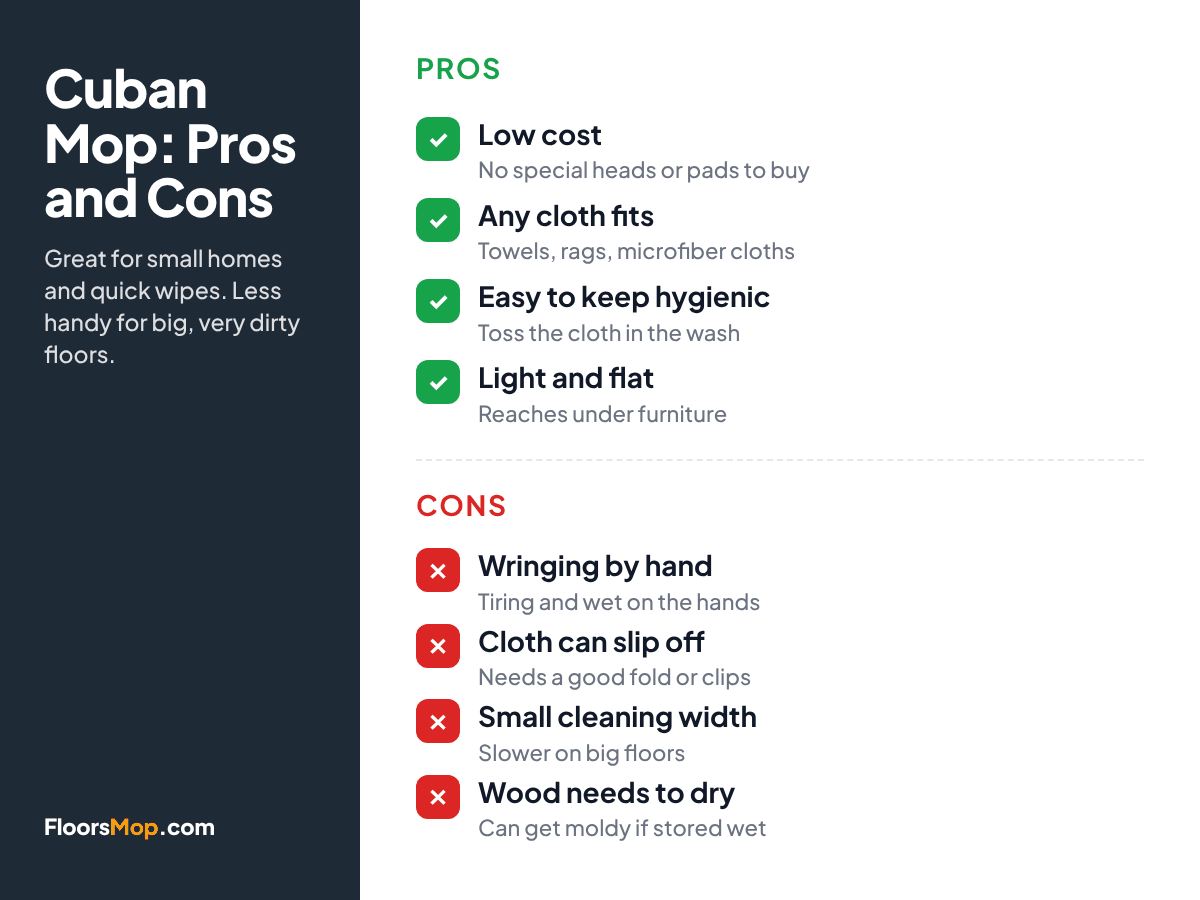
Pros: it is cheap, uses cloths you already have, and has no special heads to replace. Because you put a fresh cloth on each time, it is easy to keep clean and hygienic. It is light, reaches under furniture, and the wooden parts are simple to replace.
Cons: you wring the cloth by hand, which is tiring on a big floor and not ideal if you have sore wrists. The cloth can slip off if it isn’t folded well. The cleaning width is smaller than a large flat mop, and there is no bucket wringer to control water. Store the mop dry, because wet wood can grow mold or crack over time.
Which Floors Is a Cuban Mop Good For?
A Cuban mop works on most sealed hard floors: ceramic and porcelain tile, vinyl, linoleum, sealed concrete and terrazzo. On hardwood and laminate, wring the cloth very well so the floor is only damp, and dry any wet spots. Our guide on how to mop a floor properly covers the basics that apply to any mop.
Tips for Better Results
- Keep two or three cloths ready. Swap to a fresh cloth between rooms, especially between the kitchen and the bathroom, so you don’t spread germs from one room to the next.
- Use a second bucket for rinsing. Rinse the dirty cloth in one bucket and dip it in clean solution from the other. The cleaning water stays clear for longer.
- Wear rubber gloves. Hand wringing is easier on your skin with gloves, especially when you use a cleaner.
- Go along the grain. On wood and plank floors, push the mop in the direction of the boards to reduce streaks.
- Finish with a dry cloth. On glossy floors, wrap a dry microfiber cloth around the bar and go over the floor once more to remove water marks.
Where to Get a Cuban Mop
Look for a “Cuban mop,” “Cuban stick mop” or “wooden T mop” at Latin grocery stores, some hardware stores, and online. You can also make one with a long wooden dowel for the handle and a thicker, shorter dowel for the crossbar, joined with a drilled hole and waterproof glue. Sand and seal the wood so it doesn’t splinter or soak up water.
Frequently Asked Questions
Why is it called a Cuban mop?
It is named for its wide use in Cuban homes, and the name spread through Cuban communities in South Florida. The same style of stick and cloth mop is used across Latin America, the Caribbean and Southern Europe under other names.
Is a Cuban mop better than a regular mop?
It depends on your home. A Cuban mop is cheaper, lighter and easier to keep hygienic because you wash the cloth each time. A spin or flat mop is faster on large floors and easier on your hands because of the wringer.
Can you use a Cuban mop on hardwood floors?
Yes, if the cloth is only damp. Wring it out hard or use a microfiber cloth, and dry any wet spots. Use a cleaner made for wood floors.
How do you keep the towel from falling off a Cuban mop?
Use a cloth big enough to fold over the bar on both sides, fold the near corners up and the far corners down, and tuck the ends under. Two binder clips help hold a thin or slippery cloth.
How do you clean a Cuban mop after use?
Put the cloth in the washing machine on a warm cycle, without fabric softener. Wipe the wooden head, and let the mop dry standing upright before you store it.
The Bottom Line
A Cuban mop is a wooden T-shaped stick that turns any towel into a floor mop. It is cheap, light and easy to keep clean, and it suits small homes and tile floors especially well. The trade-off is wringing by hand and a smaller cleaning width. Wring the cloth well, fold it securely, and wash it after every use.