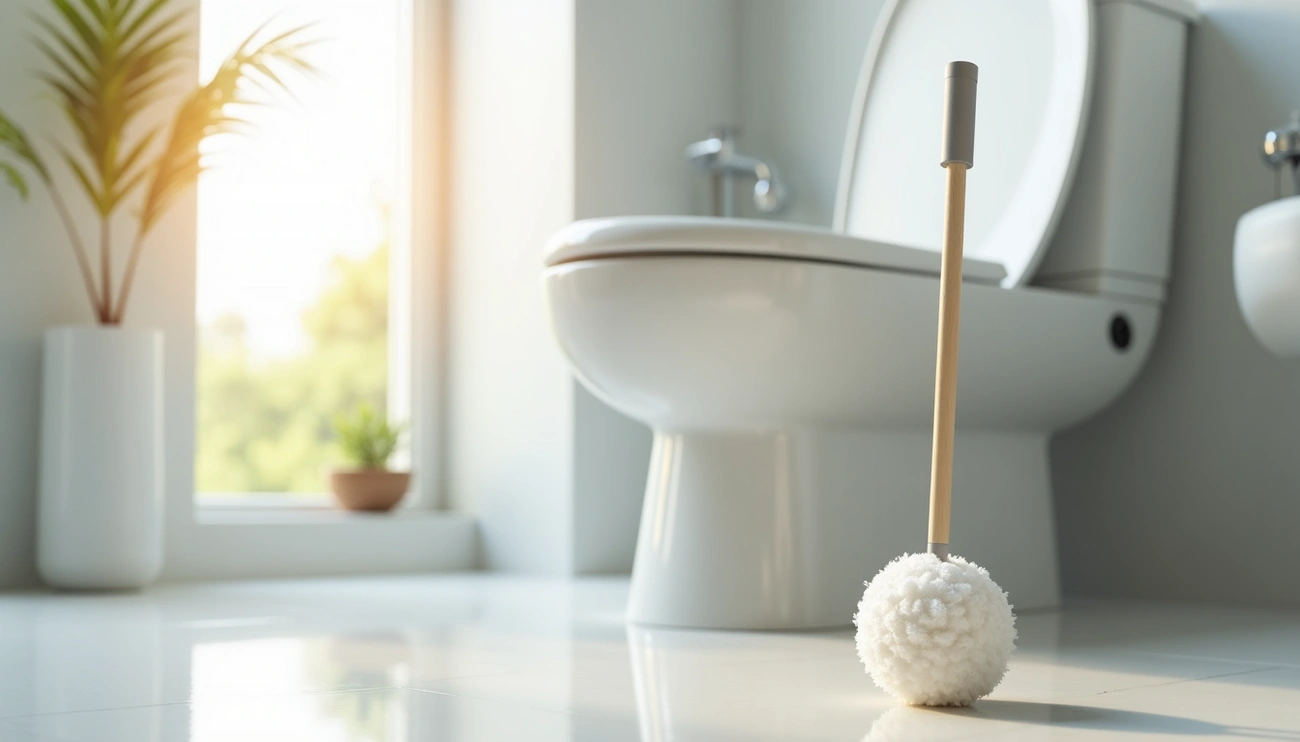
A Johnny Mop is a toilet cleaning tool with a plastic handle and a soft yarn or foam head. It scrubs porcelain bowls without scratching and resists damage from acidic cleaners. Cleaners use a Johnny Mop to apply disinfectant, sanitize surfaces, and remove water without touching the bowl.
What Is a Johnny Mop?
The toilet bowl swab definition
A johnny mop consists of a fluffy head made from soft, synthetic yarn attached to a plastic handle. The head features thick, absorbent fibers designed to soak up cleaning solutions. Most models measure 14″ long including the handle, providing enough reach without requiring you to get too close to the bowl.
The defining feature is the permanently attached cone or cap. This cone sits at the base of the mop head and serves as a built-in wringer. When you’re done cleaning, you squeeze the cone to remove excess water and cleaner without ever touching the contaminated liquid. Your hands stay protected from harsh chemicals and toilet water throughout the process.
The construction uses acid-resistant materials, typically polypropylene fibers that withstand prolonged exposure to aggressive cleaning chemicals. Note that the synthetic yarn releases liquid quickly, making it efficient for both applying cleaners and removing them.
How it differs from regular toilet brushes
Regular toilet brushes rely on stiff bristles to scrub away stains through mechanical action. By comparison, johnny mops use soft, absorbent material that works differently. The fluffy head contours to the bowl’s surface, reaching into crevices that rigid bristles miss.
Standard brushes often scratch porcelain surfaces over time. The soft material of a johnny mop cleans without leaving scratches or scrapes on your toilet bowl’s finish. The flexible head bends under the rim and into tight spaces where traditional brushes struggle to reach.
In truth, johnny mops don’t scrub the way bristled brushes do. They spread cleaning products thoroughly and hold more solution in their absorbent fibers. This means the chemicals do more of the work, while the mop distributes them exactly where needed.
Common alternative names
You’ll find these tools sold under several names. “Bowl swab” and “toilet bowl swab” are the most common alternatives to johnny mop. Some retailers simply call them “toilet bowl mops” or list them as “acid-resistant toilet brushes.”
Professional cleaning suppliers might label them as “deluxe toilet bowl mops”. The fuzzy appearance has led some to describe them as “soft plastic fluffballs on a stick”, though that’s more of a description than an official name.
What Is a Johnny Mop Used For?
Cleaning below the waterline
The johnny mop excels at accessing submerged areas that standard brushes barely touch. The absorbent head soaks up water as you work, allowing you to scrub mineral deposits and stains sitting beneath the surface. When you need to tackle stubborn toilet rings or hard water buildup, the soft fibers conform to the bowl’s contours and reach deposits hiding below the waterline.
Applying toilet bowl cleaners
I apply cleaning products directly onto the mop head rather than just squirting them around the bowl. This method gives me precise control over where the cleaner goes. The absorbent fibers hold the solution, distributing it evenly as I scrub. You can work Safety Foam, Foam ‘n’ Flush, or other toilet cleaners into every surface. The acid-resistant construction means harsh chemicals won’t damage the mop.
Lowering water levels in the bowl
One unique function sets johnny mops apart: they work like a plunger to push water down the toilet’s throat. By pumping the mop up and down, I force water through the trap, exposing the mineral ring and stained areas. This step makes your cleaning products far more effective since they contact bare porcelain instead of diluting in standing water.
Reaching tight spots and under the rim
The flexible head bends into spaces where rigid brushes can’t go. I maneuver it under the rim where bacteria and grime accumulate out of sight. The soft material squeezes into the curved areas near the bowl’s edge and gets deep into crevices. As an illustration, those black streaks under the rim disappear when the fluffy fibers make direct contact with them. Some people even use johnny mops for cleaning showers, though toilet cleaning remains their primary purpose.
Key Features of a Johnny Mop
Acid-resistant construction
Polypropylene forms the backbone of every quality johnny mop. The fibers resist damage from acidic toilet cleaners, bleach, and other harsh chemicals that would destroy ordinary materials. This acid-resistant property ensures the mop strands maintain their integrity through repeated exposure to aggressive cleaning products. The polypropylene construction is non-absorbent in terms of chemical degradation, meaning the fibers don’t break down or weaken over time.
Sponge or foam head design
The mop head typically measures 4-1/2 inches across[124], providing adequate coverage for efficient cleaning. Fuller heads deliver greater absorbency, allowing you to clean without creating a mess. Some models feature angled head designs that improve access to hard-to-reach areas under the rim[102]. The soft material contours to the bowl’s surface, ensuring thorough dirt and grime removal without leaving scratches or scrapes on porcelain.
Handle length and material
Johnny mops come in several handle lengths to suit different preferences. Standard models offer 9.5-inch, 10-inch, or 12-inch handles[124], while deluxe versions extend to 14 inches. The handles use plastic or polypropylene resin construction[124], providing a comfortable grip that reduces fatigue during cleaning. The I-beam design in some models adds structural strength without extra weight.
Durability for tough cleaning jobs
These tools stand up to the rigorous nature of day-to-day bathroom cleaning. The durable construction withstands daily use in demanding environments. Besides resisting chemicals, the fibers maintain their shape and cleaning effectiveness through multiple uses. Professional cleaning services rely on johnny mops because they hold up to long-term use, making them suitable for commercial applications in offices, hotels, restaurants, and healthcare facilities where frequent, thorough toilet cleaning is required.
How to Use a Johnny Mop Effectively
Step-by-step cleaning process
First, flush the toilet and put on protective gloves. Next, push the johnny mop into the trap area to lower the water level. This step matters because undiluted cleaning products work more effectively on exposed porcelain.
Apply 1-2 ounces of your chosen cleaner directly onto the mop head. Work the mop around the bowl for about 20 seconds to activate the foam. Make sure the product covers the entire interior, including under the rim.
Let the cleaner dwell for 3-5 minutes. The acid-based formula needs contact time to break down minerals and stains. As a bonus, you can clean other bathroom areas while waiting. Afterward, flush the toilet and rinse your johnny mop thoroughly.
Safety tips when using cleaning chemicals
Always read product labels and Safety Data Sheets before starting. Wear rubber gloves and safety goggles to protect against chemical burns and splashes.
Open windows for ventilation when working with strong cleaners. Never mix different cleaning products, as combinations can create toxic fumes. Store chemicals in their original containers in a cool, dry location away from children.
Maintenance and replacement guidelines
Rinse the mop thoroughly after each use by squeezing the cone to remove excess water. Never use your bowl mop on exterior toilet surfaces to prevent cross-contamination. Store the cleaned mop in a designated area away from other cleaning tools.
Conclusion
The johnny mop might have a quirky name, but its practical benefits are undeniable. Its acid-resistant construction, absorbent head, and ability to reach below the waterline make it perfect for deep toilet cleaning tasks. Different from standard brushes, this specialized tool excels at applying cleaners precisely and accessing tight spots under the rim. Add one to your cleaning toolkit, and you’ll notice how much easier tackling stubborn toilet stains becomes.