Hot mopping a shower pan is a waterproofing method that applies layers of hot liquid asphalt and roofing felt over a sloped mortar bed. Contractors alternate asphalt and felt to create a seamless, watertight barrier before tile installation. This heavy-duty system, common on the West Coast, can last 20–40 years and often outperforms vinyl liners.
What Is Hot Mopping a Shower Pan?
The Basic Definition
Hot mopping creates a shower pan liner by alternating layers of heated asphalt with specially manufactured felt paper. The process starts and ends with hot asphalt, forming a seamless waterproof barrier. Professionals heat the asphalt to temperatures ranging from 450°F to 500+°F before application.
The layering technique combines four layers of hot liquid asphalt between three layers of felt paper and fiberglass mesh on all corners and seams. This multi-layer approach builds thickness and durability that single-layer waterproofing methods can’t match. The asphalt binds each felt layer to create one unified barrier rather than separate components that might shift or separate over time.
How Hot Mop Waterproofing Works
The shower pan liner serves as the unseen barrier that protects your bathroom from water damage. Here’s something most homeowners don’t realize: tile and grout on shower floors aren’t waterproof. Water soaks through and reaches the pan liner beneath, which then directs it toward the drain.
In order to function properly, the hot mop must be applied over a pre-slope built to specific measurements. The slope needs to fall between 1/4 inch to 1/2 inch per foot from any point in the shower floor area to the drain. This gradient ensures water flows correctly rather than pooling on the liner surface.
The design follows an industry-standard principle called “water in, water out”. Most water hits the tile floor and drains away, but moisture that penetrates the tile reaches the liner, flows along the slope, and exits through the drain.
Where Hot Mopping Is Used
Hot mopping extends beyond just the shower floor. Professionals apply this waterproofing method to walls, curbs, benches, and other areas within the shower pan zone. Water from shower walls and glass doors eventually ends up in the pan area, so vertical surfaces need the same protection as horizontal ones.
The method allows corners to be tight, solid, and uniform with the floor area at any transition point. Coupled with fiberglass mesh reinforcement on all cuts and seams, hot mopping creates a seamless pan that doesn’t separate at vulnerable junction points. This continuous barrier approach stops water from finding gaps or weak spots that typically develop where different surfaces meet.
The Hot Mop Process Step-by-Step
Preparing the Shower Base
Before professionals start the hot mop waterproofing process, they verify the drain has two compatible components: a bottom flange that sits flush with the subfloor and a removable collar that bolts to it. The shower base gets covered with protective drop cloths to prevent any tar spillage.
At first, installers cut custom sheets of roofing felt to create the three layers needed for the hot mop. These sheets are pre-folded and fabricated to fit the exact shower dimensions before any hot asphalt touches the surface.
Creating the Mortar Bed Slope
Creating proper drainage starts with building a pre-slope using mortar mix cement. Professionals install this mortar dry, which allows them to move it with a trowel to achieve the required 1/4 inch per foot pitch toward the drain. Thereafter, they wet the mortar just enough to cure, enabling hot mop installation over the mix in minutes.
Applying Layers of Tar and Felt
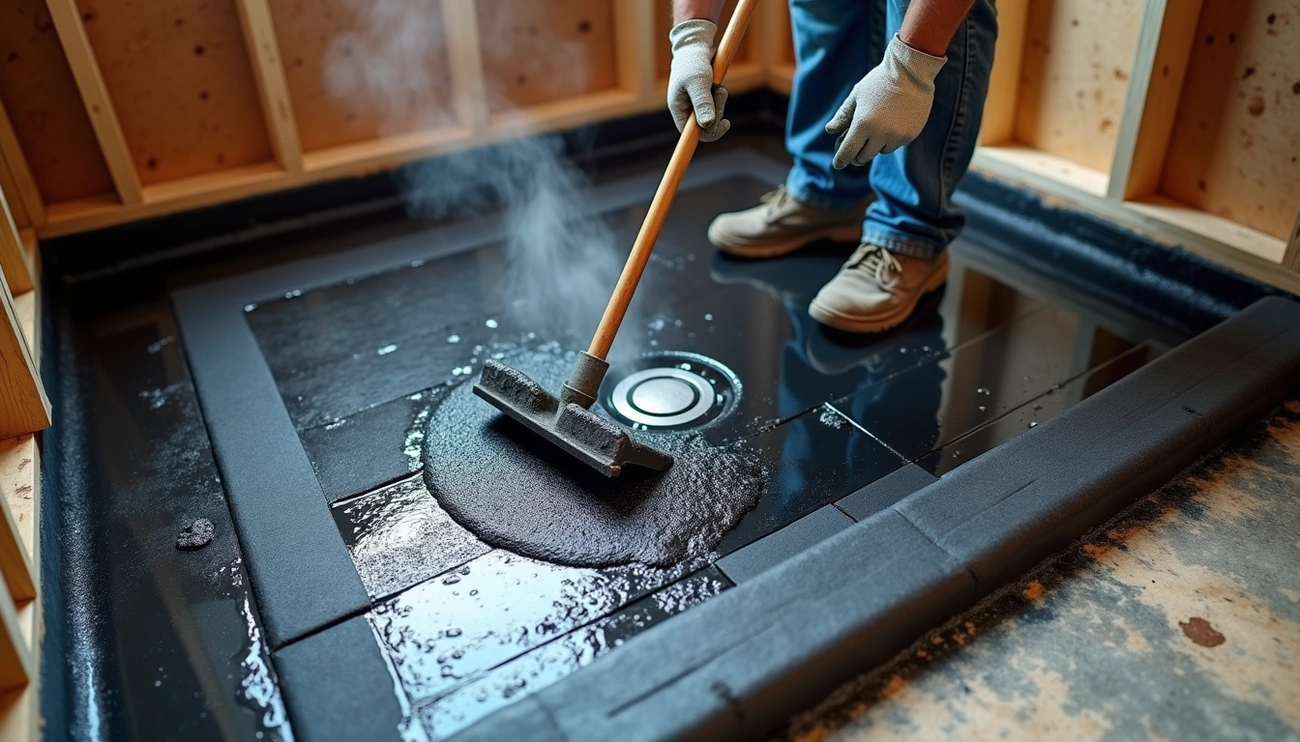
Workers heat asphalt in a kettle and carry it to the shower with a special fiberglass mop head. They dip the mop into the tar bucket and apply it to one section of the shower, then carefully place a piece of felt paper onto the tar. This process repeats on the opposite side to complete one whole layer, continuing until three layers of felt paper sit between the drain flanges.
Fiberglass mesh gets added to every corner and seam, strengthening the pan against movement and construction traffic. Hot liquid asphalt is applied before, between, and after every layer of felt paper.
Sealing the Drain Connection
Installers remove the top flange and add cold tar to create a sandwich effect, providing a watertight seal. They cut a perfect circle from inside the drain, permanently connect it to the bottom flange, then tighten the flange back together.
Final Top Mop Layer
The final stage applies an abundant amount of waterproof tar over the entire shower pan to encase and seal the whole product together. Professionals ensure they don’t cover the weep holes of the drain, allowing any water reaching the hot mop to find its way to the drain line.
Why Homeowners Choose Hot Mop Shower Pans
Long-Lasting Protection
Hot mop shower pans deliver protection that extends well beyond standard waterproofing systems. Properly installed pans typically last around 15 years before showing signs of deterioration. The method itself boasts over 64 years of reliability, particularly in regions like Southern California where it’s been the preferred choice for shower installations.
The durability comes from how the multiple layers bond together. Four layers of hot liquid asphalt alternate with three layers of felt paper and fiberglass mesh, creating a robust construction that handles weight and traffic better than single-layer alternatives. This time-tested approach has proven itself since the early 1950s.
Superior Waterproofing Performance
The Ceramic Tile Institute of America recommends hot mop asphalt shower pan waterproofing above all other methods, including pan liners and fiberglass. Their recommendation stems from extensive testing and field experience showing that hot mop pans are practically endless in life expectancy.
The multi-layer built-up system creates an impermeable membrane that forms a watertight seal. By the same token, heated tar application produces a seamless, monolithic barrier that’s incredibly robust.
Prevents Water Damage and Mold
Shower pan failures lead to mold, mildew, and costly structural damage to your property. Water can seep into wood and other structural components on second or third levels, turning a simple leak into a disaster requiring thousands in repairs.
Hot mopping creates a reliable waterproof seal that prevents moisture from trickling into floors. The proper pre-slope at a quarter-inch per foot allows drainage and prevents water from sitting inside the cement bed, which breaks down tile and grout lifespan while promoting smelly mold growth.
Works on Any Shower Size or Shape
Hot mop pans conform to any shape or size with a seamless top coat. Custom applications fit unique spaces precisely, eliminating the limitations of prefabricated shower pan membranes. Corners become tight, solid, and uniform with floor transitions, something rigid liner systems struggle to achieve.
What to Know Before Hot Mopping Your Shower
Typical Installation Time
From start to finish, installing a hot mop shower pan takes professionals between one and two hours. The hot mop needs another couple of hours to dry. However, the pan becomes ready for water testing in as little as 3 hours. We recommend waiting 24 hours after hot mop completion before starting additional work.
The Tar Smell and Ventilation
Roofers exposed to asphalt fumes may experience headache, eye irritation, nose and throat irritation, skin irritation, nausea, fatigue, and drowsiness. These effects appear to be mild and transient. Most professionals use low odor asphalt in all jobs. The duration of the smell depends on many variables such as ventilation and weather. In most cases, the smell should be gone in a few hours.
Cost Considerations
Installing a hot mop shower pan costs between $225 and $500. The price depends on your shower size and project complexity.
Why You Should Hire a Professional
Hot mopping requires handling asphalt heated to 400 degrees Fahrenheit, meaning you could seriously burn yourself if you make a mistake. Any missteps during installation could mean big problems later, like a shower pan leak. Hot mopping is a messy and strenuous project with lots of room for error. Licensed contractors carry workers compensation and general liability insurance certificates. Unlicensed contractors may lack the money or insurance to handle claims if damage occurs.
Conclusion
Hot mopping stands as a time-tested waterproofing solution that delivers decades of reliable protection for your shower. This method offers superior durability compared to modern alternatives, especially when installed by experienced professionals. The investment typically ranges from $225 to $500, a reasonable cost considering you’re getting 30+ years of worry-free performance. Before starting your bathroom renovation, make sure you hire a licensed contractor who specializes in hot mop installations. The right professional will protect your home from costly water damage and give you peace of mind for years to come.