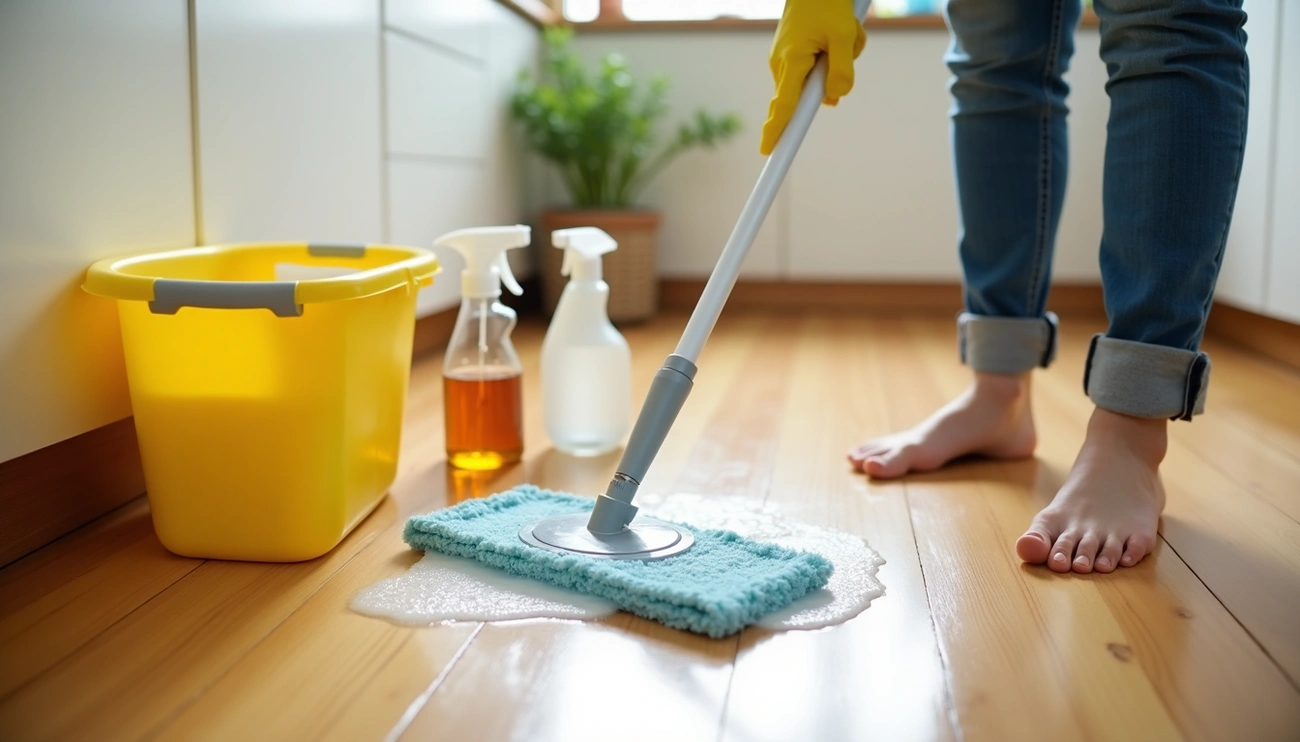
Disinfect floors by mopping with ½ cup of bleach per 1 gallon of water for tile or vinyl surfaces. Use EPA-registered disinfectants such as Lysol or Pine-Sol as directed on the label. Keep the floor visibly wet for 5–10 minutes to kill germs effectively. Use white vinegar and hot water for a natural antibacterial option.
Best Disinfectant Products for Mopping Floors
When choosing what to mop floors with to disinfect, commercial products offer proven effectiveness backed by scientific testing. I’ve found that selecting the right disinfectant depends on understanding how each type works and which surfaces they’re safe for.
Diluted Bleach Solutions
Bleach remains one of the most effective options for disinfecting floors when properly diluted. Mix 5 tablespoons (1/3 cup) of bleach per gallon of room temperature water, or 4 teaspoons per quart if you’re working with smaller areas. Use only regular unscented household bleach containing 5-9% sodium hypochlorite.
The solution works on vinyl, nonporous tile, and grout. After mopping, the surface needs to remain visibly wet for at least 1 minute to kill germs effectively. However, bleach isn’t suitable for aluminum, copper, brass, silver, unsealed wood, marble, or granite. I always rinse floors after mopping with bleach to prevent residue buildup and potential surface damage over time.
EPA-Approved Commercial Disinfectants
The EPA maintains List N, which includes over 350 registered disinfectant products proven effective against viruses and bacteria. These products have undergone rigorous testing to verify their claims. Accordingly, looking for an EPA registration number on the product label confirms you’re using a tested disinfectant.
EPA-approved disinfectants work across various floor types, but you should always verify the product is compatible with your specific flooring. The registration number consists of two sets of numbers separated by a hyphen, with the first set identifying the manufacturer and the second representing the specific product.
Hydrogen Peroxide-Based Cleaners
Hydrogen peroxide adds an extra oxygen molecule to water, giving it powerful germ-killing properties. Stick with 3% medical-grade peroxide for home use, as stronger concentrations like 35% food-grade can be toxic if inhaled or spilled on skin. For basic disinfection, mix a 50/50 solution of water and peroxide, spray surfaces, and let it sit for five minutes.
Commercial hydrogen peroxide products offer faster results. Products like Clorox Healthcare Hydrogen Peroxide Cleaner kill over 40 bacteria and viruses in 1 minute or less. These safer alternatives contain only hydrogen peroxide, ethanol, or citric acid as antimicrobial ingredients, unlike bleach or quaternary compounds that have been linked to occupational asthma. Most hydrogen peroxide products remain effective when the concentration stays under 8 percent.
Quaternary Ammonium Disinfectants
Quaternary ammonium compounds, commonly called quats, provide broad-spectrum disinfection in a single step. These products typically require a 10-minute contact time to effectively kill microorganisms, though some concentrated formulas work in 5 minutes. Quats remain effective even in hard water up to 200 ppm hardness.
I appreciate that quaternary disinfectants work on floors, walls, sinks, toilets, and vinyl upholstery without leaving harsh chemical odors. They’re particularly useful in healthcare and food service settings where maintaining floor finish while disinfecting matters. Some formulas dilute at ratios like 1:256, yielding 512 gallons of ready-to-use solution per case.
Natural Alternatives to Disinfect Floors
Natural options appeal to many households looking to avoid harsh chemicals, though you should understand their limitations before relying on them for disinfection. I’ve tested various natural methods and found they work well for routine cleaning, but they don’t all provide the same germ-killing power as commercial disinfectants.
White Vinegar Solution
White vinegar cleans floors effectively but doesn’t truly disinfect them. Vinegar lacks EPA approval as a disinfectant because it doesn’t kill germs or viruses effectively. While this might sound discouraging, vinegar still removes dirt, grime, and grease thanks to its acidic nature.
For general floor cleaning, mix 1/2 cup of white vinegar per 1-2 gallons of warm water. Some recipes call for equal parts water and vinegar for tougher cleaning jobs. I prefer distilled white vinegar over apple cider vinegar since it costs less and works just as well.
Note that vinegar can damage certain surfaces over time. The acid slowly wears down grout, so don’t let it sit on grout lines. Natural stone floors like marble and granite can etch or discolor from vinegar exposure. Sealed hardwood floors tolerate very light vinegar cleaning, but use only a damp mop and never soak the wood. Skip vinegar entirely on unsealed hardwood.
Steam Cleaning Method
Steam cleaning offers genuine disinfection without chemicals. Professional steam cleaners reach approximately 212°F and remove up to 99.999% of enveloped viruses like coronavirus and influenza from hard surfaces. They also eliminate 99.999% of common household bacteria when used properly.
The key lies in proper technique. Hold the steam against surfaces for at least 8-10 seconds to achieve complete disinfection. Some testing shows 30 seconds at maximum steam level works best for spot cleaning. The superheated dry steam reaches over 140°C and uses pressure to loosen dirt while killing microorganisms.
Steam mops work on sealed hard floors but can damage cork tiles, unsealed wood, or waxed floors. Water forced into cracks may cause swelling, warping, and mildew growth on vulnerable surfaces.
Alcohol-Based Cleaners
Rubbing alcohol sanitizes floors while evaporating quickly to prevent streaks. Mix equal parts water, vinegar, and isopropyl alcohol with a few drops of dish soap for an effective cleaning solution. This combination provides better germ-fighting properties than vinegar alone.
I use 70% alcohol from the drugstore for my homemade floor cleaner. The alcohol kills germs and breaks down grease while speeding up evaporation. For floors other than natural stone, this mixture works across hardwood, laminate, vinyl, and linoleum surfaces.
Essential Oil Additions
Essential oils add antibacterial properties and fragrance to natural cleaners. Lemon essential oil brings antimicrobial, antifungal, and antibacterial properties that work on kitchen tiles and bathroom floors. Tea tree, oregano, and lemongrass oils demonstrate strong antibacterial activity in studies.
Mix 10-15 drops of lemon essential oil with 2 cups white vinegar in a bucket of warm water for basic floor cleaning. Another recipe combines 30 drops of lemon tea tree oil with 1/4 cup water, 1/4 cup vinegar, and 1 tablespoon castile soap. Blood orange and grapefruit oils remove stubborn grease without dulling floor shine[154].
How to Disinfect Floors: Step-by-Step Process
Knowing what to mop floors with to disinfect matters little if you don’t apply it correctly. I learned this the hard way after realizing my quick mop sessions weren’t actually killing germs because I skipped crucial steps in the disinfection process.
Prepare the Area and Gather Supplies
Open windows before you start mopping to improve air circulation. For rooms without windows, use a fan to move air around the space. Good ventilation protects you from inhaling chemical fumes and helps floors dry faster.
Remove furniture, toys, and any objects from the floor that could interfere with mopping. This step ensures your disinfectant reaches all corners, baseboards, and grout lines where bacteria multiply. I also move rugs out of the way for a thorough clean.
Check that you’re wearing appropriate protective equipment. Gloves protect your hands from chemical exposure, and goggles shield your eyes from potential splashes. Put on clothing you don’t mind accidentally splashing with disinfecting solution.
Sweep or Vacuum First
Getting rid of loose dirt before applying disinfectant makes mopping easier. Sweeping or vacuuming removes hair, dust, and crumbs that would otherwise turn into muddy streaks when wet.
Vacuuming works better than sweeping for most situations. Brooms push fine grit around and kick dust into the air, but vacuums capture particles inside the machine. Use a vacuum with HEPA filtration if possible, since these trap over 99% of airborne particles.
Blot dry any wet spills before sweeping or vacuuming to avoid spreading grime further. For hardwood floors specifically, make sure your vacuum is on the hardwood floor setting to prevent scratches.
Mix Your Disinfecting Solution
Fill a plastic bucket with the proper dilution of your chosen disinfectant. Pre-clean the floor by wiping away organic matter first if you’re planning to disinfect, since organic materials can deactivate disinfectants.
Use room temperature water unless the label specifies otherwise. Make a new diluted bleach solution daily, as bleach solutions lose effectiveness after being mixed with water for over 24 hours.
Apply and Let It Dwell
The dwell time determines whether you’re actually disinfecting or just cleaning. Apply your solution and allow it to contact the surface for the required time. Bleach solutions need at least 1 minute of contact time, while most household disinfectants require 3 to 10 minutes.
The surface must remain visibly wet during the entire contact time to kill germs. If the disinfectant dries before reaching the necessary contact time, reapply it. I work in small sections to ensure I can maintain wetness and rinse efficiently.
Use a damp mop, not a sopping wet one. Excess water seeps between cracks and under baseboards, causing damage. Wring out your mop properly to find the right balance.
Rinse and Dry Properly
Empty the bucket with disinfecting solution, rinse it, and fill with clean water. Use this fresh water to rinse the floor before letting it air dry completely. Make two passes over each area if needed.
Air drying works fine as long as you keep foot traffic off wet floors. Opening windows speeds up the drying process. Alternatively, towel dry with a microfiber cloth to prevent water spots, especially if you have hard water.
Wash your hands with soap and water for 20 seconds immediately after disinfecting floors.
Disinfecting Different Floor Types
Each floor type requires specific disinfection approaches based on its material composition and protective coatings. Using the wrong method can permanently damage your floors, so matching the disinfectant to the surface matters more than choosing the strongest product.
Hardwood Floors
Sealed hardwood floors tolerate light moisture on the condition that you remove it quickly. Modern polyurethane or varnish finishes create a protective barrier against moisture and dirt. Products like Lysol Clean & Fresh Multi-Surface Cleaner work at full strength or diluted (1 oz to 5 oz warm water), requiring a 6-minute dwell time for disinfection. Clorox Scentiva Disinfecting Wet Mopping Cloths kill 99.9% of germs on sealed hardwood without bleach.
Unsealed hardwood absorbs liquids rather than repelling them. Water sitting too long causes warping or staining. Stick to alcohol-based sprays or products labeled safe for unfinished wood surfaces. Never use harsh chemicals, especially bleach, on unsealed floors.
Vinyl and Linoleum Floors
Vinyl floors handle diluted bleach well. Mix 3/4 cup bleach with 1 gallon of water for effective disinfection. pH-neutral cleaners protect the wear layer without leaving residue. A mixture of 1 cup white vinegar per gallon of warm water cleans vinyl safely, though it won’t disinfect. Avoid ammonia-based cleaners, which strip the protective wear layer over time. Steam mops can weaken adhesive in glue-down vinyl or cause planks to lift.
Linoleum requires gentler treatment. It’s sensitive to strong alkaline cleaners with pH values above 10 and excessive moisture. Use pH-neutral detergents and avoid letting water stand on the surface.
Laminate Floors
Laminate floors need minimal moisture since they’re water-resistant, not waterproof. Mix 4 teaspoons of household bleach per quart of water for safe disinfection. Apply with a well-wrung mop, working in small sections. The sealed melamine surface resists dirt and germs naturally. Avoid steam cleaners, wet mops, and harsh abrasives, which damage the protective overlay.
Tile and Grout
Ceramic and porcelain tile handle most disinfectants, but grout needs special attention. Apply baking soda paste mixed with hydrogen peroxide to stained grout lines, let it sit 15 minutes, then scrub. Seal grout at least once or twice yearly to prevent mold and stains from penetrating its porous surface. For serious mold, use products containing bleach like Lysol Mold and Mildew Remover, applying to pre-cleaned surfaces and letting them remain wet for five minutes.
Sealed vs. Unsealed Surfaces
Test whether your floor is sealed by dropping water on an inconspicuous spot. If water beads up, the floor is sealed. If it absorbs quickly, it’s unsealed. Sealed surfaces accept moisture-based disinfectants, while unsealed surfaces require dry or barely damp cleaning methods to prevent damage.
Safety Tips and How Often to Disinfect
Protecting yourself while disinfecting floors requires attention to both personal safety and proper product usage. I’ve learned that skipping safety precautions can lead to chemical burns, respiratory issues, and ineffective disinfection.
Ventilation and Protective Gear
Open windows and use fans to increase air circulation before starting. Ventilation prevents harmful fumes from building up in your space. Wear gloves to protect your hands from chemical exposure and goggles to shield your eyes from splashes. Nitrile gloves resist chemicals and punctures better than other materials.
Never Mix Certain Chemicals
Mixing bleach with ammonia creates chloramine gasses that cause coughing, shortness of breath, chest pain, and potentially pneumonia. Bleach combined with vinegar produces toxic chlorine gas. Mixing bleach with rubbing alcohol creates chloroform. Consequently, use one product at a time and rinse surfaces before switching cleaners.
Disinfecting Frequency by Household Type
Families with small children, multiple pets, or individuals with weakened immune systems should disinfect high-traffic areas more frequently. Mop hard floors at least once every one to two weeks, increasing frequency for busy households. Besides regular cleaning, disinfect only when someone is sick or surfaces are visibly soiled.
Cleaning vs. Disinfecting
Cleaning removes dirt and germs using soap and water, while disinfecting kills viruses and bacteria using chemicals. In truth, cleaning regularly proves sufficient in most situations. Disinfection becomes necessary only for specific scenarios rather than daily maintenance.
Conclusion
Keeping your floors properly disinfected doesn’t have to be complicated. Whether you choose bleach solutions, EPA-approved products, or natural alternatives like steam cleaning, the key lies in matching the right disinfectant to your floor type and following proper contact times. Indeed, technique matters just as much as product selection.
I’ve found that most households don’t need daily disinfection. Regular cleaning with soap and water handles routine maintenance, while targeted disinfection makes sense when illness strikes or high-traffic areas need extra attention. Choose your products carefully, respect the chemistry, and your floors will stay genuinely clean without unnecessary damage or wasted effort.