
Why Are My Floors Slippery After Mopping? Causes and How to Fix It

Disclosure: FloorsMop is reader-supported. As an Amazon Associate, we earn from qualifying purchases. If you buy through a link on this page, we may earn a small commission at no extra cost to you. Learn more.
Quick answer: Floors are slippery after mopping because of water still on the surface or a slick film left behind. The film is usually too much soap, oil soap, or a polish or shine product. Rinse with plain water, dry the floor, and use less cleaner. If floors are slippery even when dry, the residue needs a deeper rinse or strip.
Safety first: keep kids, older family members, and pets off wet floors, and mop yourself out of the room so you never walk on a wet section.
Wet Slippery vs. Dry Slippery
- Slippery only while wet: normal for smooth floors. Dry them faster (see below).
- Slippery after the floor is dry: something is left on the surface. Keep reading.
5 Common Causes
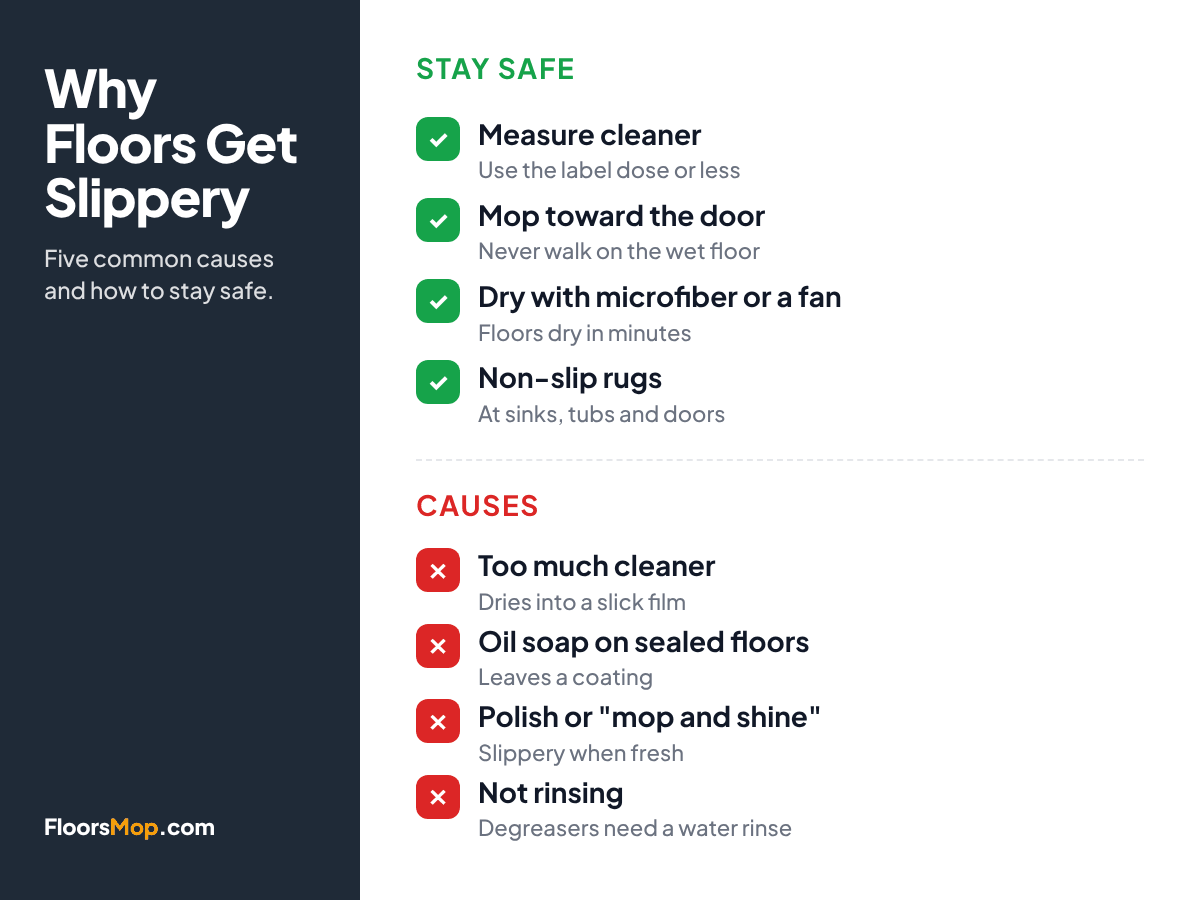
- Too much cleaner. Soap is slick. Excess dries into a slippery film.
- Oil soap or oily cleaners. These leave a coating on sealed floors that cannot absorb them.
- Polish or “mop and shine” products. Fresh coats are slippery, especially on tile and vinyl. See how to remove Mop & Glo.
- Not rinsing after a deep clean. Degreasers and strong cleaners need a water rinse.
- Too much water. Puddles take longer to dry and hide residue.
How to Remove a Slippery Film
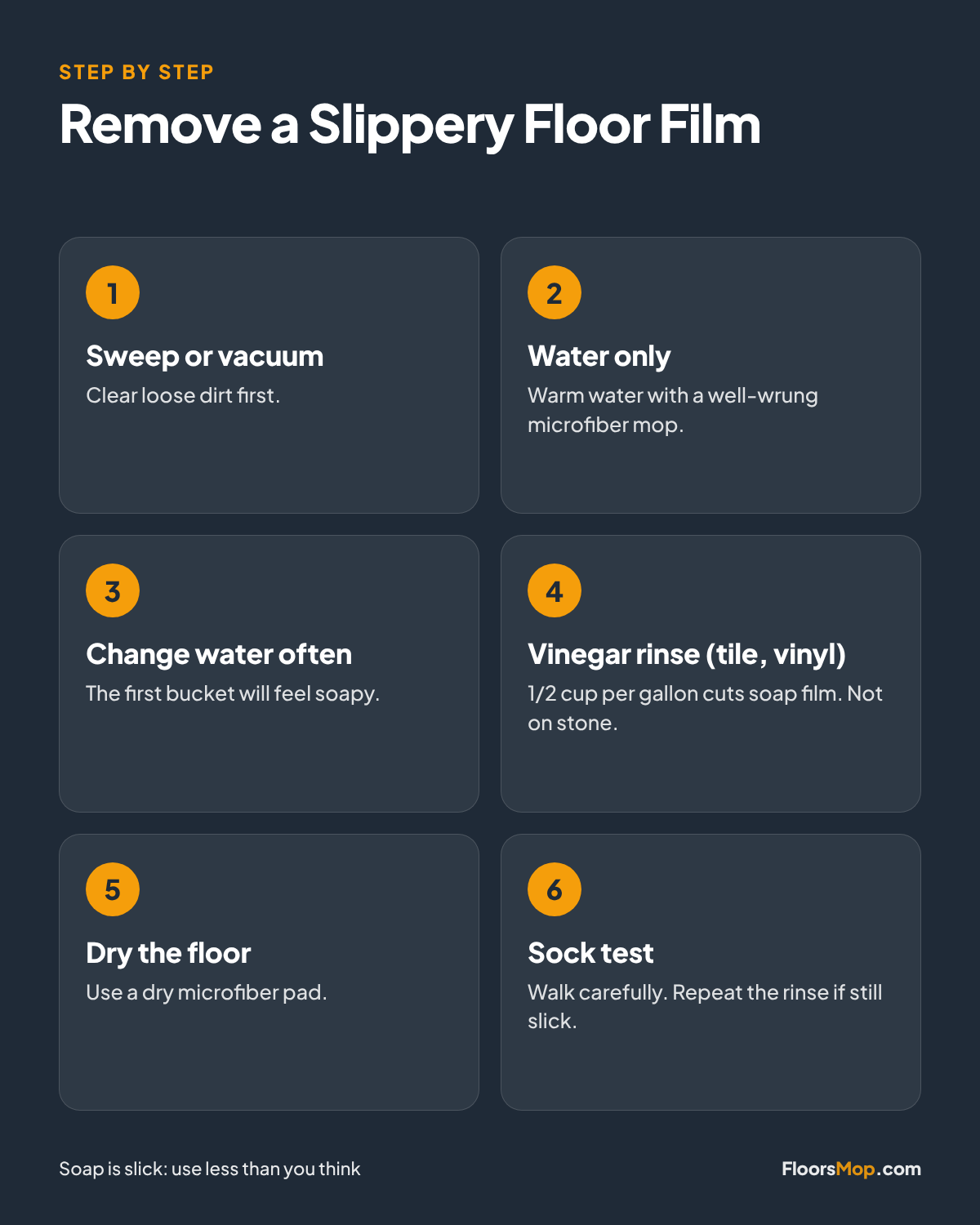
- Sweep or vacuum.
- Mop with clean warm water only, using a well-wrung microfiber mop.
- Change the water often; the first bucket will feel soapy.
- On tile and vinyl, a rinse with 1/2 cup vinegar per gallon cuts soap film. Do not use vinegar on stone.
- Dry the floor with a dry microfiber pad.
- Test: walk carefully in socks. Repeat the rinse if it is still slick.
Floors That Need Extra Care
| Floor | Why slippery | Safer approach | |
|---|---|---|---|
| Glazed or polished tile | Smooth surface plus soap film | Little or no soap; dry after mopping | |
| Vinyl and LVP | Polish products, oil soaps | pH-neutral vinyl cleaner only | |
| Hardwood | Oil soaps, polish | Wood cleaner for poly finishes, light mist | |
| Marble | Polished stone | Stone-safe cleaner, dry right away | |
| Bathroom floors | Soap, body products, water | Bath mats, dry after showers; see [[how-to-mop-bathroom-floor | how to mop a bathroom floor]] |
How to Keep Floors Safe
- Measure cleaner; use less than you think.
- Mop at a time when no one needs to walk through.
- Mop toward the door so you leave without stepping on wet floor.
- Dry floors with a microfiber pad or a fan. See how to dry a floor after mopping.
- Use non-slip rugs at sinks, tubs, and entryways.
- Skip shine products on floors where people often slip.
Helpful Products
- Bona Hard-Surface Floor Cleaner, a low-residue choice for tile, vinyl, and laminate.
- Non-slip bath mats for wet areas.
- A microfiber spray mop that uses very little liquid.
FAQs
Why is my tile floor slippery after mopping?
Soap residue or polish on smooth tile. Rinse with plain water and dry.
Can vinegar make floors less slippery?
A diluted vinegar rinse removes soap film on tile and vinyl, which often reduces slipperiness. Never use it on natural stone.
Why is my vinyl floor slippery after mopping?
Usually oil soap, too much cleaner, or a polish. Rinse and switch to a pH-neutral vinyl cleaner.
How long should I wait before walking on a mopped floor?
Until it is completely dry. With a damp microfiber mop and good airflow, that is often 5 to 15 minutes.