
How to Clean Linoleum Floors

Disclosure: FloorsMop is reader-supported. As an Amazon Associate, we earn from qualifying purchases. If you buy through a link on this page, we may earn a small commission at no extra cost to you. Learn more.
Quick answer: To clean linoleum floors, sweep or vacuum, then damp mop with warm water and a pH-neutral cleaner (or a few drops of mild dish soap). Rinse with clean water and dry the floor with a towel or microfiber pad. Avoid ammonia, bleach, harsh alkaline cleaners, steam, and soaking-wet mops.
Linoleum is often confused with vinyl, but they are different. True linoleum is made from linseed oil, cork or wood flour, pine resin, and a jute backing. It is durable and naturally antibacterial, but strong alkaline cleaners can dry it out and turn it yellow or brittle. For basic mopping technique, see how to mop a floor properly.
Is It Linoleum or Vinyl?
| Feature | Linoleum | Vinyl |
|---|---|---|
| Material | Natural (linseed oil, wood flour, jute) | Synthetic (PVC) |
| Color | Pattern runs all the way through | Pattern printed on top |
| Back side | Jute or burlap mesh | Felt or fiberglass |
| Cleaner sensitivity | Avoid high-pH cleaners | Avoid wax and oil soaps |
| Typical age | Older homes, eco builds | Most homes since the 1980s |
If you are not sure, look at a cut edge under a vent cover or at a threshold. If the color goes all the way through, it is linoleum. If it is vinyl, our guide on vinyl floors and steam mops and the LVP cleaning guide in this series are a better fit.
What You’ll Need
- Soft broom, dust mop, or vacuum
- A pH-neutral floor cleaner or mild dish soap
- Microfiber flat mop or a spin mop you can wring well
- A second bucket of clean rinse water
- Towels or a dry microfiber pad
How to Clean Linoleum Floors: 4 Steps
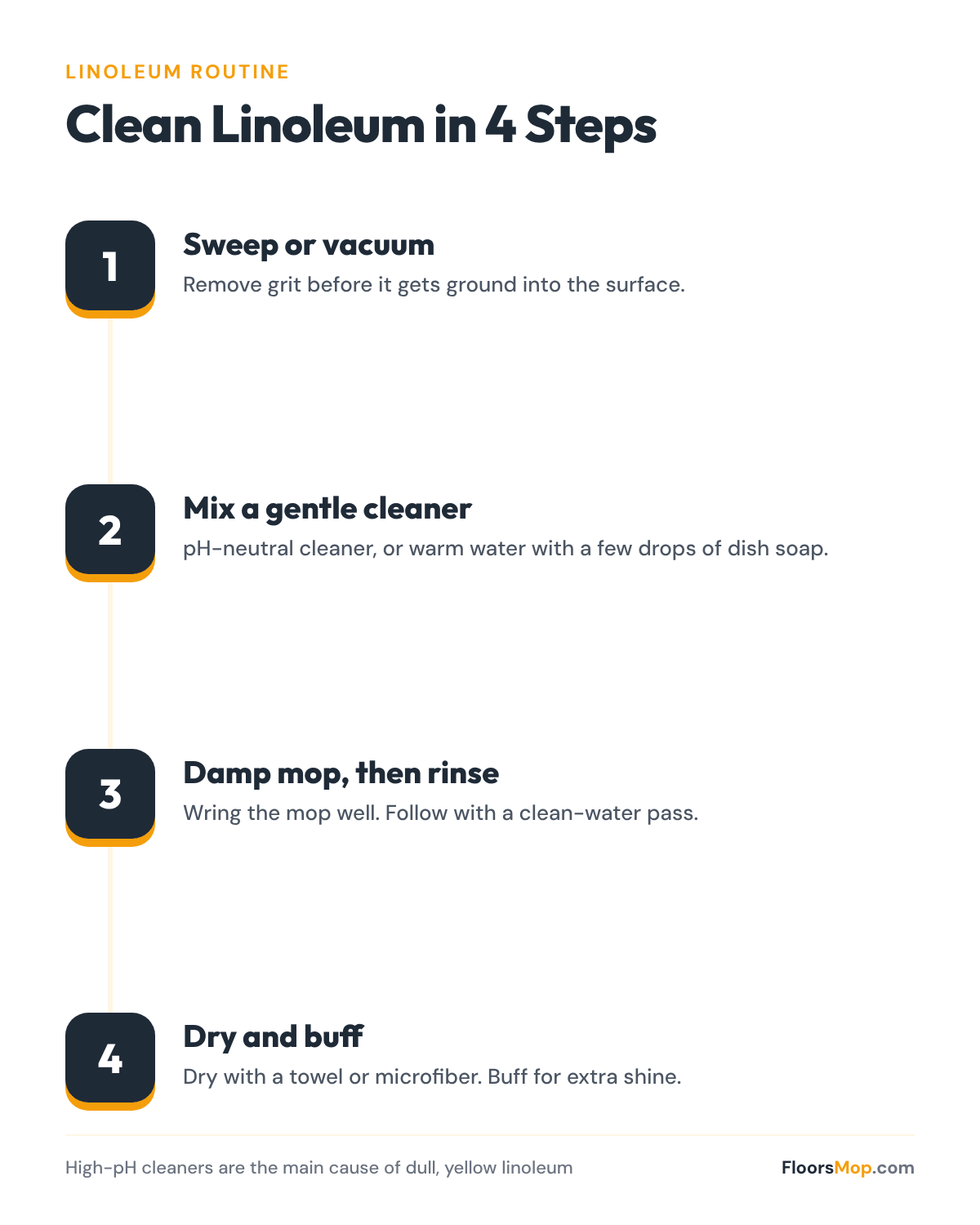
Step 1: Sweep or vacuum
Grit is what wears linoleum down over time. Sweep daily in kitchens and weekly elsewhere. Vacuum along the baseboards, where dirt gathers and works into the seams.
Step 2: Mix a gentle cleaning solution
Use a pH-neutral floor cleaner at the label strength. For a homemade version, add a few drops of mild dish soap to a gallon of warm water. Skip ammonia and strong degreasers. Many people also use a splash of white vinegar, which is mildly acidic and generally fine on linoleum when diluted, but do not mix it with other products.
Step 3: Damp mop, then rinse
Wring the mop until it is damp, not dripping. Mop in sections, then go over the floor again with a clean mop and plain water. This rinse step removes soap that would otherwise dull the surface and attract dirt.
Step 4: Dry and buff
Linoleum does not like water sitting on it, especially at seams and edges. Dry with a towel or buff with a dry microfiber pad. Buffing also brings back a soft natural shine.
What’s Safe on Linoleum (and What to Avoid)
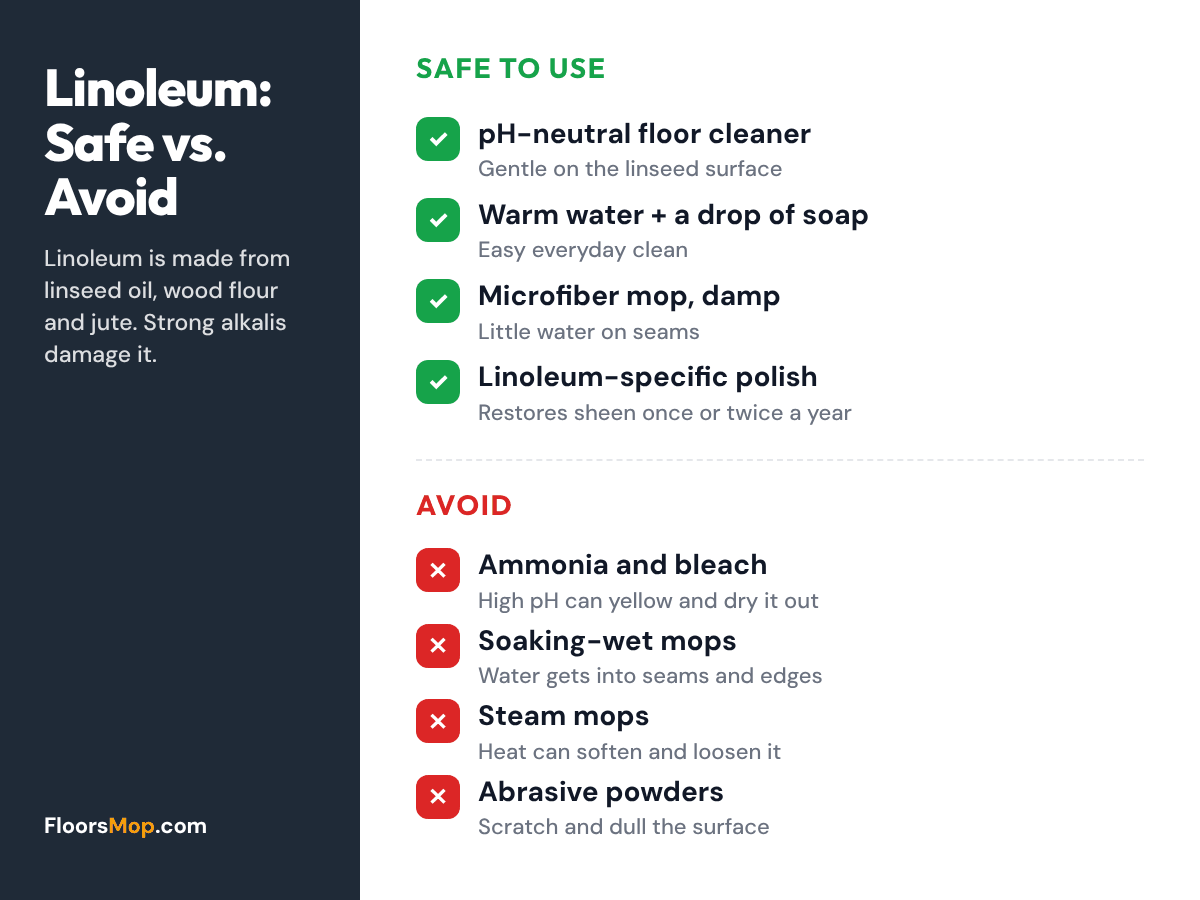
Steam is not a good match for linoleum. Heat can soften the material and weaken the adhesive underneath. See are steam mops safe for linoleum floors for the details, and do steam mops actually clean floors if you are weighing steam for other rooms.
How to Remove Stains and Scuffs from Linoleum
| Problem | What to use |
|---|---|
| Black heel scuffs | Rub with a tennis ball or a dry melamine sponge, very lightly |
| Food or drink stains | Baking soda paste, rub gently, rinse |
| Ink or marker | Rubbing alcohol on a cloth, then rinse with water |
| Grease | A drop of dish soap in warm water on a cloth |
| Yellowed areas | Often “drying room yellowing” from no light; it fades with daylight exposure |
Linoleum has a quirk: areas covered by rugs or furniture can turn yellowish because the linseed oil oxidizes without light. This usually fades after a few weeks of daylight. It is not dirt, so scrubbing will not help.
Should You Polish or Wax Linoleum?
Modern linoleum usually comes with a factory coating and does not need wax. Older linoleum without a coating benefits from a linoleum-specific polish once or twice a year. Apply a thin coat with a clean microfiber pad, let it dry fully, and buff. Avoid general-purpose “mop and shine” products that build up. If you already have buildup, our guide on how to remove Mop & Glo covers stripping it.
Cleaning Old or Vintage Linoleum
Linoleum can last 30 to 40 years, so many older homes still have the original floor. Older linoleum is often dry and porous, which makes it stain more easily.
- Start with the gentlest method: warm water and a soft microfiber pad.
- For built-up grime, use a pH-neutral cleaner and a soft nylon brush, working a small area at a time.
- Rinse well and dry right away. Old seams lift easily if they stay wet.
- Once dry, apply a thin coat of linoleum polish or a manufacturer-approved floor finish to seal the surface again.
If you find old wax layers, a gentle stripper labeled safe for linoleum removes them. Avoid strong ammonia-based strippers, which can damage the linseed binder.
Mistakes to Avoid
- Using high-pH cleaners like ammonia or heavy degreasers.
- Leaving water on the floor. Seams can curl and the jute backing can rot.
- Mopping with a dirty head. It leaves a gray film; see how do you clean a mop head.
- Dragging furniture. Use felt pads and lift heavy pieces.
- Using rubber-backed mats. They can stain linoleum.
How Often to Clean Linoleum
Sweep daily in kitchens, two or three times a week in other rooms. Damp mop weekly in busy areas and every two weeks in quiet rooms. Polish once or twice a year if your linoleum has no factory finish.
Best Products for Linoleum Floors
- Cleaner: a pH-neutral floor cleaner diluted per the label.
- Mop: an O-Cedar EasyWring spin mop for good wringing control.
- Polish: a linoleum floor polish for older uncoated floors.
FAQs
What is the best cleaner for linoleum floors?
A pH-neutral floor cleaner or warm water with a few drops of mild dish soap. Rinse afterward and dry.
Can I use vinegar on linoleum?
Diluted vinegar (about half a cup per gallon) is generally fine on linoleum. Avoid strong concentrations and never mix it with bleach.
Can I use a Swiffer on linoleum floors?
Yes. Swiffer Sweeper dry cloths and WetJet pads are fine on sealed linoleum. Do not let the floor stay wet.
Why is my linoleum floor turning yellow?
Either harsh alkaline cleaners have damaged it, or areas kept out of daylight are showing natural linseed oil yellowing, which usually fades with light.
How do you make old linoleum shine?
Clean thoroughly, rinse, let it dry, then apply a thin coat of linoleum polish and buff.
Related Guides
- Are Steam Mops Safe for Linoleum Floors?
- Best Steam Mops for Linoleum Floors
- Why Is the Floor Sticky After Mopping?
- How to Fix Dull Floors After Mopping