
Why Do My Floors Look Dull After Mopping? How to Bring Back the Shine

Disclosure: FloorsMop is reader-supported. As an Amazon Associate, we earn from qualifying purchases. If you buy through a link on this page, we may earn a small commission at no extra cost to you. Learn more.
Quick answer: Floors usually look dull after mopping because a film of cleaner, minerals, or dirt is covering the finish. A plain-water rinse and a microfiber buff restores the shine in most cases. If the floor stays dull even when clean, the finish is worn and needs a refresher product or a professional recoat.
Is It Residue or a Worn Finish?
- Residue: dullness is patchy, follows mop paths, and looks better for a moment when wet. You can clean it off.
- Worn finish: dullness is in traffic lanes (doorways, in front of the sink or sofa), and nearby protected areas, like under rugs, still shine. Cleaning will not fix it.
6 Reasons Floors Lose Their Shine
- Cleaner residue. Too much product dries into a film.
- Dirty mop water or pads. You spread a thin layer of grime.
- Hard water. Minerals leave a gray haze.
- Polish buildup. Layers of shine products turn dull and uneven. See how to remove Mop & Glo.
- Grit scratches. Fine scratches from sand and dust scatter light. See scratches after mopping.
- The wrong cleaner. Oil soaps and harsh all-purpose cleaners can dull many finishes.
How to Restore Shine, Step by Step
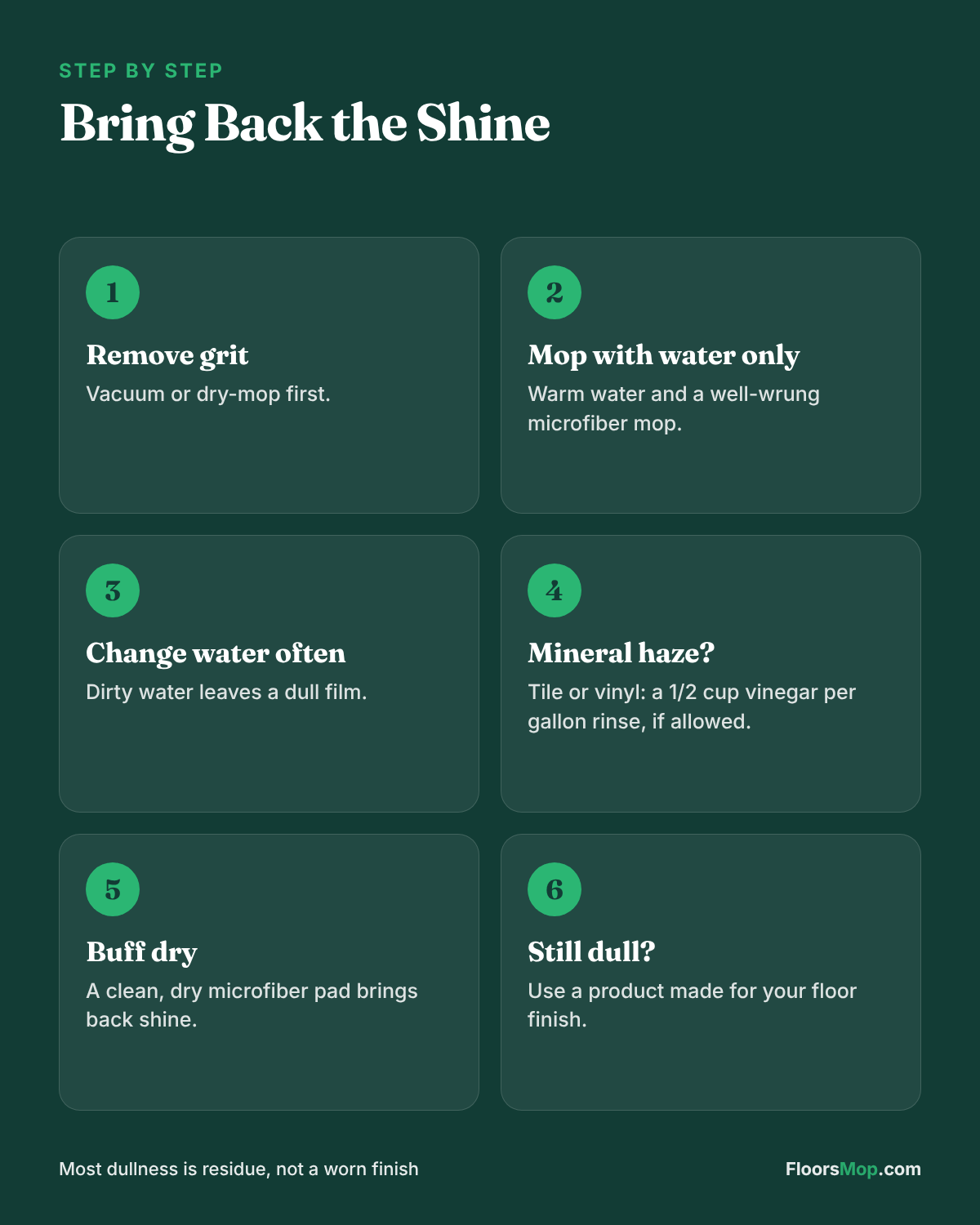
- Vacuum or dry-mop to remove grit.
- Mop with clean warm water only, using a well-wrung microfiber mop.
- Change water often.
- For mineral haze on tile or vinyl, do a second rinse with 1/2 cup vinegar per gallon, if allowed.
- Buff dry with a clean, dry microfiber pad.
- Still dull? Use a product made for your floor’s finish (below), following the label.
Restoring Shine by Floor Type
| Floor | Restore shine with | Avoid |
|---|---|---|
| Polyurethane hardwood | Wood floor cleaner, then a hardwood polish or refresher made for poly finishes; professional screen and recoat for worn finishes | Wax on poly, oil soap, vinegar, steam |
| Tile | Water rinse and buff; grout cleaning makes the whole floor look brighter | Wax on glazed tile |
| Vinyl and LVP | pH-neutral cleaner; a vinyl polish only if the maker recommends it | Wax on no-wax vinyl, abrasive pads |
| Laminate | Damp microfiber and laminate cleaner, buff dry | Polish and wax (laminate cannot absorb them) |
| Marble | Stone-safe cleaner; professional polishing for etching | Acids, vinegar |
Keep the Shine Longer
- Use doormats and vacuum often so grit does not scratch the finish.
- Measure cleaner, and rinse occasionally with water only.
- Put felt pads under furniture legs.
- Use a microfiber mop instead of a soaked string mop on wood and laminate.
Helpful Products
- Bona Hardwood Floor Polish for polyurethane wood floors (not for waxed or oiled wood).
- Bona Hard-Surface Floor Cleaner for tile, vinyl, and laminate.
- A microfiber dust mop for daily grit removal. See how to use a dust mop.
FAQs
Why does my hardwood look dull after mopping?
Usually residue from too much cleaner or the wrong product. Rinse lightly, buff dry, and switch to a wood cleaner for polyurethane. A worn finish needs a recoat.
Can vinegar make floors shiny?
On tile and vinyl, a diluted vinegar rinse removes mineral haze and can bring back shine. Never use it on stone, and avoid it on wood.
Why is my laminate floor dull?
Laminate dulls from residue and polish products. Clean with a barely damp mop and laminate cleaner, then buff dry.
How do professionals make floors shiny?
They deep-clean, then refresh the finish: screen and recoat for wood, polish or hone for stone, and strip and refinish for some vinyl.