
How to Clean Epoxy Floors

Disclosure: FloorsMop is reader-supported. As an Amazon Associate, we earn from qualifying purchases. If you buy through a link on this page, we may earn a small commission at no extra cost to you. Learn more.
Quick answer: To clean epoxy floors, dust mop or sweep first, then mop with hot water mixed with a small amount of clear ammonia (about 2 to 3 ounces per gallon) or a pH-neutral cleaner. Use a hard foam or microfiber mop and let the floor air dry. Avoid soap-based cleaners, vinegar, citrus cleaners, and wire brushes, which dull or scratch the coating.
Epoxy coatings are popular in garages, basements, and workshops because they are tough and easy to keep clean. The coating is the part you need to protect. Once it is scratched or hazy, dirt sticks to it faster. For general mopping basics, see how to mop a floor properly.
Why Epoxy Needs Different Care
Epoxy is a resin coating, not a stone or tile. It does not absorb liquids, so most stains sit on top and wipe away. The two real problems are grit, which leaves fine scratches, and residue, which turns a glossy floor cloudy and slippery. Most “my epoxy looks dull” complaints come from soap or cleaner film, not damage.
| Problem | Usual cause |
|---|---|
| Cloudy or hazy film | Soap-based cleaner or too much product |
| Fine swirl scratches | Grit dragged under a mop, or wire brushes |
| Slippery when dry | Soap residue |
| Yellowing | UV exposure on some older epoxy formulas, not cleaning |
What You’ll Need
- A wide microfiber or foam dust mop for daily sweeping
- A hard foam mop or a flat microfiber mop
- Clear household ammonia (no scent, no suds), or a pH-neutral floor cleaner
- A bucket of hot water
- A soft deck brush for textured anti-slip coatings
- A floor squeegee for garage floors with drains
How to Clean Epoxy Floors: Step by Step
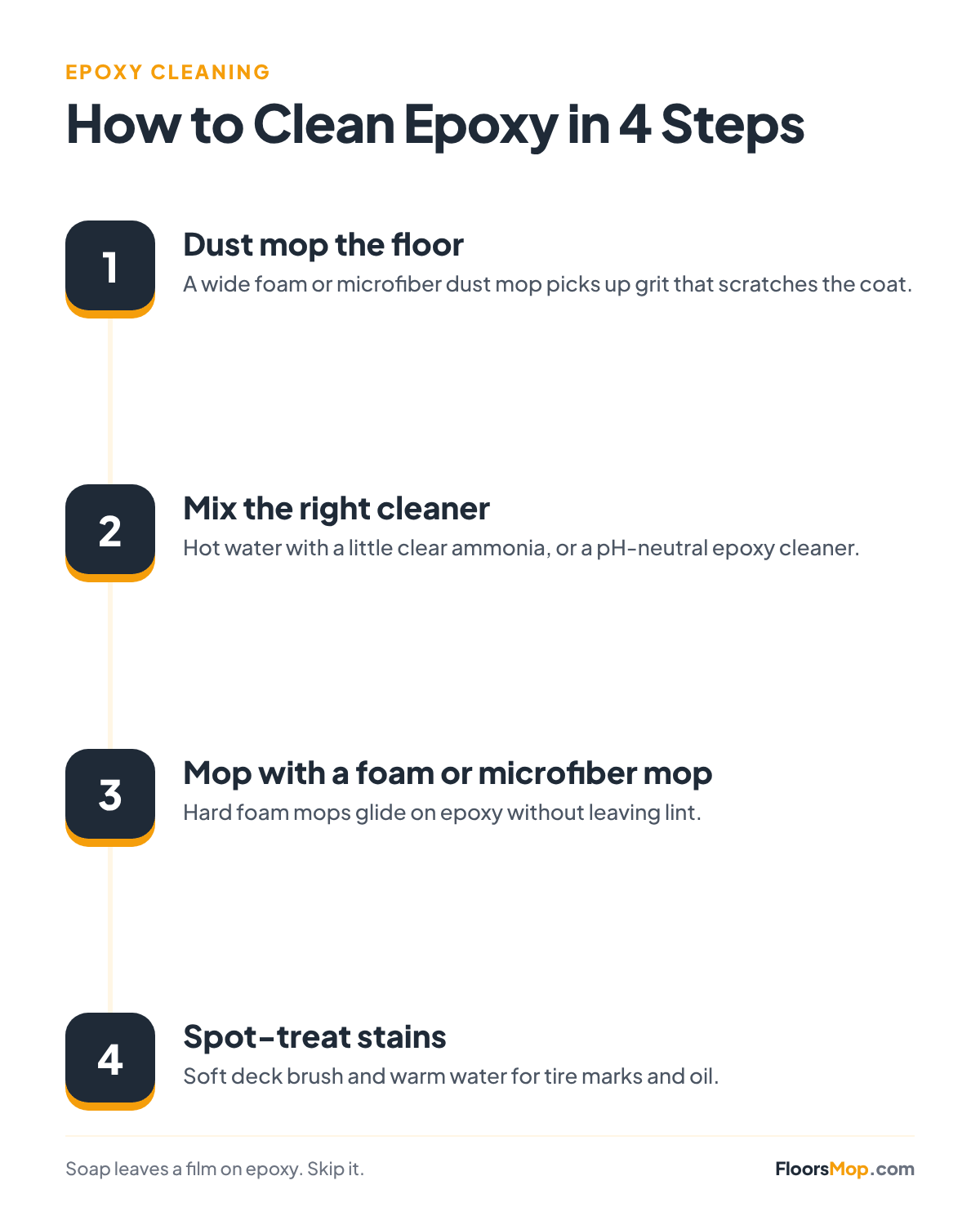
Step 1: Dust mop or sweep thoroughly
In a garage, sand and road grit are constant. Use a wide dust mop rather than a stiff push broom, which can scratch glossy coatings. A shop vac with a soft brush attachment also works well around the edges.
Step 2: Mix your cleaning solution
Many epoxy installers recommend 2 to 3 ounces of clear ammonia per gallon of hot water for routine cleaning. It cuts grime without leaving a film. If you prefer to avoid ammonia, use a pH-neutral cleaner at the label rate. Do not add dish soap. Always work with the garage door open when using ammonia, and never mix it with bleach.
Step 3: Mop the floor
A hard foam mop is the classic tool for epoxy because it glides on the smooth surface and does not leave lint. A flat microfiber mop is a good second choice. String mops tend to leave streaks. Mop in sections and let the floor air dry. For a big garage, a squeegee helps move water toward the drain.
Step 4: Spot-treat stains
Most marks lift with hot water and a soft brush. See the table below for tougher stains.
How to Remove Common Epoxy Floor Stains
| Stain | How to remove |
|---|---|
| Hot tire marks | Soft deck brush with a degreaser or concrete-safe cleaner, scrub gently, rinse |
| Motor oil or grease | Blot, then clean with warm water and a degreaser; rinse well |
| Rust | Soft brush and a little Bar Keepers Friend-type cleaner, rinse right away |
| Road salt film | Hot water and a squeegee; repeat in winter |
| Paint drips | Let dry, then lift with a plastic scraper |
| Hard water spots | Diluted ammonia solution; buff dry |
Clean spills like oil, antifreeze, and brake fluid as soon as you see them. Epoxy resists stains, but chemicals left for days can etch the surface.
What’s Safe on Epoxy (and What to Avoid)
Can you steam clean epoxy? Fully cured epoxy can handle light steam, and some owners use it for greasy shop floors. Keep the steam head moving and avoid it on new floors in the first month. Our article do steam mops actually clean floors explains what steam does and does not remove, and do steam mops work on concrete floors covers bare concrete.
How to Deep Clean a Dirty Epoxy Garage Floor
If the floor has gone a whole winter without a proper clean, do one deep clean before you switch to the weekly routine.
- Move cars, bikes, and storage bins out. Sweep or blow out loose debris.
- Treat oil spots first with a degreaser and let it sit for the time on the label.
- Mop or scrub the whole floor with hot water and clear ammonia, using a soft deck brush on textured or flake coatings.
- Rinse with clean water and push it out with a squeegee.
- Let the floor dry fully, ideally with the door open, before moving things back.
A deep clean like this usually takes one to two hours for a two-car garage. Once the floor is clean, a quick weekly mop keeps it that way.
Daily, Weekly, and Monthly Routine
| How often | Task |
|---|---|
| Daily or as needed | Dust mop, wipe spills |
| Weekly | Damp mop with ammonia solution or pH-neutral cleaner |
| Monthly | Deep clean high-traffic and parking spots with a soft brush |
| Every few years | Apply a fresh topcoat if the gloss is worn |
Mistakes to Avoid
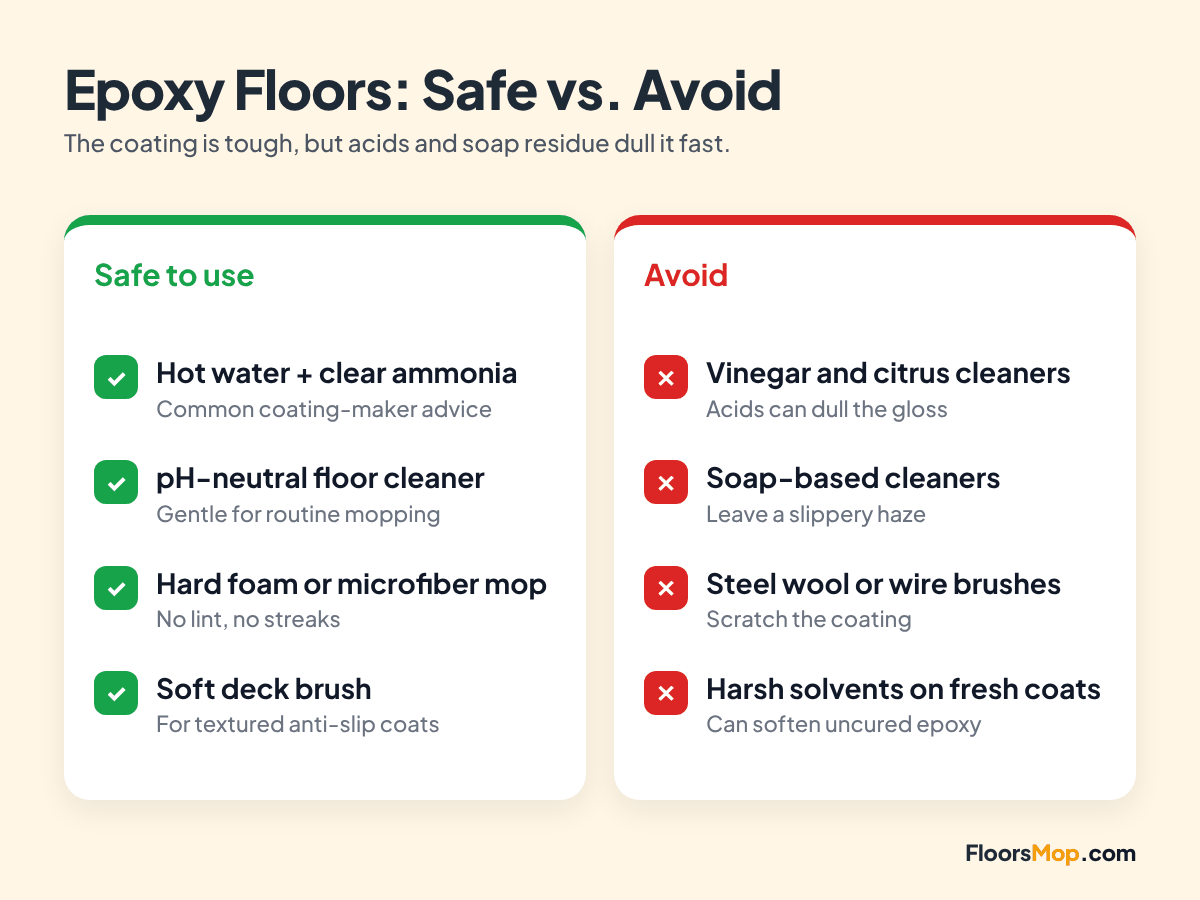
- Using dish soap. It leaves a slippery, cloudy layer that holds dirt.
- Scrubbing with wire brushes or steel wool. These scratch the coat.
- Letting chemicals sit. Brake fluid, battery acid, and paint thinner can damage epoxy over time.
- Using a dirty mop. It spreads grime in streaks; see how do you clean a mop head for cleaning tips.
- Skipping mats. Put a mat under parked tires and at the door to catch salt and grit.
Best Products for Epoxy Floors
- Dust mop: a 24-inch microfiber dust mop covers a two-car garage fast.
- Squeegee: a rubber floor squeegee moves rinse water to the drain.
- Mats: garage parking mats protect the coating from salt, oil, and hot tires.
If your floor is bare or sealed concrete rather than epoxy, see can you mop concrete floors and which dust mop for concrete floors.
FAQs
What is the best cleaner for epoxy floors?
Hot water with a small amount of clear ammonia, or a pH-neutral cleaner. Both clean well without leaving a film.
Can I use vinegar on epoxy floors?
Occasional diluted vinegar will not ruin a cured coat, but repeated acid use can dull the gloss over time. Ammonia or a neutral cleaner is a safer routine choice.
How do I get my epoxy floor shiny again?
Remove residue first with a hot water and ammonia mop, then buff dry. If it is still dull, the topcoat may be worn and need recoating.
Can you use a Swiffer on epoxy floors?
Yes. Swiffer dry cloths are good for dust, and wet pads work for light cleaning in basements or shops.
How long after epoxy can you mop?
Most coatings need 3 to 7 days to cure before light mopping. Check your product’s instructions.
Related Guides
- Can You Mop Concrete Floors?
- Do Steam Mops Work on Concrete Floors?
- Best Steam Mops for Concrete Floors
- Why Are Floors Slippery After Mopping?