
How to Protect Hardwood Floors from Scratches (Simple Habits That Work)

Disclosure: FloorsMop is reader-supported. As an Amazon Associate, we earn from qualifying purchases. If you buy through a link on this page, we may earn a small commission at no extra cost to you. Learn more.
Quick answer: To protect hardwood floors from scratches, stop grit at the door with mats, put felt pads under every chair and table leg, use rugs with a felt or natural rubber pad in busy areas, dust mop often, keep pet nails trimmed, and lift furniture instead of dragging it. Use soft cleaning tools and never let sand sit on the floor.
Hardwood is beautiful because it shows its surface. That is also why every bit of sand and every chair leg leaves a mark. The good news is that most scratches are avoidable with habits that take seconds. Good cleaning is part of it too, so see our guide on how often to mop hardwood floors for the routine side.
Where Scratches Actually Come From
| Cause | What it looks like | Where it happens |
|---|---|---|
| — | — | — |
| Sand and grit | Fine, dull haze of tiny scratches | Entryways, kitchen, paths to the backyard |
| Furniture legs | Straight lines or arcs | Dining chairs, desk chairs, sofas being moved |
| Pet nails | Short, random scuffs | Hallways, near doors, where dogs run and turn |
| Shoes | Scuffs and small dents | High heels, cleats, work boots with grit in the tread |
| Wrong cleaning tools | Swirls, dull patches | Stiff brooms, vacuum beater bars, abrasive pads |
| Dropped or dragged items | Gouges and dents | Kitchens, kids’ play areas, moving day |
Most of the “my floor looks worn” complaints come from the first row: grit ground in by daily foot traffic.
How to Protect Hardwood Floors: 10 Habits
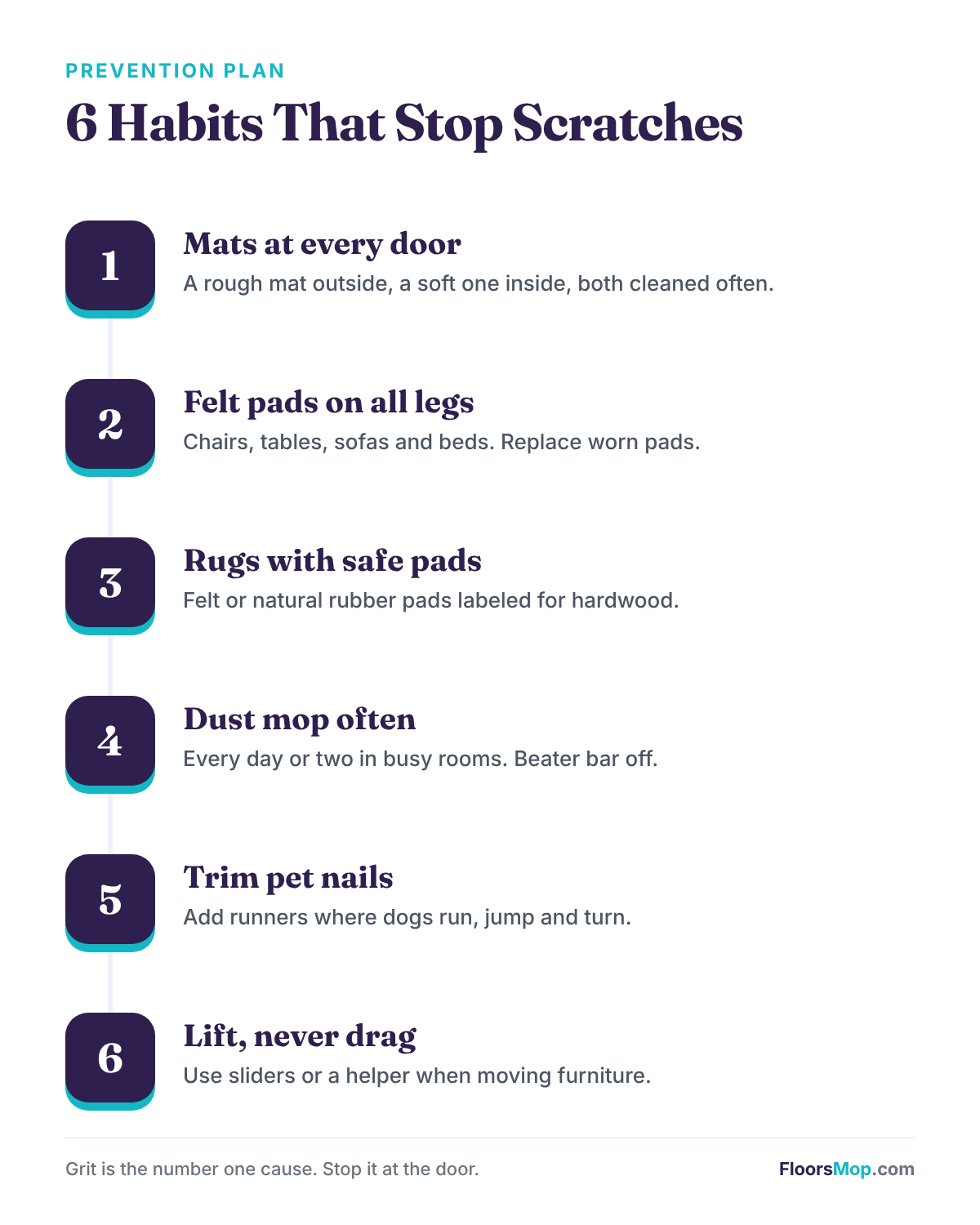
1. Put mats at every entrance
Use a rough mat outside and a soft, absorbent one inside each door. This catches most of the grit before it reaches the wood. Shake or vacuum mats often, or they become grit dispensers.
2. Add felt pads to every furniture leg
Chairs, tables, stools, sofas, plant stands and bed frames all need them. Check pads every few months. Once a pad gets packed with grit or wears thin, it scratches like sandpaper. Replace it.
3. Use rugs in busy spots, with the right pad
Runners in hallways and rugs under dining tables take the daily wear. Pair them with a felt or natural rubber rug pad. Some cheap rubber or vinyl-backed pads can discolor or stick to certain finishes, so check the pad’s label for “safe for hardwood.”
4. Dust mop or vacuum often
Grit does its damage when it is walked on. A microfiber dust mop pass every day or two in busy rooms keeps it from building up. When you vacuum, use the hard-floor setting with the beater bar off. Our guide on how to use a dust mop shows the technique.
5. Keep pet nails trimmed
Long nails click and scratch. Regular trims and a rug where your dog launches off the couch or turns a corner make a real difference.
6. Lift furniture, never drag it
Use furniture sliders made for hard floors, or lift with a helper. When moving a heavy piece, lay down plywood or a moving blanket.
7. Use soft wheels on rolling chairs
Office chairs with hard plastic casters wear paths into wood. Swap to soft rubber or polyurethane casters, or use a clear chair mat made for hard floors.
8. Make it a shoes-off home, or at least a no-cleats home
Shoes carry grit and some soles mark the finish. A shoe rack by the door helps. High heels with worn tips can dent softer woods.
9. Clean with soft tools and the right cleaner
Use microfiber mops and a pH-neutral wood floor cleaner. Avoid steel wool, stiff brushes and abrasive powders. A soaking wet mop does not scratch, but water damage can raise and roughen the grain. If you have engineered wood, see can you mop engineered hardwood floors.
10. Keep the finish healthy
The finish takes the scratches so the wood does not. When a floor looks dull and lightly scuffed all over, a screen-and-recoat by a flooring pro can add a fresh protective layer before scratches reach bare wood.
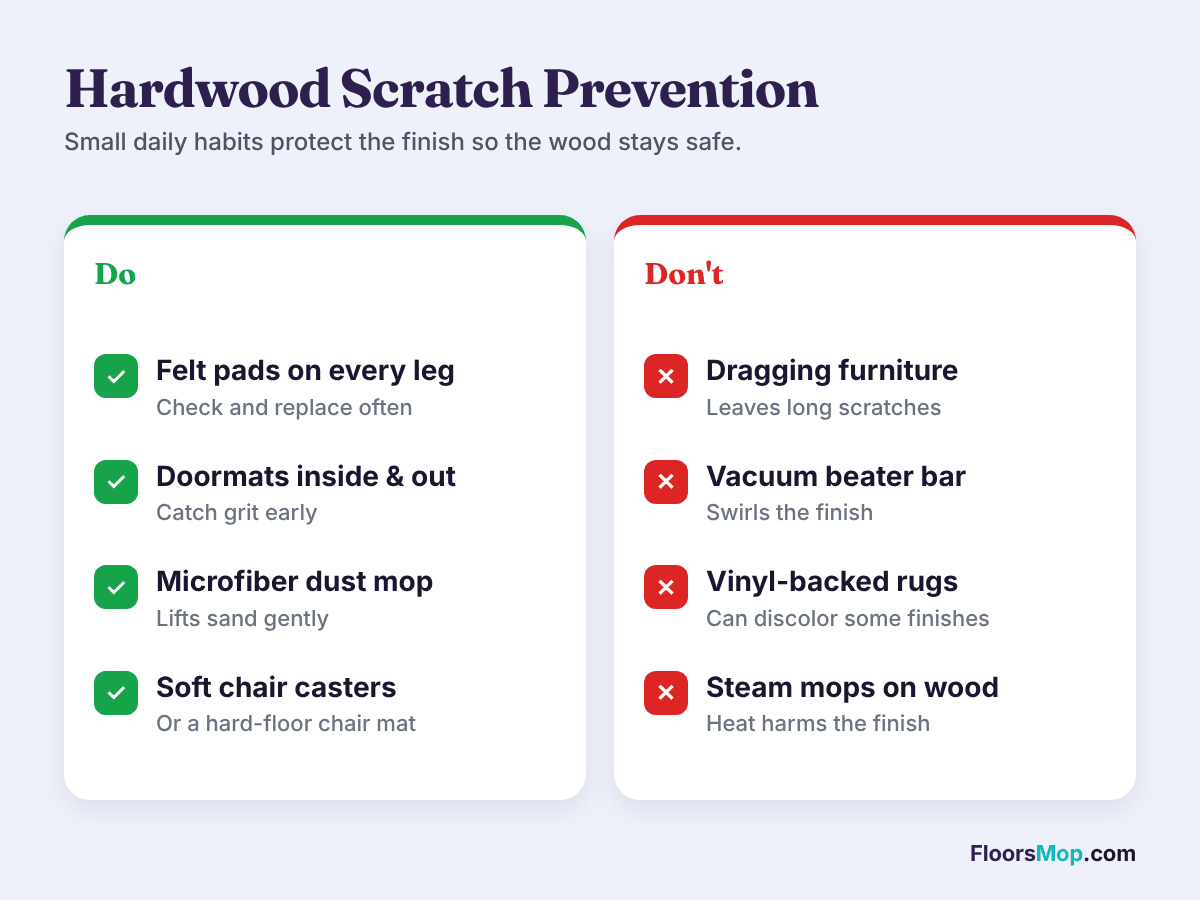
Do’s and Don’ts at a Glance
| Do | Don’t |
|---|---|
| — | — |
| Felt pads under all legs | Drag chairs or tables |
| Doormats inside and out | Let sand sit near doors |
| Microfiber dust mop | Stiff-bristle broom on a gritty floor |
| Hard-floor vacuum setting | Beater bar on bare wood |
| Hardwood-safe rug pads | Cheap vinyl-backed rugs |
| Trim pet nails | Let dogs race on bare floors |
| Soft chair casters or a mat | Hard plastic casters |
How to Fix Light Scratches
Not every mark needs a refinish. Match the fix to the depth:
| Scratch depth | How to tell | Fix |
|---|---|---|
| — | — | — |
| Finish only | Looks white or gray, no color change in the wood | A hardwood floor polish or refresher made for your finish |
| Light into the wood | You see a lighter wood color | Wood stain marker or touch-up pen in a matching shade |
| Deeper groove | Your fingernail catches | Wax filler stick, then buff; deep gouges need a pro |
| Widespread dullness | Whole traffic lanes look gray | Professional screen-and-recoat or refinish |
Always test touch-up products in a hidden area. For scratches that showed up after cleaning, our scratches after mopping guide covers the cleaning-related causes.
Scratch-Prevention Mistakes
- Thin stick-on pads that fall off. Cheap pads slide off and leave the bare leg on the floor. Use good-quality felt pads and check them.
- Forgetting the furniture you never move. Sofas and beds shift when people sit down. They need pads too.
- Putting rugs down on a brand-new finish too soon. Many finishes need time to cure. Ask your installer when it is safe.
- Using a steam mop on hardwood. Heat and moisture can harm the finish and the wood. See are steam mops safe for hardwood floors.
- Mopping over grit. Always dry clean first. Our proper mopping guide explains the order.
Products That Help
- Felt pads: X-Protector felt furniture pads. A large mixed pack covers chairs, tables and sofas in one go.
- Rug pad: Gorilla Grip felt rug pad. Look for a version labeled safe for hardwood floors.
- Dust mop: Bona microfiber floor mop for quick daily passes that pick up grit without scratching.
- Touch-ups: Minwax wood finish stain markers for small light scratches.
Shopping for a mop? See the best mop for wooden floors.
FAQs
Do rugs protect hardwood floors?
Yes, in high-traffic areas. Use a rug pad labeled safe for hardwood, and lift rugs now and then so the floor under them ages evenly with the rest of the room.
How often should I replace felt furniture pads?
Check them every few months and replace them when they look thin, hard or packed with grit. Chairs that move a lot may need new pads more often.
Do dogs ruin hardwood floors?
They can scuff the finish, especially with long nails. Trimmed nails, runners in busy paths and a tougher finish keep damage low.
Can I use a robot vacuum on hardwood?
Yes. Most are designed for hard floors. Keep the brushes clean so trapped grit does not drag across the wood.
What finish resists scratches best?
Harder, factory-applied finishes and matte or low-sheen finishes tend to hide scratches better than high gloss. Ask your flooring maker about options for your floor.
Related Guides
- How Often Should You Mop Hardwood Floors?
- Can You Mop Engineered Hardwood Floors?
- Scratches After Mopping Guide
- Best Mop for Wooden Floors
- How to Use a Dust Mop