
Is Vinegar Safe on Marble and Natural Stone? (Short Answer: No)

Disclosure: FloorsMop is reader-supported. As an Amazon Associate, we earn from qualifying purchases. If you buy through a link on this page, we may earn a small commission at no extra cost to you. Learn more.
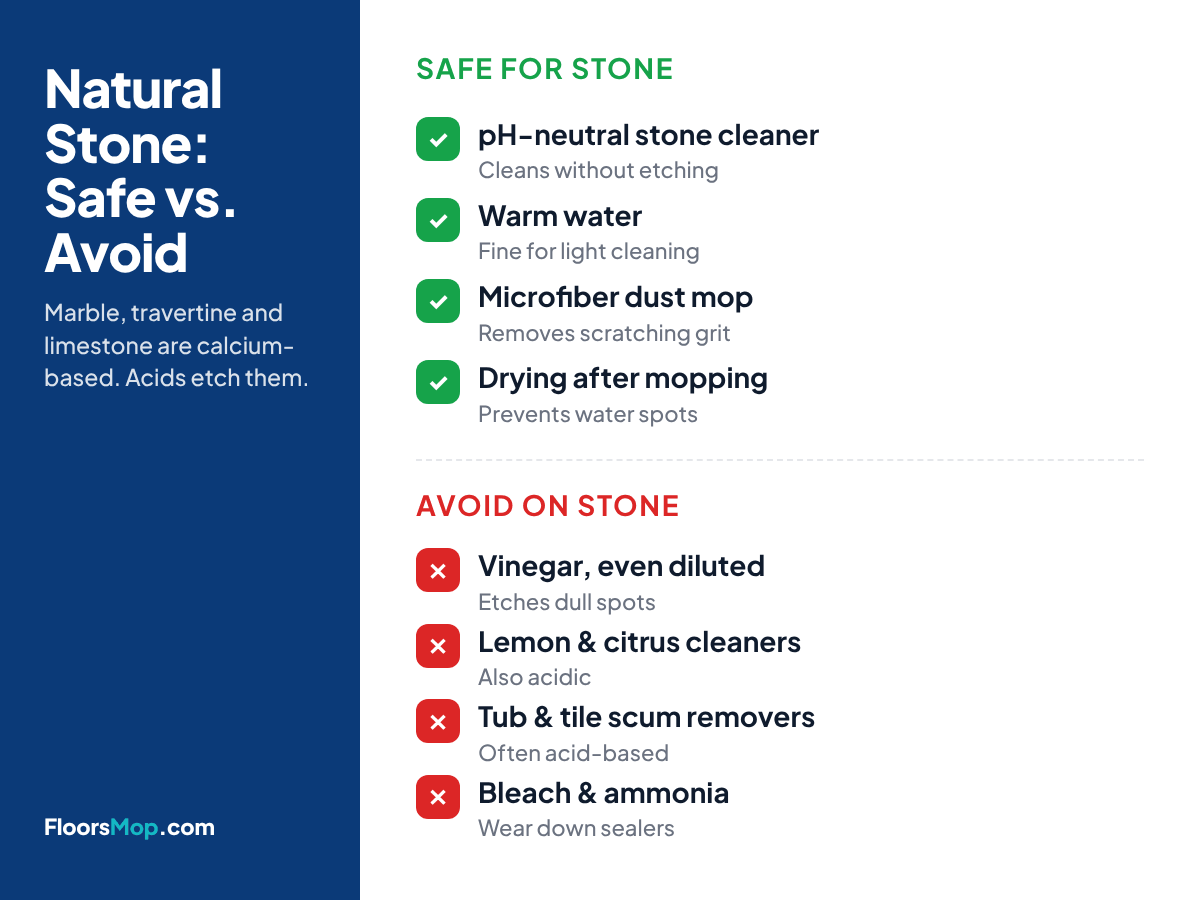
Quick answer: No. Vinegar is acidic, and it reacts with calcium-based stone like marble, travertine, limestone and onyx, leaving dull, rough spots called etch marks. Even diluted vinegar can do it. Granite and slate resist acid better, but vinegar still wears down the sealer. Clean natural stone with a pH-neutral stone cleaner instead.
Vinegar is a favorite DIY cleaner for tile and vinyl, which is why so many people assume it is fine everywhere. Stone is the big exception. Our vinegar mopping guide covers the floors where it works. This page covers the floors where it does not, and what to do if the damage is already done.
Why Vinegar Damages Marble
Marble, travertine and limestone are made mostly of calcium carbonate. Acids react with calcium carbonate and dissolve a thin layer of the surface. The result is not a stain sitting on top. It is a spot where the polished surface has been eaten away, so it looks dull, cloudy or lighter than the rest of the floor.
White vinegar is acetic acid, usually around pH 2 to 3. Diluting it slows the reaction, but it does not stop it. Repeated mopping with “just a little” vinegar can dull a whole polished floor over time.
A sealer does not fully protect you either. Most stone sealers are designed to slow down stains from soaking in. They do not make the stone acid-proof.
Which Stones Are at Risk?
| Stone | Vinegar safe? | What happens |
|---|---|---|
| — | — | — |
| Marble | ❌ No | Etches quickly; polished marble shows dull spots |
| Travertine | ❌ No | Etches; can also open up pits and holes |
| Limestone | ❌ No | Etches and can darken or roughen |
| Onyx | ❌ No | Very soft and acid-sensitive |
| Granite | ⚠️ Not recommended | Resists acid better, but vinegar weakens the sealer |
| Slate | ⚠️ Not recommended | Varies; some slates contain calcite |
| Quartzite | ⚠️ Not recommended | Usually acid-resistant, but some “quartzites” are mislabeled marble |
| Porcelain “marble-look” tile | ✅ Usually fine | It is ceramic, not stone; check grout and the maker’s guide |
If your floor came with the house and you do not know what it is, assume it is acid-sensitive. Check with the original installer or a stone care company if you can.
How to Tell If Your Stone Is Etched
- Etch marks look dull, lighter or slightly rough. They often match the shape of a drip, splash or mop stroke. You may feel the texture change with your fingertip.
- Stains look darker or a different color and usually sit in the stone without a texture change.
- Water spots wipe off with a damp cloth. Etch marks do not.
How to Clean Marble and Natural Stone Safely
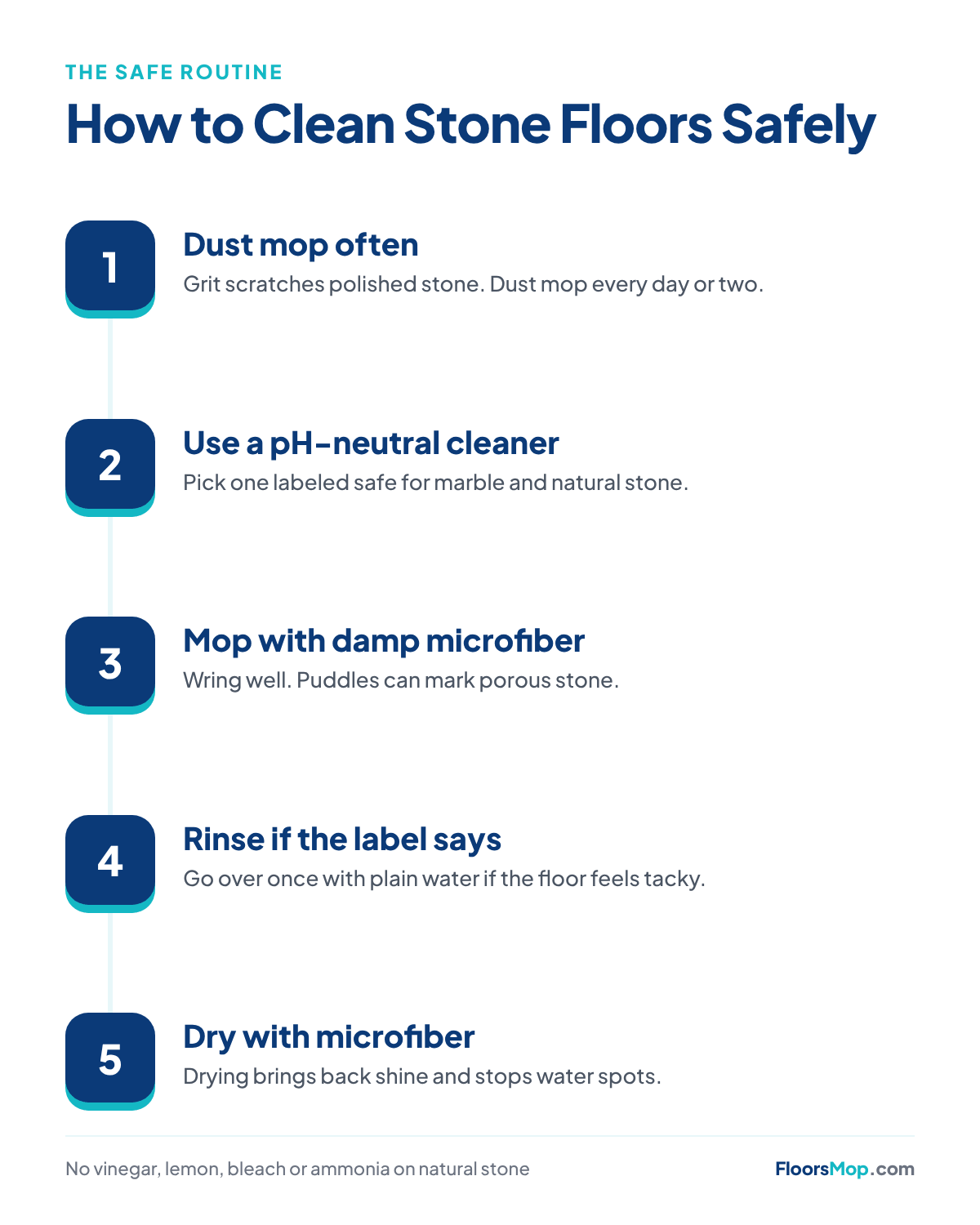
Step 1: Dust mop often
Grit is the other big enemy of polished stone. A microfiber dust mop every day or two in busy rooms keeps sand from scratching the surface.
Step 2: Use a pH-neutral stone cleaner
Pick a product labeled safe for marble or natural stone, and dilute it as the label says. Warm water alone is fine for light cleaning.
Step 3: Mop with a damp microfiber pad
Wring the mop well. Puddles can leave water marks and soak into porous stone like travertine.
Step 4: Rinse if the label calls for it
Some stone cleaners are no-rinse. If yours is not, or the floor feels tacky, go over it once with plain water.
Step 5: Dry with a clean microfiber pad
Drying gives polished stone its shine and prevents water spots, especially with hard water.
For routines tailored to specific stones, see how to mop travertine floors and how to mop slate floors. Our step-by-step mopping basics apply too.
What to Do If Vinegar Already Etched Your Floor
| Damage | What you see | What to do |
|---|---|---|
| — | — | — |
| Light etch | Dull spot, smooth to the touch | A marble polishing powder or etch remover made for polished marble |
| Moderate etch | Dull and slightly rough | Repeat polishing, or call a stone care pro |
| Deep or widespread etch | Rough patches, whole-floor dullness | Professional honing and polishing |
| Sealer worn off | Stains soak in fast | Clean, let dry, and reseal with a stone sealer |
Polishing powders only work on polished marble and similar stones. On honed (matte) stone, an etch mark may blend in on its own or need a pro. Test any product in a hidden spot first.
What About Disinfecting Stone?
Many people reach for vinegar because they want to kill germs. Vinegar is not a registered disinfectant anyway. For stone, look for a disinfectant labeled safe for natural stone and follow its directions, or use a pH-neutral cleaner for routine cleaning. Our guide on what to mop floors with to disinfect covers the options. Steam can be an option on some sealed stone, but read are steam mops good for marble floors before trying it.
What Not to Use on Stone
- “It’s only a tiny bit of vinegar.” Diluted acid still etches; it just takes longer.
- Lemon, citrus or “natural” acidic cleaners. Same problem as vinegar.
- Bathroom tub and tile cleaners on stone. Many are acidic to dissolve soap scum.
- Bleach and ammonia. They can wear down sealers and dull the finish. Never mix bleach with vinegar or ammonia.
- Abrasive powders and scrub pads. They scratch polished stone.
- Leaving spills. Wine, juice, soda and tomato sauce are acidic. Wipe them up fast.
Stone-Safe Products to Consider
- Cleaner: Black Diamond Stoneworks Marble & Tile Floor Cleaner. Marketed as pH-neutral and safe for natural stone.
- Multi-surface option: Bona Hard-Surface Floor Cleaner. pH-neutral and labeled for stone and tile.
- Light etch repair: marble polishing powder. For small dull spots on polished marble; follow the directions closely.
FAQs
Can I use diluted vinegar on marble once in a while?
It is not a good idea. Even weak vinegar etches marble, and the damage adds up. Use a pH-neutral stone cleaner instead.
Is vinegar safe on granite floors?
Granite is more acid-resistant than marble, but vinegar can break down the sealer over time and leave the stone more open to stains. A neutral stone cleaner is safer.
What does vinegar damage on marble look like?
Dull, cloudy or lighter spots that do not wipe away. They often follow the shape of a drip or mop stroke.
Can etched marble be fixed?
Light etching on polished marble can often be polished out with a marble polishing powder. Deeper or larger areas need professional honing and polishing.
Is baking soda safe on marble?
It is not acidic, but it is mildly abrasive and alkaline. It can scratch polished marble and leave residue. Stick to a pH-neutral stone cleaner.
Can I use vinegar on marble-look porcelain tile?
Usually yes, because porcelain is not calcium-based stone. Check the tile maker’s guide, and keep vinegar away from any real stone accents or thresholds.
Related Guides
- How to Mop Floors with Vinegar
- How to Mop Travertine Floors
- Are Steam Mops Good for Marble Floors?
- What to Mop Floors With to Disinfect
- Best Steam Mops for Stone Floors