
Outdoor Concrete Cleaning Checklist for Spotless Results

An outdoor concrete cleaning checklist helps you match the cleaning method to the surface type and stain so you can clean safely and efficiently. It also reduces the risk of etching, residue, and sealer damage while improving long-term results.
If you want cleaner patios, driveways, and walkways without damaging the surface, an outdoor concrete cleaning checklist is the safest place to start. The right process helps you remove stains faster, protect sealers and finishes, and get results that last longer between cleanings.
- Inspect first: Check for cracks, sealer wear, and drainage issues before cleaning.
- Match the method: Use the mildest cleaner and safest tool for the stain and finish.
- Rinse well: Remove all residue so the slab does not dry with streaks or film.
- Use pressure carefully: Great for durable concrete, risky for decorative or worn surfaces.
- Know when to call help: Deep damage, recurring stains, and large areas may need a pro.
What an Outdoor Concrete Cleaning Checklist Should Cover in 2025
An effective outdoor concrete cleaning checklist should do more than tell you to “wash the slab.” It should help you match the cleaning method to the concrete type, the stain, and the level of wear so you can clean efficiently without causing etching, streaking, or sealer damage.
Why concrete patios, driveways, and walkways need a different cleaning approach
Outdoor concrete faces a different set of problems than indoor floors. It collects grit, pollen, mud, oil, mildew, and runoff from landscaping, and it also has to handle sun, rain, freeze-thaw cycles, and vehicle traffic.
That means the safest cleaning approach depends on the surface’s exposure and condition. A driveway apron with tire marks usually needs a different treatment than a shaded patio with algae growth or a walkway with leaf stains.
What readers want from this checklist: faster cleaning, stain removal, and longer-lasting results
Most homeowners want a checklist that saves time and avoids guesswork. They want to know what to remove first, which cleaner fits the stain, and when scrubbing is better than blasting the slab with pressure.
They also want results that last. That usually means cleaning in a way that preserves the finish, rinses residue fully, and makes it easier to maintain the surface later.
Concrete Surface Types and Compatibility Before You Start
Before you clean, identify the surface you are working with. Concrete may look simple, but the finish, sealer, and decorative treatment can change what products and tools are safe to use.
Stamped vs. plain concrete: what changes in your cleaning method
Plain concrete is generally more forgiving, although it can still etch if you use too much pressure or harsh chemicals. Stamped concrete often has texture, color, and sometimes a sealer that can be dulled by aggressive cleaning.
Because stamped surfaces are more decorative, they usually benefit from gentler scrubbing, milder detergents, and careful rinsing. If the pattern has worn edges or thinning sealer, treat it as a more delicate surface.
Sealed, unsealed, painted, and stained concrete: how to avoid damage
Sealed concrete can repel some stains, but the sealer may wear unevenly. If a sealer is flaking or cloudy, strong chemicals or high pressure can make the problem worse.
Painted and stained concrete need extra caution because some cleaners can strip color or leave patchy results. When in doubt, test a small hidden area first and avoid any product that is too acidic or too alkaline for the finish.
Do not assume every concrete surface can handle the same cleaner or pressure setting. Decorative, painted, and sealed slabs can be damaged quickly by the wrong product or nozzle.
When this checklist also works for pavers, aggregate, and broom-finished surfaces
This checklist can also help with pavers, exposed aggregate, and broom-finished concrete, but the details may change. Pavers may shift or have joint sand that can be disturbed by strong spray, while aggregate finishes can trap soil in texture.
Broom-finished concrete is often durable, but its grooves can hold grit and algae. A slower, more deliberate cleaning process usually works best for all of these surfaces.
Pre-Cleaning Inspection: The Outdoor Concrete Checklist Step Most People Skip
A quick inspection before cleaning can prevent expensive mistakes. It also tells you whether the slab needs repair, a milder cleaner, or a professional evaluation before you start washing.
Checking for cracks, flaking sealer, spalling, and joint damage
Look closely for cracks, chipped edges, spalling, and loose joints. Water and cleaning solution can enter damaged areas and make flaking or erosion worse, especially if the concrete already has structural wear.
If you see areas where the surface is crumbling or the sealer is peeling, use a lighter touch and avoid forcing water into the damaged spots.
Identifying oil, rust, mildew, algae, leaf stains, and tire marks
Different stains need different treatment. Oil and grease usually respond better to degreasing cleaners, while rust, fertilizer marks, mildew, and algae often need targeted products designed for those specific issues.
Leaf tannins, mud, and tire marks may look similar at first glance, but they do not always lift with the same method. Identifying the stain early helps you avoid repeated scrubbing with the wrong cleaner.
Testing drainage, slope, and runoff areas before applying water or cleaners
Check where water will flow before you start. If the slab slopes toward a garden bed, garage threshold, or painted surface, runoff can spread residue or stain nearby areas.
Poor drainage can also leave dirty water sitting on the concrete longer than it should. In those cases, work in smaller sections and rinse carefully so the surface dries evenly.
Before wet cleaning, take a minute to follow the runoff path. A small adjustment in where you start can keep dirty water from moving into low spots or against walls.
Step-by-Step Outdoor Concrete Cleaning Checklist for Spotless Results
Once you know the surface and stain type, the cleaning process becomes much easier to manage. This is the practical part of the outdoor concrete cleaning checklist, where prep, product choice, and rinsing all matter.
Move chairs, grills, mats, potted plants, and other items off the slab. This gives you full access and prevents trapped dirt or water marks under heavy objects.
Sweep off loose soil, leaves, and sand first, including edges and corners where debris collects. Dry grit can scratch the surface or turn into muddy residue once water is added. [Source: WebMD]
Use a cleaner that matches the stain and the concrete finish. Mild detergent may be enough for general soil, while targeted cleaners are better for grease, rust, mildew, or tannin stains.
Let the cleaner sit only for the time recommended by the product label, then scrub with a stiff brush if needed. Rinse thoroughly so residue does not dry back onto the slab and leave streaks.
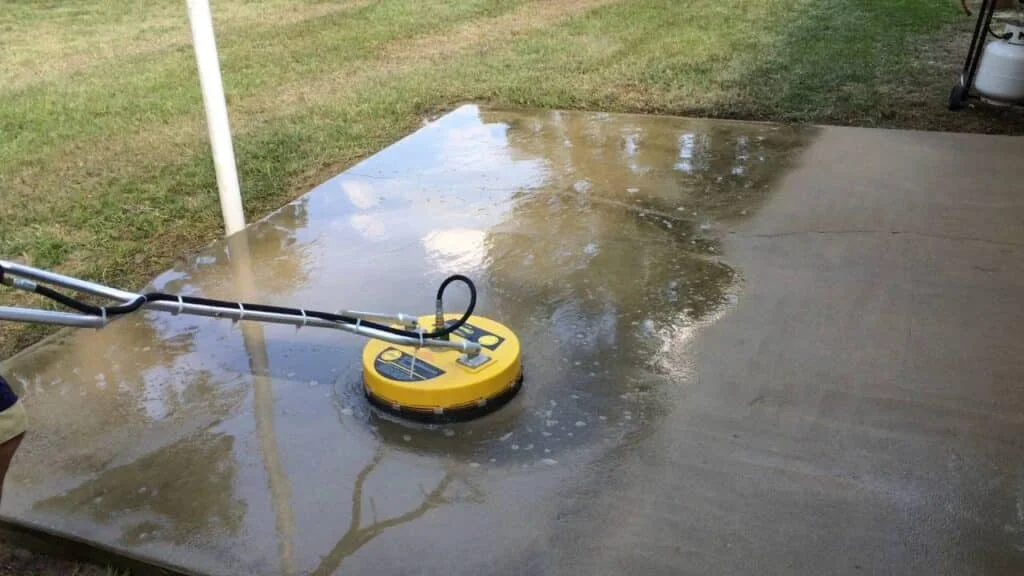
Pressure washing can be efficient for large, durable surfaces with general dirt buildup. Hand scrubbing is often safer for decorative, sealed, or already damaged concrete where too much force could leave marks.
| Method / Product | Best For | Be Careful With |
|---|---|---|
| Mild detergent and brush | General dirt, light soil, routine patio cleaning | May not remove deep grease or rust |
| Targeted stain cleaner | Oil, mildew, rust, tannins, fertilizer marks | Test first on sealed, painted, or stained concrete |
| Pressure washer | Large driveways and durable plain concrete | Can etch soft, worn, or decorative surfaces |
Stain-Specific Cleaning Examples for Patios, Driveways, and Walkways
Outdoor concrete rarely gets dirty in just one way. The stain pattern often depends on where the slab is located, what it is used for, and how much shade, water, or vehicle traffic it gets.
Grease and oil spots on garage aprons and driveways
Oil and grease often soak into porous concrete, especially if they sit for a while. A degreasing cleaner and repeated blotting or scrubbing usually work better than a quick rinse.
On older stains, you may need more than one treatment. If the spot has already penetrated deeply, cleaning may improve it without removing every trace.
Mildew and algae on shaded patio slabs
Shaded patios often develop slippery green or dark growth where moisture lingers. A cleaner made for mildew or algae is usually more effective than plain soap, but the surface still needs a careful rinse.
If growth keeps returning, the issue may be drainage, shade, or trapped moisture rather than cleaning technique alone.
Rust, fertilizer stains, and hard-water marks near garden areas
Rust and fertilizer stains can be stubborn because they often react differently than ordinary dirt. Hard-water marks may also appear near sprinkler overspray, hose bibs, or planter areas.
These stains may require a more specific product, but stronger is not always better. Always check compatibility with the finish before using anything acidic.
Leaf tannins, mud, and food spills on entertaining spaces
Leaf stains often leave brownish discoloration after rain or seasonal debris sits on the slab. Mud and food spills are usually easier to remove if you clean them before they dry into the texture.
For outdoor dining areas, a routine rinse after gatherings can prevent buildup from becoming a deeper stain problem later.
If you clean a patio regularly, lighter maintenance often works better than occasional heavy scrubbing. Frequent gentle cleaning can help preserve sealers and reduce the need for aggressive stain removal later.
Common Outdoor Concrete Cleaning Mistakes That Cause Damage
Many concrete problems come from cleaning too aggressively or using the wrong product for the finish. A careful approach protects both the look of the slab and its long-term durability.
Using too much pressure and etching the surface
High pressure can leave visible wand marks, strip sealer, or roughen the surface. That damage may not be obvious right away, but it can make the slab collect dirt faster afterward.
If you are using a pressure washer, start conservatively and increase only if the surface clearly needs it. Keep the nozzle moving and avoid concentrating force in one spot.
Applying acidic or bleach-heavy products on the wrong finish
Acidic cleaners can help with certain mineral stains, but they can also harm decorative finishes or weaken the look of colored concrete. Bleach-heavy products may lighten some stains while leaving uneven color or residue behind.
Always check whether the slab is sealed, painted, or stained before choosing a product. If the finish is uncertain, test first in a hidden area.
Letting cleaners dry on the slab or fail to rinse completely
Cleaner residue can leave streaks, haze, or a slippery film if it dries on the surface. This is especially common on hot days when product evaporates too quickly.
Work in manageable sections and rinse thoroughly before moving on. That habit matters even more on textured concrete where residue can settle into grooves.
Ignoring sealer condition and making stains harder to remove later
When sealer is worn, stains can soak in more quickly and become harder to lift. Cleaning over failing sealer may improve the appearance temporarily, but the underlying issue will still be there.
If the slab is heavily worn, it may need resealing or repair after cleaning. In some cases, that is the difference between a short-term fix and a longer-lasting result.
Do not keep scrubbing a problem area harder and harder if the stain is not changing. At that point, the issue may be penetration, finish damage, or sealer failure rather than surface dirt. [Source: Family Handyman]
When to Bring in a Flooring or Concrete Professional
DIY cleaning works well for many outdoor concrete jobs, but not all of them. Some surfaces need repair, specialized products, or a more controlled cleaning process than most homeowners can safely do on their own.
Deep staining, uneven discoloration, or recurring algae growth
If stains keep returning or the slab has blotchy discoloration, the cause may be deeper than the surface. Recurring algae growth may also point to drainage, shade, or moisture problems that need a broader solution.
A professional may be able to identify whether the issue is cleanable, repairable, or related to surface wear.
Cracked, flaking, or heavily worn concrete that needs repair before cleaning
When concrete is cracked, spalling, or flaking, cleaning can expose more damage if the surface is already unstable. In those cases, repair usually comes before deep cleaning.
If the slab is lifting, crumbling, or separating at joints, it is safer to ask for an evaluation before using pressure or strong chemicals.
Large commercial-style patios, HOA spaces, or high-traffic outdoor areas
Big spaces take more time, more water management, and more consistency than a small backyard patio. High-traffic areas also tend to have more embedded grime and wear patterns.
For shared or commercial-style spaces, a professional service can be useful when appearance, safety, and turnaround time all matter.
When professional cleaning is safer than DIY for decorative or sealed concrete
Decorative concrete can be expensive to replace or refinish, so the risk of damage matters more. If you are unsure about the sealer type, color treatment, or compatibility of a cleaner, professional help may be the safer choice.
This is especially true when warranties, decorative finishes, or prior coating systems could be affected by the wrong cleaning method.
Cost, Time, and Final Recap for a Cleaner Outdoor Concrete Surface
The best cleaning plan is not always the most aggressive one. It is the one that fits your surface, your stain type, and the amount of effort you want to spend maintaining the slab over time.
DIY supplies vs. professional cleaning: what homeowners typically spend
DIY cleaning usually involves a broom, brush, bucket, hose, and one or more cleaners chosen for the stain type. The exact cost depends on whether you already own the tools and whether you need specialty products for grease, rust, or algae.
Professional cleaning may cost more upfront, but it can be worth it for delicate finishes, large areas, or stains that do not respond well to household methods. A monthly deep cleaning guide can also help you decide when routine upkeep is enough and when a bigger reset makes sense.
DIY is usually the lower-cost option for routine patio and walkway cleaning, but specialty stain removers, pressure-washing attachments, and sealer touch-ups can add up. If the surface is decorative or heavily worn, professional help may save money by preventing avoidable damage.
How often to repeat the checklist for patios, walkways, and driveways
How often you repeat the checklist depends on use, weather, shade, and nearby landscaping. A busy driveway may need more frequent attention than a lightly used side walkway, while shaded patios may need extra checks for algae or mildew.
For maintenance between deeper cleanings, a simple weekly mopping checklist can inspire a lighter routine for covered or semi-outdoor concrete areas, though outdoor slabs still need sweeping and rinsing that matches their exposure.
Final recap: the fastest path to spotless, longer-lasting outdoor concrete
The fastest way to cleaner outdoor concrete is to inspect first, match the cleaner to the stain, and use the gentlest method that still gets the job done. That approach protects the finish while improving the look of patios, driveways, and walkways.
When you treat the slab based on its surface type and condition, the results usually last longer and are easier to maintain. If the concrete is damaged, decorative, or repeatedly stained, bringing in a professional is often the most reliable next step.
Frequently Asked Questions
A good checklist should cover inspection, debris removal, stain identification, cleaner selection, scrubbing, rinsing, and a final check for residue or damage.
Not always. Sealed, painted, stained, stamped, and plain concrete can react differently, so it is smart to test a small hidden area first.
It can be safe on durable plain concrete, but too much pressure can etch or damage decorative and worn surfaces. Start with a gentle setting and keep the nozzle moving.
Use a degreasing cleaner designed for concrete and allow time for it to work before scrubbing and rinsing. Older stains may need repeated treatment.
Recurring mildew or algae usually points to shade, moisture, or drainage issues. Cleaning helps, but improving airflow and runoff can reduce the return of growth.
Call a professional if the concrete is cracked, flaking, heavily stained, decorative, or large enough that DIY cleaning becomes risky or time-consuming.
