
Reusable vs Disposable Mop Heads: Which Is Better?

Quick Answer
Reusable mop heads are usually the better choice for regular floor cleaning because they can be washed, reused, and cost less over time. Disposable mop heads offer convenience for occasional messes, quick touch-ups, and situations where laundering isn’t practical. For most households, washable microfiber spin mop heads provide the best balance of value, cleaning performance, and waste reduction. The EPA’s greener purchasing guidance also encourages consumers to consider reusable products.
Key Differences
- Long-term cost: Reusable heads usually cost less when you mop frequently.
- Convenience: Disposable pads avoid washing and drying after each cleaning session.
- Cleaning ability: Washable microfiber works well for regular dirt, hair, and light spills.
- Environmental impact: Reusable heads generally create less solid waste per cleaning session.
- Hygiene: Both can be hygienic when used correctly and handled after cleaning.
- Best household choice: Reusable microfiber for routine cleaning, with disposable pads for selected tasks.
Choosing between reusable vs disposable mop heads can change how much you spend and how well you clean your floors. I find that the mop head matters just as much as the handle or bucket.
This guide compares cleaning results, spin mop compatibility, upkeep, cost, waste, and floor safety. You’ll also learn when keeping both types makes practical sense.
In This Guide
- What Are Reusable and Disposable Mop Heads?
- Reusable vs Disposable Mop Heads: Full Comparison
- Which Mop Head Cleans Floors Better?
- Are Reusable Mop Heads Better for Spin Mops?
- Which Type Saves More Money?
- Are Reusable Mop Heads More Eco-Friendly?
- How Should You Clean and Replace Mop Heads?
- Which Mop Head Should You Choose?
- Frequently Asked Questions
What Are Reusable and Disposable Mop Heads?
Reusable mop heads are cleaning attachments designed for repeated washing and use. Disposable mop heads or pads are designed to be discarded after limited use, often after one cleaning session.
Reusable Mop Heads Explained
Most reusable spin mop heads use microfiber, a fabric made from extremely fine synthetic fibers. These fibers help collect dust, hair, and everyday floor dirt.
Reusable mop attachments commonly include:
- Round microfiber heads: Common on bucket-style spin mops.
- Flat microfiber pads: Suitable for controlled, low-moisture cleaning.
- Cotton string heads: Often used for larger wet-mopping jobs.
- Washable spray mop pads: Designed for quick maintenance cleaning.
After cleaning, you remove the head, wash it according to its label, and dry it fully. A spare attachment lets you keep cleaning while another dries.
Disposable Mop Heads Explained
Disposable systems generally use single-use dry dusting sheets or premoistened cleaning pads. Some products also offer disposable replacement heads for specialized mops.
Dry sheets collect loose dust and hair. Wet pads contain or absorb cleaning liquid for light floor cleaning.
Not every disposable pad works with every mop frame. Many systems use specific attachment shapes or fastening strips.
In 2026, both approaches remain useful. The right choice depends more on your cleaning routine than on marketing claims.
Reusable vs Disposable Mop Heads: Full Comparison
Reusable heads favor repeated cleaning, while disposable options favor convenience. Neither design automatically guarantees better hygiene or a cleaner floor.
| Feature | Reusable Mop Heads | Disposable Mop Heads |
|---|---|---|
| Typical material | Microfiber or cotton | Nonwoven cleaning sheets or pads |
| Reuse | Multiple wash cycles | Usually single-use |
| Upkeep | Wash and dry | Discard and replace |
| Recurring expense | Laundry plus occasional replacement | New pads for each session |
| Spin mop suitability | Common and widely available | Limited; model-dependent |
| Waste | Less frequent disposal | Used pad discarded regularly |
| Best use | Routine whole-floor cleaning | Quick touch-ups and occasional tasks |
One detail often gets missed: compatibility matters more than material alone. A well-made pad won’t help if it slips off the mop during cleaning.
Before buying replacements, check the attachment system, head diameter, and model number. Similar-looking round spin mop refills aren’t always interchangeable.
Which Mop Head Cleans Floors Better?

For routine wet mopping, reusable microfiber is often the more versatile choice. Disposable pads work well for light dirt, but their performance depends on design and moisture.
Dust, Hair, and Everyday Dirt
Microfiber offers a practical balance of dirt pickup and repeated use. Its fine fibers help collect loose debris without requiring a soaking-wet floor.
Dry disposable sheets are convenient for dust and pet hair. However, heavily loaded sheets need replacing before they spread debris around.
Sticky Kitchen Spills
Kitchen floors often collect dried food, footprints, and greasy residue. A washable wet mop head lets you rinse and repeat several passes.
I prefer a well-wrung microfiber head for this type of work. It gives better control over how much liquid reaches the floor.
For a small fresh spill, a disposable wet pad may be enough. Dried grease often needs a suitable cleaning solution and additional agitation.
Which Works Best on Different Floors?
Choose your mop based on the surface finish and moisture tolerance. The floor manufacturer’s cleaning instructions should always come first.
- Sealed hardwood: Use a barely damp, compatible microfiber mop.
- Engineered wood: Avoid pooling water and follow the finish manufacturer’s guidance.
- Laminate: Choose low-moisture cleaning and dry any wet seams promptly.
- Luxury vinyl plank: Use a nonabrasive pad and an approved cleaner.
- Ceramic or porcelain tile: Washable spin mop heads work well for routine cleaning.
- Natural stone: Select a stone-safe cleaner and avoid abrasive attachments.
- Sealed concrete: Choose a mop and solution compatible with the sealer.
Neither disposable nor reusable microfiber should scratch a suitable finish when clean and correctly used. Trapped sand or grit creates a greater concern.
Safety note: Always check the flooring manufacturer’s care guide before using water, vinegar, disinfectants, or other cleaning chemicals.
Section Takeaway: Reusable microfiber suits most regular cleaning tasks. Disposable pads shine when speed matters more than repeated rinsing.
Are Reusable Mop Heads Better for Spin Mops?
Yes, reusable heads are generally the practical choice for traditional spin mop systems. Most household spin mops are built around washable round microfiber attachments.
Why Spin Mops Favor Washable Microfiber
A spin mop removes excess water by rotating its cleaning head inside a wringer. Reusable microfiber strands suit this rinse-and-wring process.
Common benefits include:
- Repeated rinsing during large cleaning jobs.
- Adjustable moisture through additional spinning.
- Replacement microfiber heads for continued use.
- Cleaning around furniture with flexible mop strands.
- Reduced dependence on single-use pads.
Models such as the O-Cedar EasyWring and O-Cedar RinseClean use reusable microfiber heads. Their refill designs differ, so confirm the exact replacement type.
What About Disposable Spin Mop Heads?
Disposable mop sheets generally belong to flat-mop systems rather than rotating spin buckets. A regular disposable floor pad may not attach securely to a round mop base.
Trying to force incompatible pads onto a spin mop can cause detachment during wringing. Use only replacements approved for your model.
How Many Reusable Heads Do You Need?
For a typical household, two or three compatible heads offer a practical starting point. One can handle daily cleaning while another stays clean and dry.
Separate heads are useful for bathrooms and food-preparation areas. This reduces unnecessary movement of dirt between rooms.
Which Type Saves More Money?
Reusable mop heads usually become cheaper with frequent cleaning. Disposable pads can still make financial sense when you mop only occasionally.
Example: One Year of Cleaning
Consider a household that mops twice weekly, or 104 times annually. The figures below are hypothetical examples, not current retail prices.
| Cost Item | Reusable | Disposable |
|---|---|---|
| Starting supplies | 2 heads at $8 = $16 | $0 additional assumed |
| Replacement consumption | No replacement assumed | 104 pads at $0.40 = $41.60 |
| Laundry cost | $5.20 assumed | $0 |
| Example annual total | $21.20 | $41.60 |
In this example, reusable heads save $20.40 over one year. The comparison excludes the mop handle, bucket, shared cleaning solution costs, and differences in labor.
It also assumes two washable heads last the entire year. Real costs change with pad prices, laundering methods, floor area, and replacement frequency.
When Do Reusable Mop Heads Pay for Themselves?
Using the same assumptions, each disposable session costs $0.40. Reusable supplies cost $16 upfront, plus an assumed $0.05 for laundry per cleaning.
The $16 purchase pays back after roughly 46 cleaning sessions. That’s about 23 weeks at two sessions per week.
Your break-even point may arrive sooner if you clean more frequently. It may take longer with expensive replacement heads or separate laundry loads.
Hidden Costs Worth Considering
- Reusable heads: Washing, drying, water, energy, and periodic replacement.
- Disposable pads: Ongoing refill purchases, packaging, and possible extra pads for large rooms.
- System compatibility: Proprietary refills may cost more or become difficult to find.
Section Takeaway: Compare the total cost per cleaning session, not only the price of a refill package.
Are Reusable Mop Heads More Eco-Friendly?
Reusable mop heads usually generate less discarded material when used repeatedly. However, the full environmental picture includes manufacturing, washing, energy, and disposal.
Waste From Disposable Cleaning Pads
A disposable system creates waste whenever you replace a sheet or wet pad. Some pads combine synthetic fibers, absorbent layers, and packaging.
These mixed materials can make conventional recycling impractical. Check local disposal rules rather than assuming used pads are recyclable.
The Environmental Trade-Off With Microfiber
Reusable microfiber reduces the need for frequent replacement, but it isn’t impact-free. Synthetic fabric can release tiny fibers during laundering.
Manufacturing, water consumption, and washing also carry environmental costs. Durability and careful maintenance therefore matter.
The EPA’s product sustainability guidance recommends considering impacts across the product life cycle.
How to Reduce Cleaning Waste
- Use each washable head until its performance declines.
- Wash appropriate heads together rather than running tiny laundry loads.
- Choose durable replacement attachments.
- Avoid excessive detergent.
- Repair or retain a working mop handle instead of replacing the whole system.
- Use disposable pads selectively rather than automatically.
Concentrated cleaners and refillable containers may also reduce packaging. The EPA’s greener cleaning product guidance explains what to consider when choosing cleaning solutions.
Section Takeaway: Reuse offers the strongest waste-reduction advantage when mop heads last through many cleaning sessions.
How Should You Clean and Replace Mop Heads?
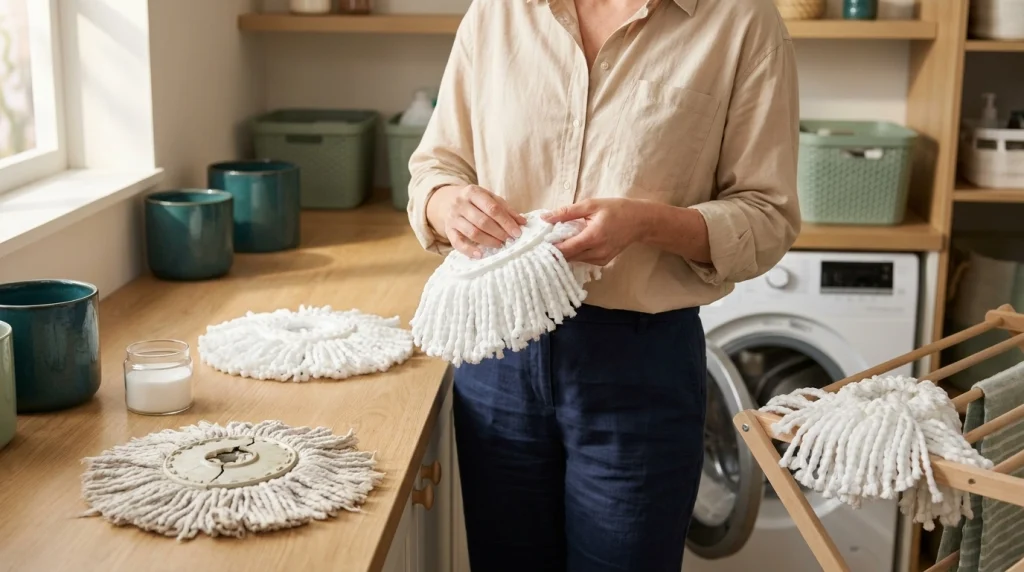
Reusable mop heads need regular washing and complete drying. Disposable heads should be changed when dirty and discarded according to their instructions.
How to Wash a Reusable Microfiber Mop Head
- Remove the mop head after cleaning.
- Shake off loose hair and debris.
- Rinse away visible soil if necessary.
- Machine-wash or hand-wash according to the care label.
- Use the recommended amount of suitable detergent.
- Avoid fabric softener if the manufacturer prohibits it.
- Dry fully before storing.
- Inspect the fibers and attachment before reuse.
Fabric softener may reduce microfiber’s ability to absorb and collect dirt. Bleach or excessive heat can also damage some reusable heads.
The CDC’s cleaning-equipment guidance emphasizes laundering, proper reprocessing, and complete drying in healthcare environments. Household cleaning requirements differ, but drying remains a sensible practice.
When Should You Replace a Mop Head?
There’s no universal replacement schedule. A frequently used mop head may wear faster than one reserved for occasional cleaning.
Look for these warning signs:
- Fibers remain flattened after washing.
- The head leaves dirt behind.
- Persistent odors remain after proper cleaning.
- Threads or attachment points start failing.
- The head no longer fits securely.
- Streaks continue despite clean water and correct detergent use.
Are Disposable Mop Heads More Hygienic?
Not automatically. A fresh disposable pad avoids the need to wash that particular pad, but hygiene also depends on the cleaner and technique.
A dirty disposable pad can spread soil just like an unwashed reusable head. Replace it when saturated or visibly dirty.
For ordinary household cleaning, a clean and dry reusable head is usually practical. Tasks involving bodily fluids require more careful handling.
Cleaning and disinfecting are different processes. If disinfection is necessary, use a suitable EPA-registered disinfectant and follow its label directions.
Safety note: Check both the disinfectant label and your flooring manufacturer’s guidance. Never mix cleaning chemicals or assume that a wet mop pad disinfects a surface.
Section Takeaway: Maintenance matters more than whether a mop head is washable or disposable.
Which Mop Head Should You Choose?
Choose reusable microfiber for frequent whole-floor cleaning. Keep disposable options in mind when convenience, storage, or occasional cleanup takes priority.
Choose Reusable Mop Heads If You:
- Mop kitchens, bathrooms, or hallways every week.
- Already own a compatible spin mop.
- Want to reduce recurring refill purchases.
- Have enough space to dry attachments.
- Clean several rooms in one session.
- Prefer controlling the amount of water used.
Choose Disposable Mop Heads If You:
- Clean small floor areas only occasionally.
- Want fast dust or hair removal.
- Have limited access to laundry facilities.
- Need a compact cleaning system for occasional use.
- Prefer avoiding storage of damp attachments.
My Preferred Setup for Most Homes
I’d start with a washable microfiber spin mop and two compatible replacement heads. That covers regular cleaning without constant refill purchases.
For small dry messes, a disposable dusting sheet can still be useful. There’s no need to treat the two systems as mutually exclusive.
Before purchasing, check:
- Compatibility: Exact mop model and attachment type.
- Fiber quality: Secure stitching and durable construction.
- Washability: Clear care instructions.
- Replacement supply: Easy access to suitable refills.
- Floor suitability: Compatibility with your flooring and cleaner.
The best option is the one you’ll maintain correctly. An expensive reusable head offers little value if it stays dirty between sessions.
Frequently Asked Questions
1. Are reusable mop heads better than disposable ones?
Reusable mop heads are usually better for frequent cleaning because they offer repeat use and lower long-term costs. Disposable pads are more convenient for occasional cleaning. Your floor type, laundry access, and cleaning frequency should guide the decision.
2. How long do reusable microfiber mop heads last?
Lifespan varies with fiber quality, cleaning frequency, and laundering. Replace a microfiber head when it loses cleaning performance, develops persistent odors, or becomes damaged. Follow manufacturer guidance rather than relying on a fixed number of months.
3. Can I use disposable pads on a spin mop?
Only if the manufacturer provides a compatible disposable attachment. Most round spin mops are designed for washable microfiber heads. Standard flat disposable pads may detach during spinning and shouldn’t be forced onto incompatible mop bases.
4. Do reusable mop heads spread bacteria?
Dirty reusable heads can transfer contamination between surfaces, especially when stored damp. Washing them appropriately and drying them completely helps reduce this problem. Disposable pads can also spread contamination if reused after becoming dirty.
5. Are disposable mop pads safe for hardwood floors?
Some are suitable for properly sealed hardwood, but not all. Check the pad’s cleaning ingredients and the flooring manufacturer’s guidance. Avoid excessive moisture, pooling liquid, and products that leave unwanted residue.
6. Can reusable microfiber mop heads go in the washing machine?
Many can, including common spin mop refills. Always check the care label first. Use appropriate detergent, avoid prohibited fabric softeners or bleach, and follow the recommended drying method to protect the fibers.
7. Which mop head is best for pet owners?
Washable microfiber is a practical choice for routine pet hair, paw prints, and dirt. Disposable dry sheets can help collect loose fur between deeper cleanings. For pet accidents, use a floor-compatible cleaner and follow appropriate hygiene precautions.
Final Verdict: Reusable or Disposable?
For most households, reusable microfiber mop heads offer better long-term value, versatility, and waste reduction. They’re especially suitable for spin mops and regular cleaning of compatible hard floors.
Disposable pads still have a place in smaller homes, quick touch-ups, and occasional cleaning routines. Their biggest advantage is convenience.
Start with two washable microfiber mop heads for regular mopping. Add disposable sheets only when they solve a specific cleaning problem.
That simple approach can keep your floors clean without unnecessary purchases or waste.