
Can You Mop with Fabric Softener? (Pros, Cons and a Safer Method)

Disclosure: FloorsMop is reader-supported. As an Amazon Associate, we earn from qualifying purchases. If you buy through a link on this page, we may earn a small commission at no extra cost to you. Learn more.
Quick answer: You can add a small amount of liquid fabric softener to mop water for scent, but it does not clean. Softener is designed to leave a coating, so too much makes floors slippery, sticky and quicker to attract dirt. If you try it, use about 1 tablespoon per gallon on tile or vinyl only, and skip wood and laminate.
The “fabric softener in the mop bucket” tip shows up all over social media because the house smells like clean laundry for hours. The scent part works. The cleaning part is where it falls short. If your main goal is a clean floor, our guide on how to mop a floor properly covers the basics, and this page explains where softener fits in.
What Fabric Softener Does (and Why That Matters on Floors)
Liquid fabric softener works by depositing a thin, waxy, positively charged layer on fabric. That layer makes cotton feel soft and cuts static. It also carries fragrance that lingers.
On a hard floor, the same coating has nowhere to soak in. It sits on the surface. A little can look shiny. More than a little can feel slick underfoot, show footprints, and hold onto dust and pet hair. That is why many people find their floors look dirty again faster after a few weeks of softener mopping.
The Pros and Cons at a Glance
| Pros | Cons |
|---|---|
| — | — |
| Strong, long-lasting scent | Does not remove grease or grime on its own |
| Cheap and easy to find | Leaves a film that can be slippery |
| Light film may add a little shine on tile | Film attracts dirt and shows footprints |
| Some say it helps reduce dust cling | Can build up into a sticky layer over time |
| Not suitable for wood, laminate or stone |
Which Floors Can Handle It?
| Floor | Fabric softener? | Notes |
|---|---|---|
| — | — | — |
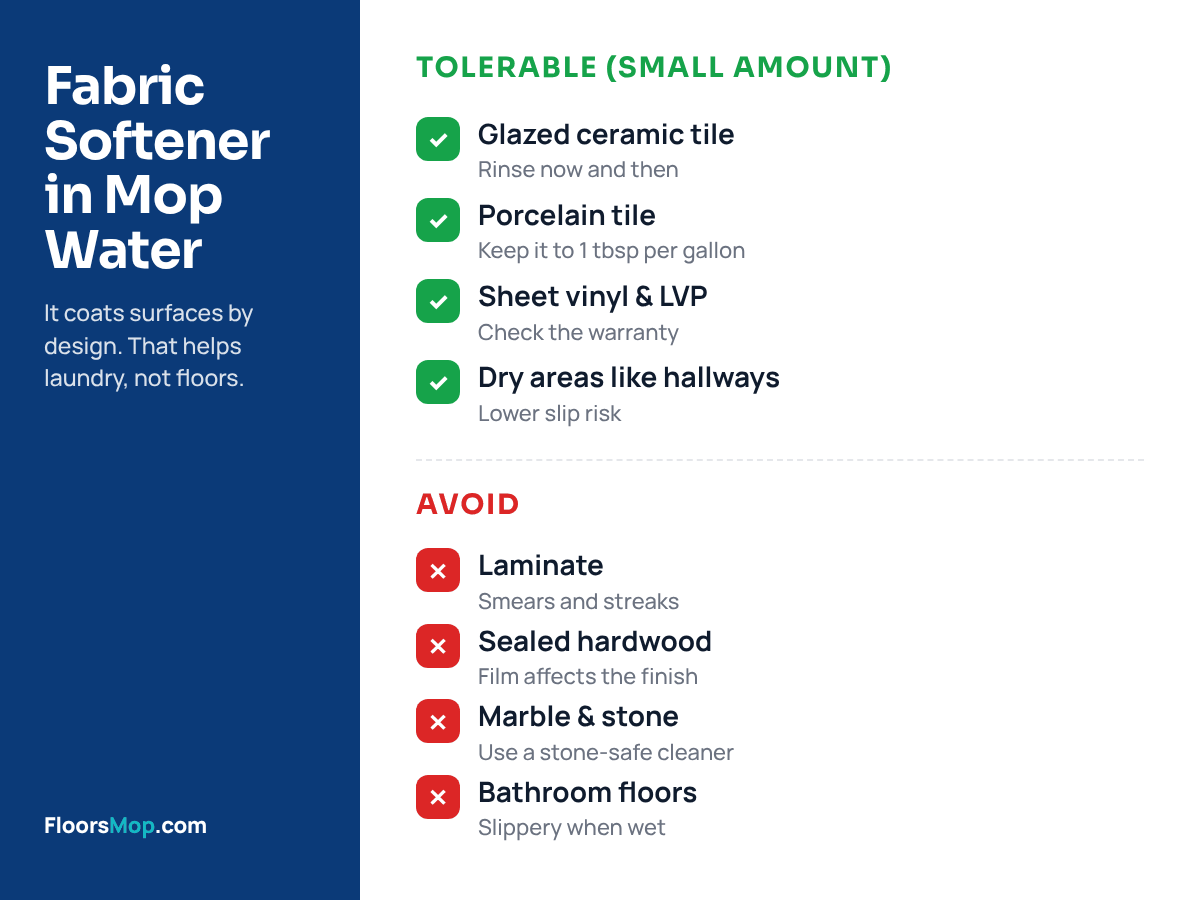
| Glazed ceramic or porcelain tile | ⚠️ Small amount | Rinse occasionally to prevent buildup |
| Sheet vinyl and LVP | ⚠️ Small amount | Check your floor warranty; film can dull the wear layer’s look |
| Laminate | ❌ No | Coatings smear and streak; laminate needs a residue-free cleaner |
| Sealed hardwood | ❌ No | Film interferes with the finish and future recoats |
| Marble and natural stone | ❌ No | Use a stone-safe pH-neutral cleaner |
| Bathroom floors | ❌ Usually no | Wet bathroom floors plus a slick film is a slip risk |
A Lower-Risk Way to Mop with Fabric Softener
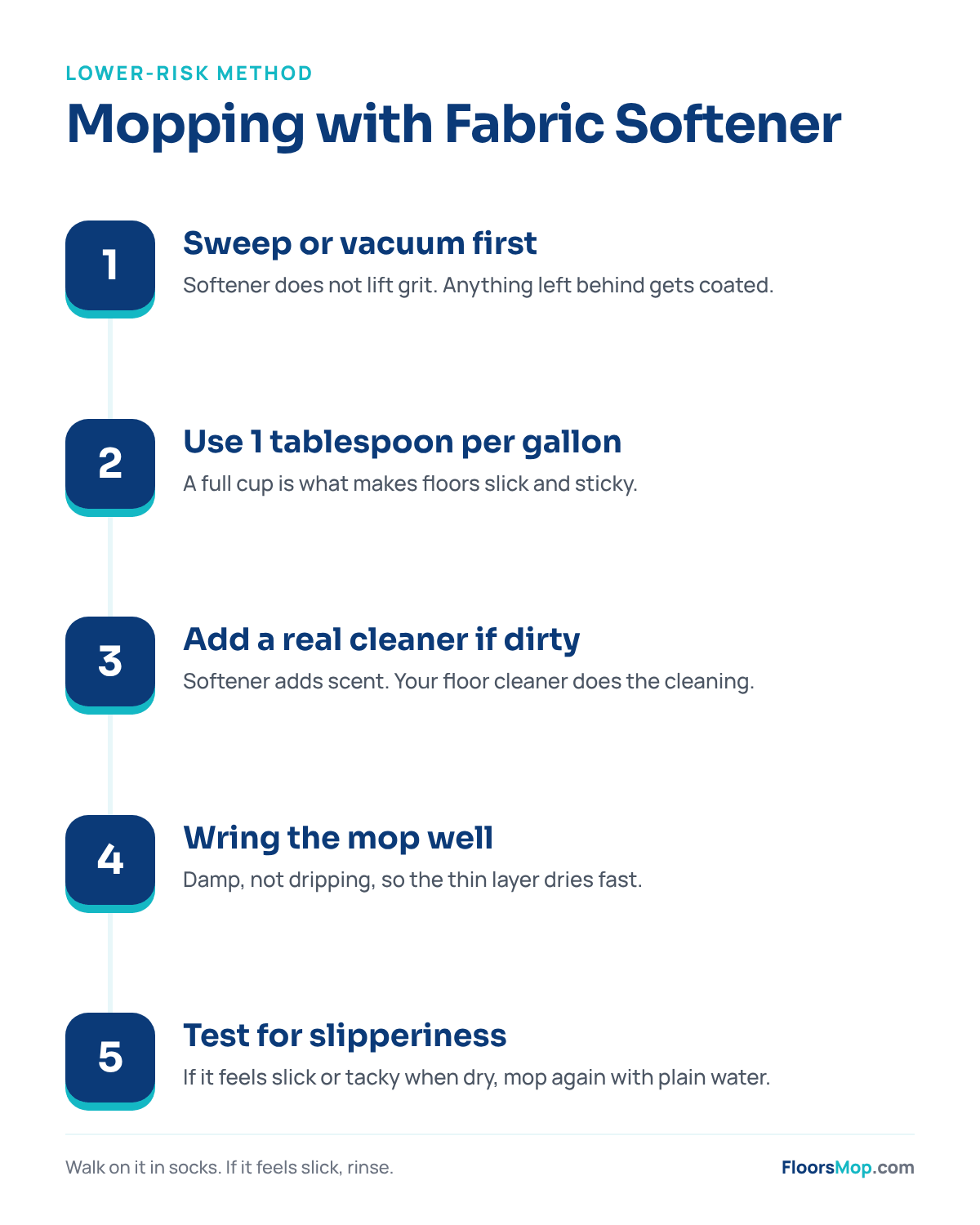
If you still want the scent on a tile or vinyl floor, keep the amount small and the mop damp.
Step 1: Sweep or vacuum first
Softener will not lift grit, so remove it first. Anything left behind just gets coated.
Step 2: Mix about 1 tablespoon per gallon
Use a tablespoon of liquid softener in a gallon of warm water. Many online recipes call for a full cup. That much is what causes the slick, sticky film.
Step 3: Pair it with a real cleaner when the floor is dirty
For kitchen floors with grease, use your normal floor cleaner at label strength and add only the small amount of softener for scent. Do not combine softener with bleach or other strong chemicals. When in doubt, use one product at a time.
Step 4: Wring the mop well
A damp mop leaves a thin layer that dries quickly. A dripping mop leaves puddles that dry into visible spots.
Step 5: Test for slipperiness
Once the floor is dry, walk across it in socks. If it feels slick or tacky, mop again with plain water. In homes with kids, older adults or pets, err on the side of a plain-water rinse.
How to Remove Fabric Softener Buildup
If you have been using a heavy hand for a while, the film needs to come off before the floor will look clean again.
- Mix 1/2 cup of white vinegar in a gallon of warm water (tile and vinyl only; never on stone).
- Mop with a clean microfiber or cotton head, rinsing often.
- Go over the floor again with plain water.
- Buff dry with a microfiber pad.
For more help with tacky floors, see why your floor is sticky after mopping. If the problem is mostly slipperiness, read why floors are slippery after mopping.
Better Ways to Get a Fresh-Smelling Floor
- Use a scented floor cleaner made for your floor. Many common brands come in laundry-type scents and are designed to dry without a heavy coating.
- Fix the mop, not the floor. A sour smell usually comes from a dirty or damp mop head, not the floor itself. See how to clean a mop head.
- Change the water often. Gray mop water spreads odor around the room.
- Dry the floor well. Floors that stay wet longer can smell musty. Our guide on why your floor smells after mopping goes deeper.
- Use vinegar for odor on tile. It neutralizes some smells and the vinegar scent fades as it dries. Ratios are in our vinegar mopping guide.
Where People Go Wrong with Softener
- Pouring in a full cup. That is the most common cause of slick, dirt-grabbing floors.
- Using it on laminate or hardwood. These floors need residue-free cleaners.
- Washing microfiber mop pads with fabric softener. It clogs the fibers and the pads stop picking up dirt.
- Mixing softener with bleach or other cleaners. Stick to one product, or a floor cleaner plus a small splash of softener at most.
- Using it on bathroom floors. Wet tile and a waxy film are a bad combination.
Products That Work Better
- Scented floor cleaner: Mr. Clean Multi-Surface Cleaner dilutes in a bucket and comes in several scents.
- pH-neutral option: Bona Hard-Surface Floor Cleaner for floors where you want zero residue.
- Easy-wring mop: a Libman Tornado spin mop helps keep the head damp, which is half the battle with any additive.
Choosing a mop for the job? Our breakdown of different types of mops covers cotton, microfiber, spin and flat mops.
FAQs
Does fabric softener make floors shiny?
A little can add a slight sheen on tile. It is a coating, not a clean shine, and it tends to turn dull and sticky as dirt settles into it.
How much fabric softener should I put in mop water?
If you use it at all, about 1 tablespoon per gallon of warm water. Larger amounts are what cause the slippery film.
Can I use dryer sheets on floors?
Some people wipe baseboards with used dryer sheets to reduce dust cling. On the floor itself, they leave the same coating as liquid softener, so skip them for mopping.
Is mopping with Downy safe for pets?
Pets walk on and lick the floor, so a fragrance film is not ideal. If you use it, keep it very light and let the floor dry before pets come back in.
Will fabric softener damage vinyl floors?
Occasional light use is unlikely to cause damage, but buildup can make vinyl look dull and feel tacky. Check your floor maker’s care guide and rinse with plain water now and then.
Related Guides
- How to Mop Floors with Vinegar
- Why Is My Floor Sticky After Mopping?
- Why Does My Floor Smell After Mopping?
- Different Types of Mops
- How Do You Clean a Mop Head?