
Can You Use Bad Smell After Mopping Tips to Fix It

No, a bad smell after mopping usually means the floor still has dirty water, residue, or hidden moisture. Fix the odor by drying the area fast, using fresh cleaning solution, and checking whether the floor type needs a gentler method. Related: floor smells bad after cleaning. Related: mop odor. Related: musty floor smell. Related: dirty mop water.
Bad smells after mopping usually mean something is still dirty, too wet, or holding onto odor in the floor itself. In many homes, you can fix the problem with better rinsing, faster drying, and the right cleaner for the surface. Related: bad smell after mopping.
- Fresh tools matter: Dirty mop water and old mop heads often cause the smell.
- Drying is critical: Trapped moisture can keep floors smelling bad after cleaning.
- Match the surface: Wood, vinyl, tile, and concrete need different care.
- Watch for damage: Persistent odor can signal mold, subfloor moisture, or warping.
- Less is often better: Too much soap can leave residue and make odors return.
Can You Use Bad Smell After Mopping? What the Odor Usually Means
If you are asking, can you use bad smell after mopping, the short answer is no when the odor is strong, sour, musty, or sewage-like. That smell is often a sign that the floor, mop water, or hidden moisture needs more attention before the room feels truly clean.
A light cleaner scent fading quickly is normal. A lingering bad odor usually points to dirty water, trapped moisture, or bacteria already present in grout, seams, or porous flooring. If the smell gets worse after mopping, the floor may be reacting to too much water or the wrong product.
If the smell appears right after mopping, pause before adding more cleaner. First check the mop, bucket, and drying time, because the problem is often with the process rather than the floor itself.
Why Floors Smell Worse After Mopping: Common Causes in 2025
Floors can smell worse after mopping for simple reasons, and most of them are fixable. The most common issue is that mopping moves odor around instead of removing it, especially if the water gets dirty fast or the floor stays damp too long.

Dirty mop water and reused cleaning solution
Once mop water turns cloudy, it can spread grease, soil, and bacteria back onto the floor. Reusing the same bucket for a large area is a common reason a room still smells dirty after cleaning.
This is especially noticeable in kitchens, entryways, and pet areas. If you are using a solution that already smells off, the odor can linger even after the floor dries.
Too much water trapped in grout, seams, or wood grain
Water that sits in grout lines, floor seams, or wood grain can create a damp, stale smell. The surface may look clean, but the moisture below the top layer can keep odor active for hours or longer.
For drying help, see how to dry a floor after mopping. Faster airflow and less water use often make a bigger difference than stronger soap.
Mold, mildew, or bacteria already living in the floor surface
Sometimes the smell was already there, and mopping simply brought it out. Grout, baseboard edges, and damp subfloors can hold mildew or bacteria that become more noticeable when wet.
If the odor keeps returning after normal cleaning, the issue may be deeper than surface dirt. That is when repeated mopping can stop helping and start masking the real problem.
Wrong cleaner for the floor type
Not every cleaner works well on every floor. A product that leaves residue on vinyl may be too harsh for wood, while a heavily scented formula can mix with soil and create a sticky, sour smell.
If a floor feels tacky after cleaning, the issue may be residue rather than odor alone. Related guidance on why a floor is sticky after mopping can help you narrow down the cause.
Floor-Type Compatibility: Which Surfaces Are Most Likely to Hold Odors
Some floors hold odors more easily than others because of texture, porosity, or the way the surface is sealed. Knowing the floor type helps you choose the safest fix and avoid making the smell worse.
Tile and grout
Tile itself is usually easy to clean, but grout lines can trap moisture, soap residue, and odor. If grout is stained or porous, it may keep a musty smell even after the tile looks bright.
This is common in bathrooms and kitchens, where water and spills happen often. A cleaner that works on tile may still leave grout smelling stale if the lines are not scrubbed and dried properly.
Laminate and luxury vinyl plank
Laminate and luxury vinyl plank can hold odors when water gets into seams or edges. These floors should not be soaked, because excess moisture can sit under or between planks and create a lingering smell.
If you use these surfaces regularly, a light-damp mop and quick drying are usually safer than a wet mop. For more surface-specific caution, FloorsMop also covers steam mops and vinyl floors, since heat and moisture can be risky on some vinyl products.
Hardwood and engineered wood
Wood floors are especially sensitive to water and odor absorption. If the finish is worn, liquid can seep into the wood grain or between boards and leave a sour or earthy smell.
Engineered wood may tolerate light cleaning better than solid hardwood, but the finish still matters. If you are unsure how often to clean, a guide on how often you should mop hardwood floors can help you avoid over-wetting.
Concrete, sealed floors, and porous surfaces
Concrete and some sealed surfaces can still hold odors if they are not fully sealed or if the finish has worn down. Porous spots can absorb spills, pet accidents, or cleaning residue and release the smell again when damp.
For concrete-specific care, the cleaning approach can differ a lot depending on whether the floor is bare, sealed, or painted. If odor seems to be coming from deep in the slab, surface mopping may not be enough.
How to Fix a Bad Smell After Mopping Step by Step
The best fix is to stop spreading the odor and then remove the moisture that is feeding it. In many cases, a careful reset with fresh tools works better than scrubbing harder.
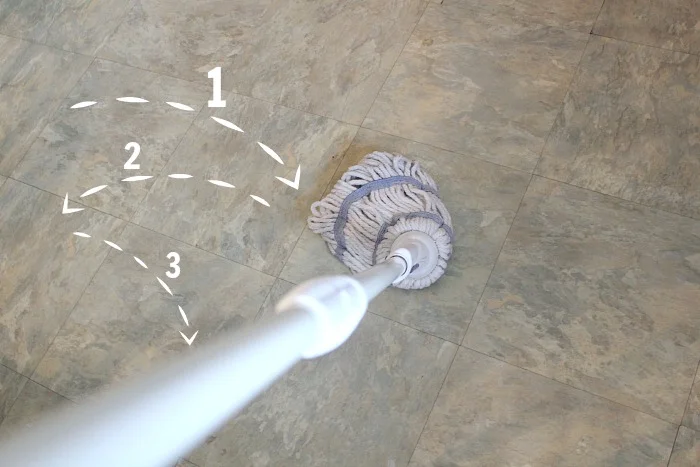
Dump cloudy or smelly water right away. Rinse the mop head, bucket, and wringer so you are not putting the same odor back on the floor. [Source: Mayo Clinic]
Open windows if possible, turn on fans, and use clean towels on damp spots. Faster drying limits mildew growth and helps the smell fade sooner.
Mix a new batch using the product label, not extra soap. Too much cleaner can leave residue that traps odor and makes the floor feel sticky.
For a small problem area, test a gentle spot treatment that matches the floor type. Avoid soaking the area, especially on wood, laminate, or seams.
Do not keep mopping over a bad smell with more soap, bleach, or perfume-heavy cleaner. That can hide the odor for a short time while leaving residue or moisture behind.
Use odor-safe spot treatments for stubborn areas
For food spills, light grease, or general grime, a mild cleaner made for the floor type is usually the safest starting point. If the area is still sticky after drying, the issue may be residue, not smell alone.
For a deeper reset, it helps to avoid overdoing the cleaner. A quick review of why weekly mopping leaves floors sticky can be useful if the odor keeps returning after routine cleaning.
Common Cleaning Mistakes That Make the Smell Come Back
Many bad smells after mopping are caused by habits that seem helpful but actually make floors harder to clean. Small changes in water use, tool care, and prep can prevent the odor from returning.
Using too much soap or scented cleaner
More cleaner does not always mean a cleaner floor. Extra soap can leave a film that traps dirt and holds onto smell, especially on tile, vinyl, and sealed floors.
Strong fragrance can also mix with grease or mildew and create a heavier odor. If the floor feels dull or tacky after drying, too much product may be part of the problem.
Mopping with a dirty bucket or old mop head
A bucket that has old residue can make clean water smell off before you even start. The same is true for mop heads that still hold soil, pet odor, or mildew.
Regular mop care matters as much as the floor care itself. If your mop head has a lingering smell, it may need a thorough cleaning or replacement rather than another rinse.
Skipping pre-sweeping or vacuuming
If dust, crumbs, and hair stay on the floor, mopping turns them into a dirty slurry. That can spread odor instead of removing it, especially in kitchens and pet zones.
Dry debris removal also protects the finish, since grit can scratch and open tiny spots where odor later settles. A quick sweep or vacuum before mopping often improves both smell and appearance.
Overwetting wood, laminate, or grout lines
Too much water is one of the fastest ways to create a lasting floor smell. Wood and laminate can swell or trap moisture, while grout lines may stay damp long after the surface looks dry.
If you need a more controlled routine, a daily floor cleaning guide can help you keep floors fresher without using excess water.
Practical Examples: What to Do for Kitchens, Bathrooms, and Pet Areas
The source of the smell often changes by room. A kitchen odor is not usually the same as a bathroom mildew problem or a pet accident that was cleaned too quickly.
Kitchen grease odors after mopping
Kitchen floors can smell sour or oily if grease was spread around instead of removed. This happens often near stoves, trash cans, and sink areas where food residue builds up.
Start by degreasing the area with a floor-safe cleaner, then rinse and dry well. If the floor still smells like old cooking oil, the issue may be on the baseboards, cabinet toe-kicks, or nearby trash area rather than the floor alone.
Bathroom mildew smells around grout and baseboards
Bathrooms trap moisture, so mildew smells often come from grout, caulk, or the edge where flooring meets the wall. Mopping too much water across the room can make the smell stronger if the area does not dry quickly.
Focus on ventilation, light cleaning, and drying the corners and baseboards. If the smell stays localized near one section, hidden water damage may be contributing.
Pet urine or accident odors that resurface after cleaning
Pet odors can come back when urine has soaked below the surface or into seams. Mopping the top layer may remove the visible mess but still leave odor in the pad, grout, or subfloor.
Use a cleaner made for pet accidents and follow the product directions closely. If the smell returns after the floor dries, the problem may be deeper than the surface layer. [Source: Family Handyman]
When the Smell Signals a Bigger Floor Problem
Sometimes a bad smell after mopping is a warning sign, not a cleaning mistake. If the odor keeps returning, the floor may have hidden moisture or damage that needs inspection.
Hidden moisture damage or subfloor issues
Water can travel under flooring and collect in places you cannot see. That can create a musty smell that seems to come back every time the room gets damp.
When the odor is strongest near one spot, especially after mopping or spills, the subfloor may be involved. That is more likely if the floor is older or has had leaks before.
Persistent mold growth under flooring
If the smell is earthy, damp, or mold-like and does not improve with cleaning, mold may be growing under the surface. Surface cleaners will not solve that kind of problem if the source is hidden.
In these cases, repeated mopping can waste time and may spread moisture into the problem area. It is better to investigate the source than to keep masking the odor.
Warping, soft spots, or discoloration that needs inspection
Changes in the floor’s shape or color can point to water damage. Warping, cupping, soft spots, or dark stains often mean the floor has absorbed more moisture than it should.
If you see these signs, stop wet cleaning that area until you know more. The smell may be a symptom of a repair issue rather than a surface cleaning issue.
When to Ask a Flooring Professional and What It May Cost
Some odor problems are simple cleaning issues, but others involve floor structure, hidden moisture, or product compatibility. A professional can help when the smell is persistent, the flooring is expensive, or you are worried about making damage worse.
Signs the odor will not clear with DIY cleaning
Ask for help if the smell comes back every time the floor gets wet, if only one section smells bad, or if the room smells musty even when clean and dry. Those signs often point to a deeper source.
It is also wise to get advice if you are unsure whether the cleaner is safe for the finish. Some floors can be damaged by the wrong formula even when the label looks general-purpose.
Typical inspection and remediation cost factors in 2025
Costs vary widely based on floor type, room size, access to the problem area, and whether the issue is surface-level or beneath the flooring. An inspection may be more affordable than repeated trial-and-error cleaning if the odor is stubborn.
Budget for possible cleaner refills, mop-head replacement, or professional inspection if the smell keeps returning. If moisture damage is involved, early diagnosis can prevent a larger repair bill later.
Repair vs. replacement comparison for damaged flooring
Minor odor issues may be solved with cleaning, sealing, or spot repair. But if the floor is warped, repeatedly damp, or damaged under the surface, replacement may be the more practical long-term fix.
The right choice depends on the material, the age of the floor, and how far the damage has spread. A flooring professional can usually help you compare the options before the problem gets worse.
Final Recap: How to Keep Floors Clean Without Leaving a Bad Smell
A bad smell after mopping usually means the floor is still holding dirty water, residue, or hidden moisture. The safest fix is to stop using the current solution, dry the area well, and reclean with the right product for that floor type.
When the odor keeps returning, look beyond the surface. Persistent smells can point to mold, subfloor moisture, or damaged flooring, and that is the point where professional help may save time and prevent bigger repairs.
Frequently Asked Questions
It usually means dirty water, too much soap, or trapped moisture is still on the floor. Sometimes the smell was already there and became stronger once the surface got wet.
Yes, but use fresh water, a clean mop, and the right dilution. If you keep using the same bucket or over-wet the floor, the smell may return.
Use a cleaner made for your floor type and follow the label directions. Mild, residue-free products are often safer than heavily scented or soapy formulas.
A musty, damp, or earthy odor that returns after drying can point to mold or mildew. If you also see discoloration, soft spots, or warped areas, inspect further.
Yes, grout, seams, wood grain, and porous surfaces tend to hold moisture and odor more easily. Tile, vinyl, laminate, hardwood, and concrete all need different cleaning approaches.
Call a professional if the smell keeps coming back, the floor feels soft, or you suspect hidden moisture damage. That can help prevent a bigger repair later.
