
Can You Use Windex on Floors? (When It’s OK and When It’s Not)

Disclosure: FloorsMop is reader-supported. As an Amazon Associate, we earn from qualifying purchases. If you buy through a link on this page, we may earn a small commission at no extra cost to you. Learn more.
Quick answer: You can use Windex for a quick spot clean on sealed tile, porcelain or vinyl, but it is not a good mopping solution. Original Windex contains ammonia, which can dull hardwood finishes, and vinegar versions can etch stone. For whole floors, use a pH-neutral floor cleaner. Never mix Windex with bleach.
Glass cleaner is often the closest bottle when someone tracks in a muddy footprint. That is fine once in a while. The trouble starts when it becomes the everyday floor cleaner. If you are looking for a gentle, reliable routine instead, our guide on how to use Bona floor cleaner with a regular mop is a good place to start.
What’s Actually in Windex?
Windex is made to evaporate fast and leave glass clear. The classic blue formula, Windex Original, uses ammonia as one of its cleaning agents. There are also ammonia-free versions and a Windex Vinegar formula. Each one acts a little differently on floors:
| Windex type | Key ingredient | What it means for floors |
|---|---|---|
| — | — | — |
| Original (blue) | Ammonia | Cuts grease, but can dull or haze wood and some finishes |
| Ammonia-free | Mild detergent, solvents | Gentler, still not made for large floor areas |
| Vinegar formula | Acetic acid | Can etch marble, travertine and other calcium-based stone |
| Multi-surface | Varies by version | Read the label; some are labeled for more surfaces than glass |
Formulas change over time, so the label on your bottle is the final word. If the label does not mention floors, treat floor use as off-label.
Is Windex Safe on Your Floor Type?
| Floor | Windex OK? | Notes |
|---|---|---|
| — | — | — |
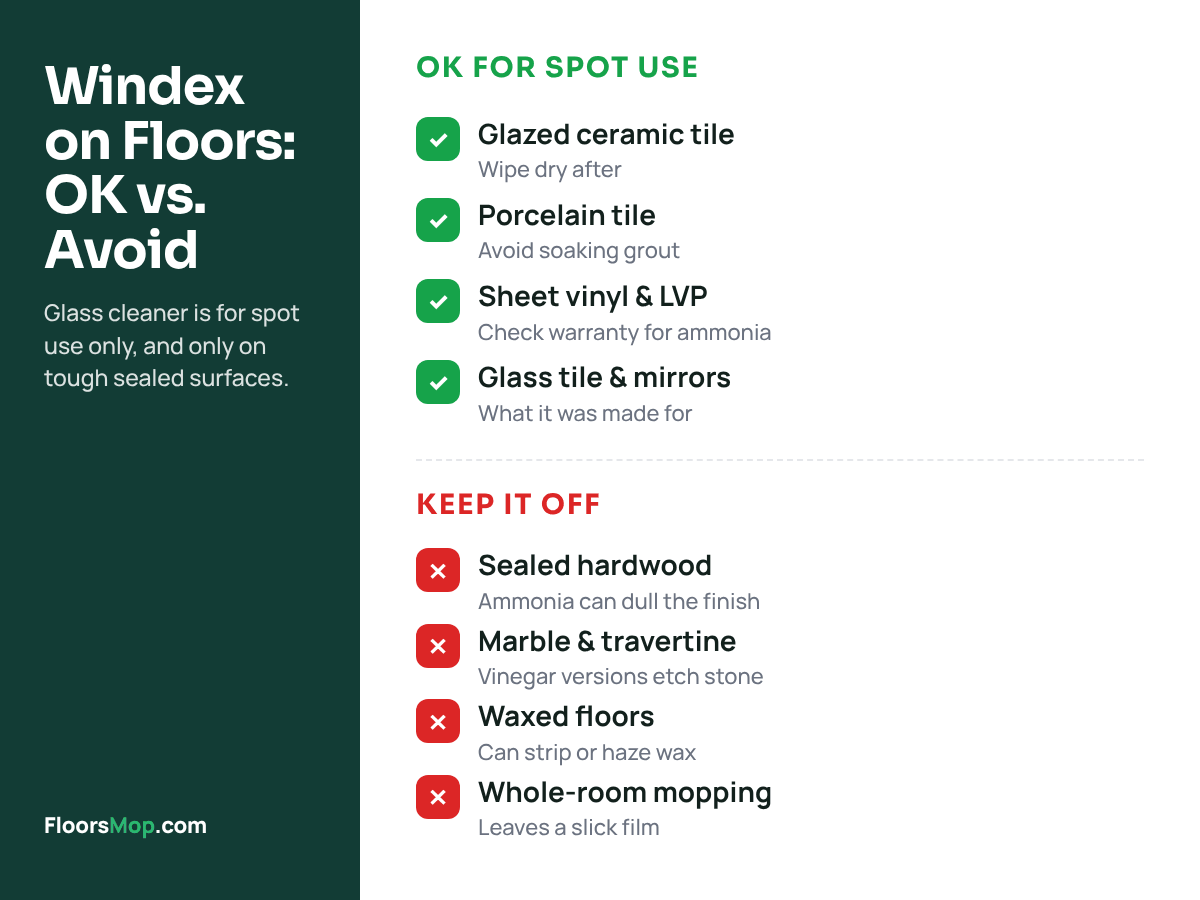
| Glazed ceramic or porcelain tile | ✅ Spot use | Wipe dry; avoid soaking grout |
| Sheet vinyl and LVP | ✅ Spot use | Fine for a smudge; check your floor warranty for ammonia |
| Laminate | ⚠️ Sparingly | Spray the cloth, not the floor; some makers warn against ammonia |
| Sealed hardwood | ❌ No | Ammonia can dull or cloud polyurethane over time |
| Engineered hardwood | ❌ No | Same finish risk as solid wood |
| Marble, travertine, limestone | ❌ No | Ammonia can weaken sealers; vinegar versions etch |
| Waxed floors | ❌ No | Can strip or haze the wax |
| Glass tile or mirrored surfaces | ✅ Yes | This is what it was made for |
Why Windex Is a Poor Choice for Mopping
It is not made to lift floor soil
Floor dirt is mostly grit, tracked-in mud, kitchen grease and skin oils. A glass cleaner is designed for a thin layer of fingerprints and haze. It evaporates before it can break up heavier soil, so you end up pushing dirt around.
It can leave the floor slippery or streaky
Spraying a whole room with glass cleaner leaves more product than a cloth can lift. On smooth floors, that film can feel slick underfoot and show streaks in the light. If that sounds familiar, our streaky floors guide explains how to strip the residue.
Ammonia and fumes
Using a lot of an ammonia-based spray in a small bathroom or kitchen can be irritating to breathe. Open a window. And never mix Windex with bleach or bleach-based cleaners, because ammonia and bleach together release toxic gas.
Cost
A glass cleaner bottle covers a small area. A concentrated floor cleaner diluted in a bucket or spray mop goes much further.
How to Spot-Clean a Floor with Windex (The Safe Way)
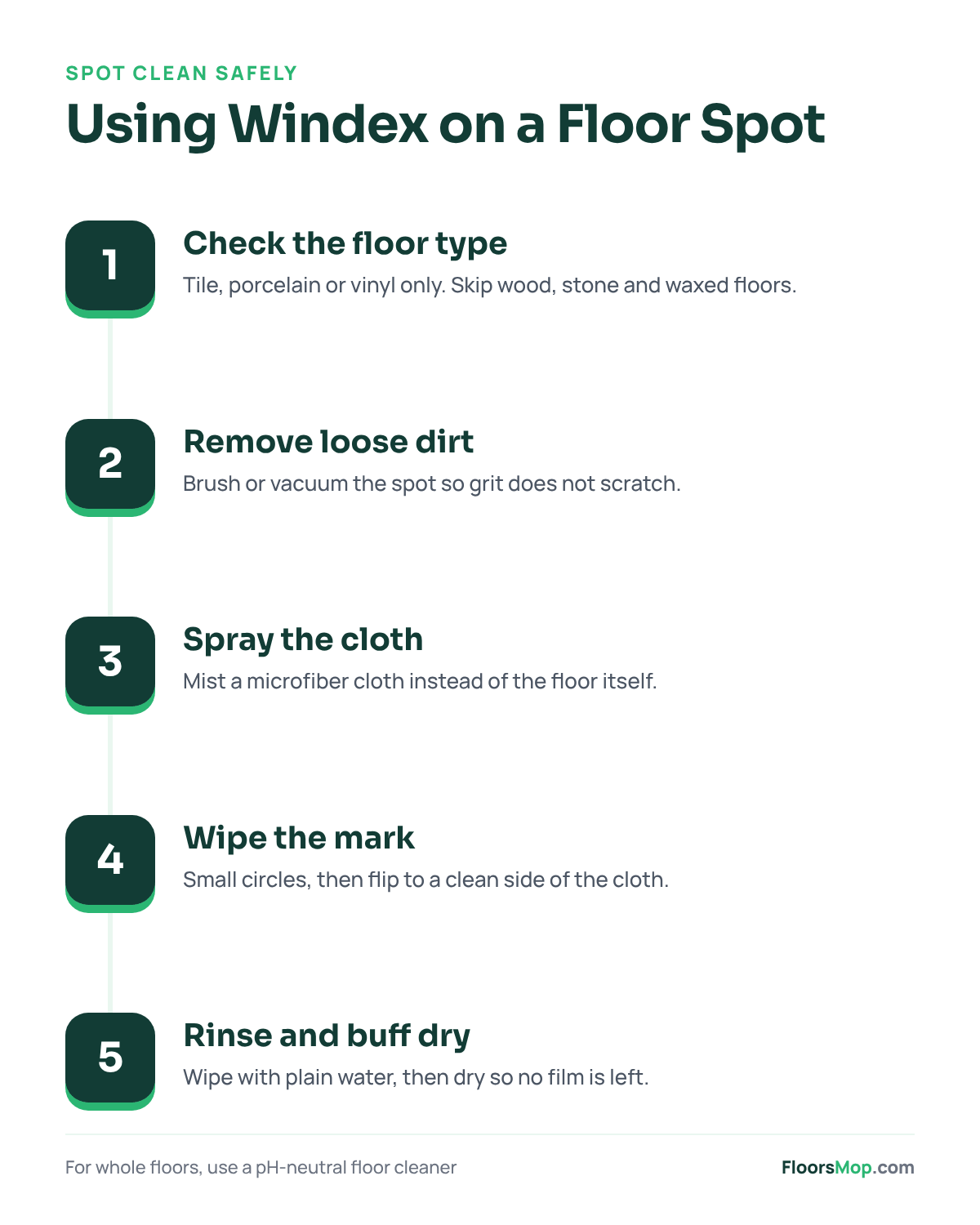
If the floor is tile, porcelain or vinyl and you just need to clear one spot, this method keeps the risk low.
- Check the floor type. Skip it on wood, stone and waxed floors.
- Remove loose dirt. Brush or vacuum the spot so you are not grinding grit into the surface.
- Spray the cloth, not the floor. A light mist on a microfiber cloth controls how much product hits the floor.
- Wipe the mark. Use small circles, then flip to a clean side of the cloth.
- Rinse and dry. Wipe the area with a cloth dampened in plain water, then buff dry so nothing is left behind.
Test any new product on a hidden corner first, such as under a cabinet toe-kick, and look at it in daylight after it dries.
What to Use Instead of Windex on Floors
| Situation | Better option |
|---|---|
| — | — |
| Weekly mopping, most hard floors | pH-neutral floor cleaner in a spray mop or bucket |
| Hardwood and engineered wood | Wood floor cleaner, such as Bona Hardwood |
| Tile with hard water film | Diluted white vinegar (not on stone) |
| Sticky kitchen spills | Warm water with a drop of dish soap, then a plain water rinse |
| Germs after illness | A product labeled as a disinfectant for your floor type |
Steam is another chemical-free option for sealed tile, but it is not right for every floor. Read what steam mops are before buying one. For a DIY route, the vinegar mopping guide has ratios by floor type, and you can also make your own spray mop cleaner.
How to Remove Windex Film from a Floor
If someone has been mopping with glass cleaner for a while, the floor may look hazy or feel slick. Here is how to reset it:
- Tile and vinyl: Mop with warm water and a splash of white vinegar (about 1/2 cup per gallon), then go over it again with plain water and buff dry.
- Laminate: Use a barely damp microfiber pad with warm water only. Work in small areas and dry as you go.
- Hardwood: Clean with a wood floor cleaner. If the finish still looks dull or cloudy after it dries, the haze may be in the finish itself, and a refresher coat may be needed.
- Stone: Use a pH-neutral stone cleaner. Do not use vinegar. If you see dull etch marks, a stone care pro can polish them out.
One pass is often not enough on heavy buildup. Let the floor dry fully between passes so you can see what is left.
Common Windex-on-Floor Mistakes
- Mopping a whole room with glass cleaner. It is the wrong tool and leaves a film.
- Using it on hardwood “just this once” every week. The finish damage builds slowly.
- Mixing it with bleach or another cleaner. Keep cleaners separate, always.
- Spraying directly onto laminate seams. Liquid can seep in and swell the edges.
- Using the vinegar version on marble or travertine. Acid etches dull spots that need professional polishing.
Better Cleaners to Keep on Hand
- All hard floors: Bona Hard-Surface Floor Cleaner. pH-neutral and made for tile, vinyl, laminate and stone.
- Wood floors: Bona Hardwood Floor Cleaner. Dries fast without dulling polyurethane.
- Quick wipe-ups: a pack of microfiber cleaning cloths so you can spot clean with water first and only reach for a cleaner if needed.
FAQs
Will Windex damage hardwood floors?
It can. The ammonia in Windex Original may dull or haze a polyurethane finish with repeated use. Use a cleaner made for wood floors instead.
Can I use Windex on laminate?
For a small mark, a light mist on a cloth is usually fine. Avoid spraying the floor, and check your laminate maker’s care guide, since some advise against ammonia.
Is Windex safe on tile floors?
On glazed ceramic or porcelain tile, yes, for spot cleaning. Wipe it dry and rinse the area with plain water if you used more than a light spray.
Can I put Windex in my spray mop?
It is not a good idea. A full tank spreads too much glass cleaner across the floor, and the formula is not designed for that. Use a floor cleaner made for spray mops.
Is Windex safe around pets?
Let the floor dry fully and rinse any area where pets lie or lick. Store the bottle out of reach and ventilate the room while you use it.
Related Guides
- How to Use Bona Floor Cleaner with a Regular Mop
- How to Mop Floors with Vinegar
- What Are Steam Mops?
- Why Are Floors Slippery After Mopping?
- Streaky Floors Guide