
Do Enzyme Cleaners Work on Hard Floors? (Pet Urine, Odors and More)

Disclosure: FloorsMop is reader-supported. As an Amazon Associate, we earn from qualifying purchases. If you buy through a link on this page, we may earn a small commission at no extra cost to you. Learn more.
Quick answer: Yes, enzyme cleaners work on hard floors for organic messes like pet urine, vomit, food spills and their odors. They do the most good in porous spots like grout, seams and worn wood finish, where smells hide. They need several minutes of wet contact to work, so spot treat wood carefully, and never mix them with bleach, vinegar or steam.
On a sealed floor, most everyday dirt wipes up with a regular cleaner. Enzyme products earn their place when a smell keeps coming back after mopping, which usually means the mess soaked into something. If you rely on steam for sanitizing, read what steam mops are first, since heat and enzymes do not mix well.
How Enzyme Cleaners Work
Enzyme cleaners contain proteins (and in many “bio-enzymatic” products, friendly bacteria) that break specific organic molecules into smaller pieces that rinse away or break down further. Different enzymes target different messes:
| Enzyme type | Breaks down | Common messes |
|---|---|---|
| — | — | — |
| Protease | Proteins | Blood, vomit, egg, pet accidents |
| Amylase | Starches | Sauces, baby food, cereal spills |
| Lipase | Fats and oils | Greasy food, body oils |
| Urease and related | Urine compounds | Pet urine odor |
Regular cleaners and fragrances can hide an odor for a while. An enzyme cleaner aims to break down the source of the smell, which is why pet owners rely on them.
Where Enzyme Cleaners Help on Hard Floors
Grout lines
Grout is porous. Urine and spills soak in and keep smelling even after the tile surface looks clean. Enzyme cleaners can reach into the grout if you let them sit.
Gaps and seams
On vinyl plank, laminate and wood, liquid can run into the joints between boards. A smell that comes from the edge of a board often lives there.
Worn or unsealed wood
Old wood with a thin or worn finish absorbs liquid. Enzymes can help with odor, but the wood itself must be protected from long soaking (more on that below).
Under appliances and around toilets
These spots collect slow drips and splashes over time. Enzyme cleaners are a good fit for the “something smells but I cannot see anything” problem.
Is It Safe for Your Floor?
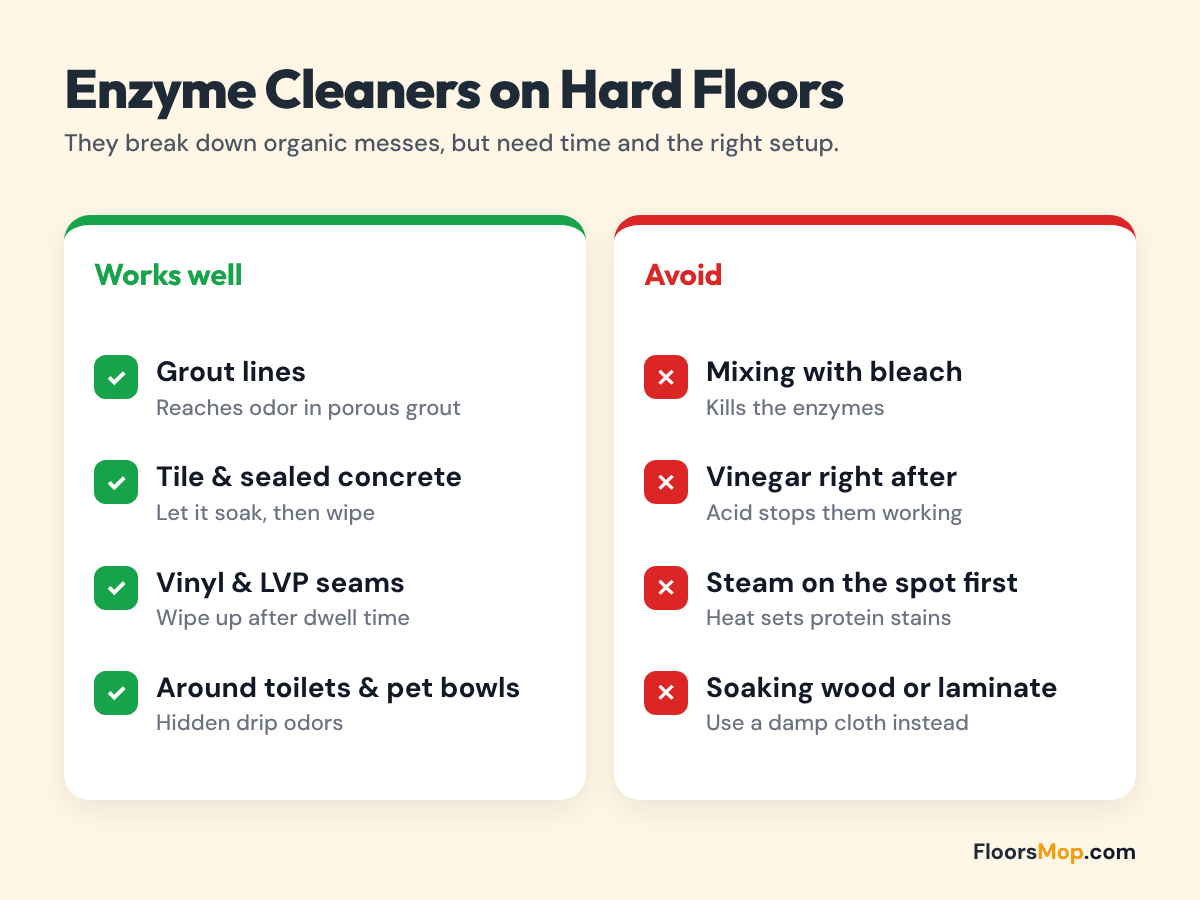
| Floor | Enzyme cleaner OK? | Tips |
|---|---|---|
| — | — | — |
| Ceramic and porcelain tile | ✅ Yes | Great for grout; let it soak in before wiping |
| Sheet vinyl and LVP | ✅ Yes | Wipe up after the dwell time; avoid flooding seams |
| Sealed concrete | ✅ Yes | Good for garage and basement pet areas |
| Laminate | ⚠️ Spot use | Limit wetness; blot dry after a short dwell time |
| Sealed hardwood | ⚠️ Spot use | Test first; cover with a damp cloth rather than pouring |
| Marble and natural stone | ⚠️ Check label | Choose a product labeled safe for stone; test first |
| Waxed floors | ⚠️ Test first | Some formulas can haze wax |
Always test in a hidden spot and check your floor maker’s care guide.
How to Use an Enzyme Cleaner on a Hard Floor
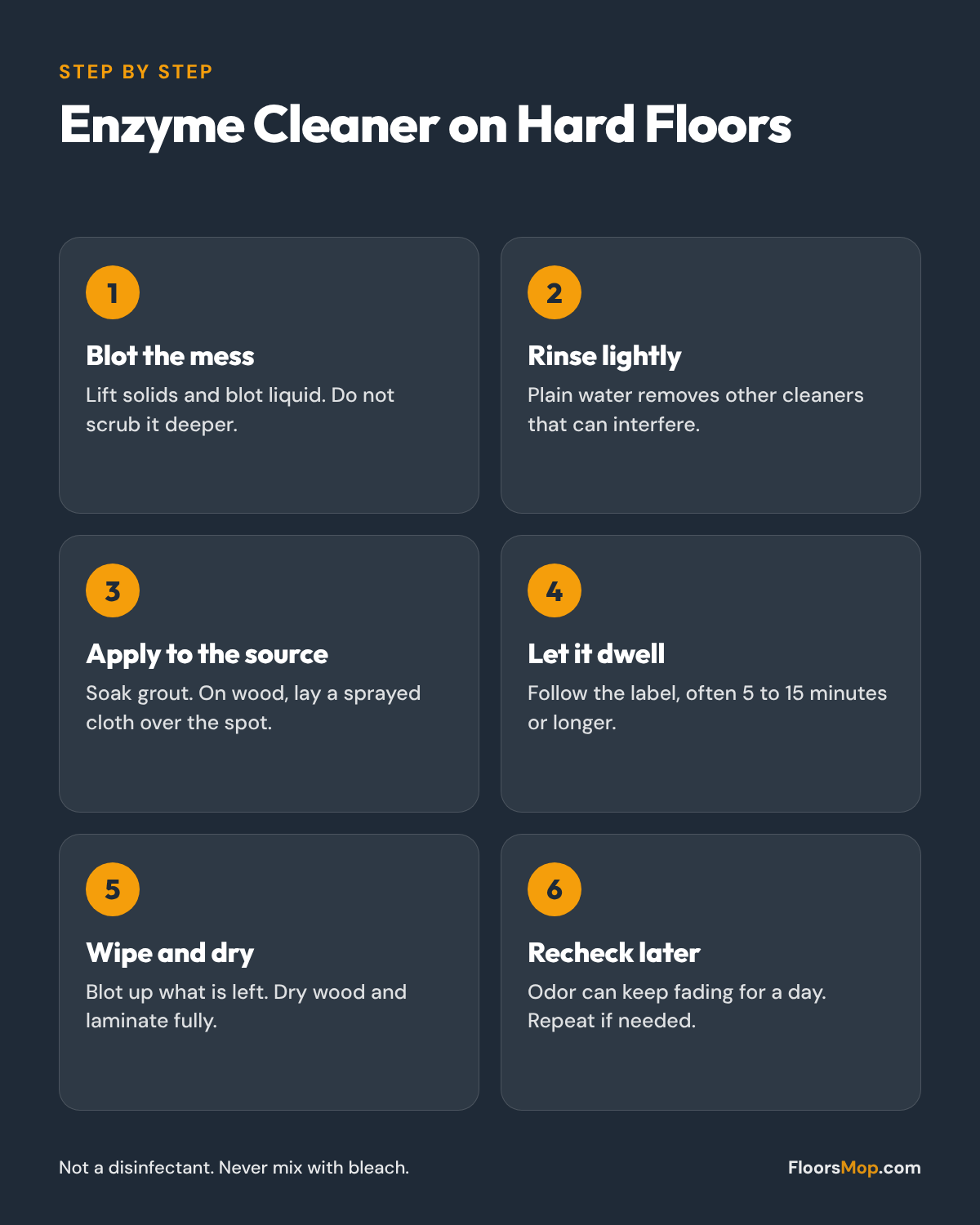
- Pick up and blot the mess. Remove solids and blot liquid with paper towels. Do not scrub it deeper into grout or seams.
- Rinse lightly if needed. A quick wipe with plain water removes leftover residue from other cleaners that could interfere.
- Apply enough to reach the source. On tile and grout, saturate the stained area. On wood and laminate, spray a cloth and lay it over the spot instead of pouring liquid on the floor.
- Let it dwell. Follow the label. Many products need at least 5 to 15 minutes, and some odor jobs need longer. Do not let it dry out on tile during that time.
- Wipe up. Blot or mop up the remaining liquid. On wood and laminate, dry the area completely.
- Air dry and check. Odor sometimes fades over a day as the product finishes working. Repeat if needed.
Enzyme Cleaners vs. Other Options
| Cleaner | Breaks down organic odor? | Disinfects? | Best use |
|---|---|---|---|
| — | — | — | — |
| Enzyme cleaner | ✅ Yes | ❌ No | Pet accidents, food, lingering smells |
| Vinegar solution | ⚠️ Partly | ❌ No | Light odors on tile and vinyl |
| Steam mop | ⚠️ Partly | ⚠️ Helps with heat | Sanitizing sealed tile |
| Bleach solution | ❌ Masks some, not ideal | ✅ Yes, per label | Germs on surfaces that tolerate it |
| pH-neutral floor cleaner | ❌ No | ❌ No | Routine cleaning |
Steam can set protein stains and the heat can deactivate enzymes. If you want to steam a spot, do it after the enzyme treatment has finished and the floor has dried. Our guides on how steam mops work and whether steam mops are good for pet urine explain why.
Enzyme Cleaner Mistakes
- Mixing with bleach or disinfectants. They can kill or break down the enzymes and bacteria. Never mix bleach with vinegar or ammonia either.
- Following up with vinegar right away. Acid can stop the enzymes from working. Use one product at a time, and wait for the floor to dry before trying another.
- Wiping too soon. A 30-second spray and wipe does little. Give it the full dwell time.
- Flooding wood or laminate. Use a cloth to hold the cleaner in place instead.
- Using hot water to dilute. Many enzyme products work best in cool or lukewarm water. Check the label.
- Expecting it to disinfect. Enzyme cleaners are not disinfectants.
Enzyme Cleaners Worth a Look
- Pet accidents: Rocco & Roxie Stain & Odor Eliminator is a popular enzyme spray for pet messes on hard surfaces and carpet.
- Budget pick: Nature’s Miracle Stain and Odor Remover is widely sold and comes in spray and refill sizes.
- Concentrate: Biokleen Bac-Out is a bio-enzymatic option that can be diluted for larger areas.
Looking for gentler everyday cleaners too? See our list of eco floor cleaners for pet owners.
FAQs
Can I mop the whole floor with an enzyme cleaner?
Some concentrates can be diluted for mopping. It is most useful in pet areas or kitchens. For routine mopping of a clean floor, a regular pH-neutral cleaner is enough.
Are enzyme cleaners safe for hardwood floors?
Usually for spot use, if you test first and keep liquid off the floor for long periods. Hold the cleaner in place with a damp cloth and dry the spot afterward.
Why does my floor still smell after using an enzyme cleaner?
The product may not have reached the source, such as deep in grout or under a board. It may also need more dwell time or a second treatment. Odor can also come from a subfloor that needs professional help.
Can I use enzyme cleaner with vinegar?
Not at the same time. Vinegar’s acidity can stop enzymes from working. If you want to use both, let the floor dry fully between them.
Do enzyme cleaners kill bacteria?
No. They break down organic matter that bacteria feed on, which helps with odor, but they are not disinfectants.
Related Guides
- Are Steam Mops Good for Pet Urine?
- Do Steam Mops Get Rid of Smells?
- How to Mop Floors with Vinegar
- How Do Steam Mops Work?
- Why Does My Floor Smell After Mopping?