
How to Clean Laminate Floors Without Streaks (Step by Step)

Disclosure: FloorsMop is reader-supported. As an Amazon Associate, we earn from qualifying purchases. If you buy through a link on this page, we may earn a small commission at no extra cost to you. Learn more.
Quick answer: To clean laminate floors, sweep or vacuum first, then mop with a microfiber pad that is only barely damp and a small amount of pH-neutral laminate cleaner. Work in small sections, never leave standing water, and buff any wet spots dry. Skip steam, wax, oil soap and abrasive pads, because they can swell the seams or leave a dull film.
The same basics apply to every hard floor; our guide on how to mop a floor properly covers them in general. Laminate just needs less water and more drying.
Laminate is tough on top but sensitive at the edges. Its core is pressed wood fiber, so too much water is the number one way people damage it. If you are still choosing a mop, see our guide to the best mop for laminate floors. This guide covers the cleaning method itself.
What You’ll Need
- A soft broom, dust mop, or vacuum with the beater bar turned off (hard-floor setting).
- A flat microfiber mop or spray mop. A spray mop makes it easy to use very little liquid. The O-Cedar ProMist MAX is a popular refillable option.
- A pH-neutral laminate cleaner, such as Bona Hard-Surface Floor Cleaner, or the cleaner your floor’s maker recommends.
- Two or three clean microfiber pads, plus one dry microfiber cloth for buffing.
- Warm water (distilled if you have hard water and keep getting spots).
How to Clean Laminate Floors: 6 Steps
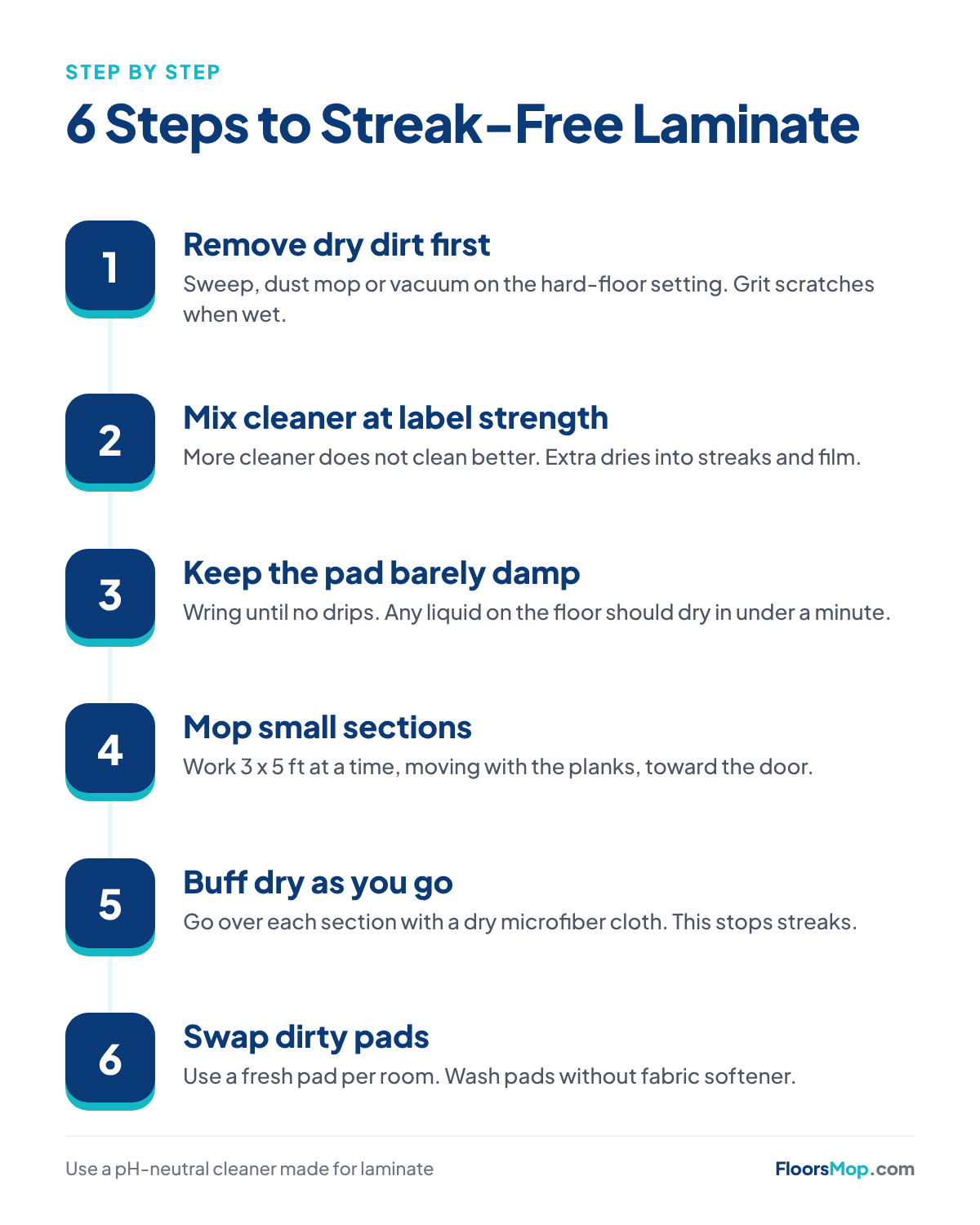
Step 1: Remove dry dirt first
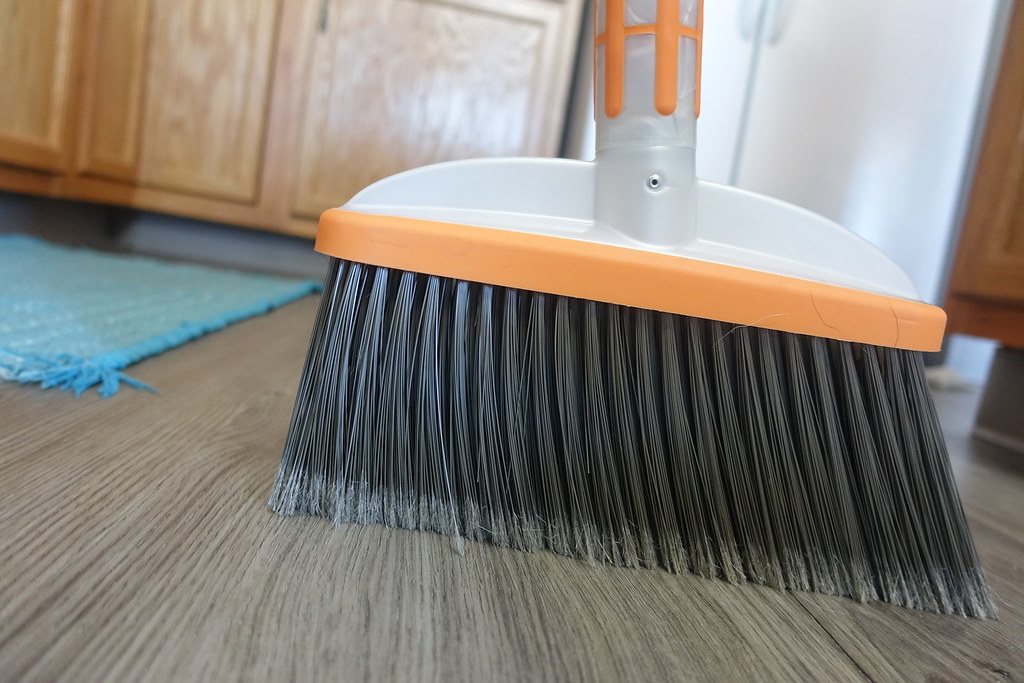
Sweep, dust mop, or vacuum the whole floor before any liquid touches it. Grit acts like sandpaper under a wet mop and causes fine scratches. Pay attention to the edges along the baseboards and under furniture, where dust builds up fastest.
Step 2: Mix the cleaner at the right strength
Use the amount on the label, not more. Extra cleaner does not clean better. It stays on the surface and dries into the streaks and cloudy film most people are trying to avoid. If you use a ready-to-use spray, one or two sprays per square meter is enough.
Step 3: Keep the pad barely damp
Wring the pad until no drips come out when you squeeze it. It should feel cool and slightly damp to the touch, not wet. With a spray mop, spray the floor lightly in front of you instead of soaking the pad. Any liquid you can see on the floor should dry in under a minute.
Step 4: Mop small sections, with the planks
Work in sections of about 1 by 1.5 meters (3 by 5 feet). Move the mop in the same direction as the planks. This follows the texture of the surface and hides any light marks. Start at the far side of the room and work toward the door so you do not walk on the wet floor.
Step 5: Buff dry as you go
Go over each section with a dry microfiber cloth or a dry pad on the mop. This is the step that stops streaks. It removes the last thin layer of moisture before it can dry unevenly, and it protects the seams from water.
Step 6: Swap the pad when it gets dirty
A dirty pad just moves grime around and leaves a gray haze. For an average living room, plan on one fresh pad per room. Wash pads without fabric softener, which coats the fibers and makes them leave streaks. Our guide on how to use a microfiber mop covers pad care in more detail, and our guide on how to clean a mop head explains washing and drying.
What’s Safe on Laminate (and What to Avoid)
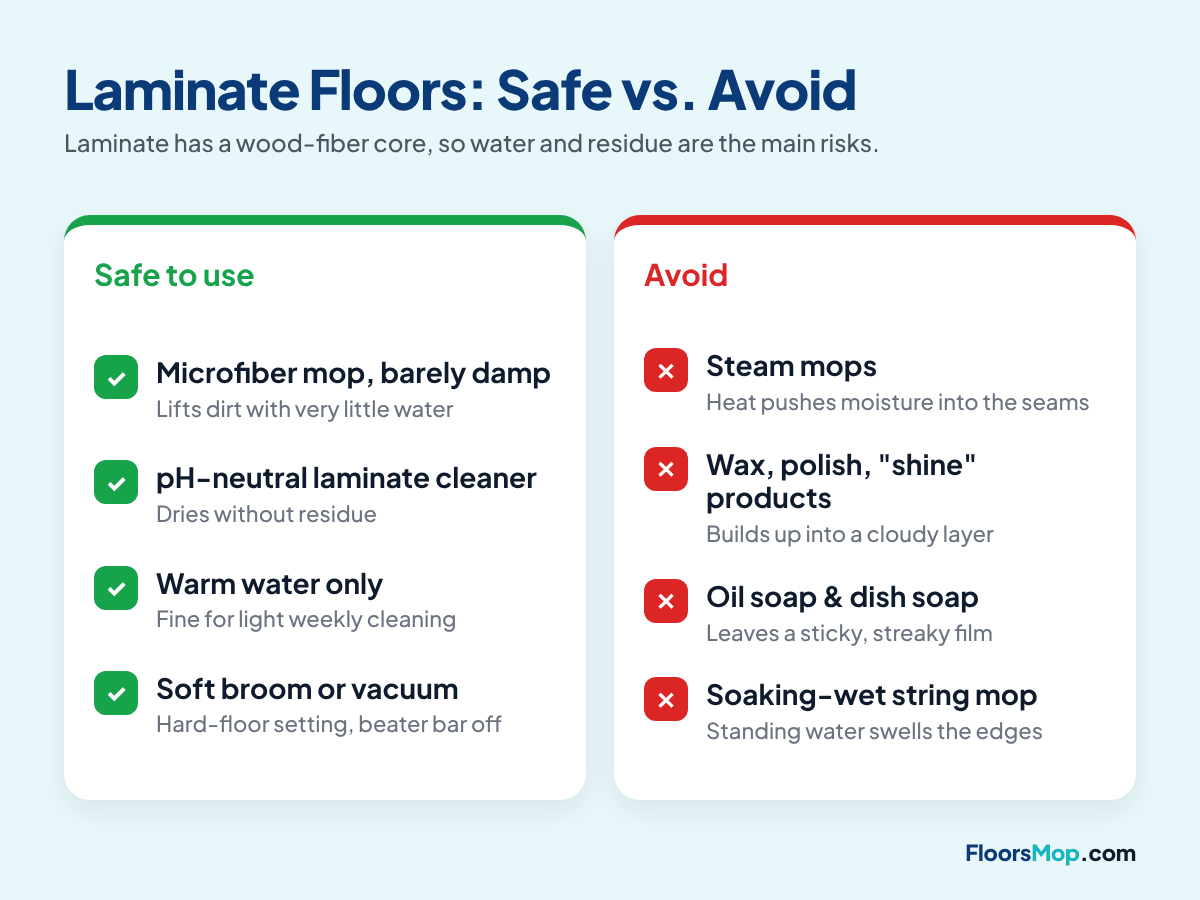
| Cleaner or tool | Safe on laminate? | Why |
|---|---|---|
| Microfiber mop, barely damp | ✅ Yes | Lifts dirt with very little water |
| pH-neutral laminate cleaner | ✅ Yes | Made to evaporate without residue |
| Warm water only | ✅ Yes | Fine for light weekly cleaning |
| Diluted white vinegar | ⚠️ Check warranty | Removes film, but some makers advise against acidic cleaners |
| Dish soap | ⚠️ Rarely | Even a few drops can leave a sticky, streaky film |
| Steam mop | ❌ No | Heat and moisture push into the seams and can swell the core |
| Wax, polish, or “shine” products | ❌ No | Laminate cannot absorb them, so they build up into a cloudy layer |
| Oil soap (e.g. wood soaps) | ❌ No | Leaves a greasy, slippery residue |
| Bleach, ammonia, abrasive pads | ❌ No | Can dull or scratch the wear layer |
Want the full story on steam? Read can you use a steam mop on laminate floors. If you prefer vinegar, our vinegar mopping guide has ratios for each floor type.
Why Laminate Floors Streak (and How to Fix It)
| Cause | Fix |
|---|---|
| Too much cleaner | Mop once with plain warm water to rinse the residue, then buff dry |
| Dirty or softener-coated pad | Use a fresh pad; wash pads without fabric softener |
| Old wax or “shine” product buildup | Strip with a laminate-safe cleaner; see how to remove Mop & Glo |
| Hard water minerals | Use distilled water in your mop or spray bottle |
| Floor left to air-dry | Buff each section with a dry microfiber cloth |
For more causes and fixes, see our full guide to streaky floors.
How Often Should You Clean Laminate?
- Sweep or vacuum: 2 to 3 times a week, daily in entryways and kitchens.
- Damp mop: once a week in busy rooms, every 2 weeks in bedrooms.
- Spills: wipe up right away. Liquid left on a seam for hours is how swelling starts.
Tips to Keep Laminate Looking New
- Put felt pads under chair and table legs.
- Use a doormat inside and outside each entrance to catch grit.
- Avoid rubber-backed rugs, which can trap moisture and discolor the floor.
- Lift furniture instead of dragging it.
Best Products for Cleaning Laminate
- Spray mop: O-Cedar ProMist MAX. Refillable bottle, washable pads, and a fine mist that keeps water use low.
- Cleaner: Bona Hard-Surface Floor Cleaner. pH-neutral, residue-free, and widely sold.
- Extra pads: washable microfiber replacement pads so you always have a clean one.
Comparing spray mops? See the best spray mop for laminate floors.
FAQs
What is the best thing to clean laminate floors with?
A flat microfiber mop with a pH-neutral cleaner made for laminate, used barely damp. For light weekly cleaning, warm water on a damp microfiber pad is often enough.
Can I use a Swiffer WetJet on laminate?
Yes. Swiffer WetJet solutions are labeled for laminate. Use light sprays and change the pad when it looks dirty to avoid streaks.
Why does my laminate look cloudy after mopping?
Cloudiness is almost always residue: too much cleaner, a polish or wax product, or soap. Rinse-mop with plain warm water and buff dry. If it stays cloudy, older buildup needs to be stripped.
Is it OK to use a wet mop on laminate?
Not a soaking-wet string mop. Water that sits on the floor can seep into the joints and make the edges swell or peel. Always wring the mop until it is barely damp.
Can I use vinegar on laminate floors?
Many people use about 1 cup of white vinegar per gallon of warm water to cut film. Some laminate makers advise against acidic cleaners, though, so check your floor’s warranty first and never use vinegar undiluted.
Related Guides
- What Is the Best Mop for Laminate Floors?
- Can You Use a Steam Mop on Laminate Floors?
- Can You Use Dish Soap to Mop the Floor?
- Is It Better to Mop With Hot or Cold Water?